
Ask whether natural or synthetic is better and you will get an argument. It is the wrong question to open with. Hang a cotton panel and a polyester panel on the same hard west-facing window, and the polyester tends to hold its colour longer, while the cotton is the nicer thing to live with in a bedroom that never gets direct sun. Neither is better than the other. The window and the bedroom are asking for different things.
For home textiles the useful split is three: natural fibres that grow (cotton, jute, coir, linen, wool, silk), synthetic fibres made from petrochemicals (polyester, nylon, acrylic, and microfibre, which is usually very fine polyester), and regenerated fibres like viscose, which start as wood pulp, dissolved and spun into thread. Blends mix two of them in one cloth. Most of what you actually notice at home, how cool a cushion feels, how long a bath mat stays damp, whether a curtain looks tired by its second summer, comes down to three things: how much water the fibre holds, how it takes rubbing, and how it takes sunlight.
How much water a fibre holds, and why that settles so much
Textile people measure this as moisture regain: the water a fibre holds once it has settled at standard testing conditions, 65% relative humidity and 21°C, as a percentage of the dry fibre weight. Because fibre is bought and sold by weight, the trade works to agreed figures for it, tabulated in ASTM D1909, the standard tables of commercial moisture regains for textile fibres.
The spread between the extremes is wider than it sounds.
| Fibre | Family | Commercial regain | What that means in a room |
|---|---|---|---|
| Jute | Natural | 13.75% | Pulls moisture out of the air, so it belongs on dry surfaces and not on wet floors. |
| Wool | Natural | 13.6% | Holds a great deal of water while still feeling dry to the hand. Not in Encasa's range. |
| Silk | Natural | 11% | Absorbent and delicate, hand wash in practice. Not in Encasa's range. |
| Viscose / rayon | Regenerated | 11% | Absorbs more than cotton and is noticeably weaker wet, so it wants a gentle wash. |
| Linen (flax) | Natural | 8.75% | On this figure it sits beside cotton, so the cool feel comes from the weave as much as the fibre. Not in Encasa's range. |
| Cotton | Natural | 8.5% | Absorbs well and feels cool, takes its time drying, and loses dye colour in strong sun. |
| Nylon | Synthetic | 4.5% | Absorbs a little and stands up to rubbing, so it turns up in tapes, straps and backings. |
| Acrylic | Synthetic | 1.5% | Wool-like feel, dries quickly, tends to pill with use. |
| Polyester | Synthetic | 0.4% | Barely absorbs, so it dries fastest and gives mould the least to work with. |
Read the gap between cotton at 8.5% and polyester at 0.4% and the folk wisdom stops being folk wisdom. Cotton feels cooler against skin because it is taking water off you. Polyester dries first in a shut, humid bathroom because there is almost nothing in it to dry. At a window the question changes, because weave and colour decide how much heat a curtain lets in, which is what our guide to summer curtain fabrics is about.
Water is only one of the three properties. On the same window, a dyed cotton usually goes chalky before a dyed polyester does, which is why our own cotton canvas cushion covers carry an indoor-use warning about prolonged direct sun, though the shade and the dye matter nearly as much as the fibre. Wear works differently again: velvet and chenille can flatten and shine where people sit, while a flat cotton canvas wears thin instead. Weave and finish move all of this around, so regain is the fibre's baseline, not its final behaviour.
Natural fibres worth knowing, and three we do not sell
Cotton is the natural fibre that actually shows up across an Indian home, and it arrives in very different weights. A canvas at around 180 GSM, mid-range as curtain weights go, hangs with some body and filters light without blocking it, and mercerising gives it a slight lustre. The same fibre in a lighter, opener weave gives you a sheer that only softens glare. If weight is the thing you keep guessing at, our guide to GSM in home textiles puts numbers to it and the curtain GSM guide does it for windows. Cotton's other habit is shrinking on the first hot wash, which matters more for a stitched-to-size curtain than for a cushion cover, and is covered in does cotton shrink. Recycled cotton behaves much the same, except that most recycled cloth carries some polyester to hold the shorter fibres together, as recycled cotton fabric explains.

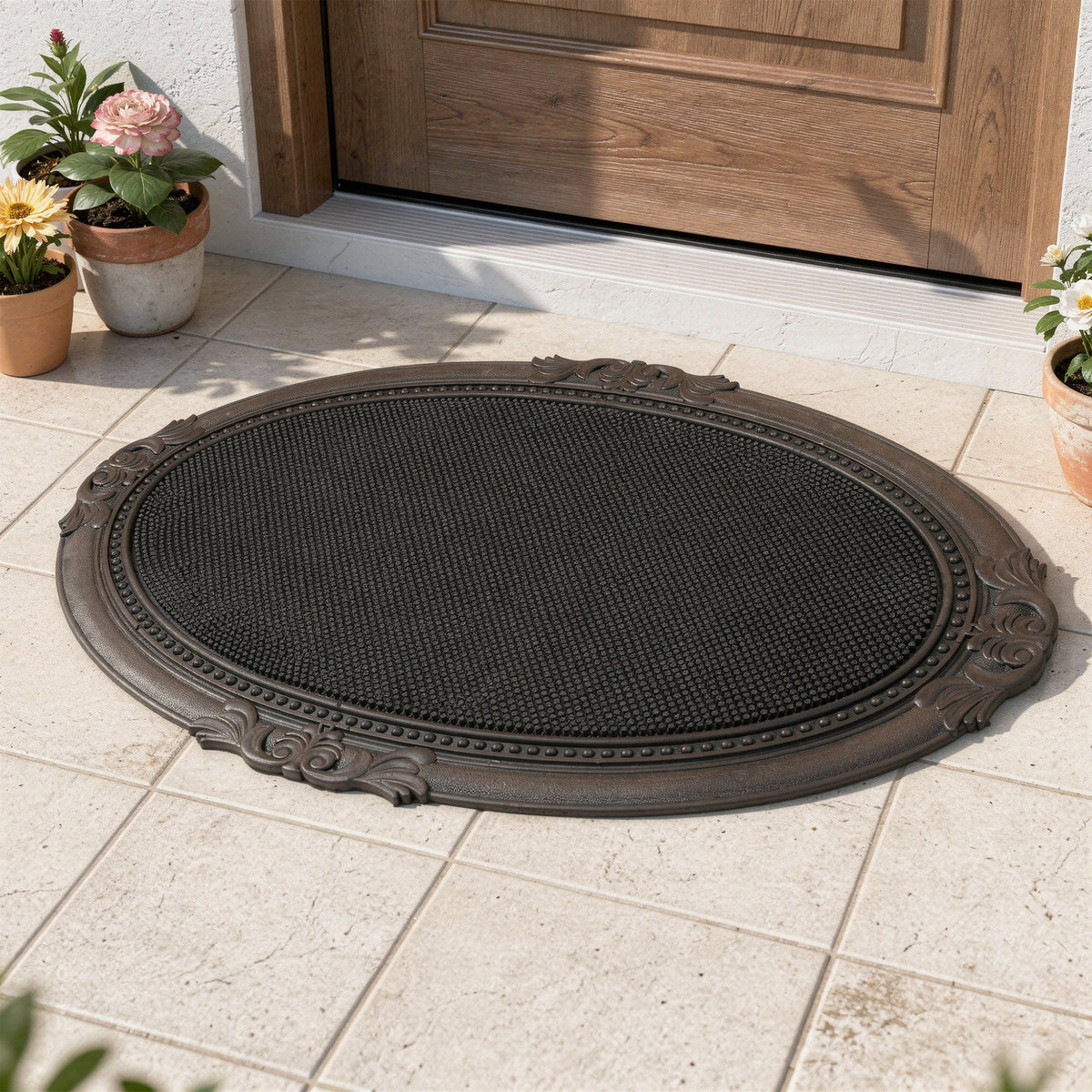
Jute and coir deserve their own category rather than a footnote, because in Indian homes they do real work. Jute is stiff, coarse and handsome, and it sits flat, which is why it makes a good table runner: the Jute Natural Bleach Table Runner is handwoven natural jute at ₹499 for 30 x 91 cm, and its care line puts a wipe with a damp cloth first, with a mild hand wash kept for when it needs more. At 13.75% regain, jute takes water in eagerly, swells, and can weaken or grow mould if it stays properly wet, so it is right for a dry table and wrong for a bathroom floor or a spot that gets mopped every morning. Coir, the coarse fibre from coconut husk, is the outdoor member of the family, and its stiff bristly surface scrapes grit off shoes in a way a soft pile cannot. That is the job of the coir mats in the door mat collection. One caveat here cuts across the face fibre entirely: those mats sit on an anti-skid PVC backing, and a rubber or PVC backing traps whatever water gets through, so a mat on a damp landing has to be picked up and dried on its own schedule whatever the top is made of.
Worth knowing when you shop: a cushion cover sold as "jute" is often a polyester weave made to look like jute, including one in our own catalogue. The fibre content line on the product page settles it, and the name never does.
Linen, wool and silk are genuine natural fibres and are in the table above for comparison. Encasa carries no pure linen, wool or silk product, and where the word "linen" appears on our table pages it means table linen as a category, not flax fibre.
Synthetic fibres, and why they are not the cheap option

Polyester does most of the synthetic work in a home, but it turns up wearing very different clothes. Woven with a looped, fuzzy yarn it becomes chenille, matte and nubby, like the Chenille Rust Orange Cushion Cover at ₹699 to ₹999 for a pair depending on size. Cut into a short dense pile it becomes velvet, with the light-catching nap that makes a room look richer at night. Woven tight and coated, it becomes a blackout curtain. Split into ultra-fine filaments it becomes microfibre, which is what many quick-dry bath mats are made of.
The idea that synthetic means budget does not survive contact with the price list. A pair of 40 x 40 cm covers costs ₹499 in our cotton canvas, ₹459 in polyester velvet and ₹699 in polyester chenille. Cost tracks the weave, the pile and the finish, not the fibre family. What you are buying with synthetic is behaviour: colour that holds up better in a sunny room, and drying speed that matters enormously in a bathroom in August.
Where does viscose or rayon fit in?
Viscose, also sold as rayon, confuses people because it sits in neither camp. It is made from wood pulp, a natural raw material, dissolved chemically and spun into fibre, which is why it is called regenerated cellulose. It behaves like a very absorbent cotton: 11% regain against cotton's 8.5%, cool to the touch, prone to creasing. The trade-off is wet strength. Viscose loses a lot of its strength when wet, so a viscose or viscose-blend item needs a gentler wash and less wringing than the plain cotton thing next to it in the machine. That is usually what the care label is telling you, and our care symbol guide translates the rest. Encasa sells no pure viscose product, so this is context for the blends you will meet elsewhere.
Which types of fabric suit which room
A window that takes hard afternoon sun
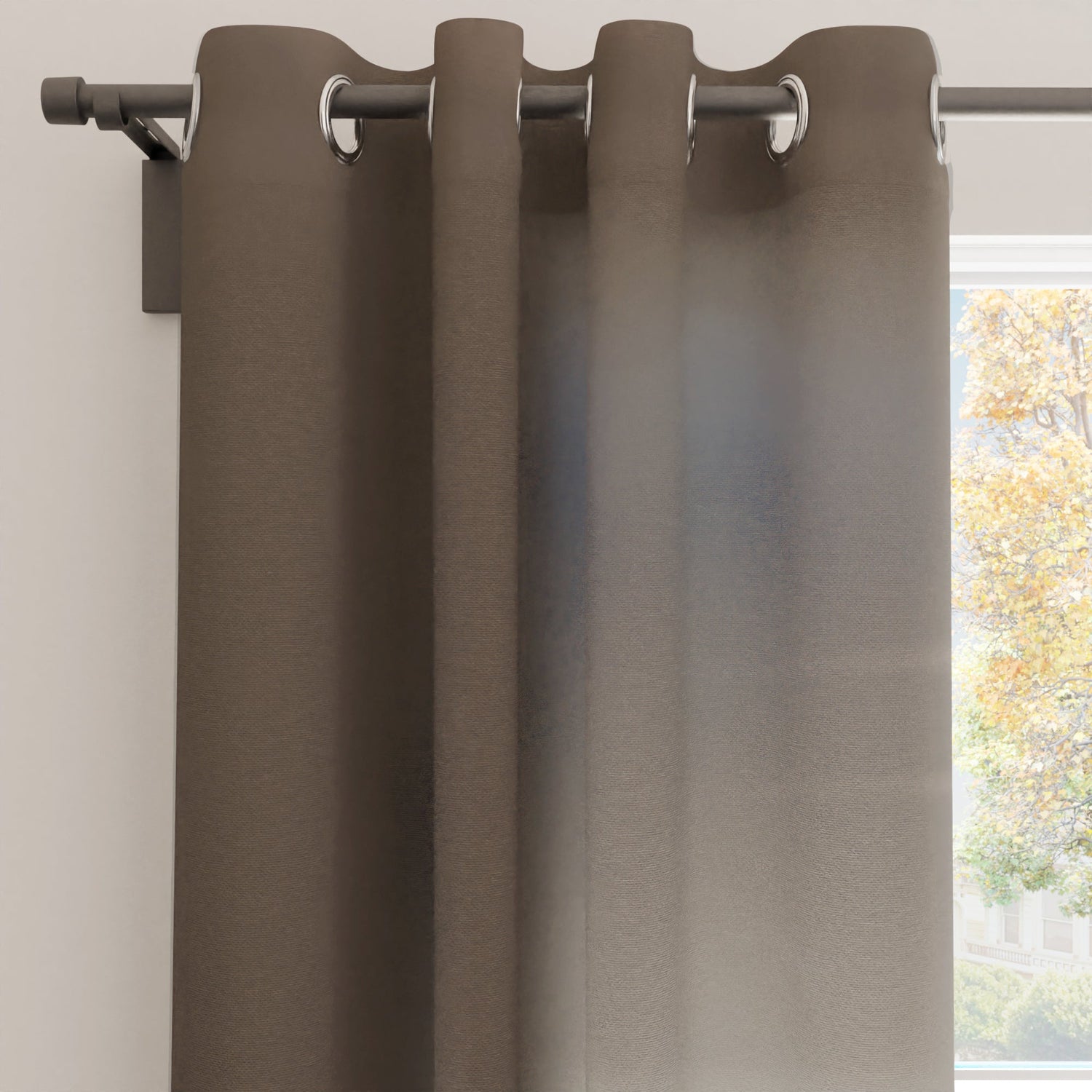
Sun is the harshest thing in an Indian home, and it makes this a fibre decision rather than a colour one. On a south or west window that gets direct afternoon light, a polyester blackout or a printed polyester panel holds its colour longer than a dyed cotton one. Save cotton canvas, like the Canvas Beige Curtain at ₹1,279 for a 7 ft door panel, for the windows with indirect light, where the weight and the way it falls are what you are paying for. Mid-tones and prints hide the fading that does happen; a flat deep colour shows it first.
A sofa that children and pets use
Here abrasion beats absorbency. Tight polyester chenille and heavy cotton canvas both take daily punishment, but they fail differently: canvas thins and softens, chenille holds its structure and can shine where the pile gets crushed. Velvet is wrong for the seat everyone lands on and right for the armchair in the corner. Buy covers rather than fixed upholstery so you can wash them, and for that comparison in more depth, see which cushion cover fabric to buy. The part no fibre chart warns you about: a cotton canvas cover comes out of the wash creased and stays that way until it is ironed, and hardly anybody irons cushion covers.
The floor outside the shower

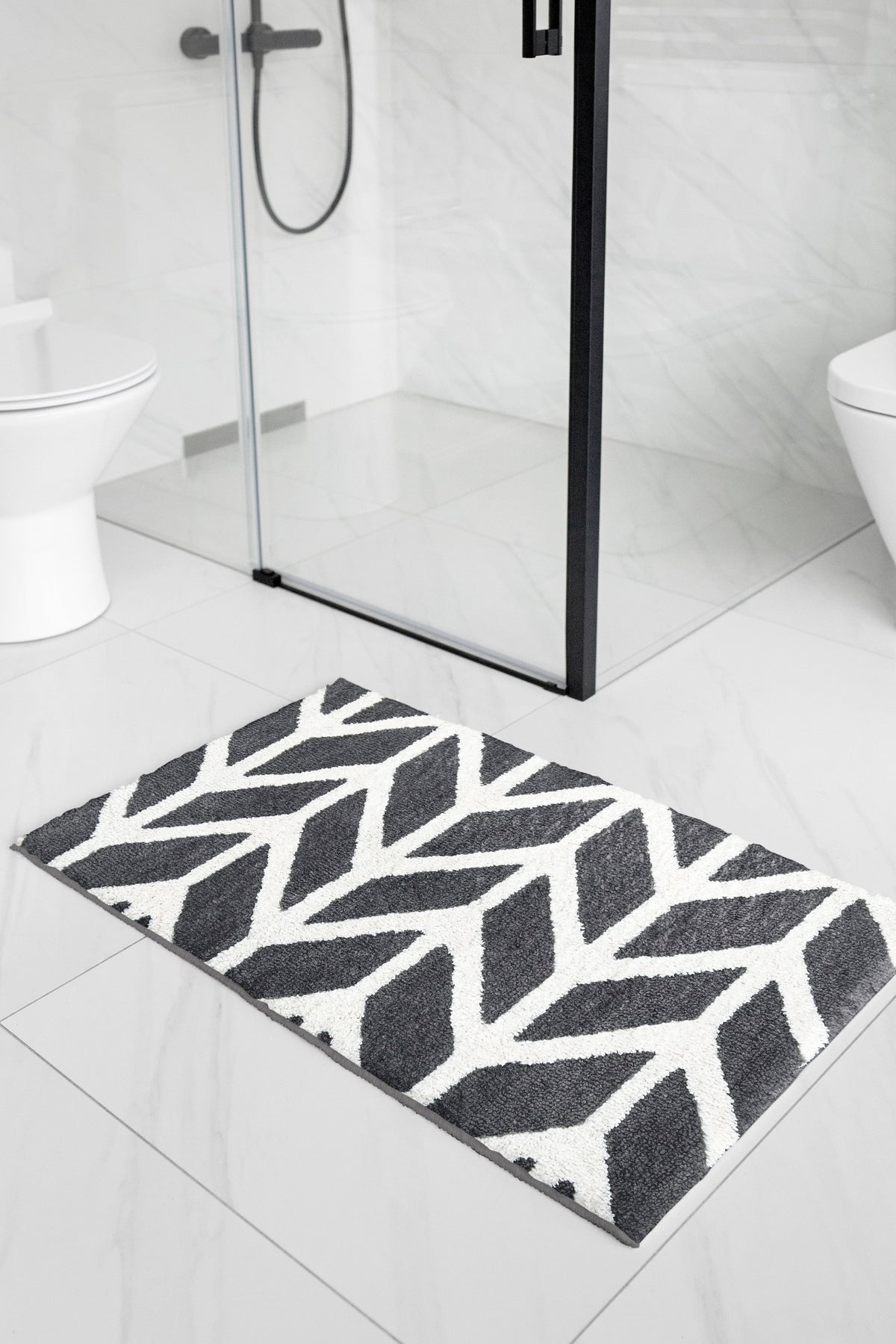
In a bathroom with a window and moving air, a cotton mat is the nicer thing underfoot: it absorbs more and feels warmer. In a sealed inside bathroom used by four people before nine in the morning, that same mat may never fully dry between uses, and a damp mat is how the smell starts. Polyester and microfibre take up less water and hand it back faster, which is the argument for the Microfibre Grey Bathmat, 76 x 51 cm at ₹799, or anything else in the microfibre collection. Ventilation decides this more than the label does.
The kitchen
The kitchen wants the opposite of the bathroom: cloth that soaks up spills fast and survives a hot wash. That is cotton territory, in terry for absorbency and flat weave for polishing glass. Heat is the other reason to stay natural here, because synthetic fibres soften and can melt at temperatures a cotton towel shrugs off. Keep polyester away from a flame, a hot pan handle and a hot iron, however good the cloth is.
For readers who get things stitched instead
Plenty of Indian homes still take fabric to a tailor rather than buying ready-made, and every choice above applies when you buy cloth by the metre. Encasa's fabric by the metre range covers both families, with cotton canvas, corduroy, chenille, velvet, blackout polyester and faux leather cut to length; plain cotton canvas is ₹499 for a one-metre cut, which arrives roughly 100 cm by 145 cm. Two practical notes. Buy cotton generously, because it can shrink on the first wash and a stitched curtain has no seam allowance to give back. And ask for the fibre content in writing, because at a shop counter "cotton finish" and "cotton" are not the same sentence. Widths also differ from roll to roll, from about 110 cm on some satins to 150 cm on most furnishing cloth, so check how much cloth one metre actually gives you before you order.
Common questions
Which type of fabric is best for curtains in direct sunlight?
A synthetic one, usually polyester, either as a blackout panel or a printed curtain. Dyes on cotton fade sooner under direct sun. If you want the look of a natural fibre on a bright window, choose a mid-tone or a print rather than a flat dark colour, and expect to rotate the panels.
Is viscose a natural or synthetic fabric?
Neither, strictly. Viscose is regenerated cellulose: a natural raw material, wood pulp, turned into fibre by a chemical process. Care for it as the delicate member of the cotton family, because it is much weaker when wet.
Is jute fabric a good choice for a bathroom?
No. Jute has one of the higher moisture regain figures of the common fibres, at 13.75%, and it swells and can grow mould when it stays wet. Keep jute on dining tables and dry floors, and use cotton or microfibre where water lands.

Leave a comment
This site is protected by hCaptcha and the hCaptcha Privacy Policy and Terms of Service apply.