
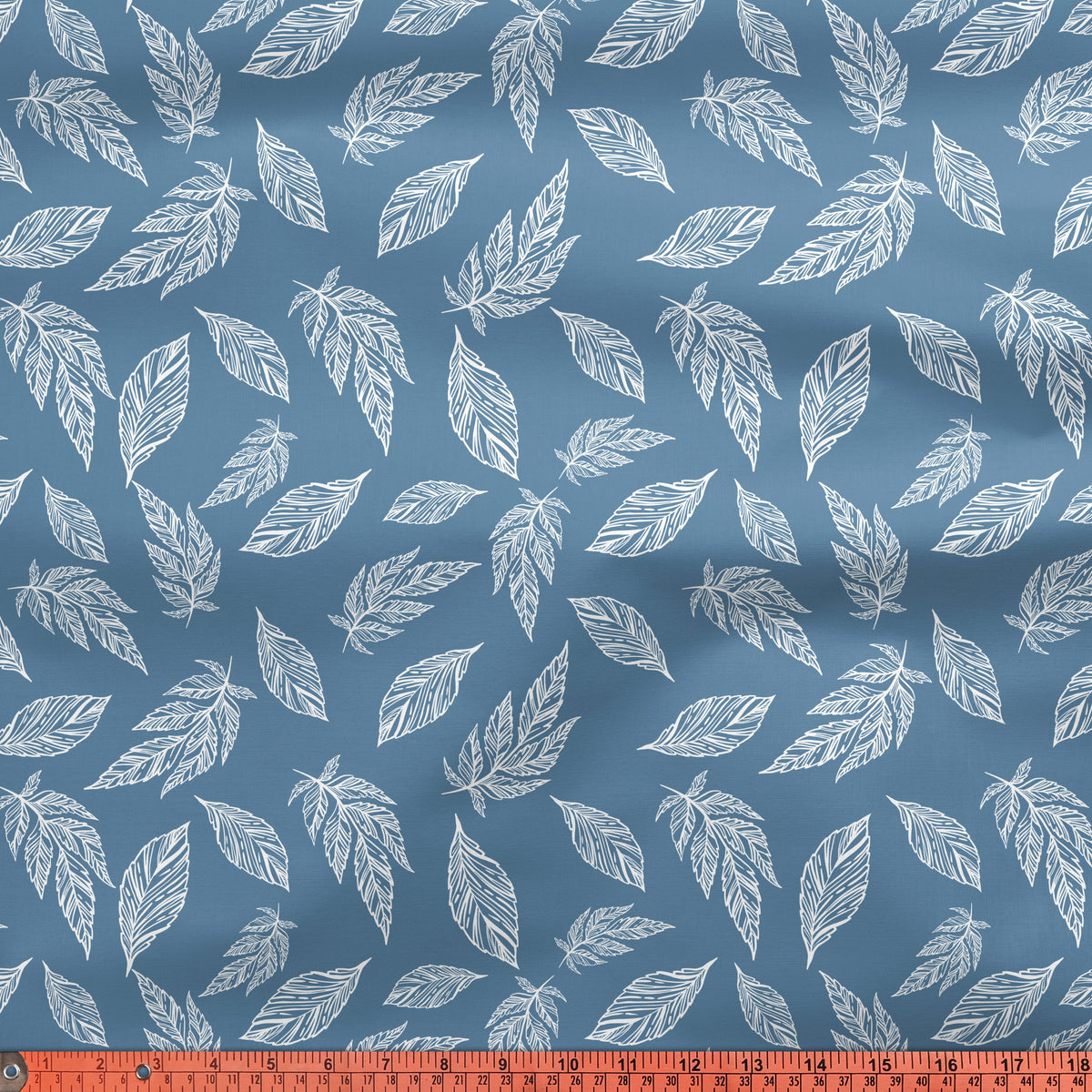
Someone re-covering four dining chair seats ordered two metres of cloth and got enough for two chairs. Nothing went wrong at the shop. Each seat pad needed a 70 cm square, enough to wrap the foam and staple underneath. The last time they did this the fabric was 150 cm wide, so two squares fitted side by side across it and two metres finished all four chairs. This time they picked a satin that was 110 cm wide, and only one 70 cm square fits across 110 cm. Two metres on the bill either way. Two chairs instead of four.
One metre of fabric is 100 cm, which is 39.37 inches (100 divided by 2.54). That figure is the length and nothing else. The width is a separate number, it belongs to the fabric rather than to your order, and it is what decides how much cloth a metre really is.
Why one metre is a different amount of cloth on every roll

Width is set on the loom when the cloth is woven. The threads running the length of the roll are strung across a fixed span, and that span holds for the whole run. Changing it means re-setting the machine, so a fabric is woven at one width and offered at that width only.
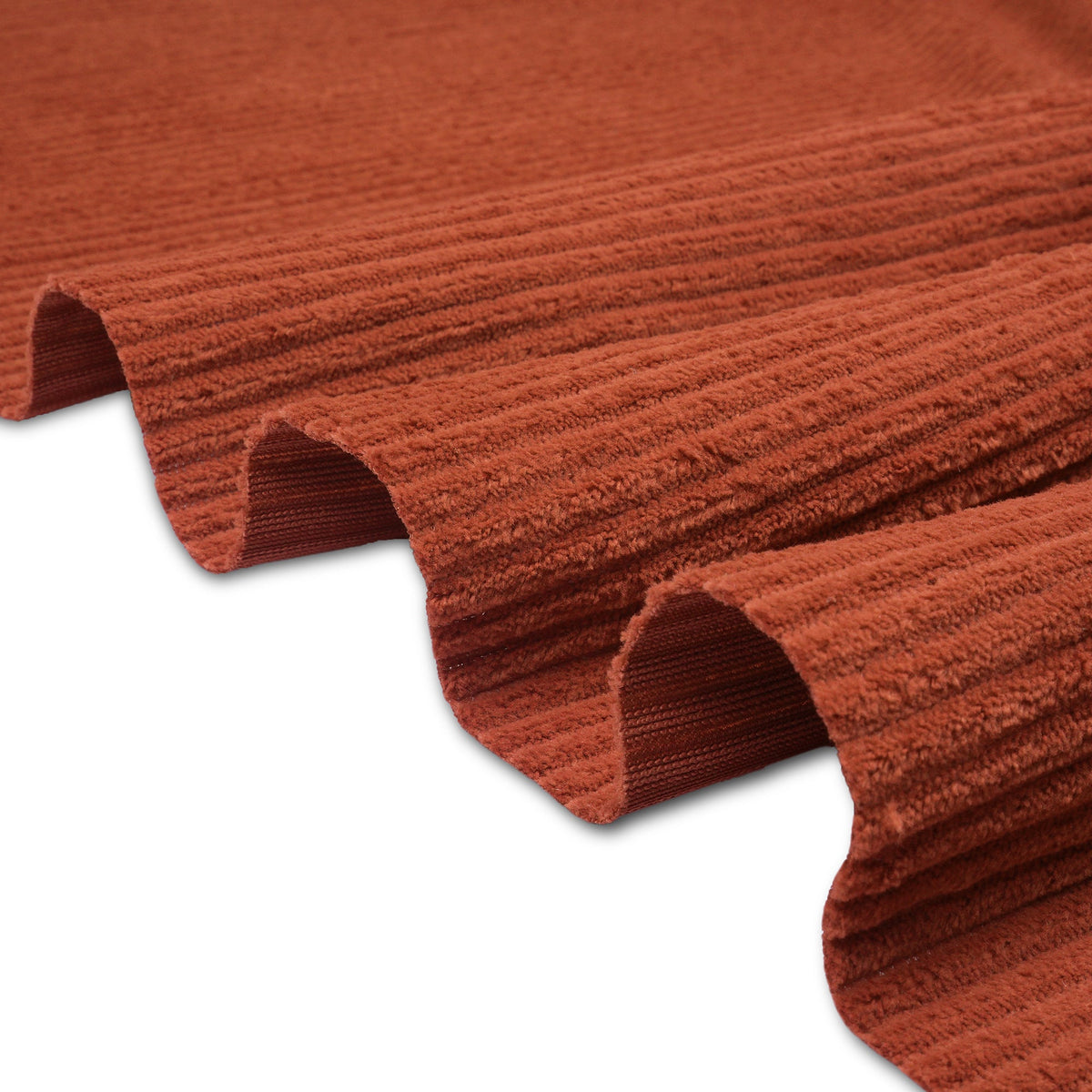
Length works the other way. Cloth comes off the loom as a long roll and is cut where you ask. That is why a listing can offer you a choice of one, two, three or five metres of the same cloth and never a choice of width. The turquoise satin is 110 cm across whether you buy one metre of it or five, and the green corduroy above is 150 cm across on the single metre cut it comes in.
Which makes width and length different kinds of number. Width you look up once on the product page and it will not move. How many metres you need is a fresh sum every time, and it turns on what you are making rather than on the cloth.
Fabric width in inches and cm
In fabric shops here the width gets named in inches and the length gets sold by the metre. You hear "yeh 58 inch hai" and then get billed for two and a half metres. Two unit systems in one transaction, so it saves trouble to be able to move between them.
One inch is 2.54 cm, which gives the widths you are most likely to be quoted:
| Trade width in inches | In cm |
|---|---|
| 44 in | 111.8 cm |
| 45 in | 114.3 cm |
| 54 in | 137.2 cm |
| 58 in | 147.3 cm |
| 60 in | 152.4 cm |
Those are the calls you hear across a counter. The 44 and 45 inch end is garment-weight cotton, the sort of cloth a tailor works with. From 54 inches upward is what gets sold as furnishing cloth, for sofas, cushions and windows, and it is the band our own range mostly sits in.
Notice how closely the cm column lands on the widths actually sold. Fifty-four inches is 137.2 cm and there is a 137 cm line. Fifty-eight inches is 147.3 cm and there is a 147 cm line. Sixty inches is 152.4 cm and there is a 152 cm line. The same looms, written down in different units.
The widths Indian fabric actually comes in

The table below comes from the size options on the product pages of our own fabric range, 236 cloths sold by the metre. Every option is written as cut length by width, so "100x150 cm (1 Meter)" is a one metre cut of 150 cm wide cloth.
| Width | In inches | Cloths at this width | Cut lengths offered | Cloth in a one metre cut |
|---|---|---|---|---|
| 110 cm | 43.3 in | 27 | 1, 2, 3 or 5 m (all 27) | 1.10 m² |
| 122 cm | 48.0 in | 7 | 1 m | 1.22 m² |
| 137 cm | 53.9 in | 75 | 1 m; 8 also 2, 3 or 5 m | 1.37 m² |
| 147 cm | 57.9 in | 21 | 1 m | 1.47 m² |
| 150 cm | 59.1 in | 50 | 1 m; 30 also 2, 3 or 5 m | 1.50 m² |
| 152 cm | 59.8 in | 23 | 1 m | 1.52 m² |
| 155 cm | 61.0 in | 4 | 1 m | 1.55 m² |
| 160 cm | 63.0 in | 29 | 1 m | 1.60 m² |
It falls into two groups. A narrow one at 110 cm, which here is the satin and silk-look polyester. Then a wide band from 137 cm to 160 cm carrying nearly everything else, the canvas, corduroy, chenille, faux leather, printed cotton and yarn-dyed checks that get used on sofas, cushions and windows. The natural chenille sits in the 137 cm group, which at 75 cloths is the largest.
The cut-length column is worth a second look, because a longer cut is the exception rather than the rule. Every one of the 110 cm cloths sells in one, two, three or five metre pieces. At 150 cm, 30 of the 50 do. At 137 cm, 8 of the 75. Everything else is a one metre cut only, so a big job on a 152 or 160 cm cloth means ordering several separate metres rather than one continuous length, which is a real constraint if you were counting on cutting across a join-free piece.
How much cloth does one metre give you?
Multiply the width by the metre of length and you get the area. A metre of the 110 cm turquoise satin is 1.10 m². A metre of the 160 cm blue leaf print is 1.60 m². That is 45 per cent more cloth for the same word on the label.
That gap matters most when you are comparing two per-metre prices. Across our own range a one metre cut runs from roughly ₹320 to roughly ₹800, and some of that spread is fibre and weave, but some of it is simply that you are being handed more cloth. Divide the price by the width in metres before you decide anything is dear.
It also changes what fits. Cushion fronts for the standard 40 cm sofa cushion need pieces of about 45 cm square once seams are allowed. Across 110 cm you get two of those side by side; across 160 cm you get three. With a metre of length giving two rows either way, that is four fronts from the narrow cloth and six from the wide one. If two covers is the whole plan, incidentally, buying them finished usually costs less than a metre of cloth plus tailoring, since a pair of cushion covers in that size starts at about ₹440. For curtains, the number of widths you need comes from the window and the fullness you want, which the guide to how many curtain panels works through.
Full width and usable width are not quite the same

Run your hand to the edge of any woven cloth and you find the selvedge, a firmer strip a centimetre or two deep where the weft turns back on itself. It does not fray, which is useful, but it is often woven tighter than the rest and can pull differently once washed, so many people cut it away rather than build it into a seam.
That is worth knowing before you plan a cut to the last centimetre. The width on the label is the full woven width, and a little of it at each edge is selvedge rather than cloth you would want in the middle of a cushion front. On something like the 152 cm buffalo check canvas, that is the difference between a plan that just fits and one that just does not. Leave yourself a couple of centimetres either side and the question goes away.
Two other things limit how much of that width you can actually use, quite apart from the selvedge. On a pile cloth such as corduroy or chenille the nap lies one way, and two pieces cut facing opposite directions read as different shades under a lamp, so you cannot simply turn a piece sideways to make it fit across the roll. A print with a large repeat behaves much the same, since the motifs have to line up where two pieces meet. Either way you lose the option of turning a piece to fit, so work the layout out on the width you actually have.
Is double width the same as a double bed size?
No, and the two get mixed up often enough to be worth separating. Double width is a weaving term. It describes cloth woven on a wider loom than the usual furnishing widths, commonly described as somewhere around 270 to 300 cm, and it exists mostly so that a quilt back can be cut in one piece with no join down the middle. A double bed size is a finished bedding measurement and has nothing to do with how the cloth came off the loom.
Nothing in our own range is double width. The widest is 160 cm, which is ordinary furnishing width and enough span for cushions and upholstery.
Common questions
How many cm and inches is 1 metre of fabric?
A metre is 100 cm, and 39.37 inches, since one inch is 2.54 cm. It is a length, not an amount of cloth.
What is the standard width of fabric in India?
There is no single one. Shops quote in inches and the common calls are 44, 45, 54, 58 and 60 inches, which come to 111.8, 114.3, 137.2, 147.3 and 152.4 cm. Furnishing cloth clusters at the wider end, garment cotton at the narrower. Online listings tend to give the width in cm instead, usually rounded, so a cloth labelled 137 cm and one a shopkeeper calls 54 inch are the same width for any practical purpose.
What does 58 inch fabric mean?
That the roll measures 58 inches, or 147.3 cm, from edge to edge. It says nothing about how much you are buying, which is the length you ask for at the counter.
Why is fabric sold by the metre if the width varies?
Because width cannot vary. It is fixed when the cloth is woven, so the only thing left to sell you by is length. Check the width once, before you order the metres.
With the width settled, the open question is how many metres, and that one turns on the sofa or the window in front of you rather than on the fabric. The buying guide below has those sums.

Leave a comment
This site is protected by hCaptcha and the hCaptcha Privacy Policy and Terms of Service apply.