
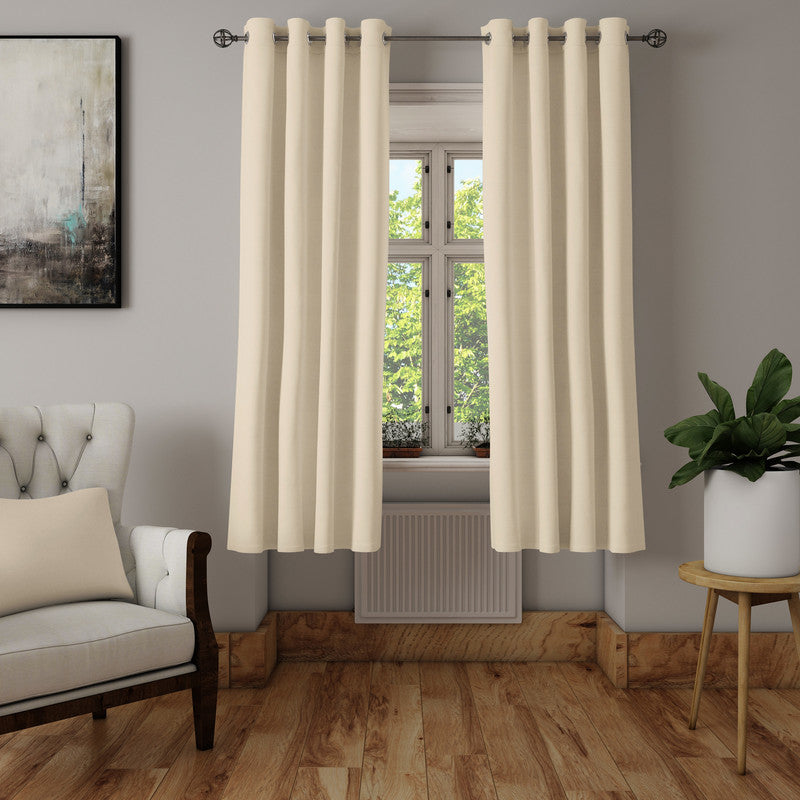
You buy pale cotton curtains in April, because the cloth feels cool in your hand and looks light at the window. You keep them drawn from noon. By four the room is still hot, the panels are warm to touch, and the fan is pushing warm air around. Nothing is wrong with the curtains. They were chosen on how the fabric feels against skin, and a window is not asking that question.
The short version. At a window, what keeps a room cooler is how tightly the cloth is woven, what colour it is, and how much of the day it spends closed over the glass. Fibre matters far less there than it does on your body, which is why a light polyester panel can leave a room feeling better than a heavy cotton one. On a sofa or a table, where the cloth touches you, cotton wins.
If you landed here looking for clothes, the answer is simpler. Cotton and linen feel coolest because they take sweat off your skin and let it evaporate, and an open, loosely woven cloth in a pale colour beats the same fibre woven tight and dark. From here it is windows, sofas and tables.
The two questions hiding in one search
"Feels cool" and "keeps the room cool" run on different mechanisms, and mixing them is how people end up disappointed.
Against skin, the fibre does the work. Textile people measure how much water a fibre holds as moisture regain, and the gap is large: cotton sits at 8.5% against polyester's 0.4%, with the full table and its sourcing in our guide to the fibres used across home textiles. On a sticky evening a cotton cover lifts damp off your arm and lets it dry into the air, and that is the whole of what "cool to the touch" means. It is why a cotton cushion cover earns its place in May.
At a window, none of that applies. The curtain is not touching you. It stands between the sun and your room, so what matters is how much light and heat get past it, how much bounces back out through the glass, and whether air can still move. Weave, colour and how the panel hangs. A curtain in the most breathable fibre going will still cook a room if it is dark and pressed flat against hot glass.
What actually keeps a room cool?
Weave does more than fibre, colour more than people expect, and weight only counts for the hours the curtain is drawn.
Take the weave. A loose, open cloth lets air and light through; a dense one holds both back. This is where "natural is cooler" falls apart, because a heavy cotton canvas woven tight is less breathable than a light polyester woven loose. Two panels held side by side against the shop's window will tell you more than either label.
Colour is the part nobody explains. A pale surface throws more of the sunlight hitting it back out; a dark one absorbs it, warms up, and then radiates that warmth into the room from a few inches away. It is also why the curtain a shop puts out for summer is so often a cream or a pale neutral, whatever the label calls the shade.
Weight is what most people buy on, and on its own it is the least useful of the three, because a heavy panel only works while it is shut. Drawn across a sunny window it keeps more heat out than a thin one, and takes the daylight and the breeze with it.
| What you change | What it does for heat | What it costs you |
|---|---|---|
| Opening the weave | Lets air move through, so the room does not feel sealed | Less shade, more glare, more dust in the cloth |
| Going paler | Reflects more sunlight back out instead of absorbing it | Shows dirt sooner, and dark walls need more thought |
| Going heavier or lined | Blocks more solar heat during the hours it stays shut | Blocks the daylight and the breeze with it |
The US Department of Energy's Energy Saver guide gives householders two pieces of warm-weather window advice that fit this exactly: choose medium-coloured draperies with white plastic backings to reduce heat gain, and close draperies on windows receiving direct sunlight during summer days (Energy Saver Guide, 2022, page 23). Read that carefully. It describes a closed curtain on a sunny window, not a fabric that cools a room by itself. Neither of the panels further down carries a backing like that, so take the point as the case for lining rather than a description of anything we sell.
Which summer curtains work in an Indian room?

For a room you want bright and moving air, the useful panel is a light one. Our Polyester Cream Poly Curtain is unusually honest about this on its own page: the lightweight twill "does not block out sunlight, so the room can remain bright and airy," while still not being see-through. A pair runs ₹849 to ₹1,329 depending on length, and it is sold in five lengths from 5 ft to 9 ft. It hangs on a rod pocket rather than eyelets, comes with a tieback, and its page suggests tying it back during the day to let more light and air in. A fan cannot pull air through a panel drawn flat across an open window, so on a shaded window a tied-back curtain does more for comfort than any fibre choice.
For a window that gets real sun, you want the opposite: weight, drawn through the worst hours. The Cotton Natural Curtain is a mercerised cotton Panama weave with eight metal eyelets, ₹1,739 to ₹2,199 a pair for the 5 ft and 7 ft lengths. Its page describes it as moderately reducing outside light for a warm glow, with nobody able to see in, which is fair for a mid-weight canvas: it filters rather than floats. The 9 ft long-door length is listed but out of stock at the time of writing. The rest of the cotton canvas curtains are the same Panama-weave cloth in other colours. Many flats have one window of each kind, which argues for buying two different panels from the curtain range rather than one compromise repeated through the house.
Blackout panels are where colour and weight meet. A blackout blocks a good deal of solar heat while it is drawn, but a dark face absorbs more of that energy into the cloth and hands some back to the room, where a pale face absorbs less. Neither stays cool in direct sun, and the darkness comes from how the fabric is built rather than its colour, as blackout, room-darkening and sheer curtains compared works through.
Air conditioning flips the argument. With the fan on and the window open you want air moving, so an open weave tied back beats a heavy panel. In a sealed, cooled room nothing comes through the window anyway, and the tighter curtain that keeps solar heat off the glass wins. Breathability stops mattering the moment the window stops opening.
Cushion covers, and what your arms are touching

Here the fibre argument comes back, because your forearm rests on this cloth all evening. Cotton canvas is the sensible summer face on a sofa, and Encasa's cotton canvas cushion cover is a medium-weight 180 GSM canvas its page describes as absorbent, breathable and sweat-resistant. A pair is ₹499 at 40x40 and 45x45 cm, rising to ₹919 at 60x60 cm. One warning on the colour: the page never names the shade, and it photographs as a warm tan, closer to camel than cream.
Cotton canvas has two habits worth knowing before you re-cover the sofa. Its page carries an indoor-use warning about prolonged direct sunlight, fair for any dyed cotton and a reason to leave the brightest seat to something synthetic. It also comes out of the wash creased, and only an iron takes that out. Velvet and chenille are what to retire until October, since a dense pile is the last thing you want under an arm in May. Which fabric suits which seat is worked out in the cushion cover fabric guide. The range sits in cushion covers.
What to put on the summer table

Nobody's comfort depends on a napkin, so ignore anyone who tells you a folded cloth keeps you cool. What changes in summer is use. Hands and faces need wiping more often, glasses sweat onto the table, and a cotton napkin absorbs and washes where a synthetic one pushes water around. The Cotton Natural Table Napkins are mercerised cotton at 180 gsm with mitred corners, ₹809 for a pack of twelve at 23x23 cm and ₹999 at 43x43 cm, with colours the page states are fast to a 30°C machine wash. That matters more here than the fibre does, because summer napkins get washed constantly. The rest are in table napkins.
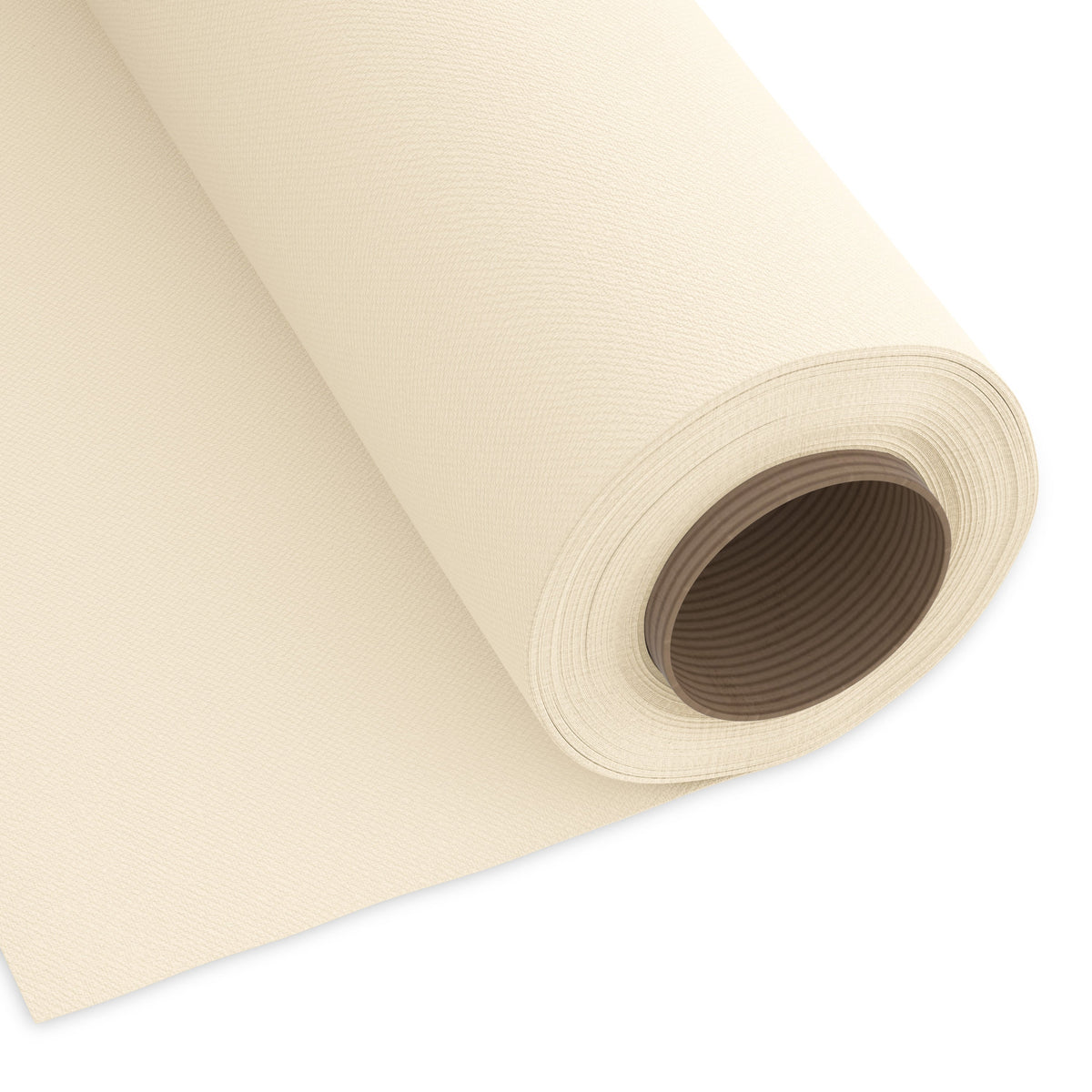
If you get things stitched, plain cotton canvas starts at ₹499 a metre, and the fabric range runs up to upholstery weights.
What does an open weave cost you?
Dust, mostly. A weave that lets air through lets dust settle into the cloth and pass through it, and the dry weeks before the monsoon are when you notice it. The airy panel you hang in April wants washing more often than the heavy one it replaced, and washing curtains has its own rules: how to wash curtains.
Then the humidity turns up, a few weeks behind the heat. Summer in most of India runs straight into monsoon, so anything bought in March also has to live through June to September. Cotton holds far more water than polyester and takes longer to dry, which is fine on a breezy balcony and a nuisance in a flat where washing dries indoors. Buy cotton with a little length in hand too, since it can shrink on a first hot wash: does cotton shrink has the detail.
Common questions
Do light-coloured curtains keep a room cooler than dark ones?
Usually, yes, for the same fabric and weight. A pale surface reflects more of the sunlight hitting it back out through the glass, while a dark one absorbs that energy, warms up and radiates it inwards. A pale panel woven very loosely still lets plenty of sun through, so colour is not the whole story, but between two otherwise identical curtains the paler one is cooler.
Is cotton or polyester better for summer curtains?
Neither wins on fibre. Compare the two panels in front of you: the lighter, more open weave keeps the room feeling airier, and the denser one blocks more heat during the hours you keep it shut. A light polyester often beats a heavy cotton for airiness, and a cotton canvas beats a thin polyester for shade. Cotton's real advantage is anything touching skin.
Does an open weave let more heat into a room?
Yes, more sunlight and the heat with it. The trade is airflow, and it is worth making wherever air can actually get in. A balcony door left open behind a mesh screen is the clearest case: the screen already cuts some light, and a light panel over it still lets the evening breeze reach the room. Behind sealed glass in afternoon sun there is no breeze to gain, so the openness costs you and returns nothing.
Should summer curtains stay open or closed during the day?
Closed on any window taking direct sun, which is what the Department of Energy guide recommends for warm weather, and open or tied back on the shaded ones so air can still move. Most homes have both kinds and treat them the same, which is a fair part of why rooms stay hot.

Leave a comment
This site is protected by hCaptcha and the hCaptcha Privacy Policy and Terms of Service apply.