
GSM stands for grams per square metre, and it is exactly what it sounds like: the weight of a one-metre-by-one-metre piece of the fabric. A 500 GSM towel weighs 500 grams for every square metre of cloth. That is the whole definition. What makes GSM worth understanding is not the arithmetic but what that weight stands in for, because for a given fabric a higher GSM usually means a denser, thicker, more absorbent cloth.
The trap is treating GSM as a quality score, where bigger is always better. It is not. A heavy curtain and a heavy towel want high GSM for good reasons, but a heavy summer bedsheet is just a hot, slow-drying bedsheet. GSM tells you what a fabric will feel like and how it will behave. It does not tell you whether it is well made, and the right number is different for every product. So the useful question is never "is this GSM high", but "what does this weight predict for this particular thing, and what band should it sit in".
What GSM does, and does not, tell you
Within one type of fabric, GSM is a reliable proxy for a cluster of things you can feel. A higher number generally means more material per square metre, so the cloth is thicker, heavier in the hand, more opaque when held to the light, and, in absorbent fabrics like terry, able to hold more water. That is genuinely useful, because you cannot judge those things from an online photo but you can read a GSM figure.
What GSM cannot do is compare across different fabrics or vouch for quality. A tightly woven cotton can outlast and outperform a heavier but loosely spun one, because weave, fibre length and finishing all matter alongside weight. A high GSM made from poor short-staple cotton will still shed and pill. Read GSM as one strong signal about weight and density, then, not as a verdict on the whole product. Which fibre you are weighing matters as much as the number, and the natural and synthetic fabrics used in home textiles sets out what each one is good at.
GSM bands to look for, by product
These are approximate shopping ranges, the bands you tend to see quoted on products rather than lab figures, and what moving up or down each one gets you. Treat them as orientation, not law, since makers measure and market GSM a little differently.
| Product | Usual GSM band | What higher GSM buys you |
|---|---|---|
| Sheer curtains | 50 to 100 | More opacity and body; too high stops being sheer |
| Bedsheets | 120 to 180 | A weightier hand; too high sleeps hot in summer |
| Kitchen towels | 150 to 300 | More absorbency and durability for wiping and drying |
| Blackout curtains | 200 to 320 | Heavier drape and less billowing; the coating, not the weight, does the actual light-blocking |
| Bath towels | 400 to 600 | Plusher feel, more absorbency, slower to dry |
| Bathmats | 700 and up | Denser underfoot feel and more water held |
For anything absorbent, towels and mats, a higher band means more water held but also longer to dry, the same trade-off that runs through all absorbent textiles. Curtains are the exception to the read-the-number habit: a blackout is a heavier cloth than a sheer, but its darkness comes mostly from the coating or lining, so a very high GSM there buys you drape and quiet, not extra black.
GSM in the things you actually buy
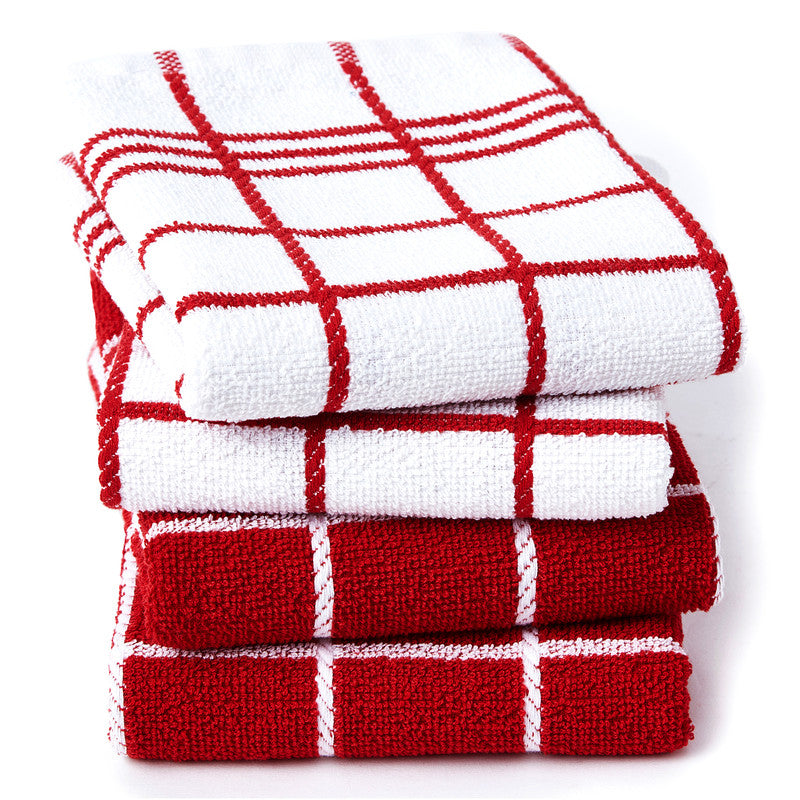
Where the number actually helps is when you are choosing between two products that look identical online. Take a kitchen towel meant to genuinely dry dishes and hands rather than smear water around: a heavier terry towel such as these red terry towels will hold more water and take rougher use than a thin flat-woven one, so here reaching for the higher GSM is the right call.

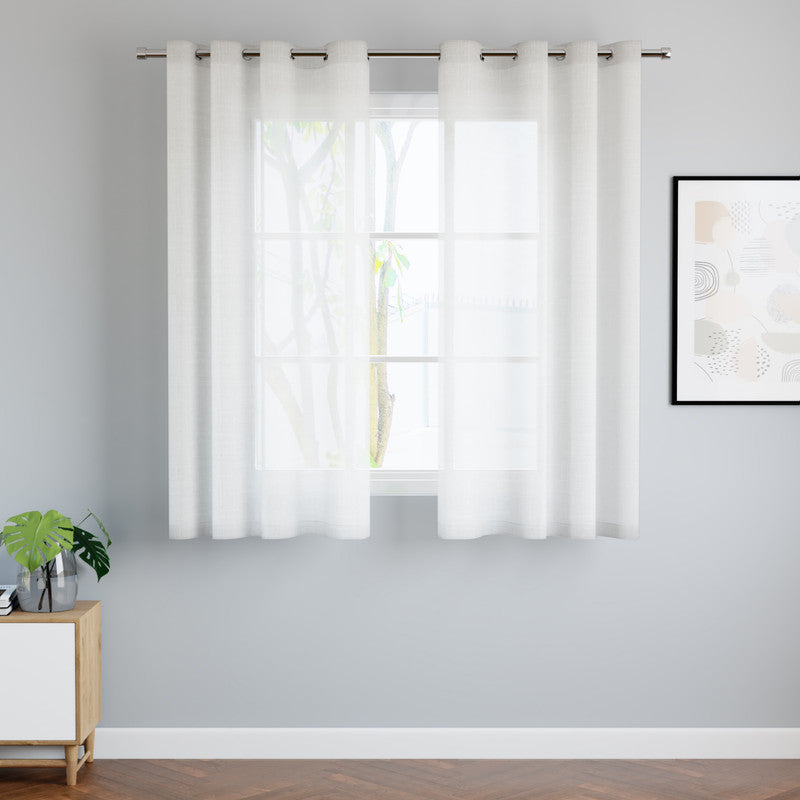
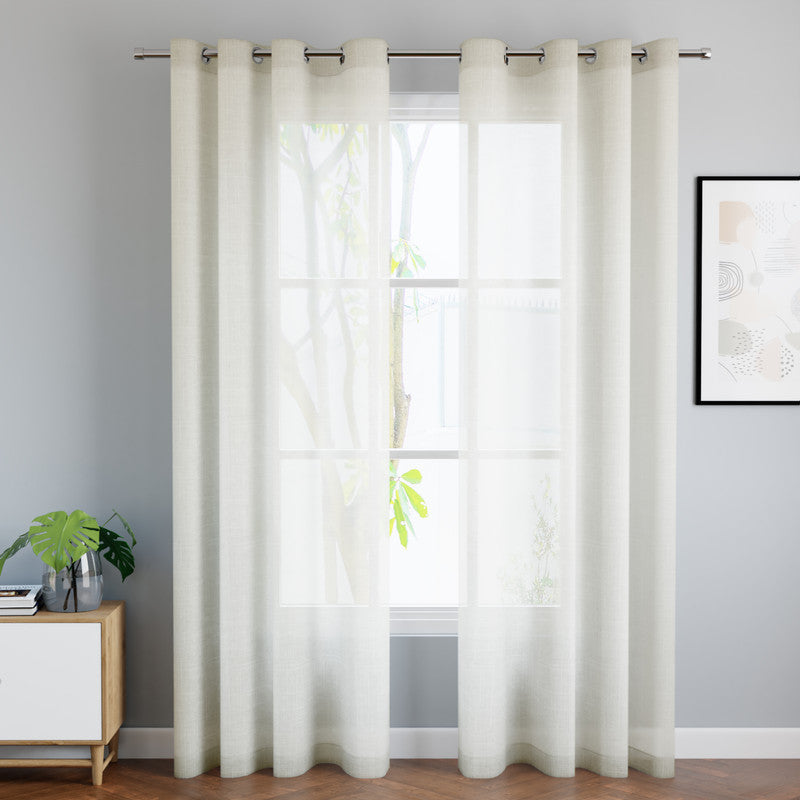
Curtains flip the logic, as the table warned. A heavier fabric in the curtains collection, like a blackout twigs panel, hangs in deeper, straighter folds and does not billow at the window, which is worth having. But if it is darkness you are after, that comes from the coating on the back, so do not pay for GSM expecting more black. And a cotton sheer is meant to be low GSM, since that is what lets the daylight through as a soft glow; a high number would just defeat the point. Cotton canvas sits in the middle of that range at around 180 GSM, and our guide to canvas fabric explains what that weight means at a window and on a cushion.
Bathmats are where a high GSM can quietly be the wrong choice. A dense, heavy mat feels wonderful underfoot and holds a lot of water, which is exactly right for a dry, private, well-aired bathroom. Put that same plush mat in a small, shared, monsoon-damp bathroom and all that held water becomes a mat that never dries between uses and starts to smell. There the lower-GSM, thinner mat is the smarter buy. The biggest number is not the answer; the number that suits the room is.
Frequently asked questions
What does GSM mean in fabric?
GSM means grams per square metre, the weight of a one-metre square of the fabric. Within a single fabric type, a higher GSM usually indicates a denser, thicker and more absorbent cloth, so it is a useful shorthand for weight and substance.
Is a higher GSM always better?
No. Higher GSM suits towels, bathmats and blackout curtains, where weight and absorbency matter. It is wrong for sheer curtains, which need to stay light to let light through, and for summer bedsheets, which sleep hot when too heavy. The right GSM depends on the product.
What is a good GSM for a bath towel?
Bath towels typically sit between about 400 and 600 GSM. Around 400 to 450 gives a lighter, faster-drying towel, while 550 to 600 feels plusher and holds more water but takes longer to dry, which matters in humid bathrooms.
Does GSM tell you the quality of a fabric?
Not on its own. GSM measures weight and density, not how well the fabric is made. Weave, fibre length and finishing all affect quality, so a well-woven lower-GSM cotton can outperform a heavier but loosely spun one. Read GSM alongside those, not instead of them.

Leave a comment
This site is protected by hCaptcha and the hCaptcha Privacy Policy and Terms of Service apply.