
Some guides say an iron mark is easy to get out, and some marks are. Others are burnt or melted cloth, and no home remedy brings that back. Believing otherwise is how a shirt gets ruined twice, first by the iron and then by hard scrubbing and strong chemicals around the mark.
To remove an iron stain from clothes, first work out what it is. A light scorch on cotton may lift with 3% hydrogen peroxide and a wash. A shine may fade after a wash, or with a damp cloth under a low iron. Spots left by scale or rust sit on the cloth and are worth trying, though rust can be stubborn. A dark, brittle scorch or a melted patch will not come out.
Which iron stain do you have?
The words "iron stain" cover three different marks, and the fix for one can be wrong for the next. Look at the mark in daylight, then touch it. The descriptions below are a practical guide, not a lab test.
| Mark | What you see and feel | What happened | Can it come out? |
|---|---|---|---|
| Scorch | Yellow or brown, sometimes in the outline of the iron. A dark one can feel stiff or brittle | The iron burnt the fibre | Light marks may. Severe ones will not |
| Shine | A smooth, glossy patch with no change of colour. It shows best when light falls at an angle | Pressure over a seam or fold, or heat that changed the fibre | Pressure shine can fade. Melted fibre will not recover |
| Spots | Small brown, white or rust-coloured dots or streaks | Scale from a steam iron, or rust on the cloth | Worth trying, because something is sitting on the cloth |
How to remove an iron burn from clothes
The University of Georgia Extension sets out a clear method for fabric scorch. Read the care label before you use it, and leave out anything the label forbids. Our guide to fabric care label symbols explains the bleach icons. Then test each product on a hidden spot, such as the inside of a hem.
- For a light scorch, wet the mark with 3% hydrogen peroxide and keep it moist for several minutes.
- For a heavier mark, dampen a cloth with the peroxide and lay it over the scorch. Put a dry cloth on top and press with a hot iron, as hot as the label allows.
- Rinse well, then wash with detergent in hot water, again only as hot as the label allows. If the label permits chlorine bleach, add it here. If not, the page's other route is to soak the piece in sodium perborate, an oxygen-type bleach, before you wash it. Never mix chlorine bleach with lemon juice, vinegar, ammonia or any other cleaner.
- Look at the cloth while it is wet, then again once it is dry.
On white or pale cloth the same page gives another route: put salt and lemon juice on the mark, let it dry in the sun, then wash.
Check the bottle before you start, because hydrogen peroxide is sold in more than one strength and this method is written for 3%. Keep all of this to washable, sturdy cloth such as cotton and linen. Silk, wool and zari need different handling. Peroxide, lemon and strong sun can all take colour out of dyed cloth. That makes the hidden-spot test more important on a printed kurta than on a white shirt, and if colour has already moved, colour bleeding in the wash is the next read.
When a scorch will not come out
The university page says it in five words: "Severe scorch cannot be removed." Detergent and bleach makers' pages also warn that a deep scorch can stay for good, because the fibre itself has burnt.
So stop when the mark is dark brown or black, when the cloth feels stiff or crumbly, or when it has started to go thin. Stop too if a full round of treatment changes nothing you can see. More rubbing and stronger chemicals will not bring burnt fibre back. They only weaken the cloth around the mark.
A burnt patch can still leave you with options. A tailor may be able to patch it, and a shirt with a mark low on the back can be worn tucked in or kept for home.
Brown, white and rust-coloured spots
Start by asking when the mark appeared. A brown or white spot that came with the steam is usually not a burn. Philips's support pages say scale left inside a steam iron can come out as brown or white marks on clothes, and that hard water builds scale faster. For the shirt, our advice is simple: wash it as usual and check it while it is wet. Then fix the iron, or the marks may return. The guide to cleaning an iron under Related guides covers that job.
Real rust comes from other places too: a rusty hanger or a bucket, or water from old pipes. Rust from water is not an iron mark at all, but it is the same stain on the cloth and the same job.
The one method we would suggest at home comes from the same university's rust page:
- Test a hidden spot first, since lemon and sun can lighten colour.
- Sprinkle salt on the stain and squeeze lemon juice over it.
- Let it dry in the sun.
- Rinse well, and repeat if the mark is fading.
This is for sturdy washable cloth. The page sends washable silk, washable wool and silk-like fabrics to separate instructions, and it warns that rust "may be very difficult to remove". If you buy a rust remover instead, check its label for the fibres it allows, test a hidden spot and follow its directions carefully.
Keep chlorine bleach away from it. That page says chlorine "will set these stains". So name the mark first. The bottle that may help a scorch can make rust worse.
If every load comes out spotted, look at the water, the tank or the machine drum. No treatment on one shirt will end that.
How to remove the shine left by an iron

Shine has two common causes. One is pressure over an uneven surface such as a seam or fold. Philips's FAQ for its steam generator irons describes this one and says the shine fades after washing. The other is an iron too hot for the fabric, which Brabantia, a homeware maker, says melts or scorches the fibres. The check below is our own way of separating the two, so treat it as a practical guide and not a standard test.
Touch the patch first. If it feels hard, puckered or glassy, stop and treat it as melted, because more heat can make it worse. A melted patch will not come out. That is our understanding of how polyester and nylon behave, not a lab result, but we know of no home method that gives melted fibre its old shape back.
If the cloth still feels like cloth, wash it as the label says, dry it, and look again with light falling at an angle. A patch that has faded was probably pressure. If it is still there, try Brabantia's route soon, because the page warns that a mark left alone gets harder to shift: lay a damp cotton cloth or pillowcase over it and press gently on a low setting.
The same page also suggests steel wool or a nail file. We would skip both on anything you care about. Rubbing wears the surface of the cloth, and a worn patch can show as much as a shiny one.
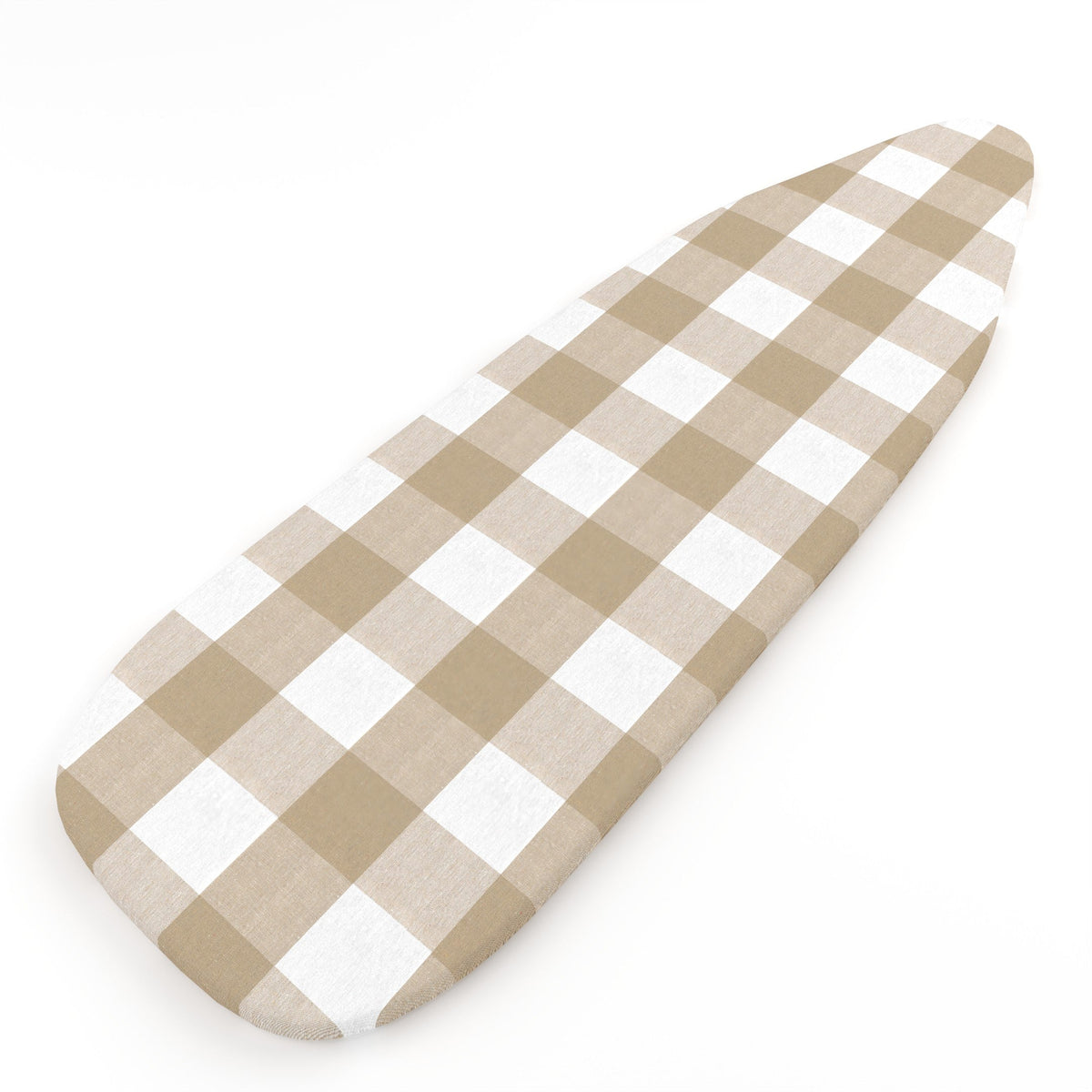
Shine that keeps turning up where the garment has no seam or fold may be coming from the board and not the iron. The signs of a worn pad are in our guide to replacing an ironing board cover. If your pad has gone flat, a new cover such as the Big Leaves Blue (₹669 to ₹989 by size, with felt padding listed on its product card) gives you an even surface again. It will not stop a too-hot iron from burning a shirt. Sizes differ from print to print in the cover range, so measure your board and check the size on the listing you pick.
How to stop iron marks coming back

Test the iron on an inside seam before the front of anything, and use the lowest heat that does the job within what the label allows. Iron dark and shiny pieces inside out. Go around seams, pockets and buttons, or lay a cotton cloth over them. That one habit deals with the pressure shine Philips describes.
The other habit is about where the iron sits when your hand leaves it. Stand it on its heel or on a rest, never face down on the cloth while you answer the door.
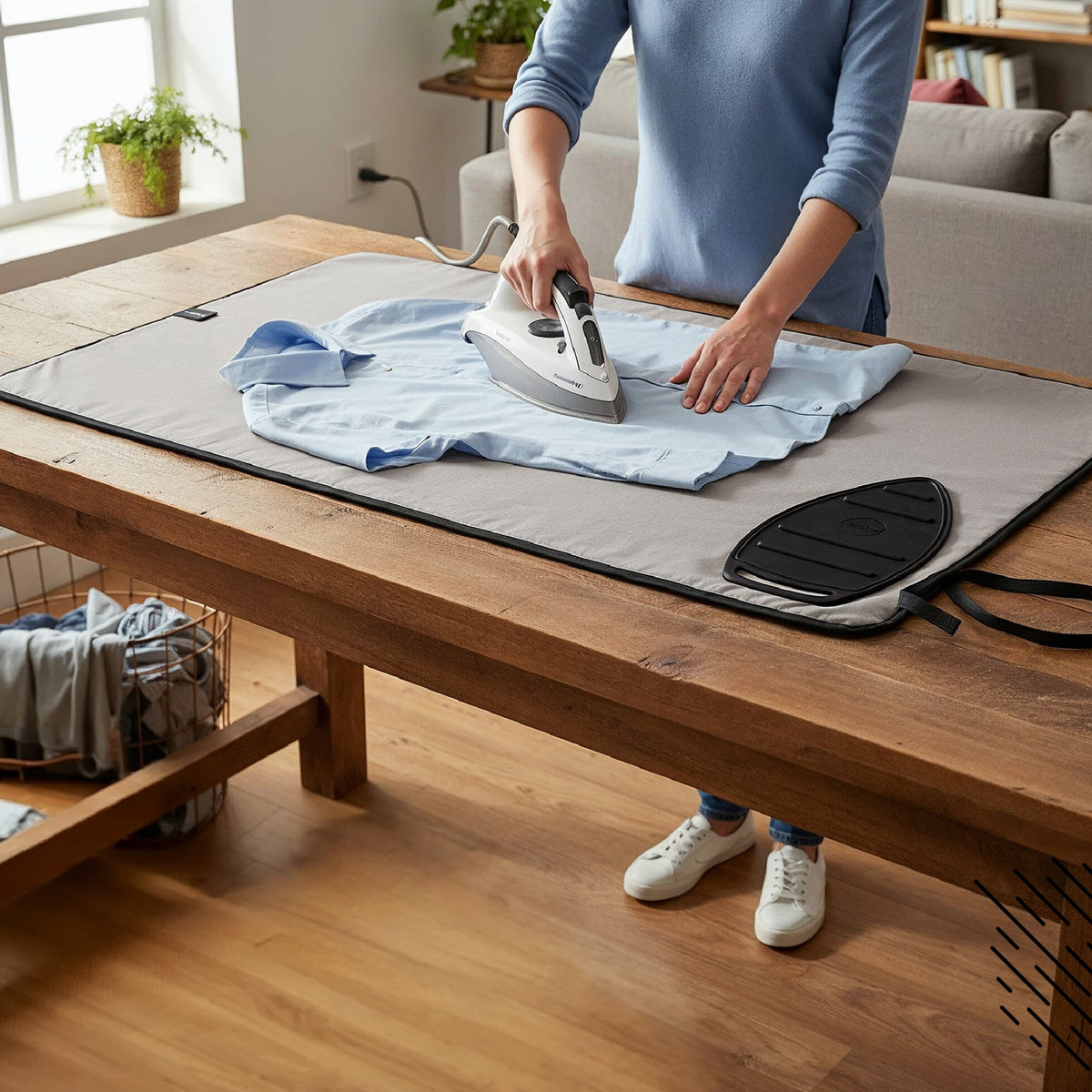
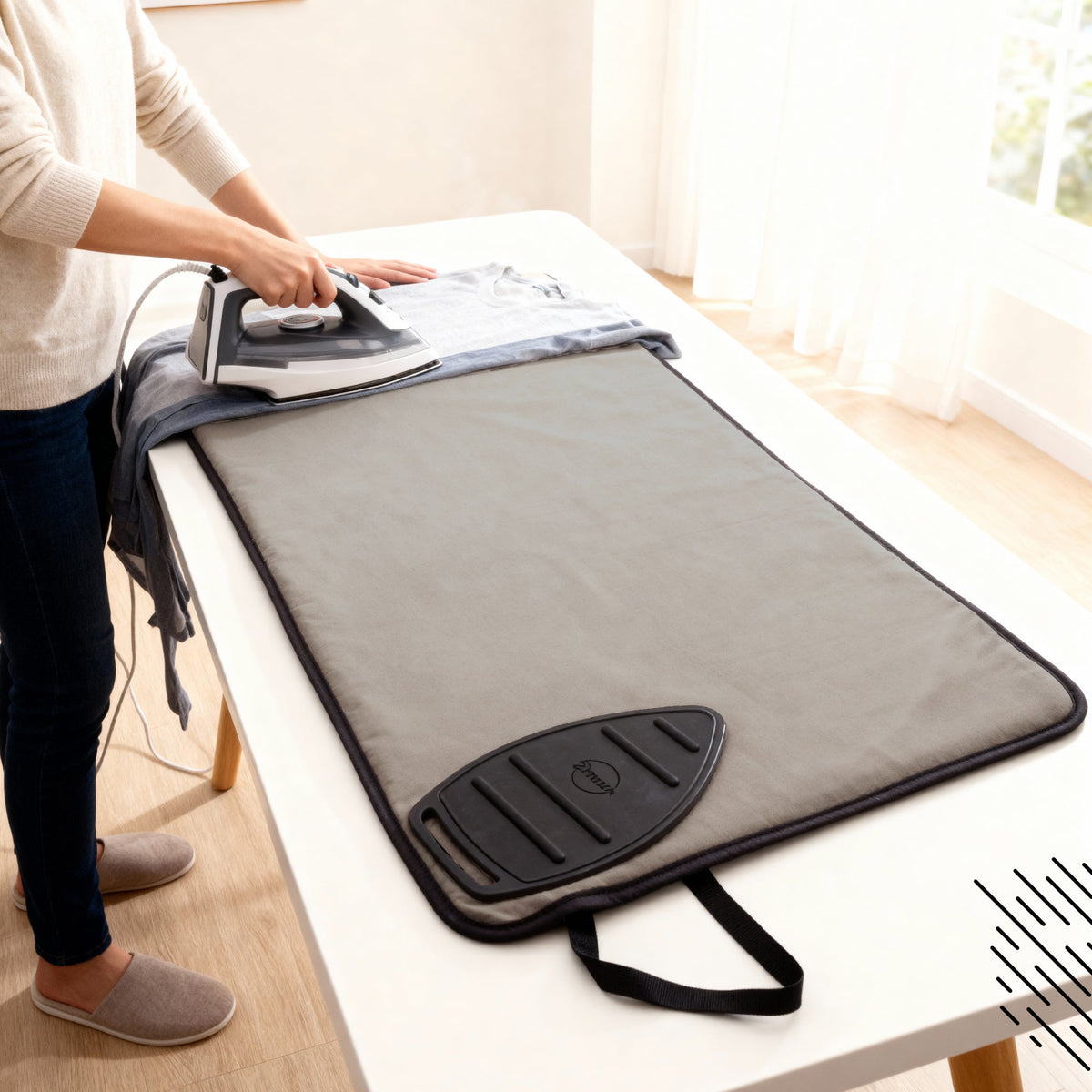
Ironing on a table or a bed makes this harder, since you have no board or built-in rest. Our guide to ironing without a board goes through the surfaces. If a table is your daily setup, the grey cotton ironing mat (₹999 for 70x50 cm, ₹1,299 for 120x70 cm) comes with a silicone iron rest, so the hot iron has its own place to go between garments. The heat setting is still your job.
Questions people ask about iron marks
Does iron shine come out of polyester?
Sometimes. A glossy line along a seam may be pressure and can fade with a wash. A patch that feels hard or has puckered has melted, and it stays. Polyester-cotton blends can do either, so go by touch and not by the label alone.
How do I get an iron mark out of a white school shirt?
Some school shirts are blends and some are not, so the label decides what you can use, and chlorine bleach especially. White cloth hides nothing, so a light scorch that fades may still leave a faint shadow. If it does, that shirt may be better kept as the spare.
Do vinegar or baking soda remove iron stains?
They are not part of the university method. Recipes for both are easy to find, but some give no amounts, and none of the ones we read shows any testing. If you try one, test a hidden spot and expect little on anything darker than light yellow. Skip recipes that use ammonia.
Can I treat an iron mark on a silk saree at home?
We would not. The steps here are for washable, sturdy cloth, and silk and zari can be marked by the treatment itself. Take the saree to a dry cleaner, and say what happened and what you have already tried.

Leave a comment
This site is protected by hCaptcha and the hCaptcha Privacy Policy and Terms of Service apply.