
The word "cotton" on a fabric listing tells you less than you would hope. It names the fibre, and the fibre is the same in a see-through kurta cambric and in a canvas stiff enough for a sofa. What separates them is how the yarn is woven and how much a square metre weighs. Those two things decide what the cloth can do.
So the short answer is this. For curtains and cushion covers that get used every day, buy a medium to heavy plain weave or twill, roughly in the canvas range. Keep light cambric and poplin for linings, kurtas and pillowcases. Then work out the metres from the width of the cloth, not the label, and add about 5 percent for the shrinkage that cotton does on its first wash.
The cotton weaves you will see named, and what each is for
Weave is how the threads cross. A plain weave goes over one, under one. A twill steps the crossing along by one thread each row, which draws a diagonal line across the face. Basket weaves like panama pair the threads up.
Cambric is a fine, light, closely woven plain weave, often given a slightly firm finish. It is the classic Indian kurta and lining cloth. On its own it is too thin to hold a cushion's shape, but it makes a good lining behind a printed curtain.
Shirts are where most people have met poplin. It is also a plain weave, with a faint crosswise rib that comes from a finer warp than weft, and it feels smooth and a little crisp. At home it suits pillowcases and light summer curtains that are meant to let the light through.
Sheeting, the cloth bedsheets are cut from, is plain weave made wide, usually a step heavier than poplin. Bedsheets tend to sit somewhere between 120 and 180 GSM, which is the band our guide to what GSM means gives for them. That weight works for a light tablecloth, a printed cushion cover that gets gentle use, or an unlined curtain in a room where you want light.
Twill behaves differently from a plain weave of similar weight. The diagonal hides small creases and marks better, and the cloth drapes more softly. Drill and denim are both twills. For a tablecloth that sees dal and chai every day, twill forgives a lot.
Canvas and duck are the heavy plain weaves. Duck is the tighter, firmer end of the family and is the kind used for bags and director's chairs. Home furnishing canvas is lighter than that, heavy enough to hang straight at a window and survive a sofa, light enough to stitch on a home machine.
A lot of Indian cotton sold as canvas is actually panama or half panama. These are basket-style weaves, with threads grouped in one or both directions, so the face looks slightly textured and the cloth feels soft for its weight.
Cotton against polyester or linen is a separate question, covered in our guide to types of fabric for the home.

How heavy should cotton fabric be for each job?
GSM is grams per square metre. It does not measure quality on its own, but it tells you how much cloth there is to wear out, block light and hold a shape.
A cushion cover on a sofa that people lean on and throw around wants a cloth with real body. Light sheeting will work, but it shows the insert's seams through it, and it wears thin at the corners sooner than a heavier weave would. A curtain is different, because weight changes the drape and the light. A heavier canvas falls in straight, steady folds and dims the room. A light sheeting moves in a breeze and glows.
Our own cloths give a sense of where the numbers sit. The printed cotton sheeting in blue leaves states 140 GSM, inside the bedsheet band. The plain natural cotton canvas states 180 GSM with a half panama weave; that figure sits in a spec image in the listing's photos rather than in the text. If the sheeting is the right weight for your tablecloth, the canvas is the one to choose for cushions on a sofa used every day.
How many metres of cotton fabric to buy
Cloth is sold by length, but the width decides how much you are getting. One metre of 145 cm cloth and one metre of 110 cm cloth are very different amounts of fabric, which our fabric width guide works through in cm and inches.
There is a catch on our own listings that is worth knowing. Several of the cotton cloths give two different widths on the same page, one in the size option and another in the description. The canvas says 150 cm in the size box and 145 cm in the text. The twill says 150 and 140. The sheeting says 160 and 150. Until those agree, plan your cuts on the smaller figure. If the cloth turns out wider, you lose nothing; if you plan on the larger figure and it arrives narrower, the third cushion front does not fit.
Then allow for shrinkage. Cotton commonly shrinks around 3 to 5 percent, mostly on the first wash, as our piece on whether cotton shrinks explains. The canvas listing itself recommends washing the cloth before you stitch it. Wash, dry and iron it first, then measure and cut. The figures below assume that, with 5 percent taken off both length and width.
On the twill, at 140 cm, the same sum leaves 129 cm of usable width, which is exactly three pieces with nothing to spare. Tell the tailor to cut close to the selvedge, or plan on two across.
| Project | Order | Why that much |
|---|---|---|
| Four 40 cm cushion covers, zipped | 2 m | One metre gives six pieces, three covers. Two metres gives twelve, so you have spare pieces for two more |
| Two 50 cm cushion covers | 2 m | A 53 cm piece fits twice across but only once down a washed metre |
| One 5 ft window curtain panel | 2 m | 152 cm drop plus about 20 cm for hem and heading, then 5 percent for shrinkage, comes to about 181 cm |
| One 7 ft door curtain panel | 3 m | The same sum comes to about 245 cm. Half metres are not sold, so the extra is enough for tie-backs |
| One 9 ft curtain panel | 4 m, or 3 m with a shorter drop | The sum comes to about 310 cm, just past 3 m |
| Tablecloth for a 4-seater, about 185 x 135 cm | 2 m | The width of the cloth becomes the width of the tablecloth |
| Tablecloth for a 6-seater, about 230 x 135 cm | 3 m | Cut the length down after washing and hem it |
The curtain rows assume one panel is one full width of cloth. How many panels a window needs depends on its width and how full you want the curtains, which our guide on how many curtain panels works out. Hem and heading allowances vary from tailor to tailor, so ask yours before you order.
Where the sums get awkward
The 9 ft panel is the row that catches people. Three metres of washed cloth is 285 cm. Take off 20 cm for the hem and heading and the finished drop is about 265 cm, roughly 9 cm short of a true 9 ft. If your rod sits high enough that the curtain can stop short of the floor, three metres is fine. If you want it to touch the floor, you are buying four metres per panel and throwing most of a metre away.
At that point, compare the stitched cost with buying ready-made. A pair of 9 ft panels in canvas needs eight metres. On the natural canvas, that is the 5 m cut at ₹2,419 plus the 3 m cut at ₹1,439, before any tailoring. The ready cotton beige curtain pair in the 9 ft length is ₹2,539 for both panels, in a mercerised panama-weave cotton with eyelets already fitted. Stitching your own makes sense when you want a colour, a lining or a heading style that the ready cotton canvas curtains do not offer. On cost alone, at this length, it rarely wins.
The tablecloth works the other way. A 4-seater cloth from two metres of the blue leaf sheeting costs ₹698 in cloth. You choose the print from the whole fabric collection, and the only stitching is a straight hem on four sides, which any local tailor can do in minutes.

Choosing between the four cottons we sell by the metre
On real listings, the names on the label do not always match the weave.
The canvas is a mercerised cotton in a half panama weave, sold in 22 plain colours. It is the only one of the four with 2, 3 and 5 metre cut options, though eight of those colours currently sell only the 1 metre cut. Its tags also call it duck, which it is not; the description's half panama is the accurate word. Of the four, it is the one to pick for curtains that should hang straight.
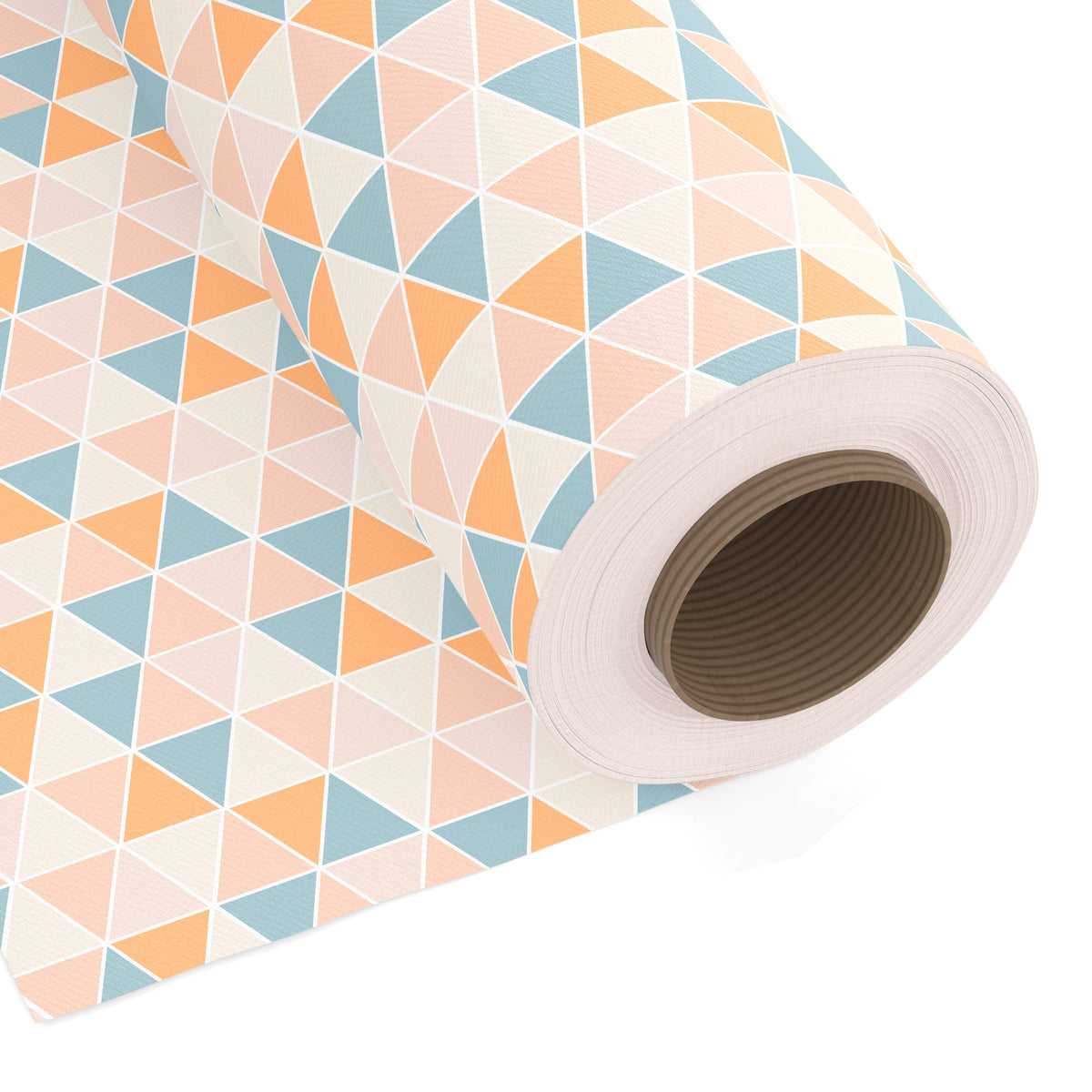
The cotton twill with a triangle print is the one for a dining table. It costs more per metre, at ₹659, and its weight is not stated on the listing. But the diagonal weave and the busy print hide marks that a plain sheeting would show by the end of the first meal.

The checks and stripes, such as the buffalo blue check, are titled "cotton canvas" but described as a homespun weave, and the threads are dyed before weaving. That matters more than the name. Because the colour goes right through the yarn, the pattern shows almost the same on the back, so a reversible table runner or an unlined curtain looks finished from both sides. No GSM is given. One more detail: a large check has to line up across seams. Buy an extra half repeat on any project with a join in it, which on cut-to-metre cloth means an extra metre.
The sheeting is the light, cheap one at ₹349 a metre and 140 GSM, in a run of printed designs. It is the one for a tablecloth, a light curtain or cushion covers on a bed where nobody sits on them.
Common questions
Which cotton fabric is best for sofa cushion covers?
A medium to heavy plain weave or twill, around canvas weight. Light sheeting and poplin work on a bed or a chair nobody uses, but on a family sofa they show the insert through the fabric and thin out at the corners. Washing the cloth before cutting matters as much as the choice, since a cover that shrinks after stitching will not close over its insert.
Is cambric or poplin better for curtains?
Neither, if you want the room dim, since both let a lot of light through. Poplin has a little more body for an unlined summer curtain; cambric works better as a lining.
How much extra cotton fabric should I buy for shrinkage?
Add about 5 percent to the lengths you need, and plan on 5 percent less width as well. Wash and dry the cloth before it goes to the tailor, so the shrinking is done before anything is cut.
What is the difference between canvas and duck?
Both are heavy plain-weave cottons. Duck is woven tighter and firmer, which suits bags and outdoor seating. Furnishing canvas is lighter so it can drape at a window and be stitched on a home machine. Plenty of cloth sold as canvas in India is actually a panama or half panama weave.

Leave a comment
This site is protected by hCaptcha and the hCaptcha Privacy Policy and Terms of Service apply.