
The tape is still in your hand. The sofa has been measured twice, the curtain rod is 210 cm across, and the only question left is the one the shop asks first: how many metres? Online it arrives as a dropdown offering one metre, two, three or five, with nothing on the page to say which of them covers a sofa.
A loose cover for an ordinary three-seater works out at roughly 11 metres of 150 cm cloth, or 12 metres if the fabric you liked is 137 cm wide. A pair of 7 ft curtains gathered to twice a 210 cm rod needs about 8 metres at 150 cm and 10 at 137 cm. Both numbers come from one sum: the area you have to cover, divided by the width of the cloth, rounded up to the cuts the shop sells.
How fabric sold by the metre actually works

A metre of fabric is 100 cm of length. The width is not yours to pick. It is fixed on the loom, holds all the way down the roll, and changes from one family of cloth to the next.
Both numbers sit in the size option on the listing. A one metre cut of the canvas charcoal grey reads as 100x150 cm: 100 cm of length off a roll 150 cm wide. That option is the width to work from, because it is the piece being priced and cut, and every width and price below came off those size options.
Across Encasa's fabric by the metre range the widths run from 110 cm to 160 cm in eight steps. Most of the cloths whose own listings name upholstery, slipcovers or curtains among their uses sit between 137 and 155 cm. The 110 cm satins and the light printed cottons at 160 cm are written up for dresses, gowns and craft, so they belong on a tote bag rather than a sofa. For metres, inches and centimetres lined up in one place, fabric width and length explained has that conversion table.
Cut lengths are the other half of it, and they are scarcer than you would guess. Only about a quarter of the range offers a two, three or five metre cut at all. On everything else you raise the quantity on a one metre option instead. Among the cloths worth putting on furniture, those longer cuts sit at 150 cm, on the plain canvas and the embossed velvet. Chenille, blackout polyester and faux leather, all at 137 cm, sell single metres only, and so do the 152 cm canvas checks and stripes. The listings say multiple metres are cut as one continuous piece where they can manage it, worth confirming before a tailor plans around a single unbroken length.
Which sofa fabric survives an Indian living room

| Fabric | Width | One metre | Cuts offered |
|---|---|---|---|
| Cotton canvas, plain | 150 cm | ₹499 | 1, 2, 3, 5 m |
| Cotton canvas, checks and stripes | 152 cm | ₹499 | 1 m |
| Embossed velvet | 150 cm | ₹459 | 1, 2, 3, 5 m |
| Plain velvet | 152 cm | ₹499 | 1 m |
| Corduroy | 150 cm | ₹589 | 1 m |
| Cotton twill print | 150 cm | ₹659 | 1 m |
| Chenille | 137 cm | ₹759 | 1 m |
| Blackout polyester | 137 cm | ₹459 | 1 m |
| Faux leather | 137 cm | ₹798 | 1 m |
Cotton canvas is the cheap way into a wide choice of plain colour, twenty-two shades at ₹499, and its own page names slipcovers and light upholstery among its uses. Read the word light. It is a mercerised half-panama weave with body and a slight sheen, fine on a formal sofa nobody sprawls on; a three-seater that takes two children and a laptop every evening is asking more of it than the cloth claims. Its own care line recommends a pre-wash to allow for cotton shrinkage, which matters more here than on a cushion cover, because a stitched-to-size cover has no seam allowance to give back.
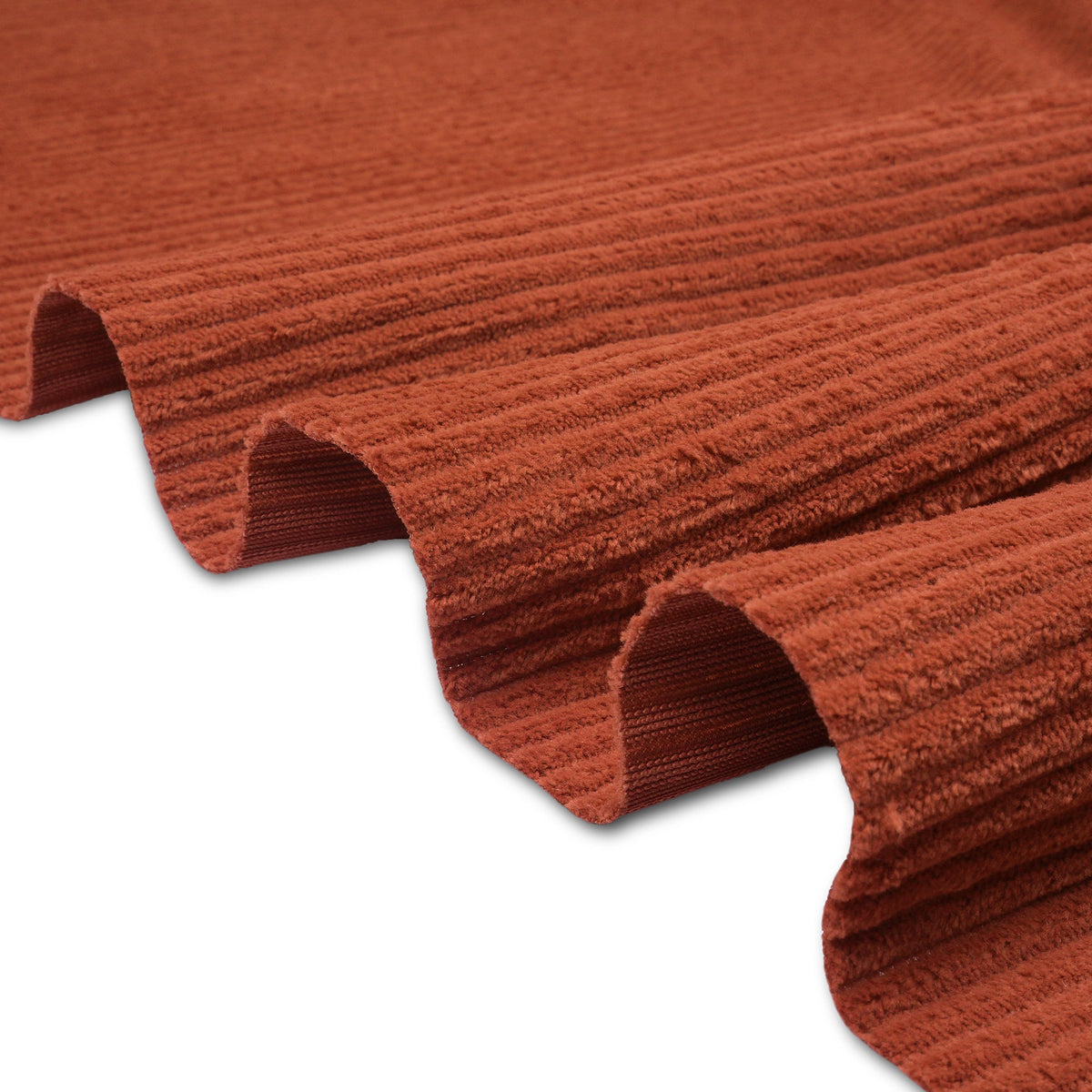
Corduroy prints its weight on the page, 238 GSM, and looks the most obviously like furniture cloth. The brick corduroy has ribs running the length of the roll, which is a warning as much as a feature: cut two pieces with the ribs going different ways and they read as two different shades under the same lamp. Every panel has to face the same way, and that costs length. The GSM guide explains why a curtain's GSM and an upholstery cloth's GSM are not the same conversation.
Faux leather is the answer when the sofa's real enemy is spills. PU on a woven backing, wipes clean with a damp cloth, written up for sofa upholstery, headboards and stools. It is also the narrowest of the upholstery cloths and the dearest, sold in single metre cuts only, which adds up to a lot of separate metres for one sofa.
Velvet comes in two ranges at two widths: the embossed maroon at 150 cm with a damask pattern pressed into the pile, the plain velvets at 152 cm and flat. A pile lies down where weight sits on it, and a pressed pattern gives that flattened patch something to hide behind. Even so, velvet suits the armchair in the corner better than the seat three people share, which is corduroy's job.
Chenille in natural is the soft one, cream with a quiet flecked surface and a lot of drape. Blackout polyester belongs at the window rather than under people. If your question is which fibre rather than how many metres, types of fabric in home textiles covers that ground.
How many metres of fabric for a three-seater sofa
Measure your own sofa rather than trusting a number from a guide: a slim-armed three-seater and a deep roll-arm seating the same three people are not the same job.
Take a three-seater 200 cm across the back, 85 cm tall, with arms 90 cm deep and 60 cm high, three seat cushions of 65 by 60 by 12 cm and three back cushions of 65 by 55 by 12 cm. Written out as flat rectangles, the frame comes to:
- outside back, 200 by 85 cm: 1.70 m²
- inside back, 200 by 65 cm: 1.30 m²
- seat platform, 200 by 60 cm: 1.20 m²
- front apron, 200 by 35 cm: 0.70 m²
- two outer arms, 90 by 60 cm each: 1.08 m²
- two inner arms, 90 by 45 cm each: 0.81 m²
- two arm fronts, 60 by 45 cm each: 0.54 m²
That is 7.33 m² of frame. Each seat cushion needs a top, a bottom and a 12 cm boxing strip round its edge, which is 1.08 m² a cushion, or 3.24 m² for three. The back cushions come to 1.00 m² each, 3.01 m² for three. Everything together is 13.6 m² of cloth.
Nothing nests perfectly, so tailors add for offcuts; ask yours what margin they work to. Adding 15% takes 13.6 m² to 15.6 m², and only now does width enter the sum. At 150 cm, 15.6 divided by 1.5 is 10.4 running metres, rounded up to 11. At 137 cm it is 11.4, rounded up to 12. Thirteen centimetres of width costs you a whole metre of length.
How you buy those metres differs too. Eleven metres of canvas charcoal grey goes in the basket as two five metre cuts and a single, because that range carries the longer options. Twelve metres of chenille or faux leather is twelve separate one metre cuts, since those ranges offer no other length.
Treat that as a floor rather than a promise. The outside back of this sofa is 200 cm across and no roll here is 200 cm wide, so that panel either carries a seam or gets cut with its long side running down the cloth, using 2 m of length and wasting most of the width unless a cushion piece tucks in beside it. That call belongs to whoever is cutting.
How much fabric for curtains

Curtains take the same idea with one extra step, because cloth hangs in whole widths rather than being cut into odd shapes. Multiply the rod width by the fullness you want, divide by the fabric width, round up to a whole number of widths, then multiply that count by the drop plus whatever the tailor takes for the header and hem.
A 210 cm rod at twice fullness wants 420 cm of flat cloth. At 150 cm that is 2.8 widths, rounded up to 3. At 137 cm it is 3.07, which rounds up to 4, and the fourth width is where the bill jumps. A 7 ft door curtain drops 213 cm, and if your tailor asks for 25 cm across header and hem, each width is 238 cm of length. Three widths is 7.14 m, bought as 8. Four widths is 9.52 m, bought as 10.
That extra width is not automatic. Drop the same rod to 1.5x fullness and you need 315 cm of flat cloth, which is 2.1 widths at 150 cm and 2.3 at 137 cm. Both round to 3, and the width stops mattering. Whether the jump bites depends on where your rod falls against multiples of the roll.
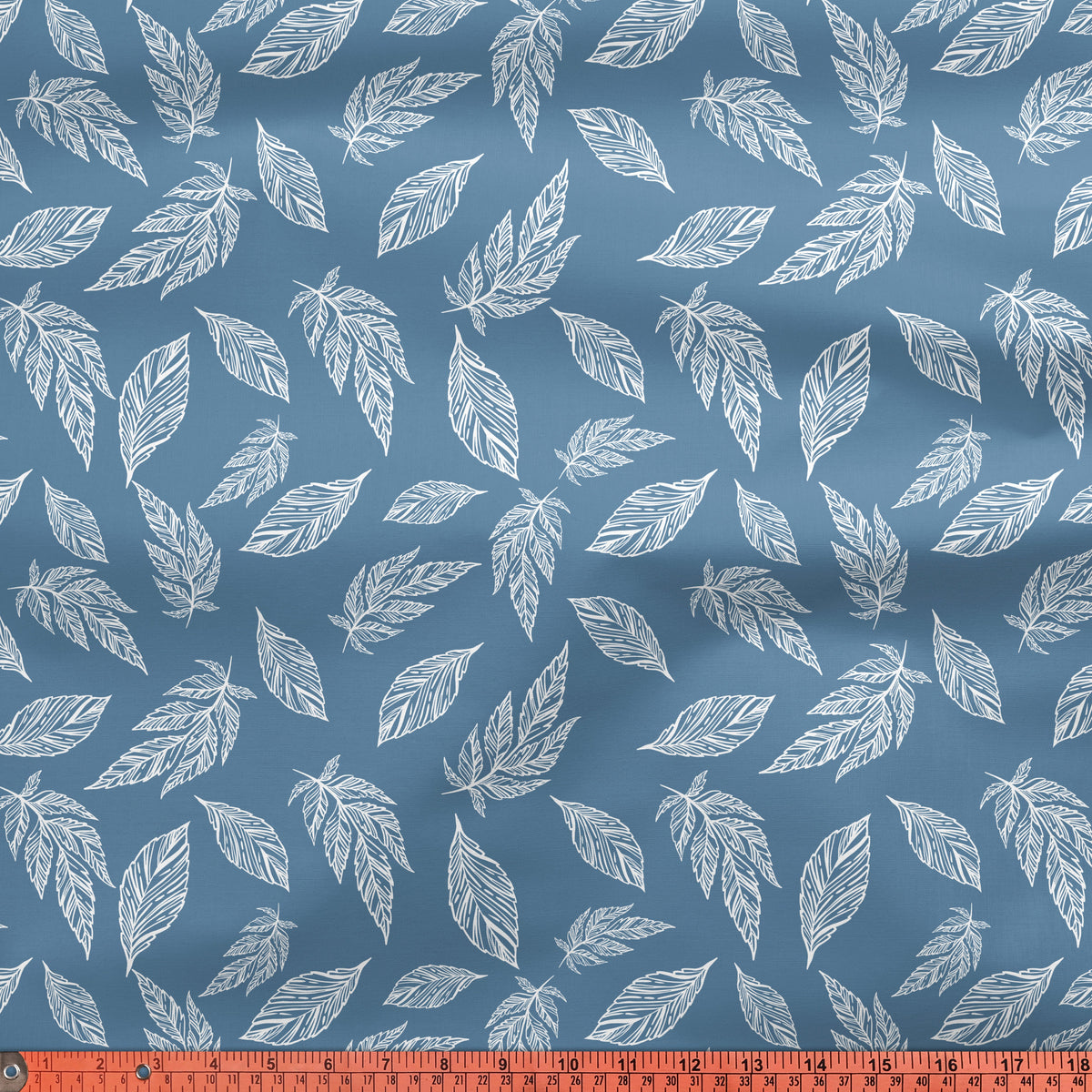
The blackout polyester in the L1 print is a cream ground scattered with green painted leaves rather than the solid colour its name suggests, so look at the photo before you picture the room. It is 137 cm, the width that pushed the example above to four, and it sells in one metre cuts only. If that sounds like more project than you wanted, ready-made curtains come hemmed in the standard 5, 7 and 9 ft drops, and how many curtain panels a window needs runs the fullness sum against finished panels sold in packs.
The number to hand your tailor
Encasa sells the cloth cut to length. The stitching is your tailor's job, so walk in with three things: the sofa's measurements, the width of the cloth you picked, and your total. If they come back with a bigger number, take theirs. They can see the furniture, the pattern repeat and how the pieces fall across the roll.
Buy the whole quantity at once, too. Colour can drift between production runs, and the metre you top up with a month later is the piece that ends up on the arm everybody looks at.
Buying the cut you actually need
Round up to the next cut the listing sells, then check that the cut exists in the colour you want. Where the longer options exist at all, they work out slightly cheaper per metre: five metres of canvas at ₹2,419 is about ₹484 a metre against ₹499 for a single.
Stock runs out by cut length as well as by colour, which is what catches people out on a big order. On the day this was written, canvas white had its one metre cut in stock and its two, three and five metre cuts sold out, so eleven metres in that shade meant eleven separate metres rather than two fives and a one. Availability moves, so check the colour, not the range.
Leave room for direction too. Buying corduroy or velvet, where every piece has to face the same way, add to your figure rather than trusting the sum to the last metre.
Common questions
How many metres of fabric do I need for a 3 seater sofa?
Around 11 metres of 150 cm cloth, or 12 at 137 cm, for a loose cover on a sofa 200 cm across with three seat and three back cushions. That comes from 13.6 m² of panels plus roughly 15% for offcuts, divided by the fabric width. A tighter fitted cover, or rolled arms, wants more.
What width does fabric come in?
It depends on the cloth. Encasa's range runs 110 cm to 160 cm, with most of the furnishing weights between 137 and 155 cm and the lighter dress and print cottons at 110 cm and 160 cm. The width is printed in the size option on each listing, so read it there rather than assuming a standard.
Can I use curtain fabric on a sofa?
In one direction, sometimes. A heavy curtain cloth like canvas or chenille can cover an occasional chair, but a blackout polyester made to hang and block light has no business under people. The reverse works better: corduroy, with its stated 238 GSM, makes a substantial curtain if the rod and rings take the weight, and velvet drapes as a curtain too; the embossed velvet states 170 GSM on the spec image in its gallery, the plain velvet states no weight at all.
Is corduroy or canvas better for a sofa cover?
Corduroy for a sofa in daily use, canvas for one that is mostly looked at. Corduroy's own page puts it at 238 GSM and names heavy-duty upholstery, and its ribbed surface disguises ordinary marks. Canvas costs less, comes in more plain colours, and its own listing calls it suitable for light upholstery, which is a limit worth reading.

Leave a comment
This site is protected by hCaptcha and the hCaptcha Privacy Policy and Terms of Service apply.