
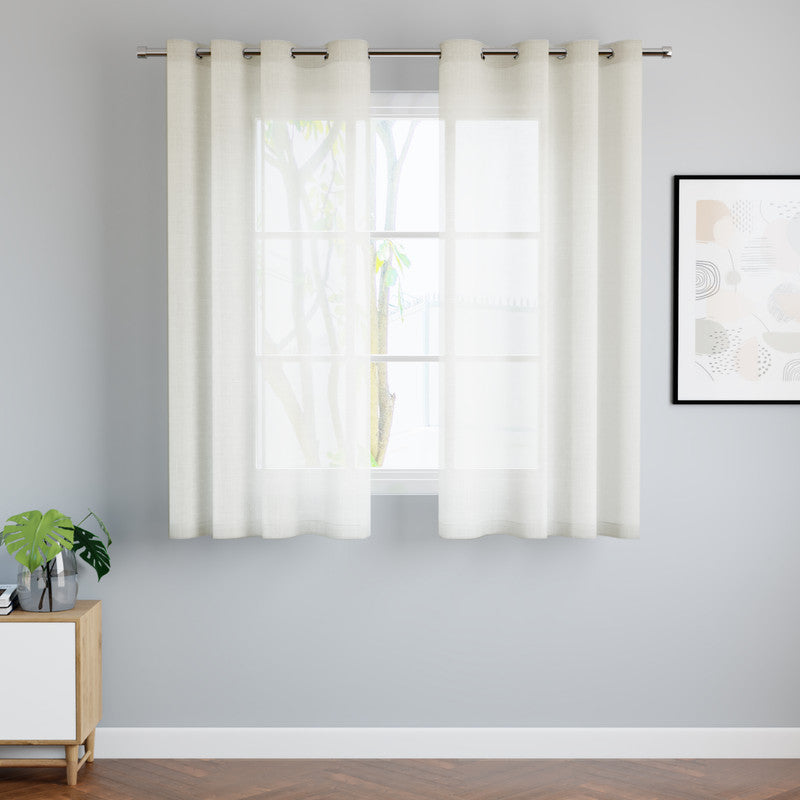
Buy one pack because you have one window, and the curtain almost always looks wrong once it's up. Not the wrong colour, not the wrong length, just thin. It hangs closer to a bedsheet pinned to a rod than the soft, folded curtain in the product photo. The pack was never the problem. The maths behind it was skipped.
Here is the short version. The number of panels a window needs depends on the width of the rod, not the window, and not the count of openings in the room. Take the rod's width, multiply it by 1.5 to get the minimum flat fabric you want, by 2 for a fuller, more gathered look, then divide by the flat width of one panel and round up. A single wide "one window, one pack" purchase is usually the guess that skips this step.
How to calculate curtain width
The formula has three parts, and each one is worth getting from the right place rather than eyeballing it.
Start with the rod, not the window. A rod is normally mounted 15 to 20 cm past the frame on each side so the drawn curtain clears the glass, which means the rod is always wider than the opening it covers. Measure the rod itself, bracket to bracket, once it is up or marked.
Multiply that number by a fullness factor. One and a half times the rod width is the practical minimum, the point where the fabric has enough slack to fold rather than pull flat. Two times the rod width gives a noticeably fuller, more tailored look, the kind used in formal living rooms and hotel-style bedrooms. Most homes are happy somewhere in between.
Divide by one panel's flat width to get the panel count. Encasa's cotton sheer panels are 142 cm wide whichever drop you pick, since the length changes but the top edge doesn't. Not every range prints its flat width on the listing, and where it isn't given, 140 to 145 cm is the usual ready-made panel, so check before you commit to the sum. A 210 cm rod at 1.5x needs 315 cm of flat fabric, which is 315 ÷ 142, or 2.2 panels, rounded up to 3. Because panels are sold in packs of two, that rounds again to two packs, four panels, well past the fullness you actually asked for.
A rod width worked two ways
That last jump, from 3 panels needed to 4 panels bought, is the part most buying guides skip, so it's worth walking through on two different rods.
| Rod width | Flat fabric at 1.5x | Panels at 142 cm each | Packs to buy | Fullness you actually get |
|---|---|---|---|---|
| 160 cm | 240 cm | 1.7 → 2 | 1 pack | 284 cm flat = 1.78x |
| 260 cm | 390 cm | 2.7 → 3 | 2 packs | 568 cm flat = 2.18x |
A 160 cm rod, a fairly typical width once you've added the overhang to a standard window, lands neatly on a single pack. Two panels give 284 cm of flat fabric against a 240 cm target, so the result sits comfortably inside the 1.5 to 2x range without any leftover fabric to pay for. A 260 cm rod, the kind you get across a balcony slider or a wide living-room window, needs three panels by the raw sum, but nothing is sold in threes. Buying the second pack pushes the fullness to 2.18x, past the usual ceiling, and buying only one pack leaves it at 1.09x, below the minimum where curtains stop looking gathered. Neither answer is wrong exactly. A single pack on a wide rod is an honest budget compromise that a heavier fabric can carry off; two packs is the fuller, more finished result if the room and the budget both allow it.

How wide should curtains be?
Width is a rod decision, not a glass decision. Mount the rod 15 to 20 cm beyond each side of the window frame so the curtain, when open, stacks clear of the glass instead of blocking part of it, and measure the finished rod width, brackets and finials included, before you shop for panels. A 130 cm window frame commonly ends up under a rod closer to 165 cm once the overhang on both sides is added in, and it's that 165 cm figure that goes into the fullness sum above, not the 130 cm frame. Getting the rod placement right is its own separate step, covered with worked drop measurements in the curtain size guide, which this piece assumes you've already done before turning to width.
Why eyelet curtains add fullness in jumps, not by the metre
This is where ready-made eyelet curtains behave differently from a curtain a tailor pleats to order. A custom pinch-pleat or tab-top panel is made to a fullness percentage the workroom calculates first, then cuts and sews exactly that much fabric, so a rod that needs 1.7x fullness gets 1.7x, no more. A shop-bought eyelet panel has already been cut and finished at a fixed width, 142 cm on the cotton sheers, so the only way to add fullness after the fact is to buy another whole panel. There's no tailor to call for an extra 40 cm.

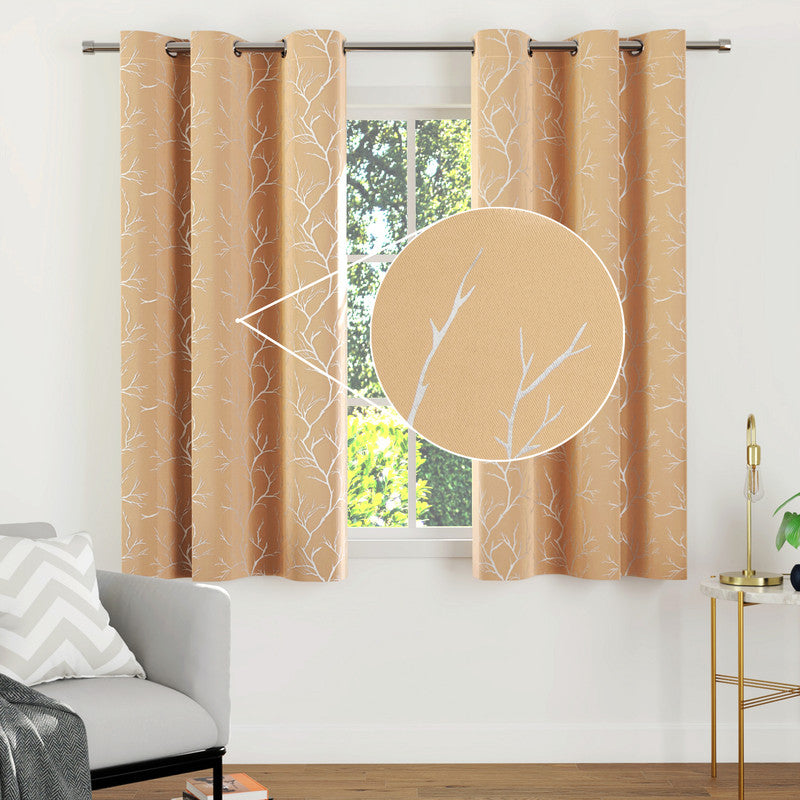
That's a real trade-off worth working through before checkout. The honest fullness a given rod ends up with often depends on where 1.5 to 2x happens to fall against multiples of 142 cm, and no pack automatically looks right just because the label matches the window. A heavier blackout fabric hides a slightly under-full rod better than a light sheer does, because the weight of the fabric itself makes the folds read as deliberate even at 1.3 or 1.4x, so the twigs beige blackout panel is more forgiving on a wide rod bought as a single pack than the same rod dressed in a cotton sheer would be.
How many curtain rings does a panel need
Ring count is set at the factory, so this is something to check rather than decide, and it is worth checking twice because listings are not always consistent with themselves. Encasa's cotton cream sheer describes eight metal rings in its text while its own eyelet close-up says six per panel. The twigs beige blackout panel is unambiguous at six.

Six eyelets across a 142 cm panel leaves roughly 25 cm between rings; eight brings that closer to 18 or 20 cm. Neither is wrong. Tighter spacing holds a heavy blackout fabric flat against the rod instead of letting it scallop between rings, while wider spacing lets a light sheer fall into deeper, looser folds. If the panel is heavy or lined, more rings is the safer bet.
The more useful number, and the one no listing puts in the title, is the eyelet's inner diameter. Encasa's panels use a 4 cm inner ring, and that is the real limit on which rod you can thread through: a 25 mm rod passes easily, while anything approaching 40 mm will not go on at all. If you are buying panels for a rod you already own, measure the rod's thickness as well as its width.
Frequently asked questions
How many curtains do I need for one window?
It depends on the rod's width, not the window count. Multiply the rod's width by 1.5 to 2 for the flat fabric target, divide by 142 cm for a standard Encasa panel, and round up to a whole pack. A rod up to about 190 cm usually needs one pack of two panels; a wider rod needs two packs. Once the count is settled, the decision left is colour, and our guide to curtain colour combinations works through cream, white, grey and dark walls.
How wide should curtains be?
Wide enough, when laid flat, to total one and a half to two times the rod's width, not the window frame's width. The rod itself should already run 15 to 20 cm past each side of the frame, so both numbers end up larger than the glass alone.
How do I calculate curtain width?
Rod width times a fullness factor between 1.5 and 2, divided by the flat width of a single panel, rounded up to the next whole pack. For a 142 cm panel, a 200 cm rod at 1.5x needs 300 cm of fabric, which is 2.1 panels. One pack of two comes just short at 1.42x and two packs overshoot to 2.84x, which is the pack-size problem in miniature: on a 200 cm rod nothing lands neatly inside 1.5 to 2x.
How many curtain rings does a panel need?
The maker fixes it, so it isn't a choice you make: Encasa's panels come with six or eight along the top edge depending on the range, which is roughly one every 18 to 25 cm on a 142 cm panel. The spec worth checking instead is the eyelet's inner diameter, 4 cm on these panels, since that caps how thick a rod you can thread through.

Leave a comment
This site is protected by hCaptcha and the hCaptcha Privacy Policy and Terms of Service apply.