
Every year the same thing happens in a lot of homes. The fans get wiped, the walls get touched up, the brass gets polished, and then on the evening before Lakshmi Puja somebody notices the curtains are still damp on the balcony line and the good tablecloth has a turmeric mark nobody saw in March.
The fix is mostly a matter of order. For Diwali home cleaning, the fabrics are the slow part, and they are slow because of drying, not washing. Start with whatever takes longest to dry, finish with whatever you can wash the night before, and leave a margin for a cloudy week. Diwali falls on 8 November in 2026, so a sensible start for soft furnishings is the third week of October.
Why drying, not washing, sets the timetable
A washing machine treats a thin napkin and a heavy curtain about the same. The difference shows up afterwards. Thick or tightly woven fabric holds a lot of water in the yarn, and it can only lose it from the surface. The thicker the fabric, the more water sits deep inside it, away from the air.
October makes this worse in some cities and better in others. Where the monsoon has fully withdrawn, the air is drier and the sun is lower but still warm, and a curtain on a line can be done in a day. In coastal cities, and anywhere a late spell of rain is still around, the air stays humid and the same curtain can hang there into the next morning. Damp fabric that sits folded overnight is how you get that musty smell back, which defeats the point of washing it.
So the useful question for each item is not "how do I wash this" but "how long will this take to be fully dry where I live this week, and what happens if it doesn't." Answer that and the order writes itself.
The order that works
Two to three weeks out, do the heavy items: curtains, especially lined or blackout ones, and any rugs or dhurries. These have the longest drying time and the worst consequence if they go back up damp.
About ten days out, do cushion covers. They dry faster, but a sofa looks odd without them, so do them in two batches if you have only one set.
In the last week, do table linen. Tablecloths, runners and napkins are thin and quick to dry, and they are also the things most likely to get a fresh stain from early sweets and guests, so washing them late means they go on the table clean.
The night before, do nothing new. Iron, fold and fix. Anything you discover then gets spot-cleaned, not fully washed.
Room-by-room checklist
| Item | Wash | Drying in October | Watch for |
|---|---|---|---|
| Polyester blackout curtains | Cold, gentle cycle | Slowest of the lot; the coated or triple-weave layer holds water | Hang to finish drying on the rod, not folded |
| Cotton curtains | Cold to cool; dark colours on their own | Usually a day on a line in dry weather | Shrinkage if dried hot; iron while slightly damp |
| Velvet cushion covers | Inside out, cold, gentle | Quicker than curtains, but the pile stays damp underneath | Brush the pile while drying; never wring |
| Cotton and chenille cushion covers | Cold, inside out | Fast in sun | Colour running from new dark covers |
| Rugs and dhurries | Depends entirely on backing; often spot-clean or professional | The slowest item in most homes | Rubber or latex backing traps moisture |
| Tablecloths and runners | Cold, then low tumble or line dry | Fast | Old oil and haldi stains; treat before washing |
| Napkins | Cold, with similar colours | Fastest | Wash new red or maroon sets alone the first time |
The temperatures above follow the care notes on the products we sell and the most common care labels. Your own label wins every time, and if you are not sure what the symbols mean, our guide to fabric care label symbols decodes them.
How to clean curtains at home without the musty smell

Take them down first thing in the morning, shake them out outside, and vacuum the top hem and the eyelet band where the dust settles. That band is often the dirtiest part and the part people forget.
Wash one pair at a time. A machine stuffed with four curtain panels doesn't rinse properly, and soap left in the fabric attracts dust again within weeks. Use a gentle cycle and a low spin; a hard spin creases polyester in ways that take a lot of ironing to undo.
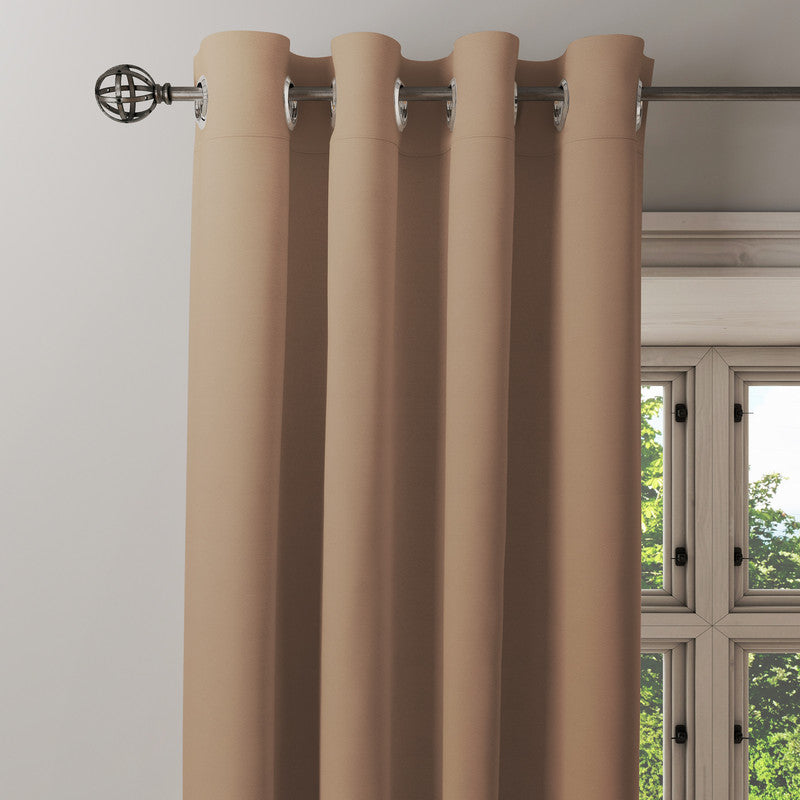
Here is the case that catches people out. A polyester blackout pair like the Twigs Beige blackout curtains is listed as cold-washable and not needing ironing, which is true. But the dense triple weave that blocks the light is also what holds water, so on a humid day it can feel dry on the face and still be damp inside the top hem. The answer is to hang it back on the rod while very slightly damp, open the window, and let the weight pull the creases out. Don't fold it and leave it on a chair.
Cotton curtains behave differently. They dry faster but crease more, so iron them while they still have a little moisture in them. If a cotton pair has faded along the side that faces the window and no wash will bring it back, this is the year to replace rather than wash. A plain pair from the cotton canvas curtain range is a better use of the effort than ironing a curtain that will still look tired under festive lights. Our full guide to washing curtains covers rings, linings and sheers in more detail.
Cushion covers: wash, or swap?
Cushion covers are the quickest win in a festive room, which is why so many people replace them for Diwali instead of washing them. Both are reasonable. The test is simple: if the cover is clean after a wash but the colour or pile looks flat, washing hasn't fixed the problem.
Velvet needs the most care. Turn it inside out, wash cold, don't wring it, and lay it flat or hang it so the pile isn't crushed. Brush the pile in one direction once it's nearly dry and it recovers most of its sheen. Our velvet cushion cover washing guide goes through it step by step.
If you are replacing, the season decides the colour more than the room does. A sofa in a room lit by diyas and fairy lights takes warm, light-catching colours well. Gold velvet, such as the Velvet Gold cushion covers, picks up that light. In a room that gets strong afternoon sun, though, velvet fades faster than cotton, so keep the velvet for the side of the sofa away from the window and use cotton or chenille from the wider cushion cover collection on the sunny side.
One warning about new dark covers: wash them alone the first time. Red and maroon dyes can bleed onto lighter fabric in the same load.
What about rugs?
Rugs are where a deep-clean most often goes wrong, so it's worth being careful. Many rugs sold in India have a rubber or latex backing for grip. That backing doesn't let water out, so a rug washed at home can stay damp underneath long after the top feels dry, and that is where the smell and mildew start. Check the label before anything goes in a machine.
For most rugs, the safe routine is to beat or vacuum both sides, take it out into the sun for a few hours, and spot-clean stains with a little mild detergent and a damp cloth. A flat cotton dhurrie without a backing can usually be washed, but it is heavy wet, so it needs a strong line and a full dry day. Large wool or hand-knotted rugs are better left to a professional cleaner, and they get booked up before Diwali, so call early.
The backing question is also worth asking when you buy. A reversible handwoven cotton rug, like the round recycled cotton chindi rug, has no rubber layer to trap water, and because both faces are usable you can flip it after a festive evening of footfall and spilt sweets. Our guide to choosing rugs for the living room covers sizes and materials.
Table linen: the last thing you wash

Table linen goes last because it is the quickest to dry and the most likely to get dirty again. Look for old stains before you wash. Oil and haldi marks that went through a hot wash or a hot iron last year are often set now, and a set stain on the cloth the whole family sits around is a fair reason to replace it.
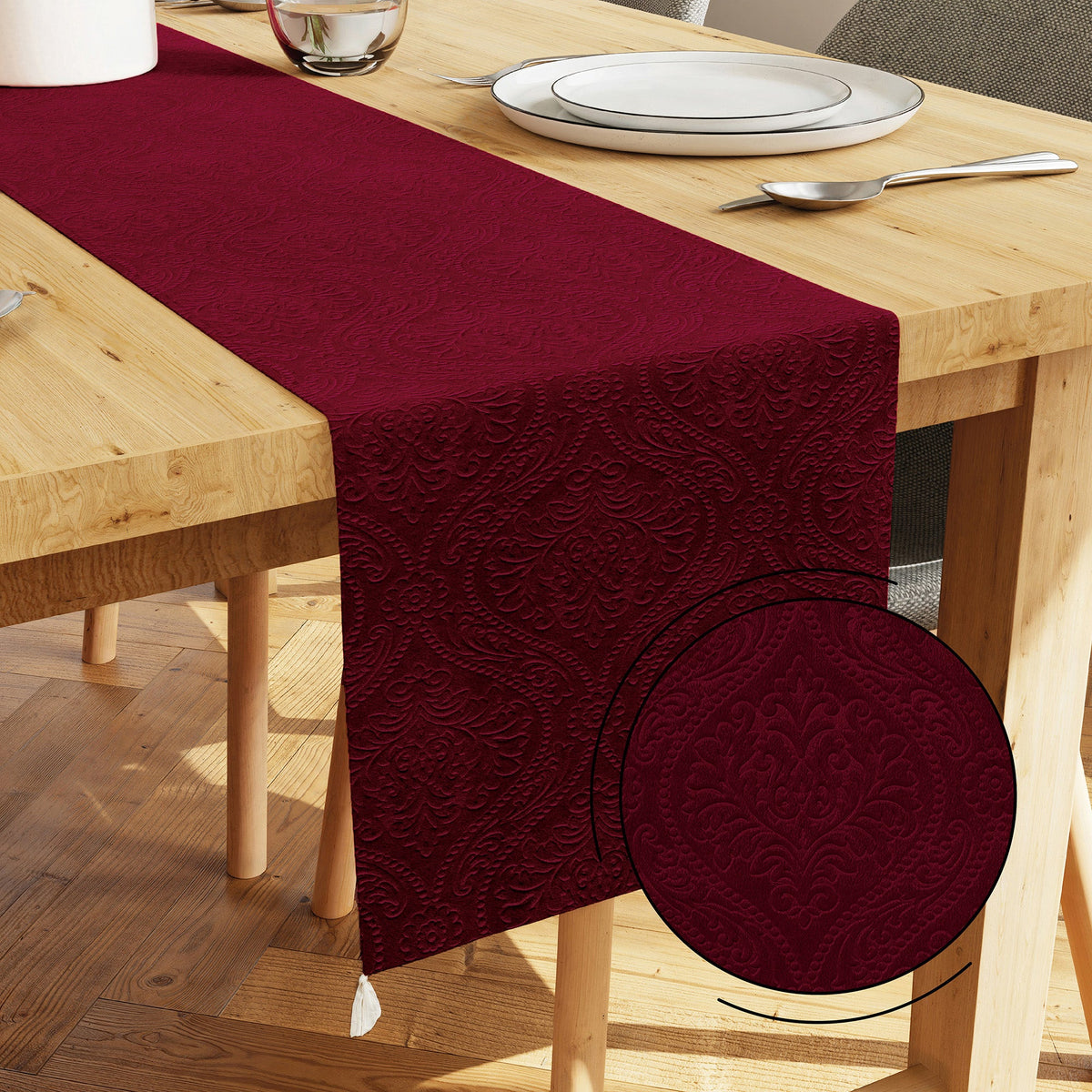
For a cotton tablecloth, cold water and a low tumble or a line dry keeps shrinkage down. Velvet runners are fine in the machine too. The embossed maroon velvet runner is listed as machine washable, and a runner is easier to wash after the dinner than a full cloth. That makes a runner over a plain cloth a practical choice for the festive table, since the runner takes the spills. If your current tablecloth is beyond saving, there are plain and festive options in the table cloth collection. For setting it all out on the day, see our Diwali table setting guide.
FAQ
When should I start Diwali cleaning?
For fabrics, start about two to three weeks before the festival. In 2026 that means the middle to the end of October. Heavy curtains and rugs come first because they take the longest to dry.
Can I wash blackout curtains in a washing machine?
Usually yes, on a cold, gentle cycle with a low spin, if the care label allows it. Wash one pair at a time and hang them on the rod to finish drying.
How do I stop washed curtains smelling musty in humid weather?
The smell comes from fabric that stayed damp too long. Wash on a morning with a dry forecast, rinse well, and never fold curtains until the hems and eyelet bands are fully dry.
Should I wash or replace old cushion covers?
Wash them if they look good once clean. Replace them if the colour has faded, the pile is crushed, or the zip has failed, since washing won't fix those.

Leave a comment
This site is protected by hCaptcha and the hCaptcha Privacy Policy and Terms of Service apply.