
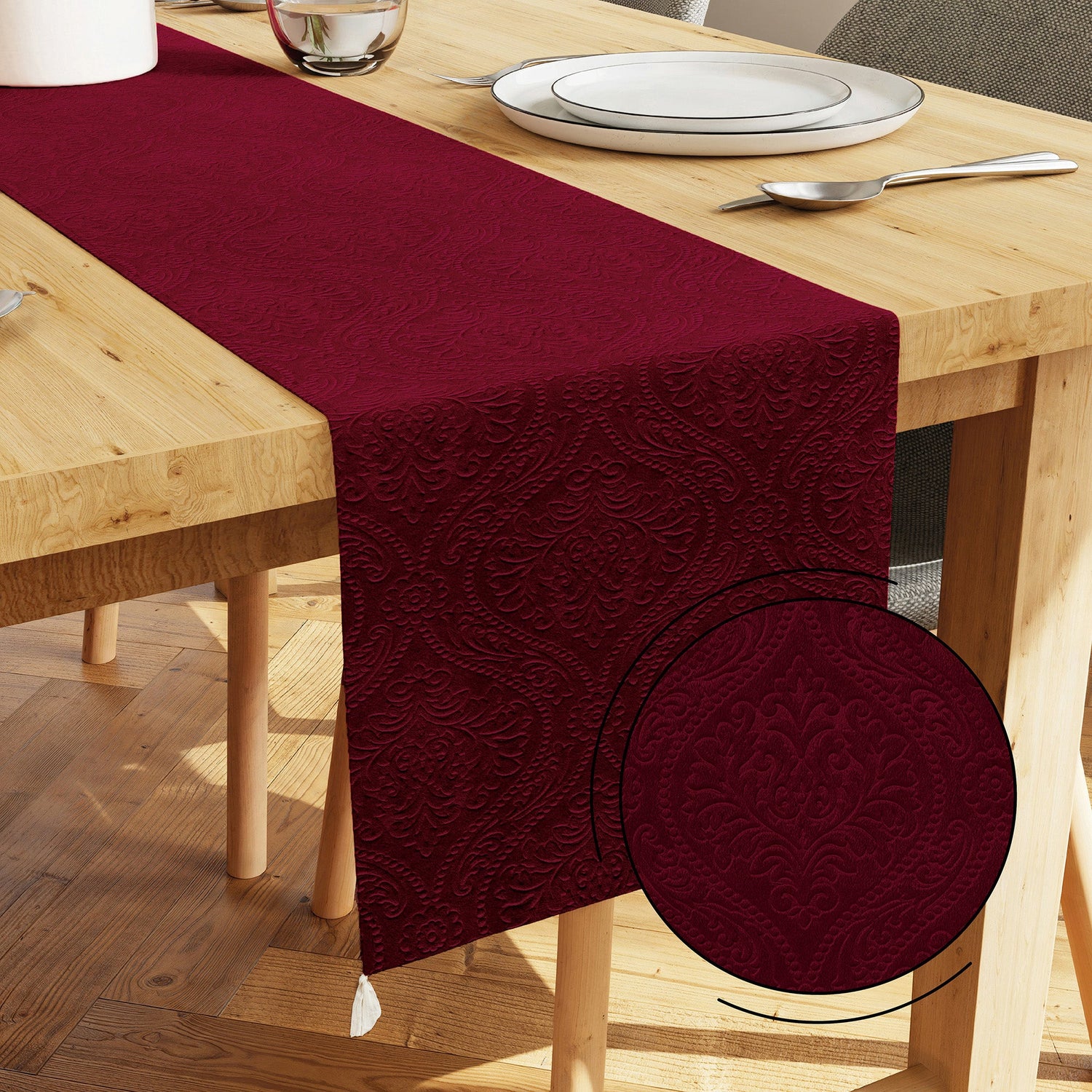
By the time the sweets come out, the diya thali in the middle of the table has usually been nudged twice: once to make room for a serving dish, and once because a sleeve or a dupatta came close enough to a lit wick that someone reached over without saying anything. The tablecloth survives that. The runner underneath it, with one end hanging loose off the table edge, is what actually picks up the wax or the singe mark, and by then the meal is half over and nobody wants to be the one to point it out.
A Diwali table setting is really three ordinary layers put down in a particular order: a base of cloth or a runner, a middle layer of placemats and napkins, and a diya or floral centrepiece added last so it never has to move again. Colour gets most of the attention in festive styling advice, but distance from the flame and how well loose ends are anchored matter more to how the evening actually goes. Settle those two first, then pick maroon, gold or whatever suits the room.
What makes a Diwali table different from any other dinner
Most nights, laying a table is about looking presentable and being easy to clear. On Diwali, three things stack on top of that. An open flame is often sitting directly on the table, sometimes with loose rangoli powder or petals scattered near it. The guest count usually runs higher than a normal weeknight, so the table is doing more physical work over a longer evening. And the room is lit warmer and dimmer than daylight, by diyas, fairy lights and maybe one dimmed overhead bulb, so a colour that looked crisp when you bought it can read flat or muddy once everyone's seated. None of this calls for elaborate styling. It mostly changes the order things go down in and which pieces sit closest to the flame.
What order should the layers actually go down in?
Base first, either a tablecloth on its own or a runner laid over a cloth you're not precious about. If the runner has no cloth underneath it, tuck or weigh down both ends under something with mass and no flame on it, a serving dish or a vase, rather than letting them hang free off the table edge. A loose end near a chair someone pushes back is a common way a runner ends up half on the floor before dinner is over. Placemats and napkins go down next, and this is also where a folded napkin does real work. A simple book fold or pocket fold, covered step by step here, reads as tidy without needing a tutorial at the table. The diya or floral centrepiece goes down last, once everything else is anchored, since it's the one piece nobody wants to disturb again once the candles are lit.
| Layer | What sits here | Diwali-specific note |
|---|---|---|
| Base | Tablecloth, or a runner over an everyday cloth | Takes the oil and turmeric splashes a bigger-than-usual spread throws off; a cloth earns its keep on nights like this even on a table you don't normally cover. |
| Middle | Placemats and folded napkins | Marks out each guest's space without covering the whole table in one colour. |
| Anchor | Floating bowl, flowers, or a serving dish | Goes down last and pins any loose runner ends underneath it. Weight the fabric with something unlit; the diyas keep their own clear space. |
How close can a diya actually sit to the cloth?
Further away than most people leave it. Fire services put the number at 30cm, about a foot, between an open flame and anything that can burn: the US Fire Administration's guidance is to "keep candles at least 12 inches away from anything that burns", and a diya is a candle by another name. On a table that means 30cm of clear space around each wick, not a hand's width. The risk isn't usually the cloth catching where it sits, it's a breeze from a ceiling fan or a window left open for fresh air after the fireworks, drifting a loose runner end across a flame, or a sleeve doing the same thing as someone leans across to serve. Distance and anchoring the loose ends do more work here than fabric choice does. Neither a cotton runner nor a velvet one is treated to resist an open flame the way stage curtains or hotel drapery sometimes are, so "which fabric is safer" is the wrong question. The gap you leave is the actual control.

Under a hot serving dish, a natural material removes one more thing to think about. Madur kathi placemats, handwoven from river grass rather than dyed cloth, are sold as heat resistant for exactly that job, and they don't carry the scorch-mark worry that a painted or laminated placemat can. The weave sits close enough to a festive red or a natural beige to work with either a maroon runner or a plainer cloth. A lit diya is a different matter: put that on a metal or ceramic thali, not on grass, cloth or anything else that can take a light.
Colour that holds up once the diyas are lit
A swatch that looks bright under a shop's tube lighting or on a laptop screen can go flat once the room is lit by diyas and fairy lights instead of daylight. Deep, saturated colours, maroon, mustard, deep gold, tend to hold their character under warm light better than pale pastels do, which can wash out and look closer to grey once the sun's down. This is less about following a Diwali colour palette and more about testing anything you're buying against how the room will actually be lit that evening, not how it looks in a product photo shot in daylight.

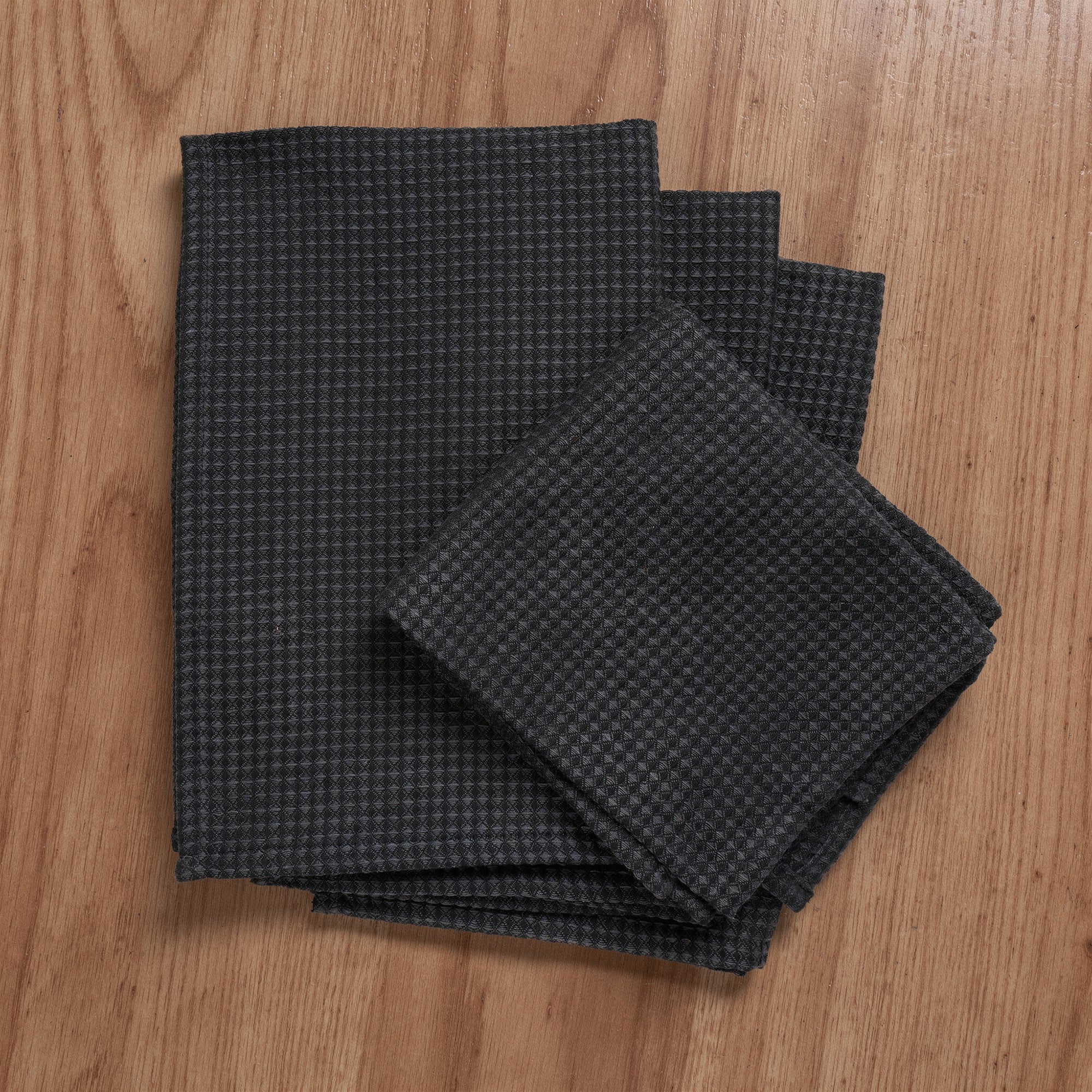
Metallic thread and embroidery pick up warm light in a way flat print doesn't, which is where a piece like the damask cotton festive napkin, gold and silver embroidered on mercerised cotton, earns a spot on a table that's mostly candle-lit by the time dessert arrives. If gold and silver together feels like too much for the rest of the table, a solid maroon or rich mustard napkin from the table napkin collection does the same job of holding colour under low light without the extra detail.
Putting one table together, start to finish
For a standard 6-seater rectangular table, start with the cloth. A cotton chambray cloth, like the Cotton Red Table Cloth, runs up to 118x57 inch for a full rectangular table, or a 57x57 inch square for a smaller four-seater; getting the size right before you buy matters more for a cloth than for almost anything else on the table, since it can't be adjusted after the fact the way a runner's overhang can. The sizing logic for different table shapes is covered in more depth here if the table isn't a standard rectangle or square.

Over that, a runner in a contrasting jewel tone adds the festive layer without replacing the whole cloth. The Embossed Velvet Maroon Table Runner comes in a 32x150cm length sized for a four-seater or smaller table, with a 240cm option for longer tables; exact drop and overhang math against your table's actual length is worked through in the table runner size guide. Anchor both ends under the centrepiece or a serving dish rather than letting them hang past the table edge, for the same reason covered above. Placemats and napkins from the placemat collection and the table napkin collection round out the set in a matching or contrasting tone, depending on how much pattern the runner is already carrying. If red is wrong for your room, the same chambray cloth comes in three other shades. The diya thali or a low arrangement of marigolds goes down last, once every loose edge on the table is weighted or tucked away.
Frequently asked questions
Do I need a separate diya thali if there are already diyas on the table?
It earns its place. A metal or ceramic thali gives every diya a non-combustible base, keeps the wick off the cloth, and gathers wax drips and loose petals or rangoli powder in one spot so cleanup is faster and the runner stays clean. It doesn't replace the clear gap around each flame, but it removes the worst version of the problem.
Can I use my everyday tablecloth instead of buying something new?
Yes. A plain cotton or chambray cloth in a neutral tone works fine as the base layer; the festive element can come entirely from the runner, napkins and centrepiece on top, without replacing the cloth itself.
How many placemats and napkins do I actually need for extra guests?
Count seats, not your usual household number, and add one or two spares for a last-minute guest. Packs typically come in fours, sixes or twelves, so it's worth checking the seat count against the pack size before ordering rather than assuming a set will stretch.
What if the table already has a centrepiece I don't want to move?
Build the layers around it rather than under it. Lay the cloth and runner up to the centrepiece's edge, and use the placemats and napkins to define the actual eating space so the fixed centrepiece doesn't end up in the way of a serving dish.

Leave a comment
This site is protected by hCaptcha and the hCaptcha Privacy Policy and Terms of Service apply.