
The morning after Diwali, the dining table tells the story of the night. A ring of hardened wax where a tealight tipped over. A dark patch on the runner where a diya sat a little too close to the edge. Pink dust from the rangoli, tracked up onto the curtain hem by someone's dupatta.
All three look like "a stain", but they are three different problems. Wax is a solid that sits on top of the fibres. Diya oil and ghee are liquids that soak into them. Rangoli colour is a fine powder that lodges between them, and some of it is dye that wants to bond. Each one needs a different first move, and the wrong first move is what makes a stain permanent.
So the short answer: lift wax once it is hard, then draw out the last of it with heat through paper. Break oil down with plain dish soap before any water touches it. Brush rangoli colour off dry, then wash it in cold water. Heat and rubbing are the two things to hold back on until you know which stain you have.
Why the first move matters more than the detergent
Most stain damage happens in the first ten minutes, and it is usually done by a helpful person with a wet cloth.
Water on wax does nothing useful. The wax stays put, and rubbing pushes the soft parts deeper into the weave. Water on oil is worse: oil and water do not mix, so plain water just spreads the oil outwards into a bigger, fainter ring. And water on dry rangoli powder turns loose pigment into a liquid dye, which then soaks into the fibre exactly the way the dye in the fabric itself did when it was made.
Heat is the other trap. Warmth helps get wax out, because melted wax can be soaked up by paper. But heat on a colour or oil stain that has not been fully removed can set it, and a hot dryer cycle is the usual way that happens. The habit worth building is simple: check the stain is gone while the fabric is still damp, and only then let it dry in heat or sun.
How to remove candle wax from fabric
Wax is the easiest of the three, as long as you are patient.
- Let it harden. If the wax is still soft, wait. To speed it up, hold a bag of ice against it for a few minutes, or put a small item like a napkin in the freezer.
- Lift the hard wax off. Flex the fabric so the wax cracks, then ease the flakes away with a blunt butter knife or your fingernail. Do not scrape hard enough to rough up the surface.
- Draw out what is left with heat. Put plain paper (brown paper, blotting paper or a few layers of paper towel) above and below the stain. Press with an iron on low to medium heat, with no steam, for a few seconds at a time. The wax melts into the paper. Move to a clean part of the paper and repeat until no more grease shows on it.
- Deal with the shadow. Coloured candles, and the dyed wax in some decorative diyas, can leave a faint tint once the wax itself is gone. Treat that as a colour stain: dab a little liquid detergent on it, leave it for ten minutes, then wash cold.
Avoid newspaper for step 3. The ink can transfer to a pale cloth when it is warm, which swaps one stain for another.
Diya oil and ghee on a tablecloth
Oil stains are about chemistry, not force. A drop of mustard oil or ghee spreads along the fibres and holds on. Detergent works because it grabs oil at one end and water at the other, and plain dish soap is built to do exactly this job on kitchen grease.
Blot first, gently, with a dry paper towel. If the spill is fresh and large, a sprinkle of talc or cornflour can soak up more over half an hour; brush it off before the next step. Then work a few drops of dish soap into the stain from both sides with your fingertips, leave it for 15 to 30 minutes, and wash in the warmest water the care label allows. Cotton usually takes warm water well; check before you try it on anything printed or dyed in a deep colour.
Old oil is harder. Ghee that has sat through a long evening and been walked past for a day will have spread and partly set. It often needs two rounds of soap and wash, and a turmeric-heavy dish spilt alongside it adds a yellow that oil treatment will not move. That second problem is covered in more depth in our guide to oil and haldi stains on clothes, and the same method works on table linen.
Gulal and rangoli colour: dry before wet
Rangoli powder is a mix of chalk or stone powder and colour. Gulal is finer and is mostly colour. The base part washes out easily. The colour part is the one that stains.
Shake the fabric outside first. Then brush the surface with a soft, dry brush, or lift the dust with the sticky side of tape, until no loose powder comes away. Only then wet it, and use cold water. Soak in cold water with a little detergent, then wash cold. Warm water opens up cotton fibres and helps a dye bond to them, which is what you are trying to avoid.
If a pink or green tint is still there after one cold wash, do not put the piece in a dryer or out in hot sun. Treat it again while it is damp. Colour moving where it should not is the same thing that happens when a new dark item bleeds in the wash, and the steps in our article on colour bleeding in the wash apply here too.
The method at a glance, by fabric
Cotton, polyester and velvet each change the method a little. Cotton takes heat and soap well but soaks up oil and colour quickly. Polyester holds dye stains less readily but softens under a hot iron. Velvet's raised pile is the problem: it crushes under pressure and heat, so the iron-and-paper trick needs care.
| Stain | First move | Cotton | Polyester | Velvet (polyester pile) |
|---|---|---|---|---|
| Candle wax | Harden, then lift | Paper and warm iron, then wash | Paper and low iron only; test a hidden corner | Iron on the back, paper on the pile side, very light pressure |
| Diya oil, ghee | Blot, then dish soap | Soap, then warm wash | Soap, then lukewarm wash; oil can cling, so repeat | Soap with fingertips, never scrub; wash gently |
| Rangoli, gulal | Dry brush or tape | Cold soak, cold wash | Cold wash; usually releases well | Brush with the pile; cold wash |
One case cuts across the table: a velvet runner with wax on it. Pressing a hot iron down on the pile side flattens it, and the crushed patch can look like a stain of its own. Lay the runner pile-side down on a towel, put paper between the pile and the towel, and iron the back on low. The wax melts out into the paper below while the towel cushions the pile.
Curtains are a different job
A curtain stain is usually on the hem, and the curtain is heavy and hanging. Take it down rather than working on it in place. Water run down a hanging curtain carries the stain along with it and leaves a tide line.
For a cotton curtain such as the Cotton Beige Curtain, treat the stain on a flat surface, then wash the whole panel so you do not end up with one clean patch on a duller curtain. The product page says the curtains are machine washable and advises washing dark colours separately, which matters most after a rangoli treatment. Pale curtains near a puja corner show diya smoke and oil first, so if you are choosing for that spot, the darker colours in the curtain collection hide a faint mark that a cream panel will not.

Choosing linen for the festive table
If the table is going to carry diyas and tealights every year, the fabric choice decides how much of this work you do.
Cotton is the forgiving one. It takes a warm wash and a hot iron, so wax and oil both come out with the standard method. A printed cotton cloth like the Cotton Red Table Cloth, a 145 x 145 cm chambray cotton square, also hides a faint shadow inside its pattern better than a solid pale colour does.

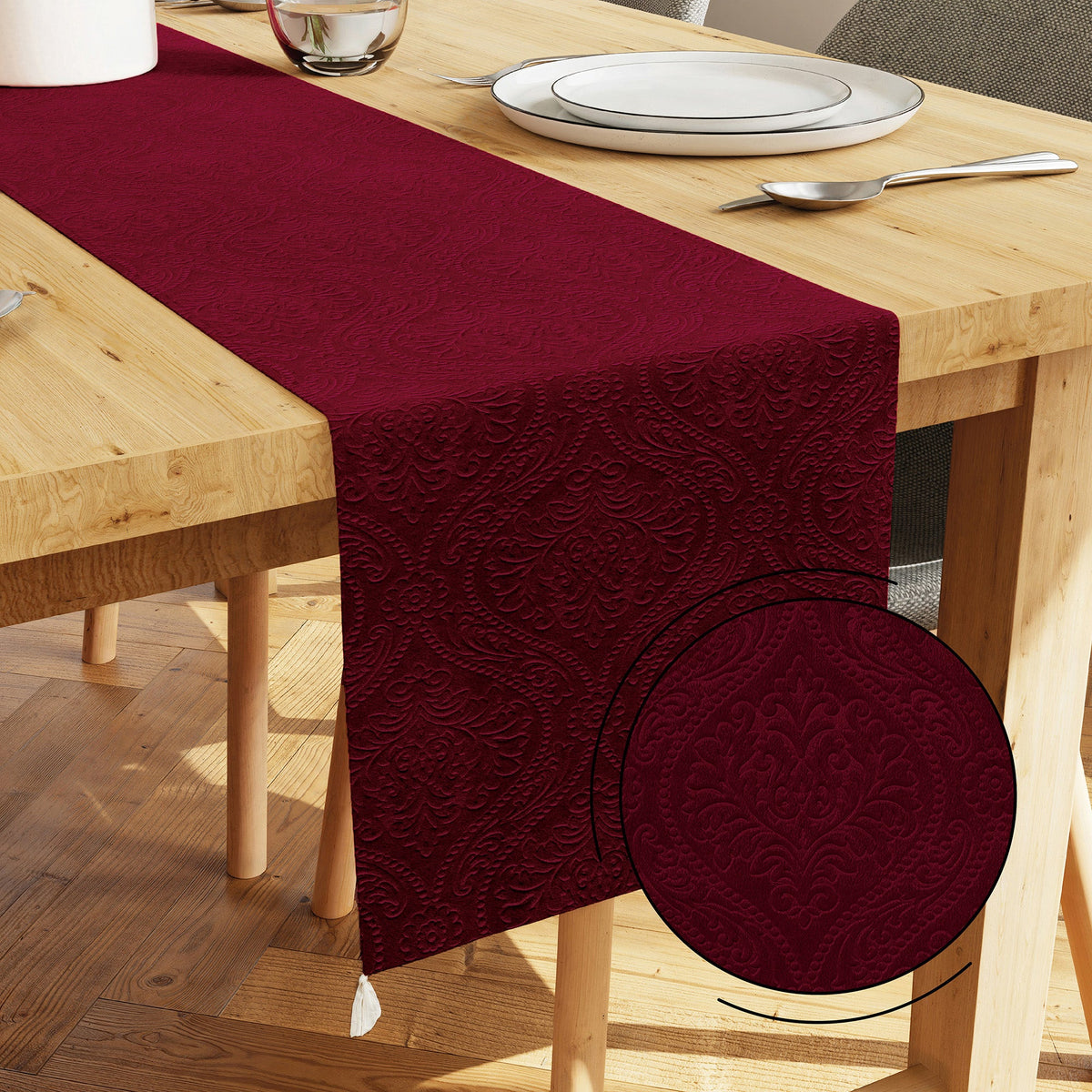
Velvet looks the most festive and is the fussiest about wax. The Embossed Velvet Maroon Table Runner is 175 GSM polyester velvet, and its product page lists it as machine washable. Its deep maroon will hide oil better than wax, since wax stays visible as a pale crust until it is lifted. A reasonable plan for a table that will hold lit diyas: velvet runner down the middle, diyas on small brass or steel plates rather than on the cloth, and a washable cotton cloth from the table cloth collection underneath to take the drips the plates miss.
Napkins get the oil from fingers and the turmeric from food. A pack of plain cotton ones from the table napkins collection can go straight into a warm wash after dish-soap pre-treatment, which is more than most embroidered festive napkins will take.
FAQ
Can I use a hair dryer to remove candle wax?
Yes, for small spots. Warm the wax with the dryer and blot it up with paper towel as it melts. It is less controlled than an iron with paper, and on velvet the moving air can push melted wax sideways into the pile.
Will dish soap damage coloured fabric?
Plain dish soap is mild and is widely used on washable fabrics. Dab a little on a hidden seam first if the cloth is a deep or hand-printed colour, and wait a few minutes to see whether any colour comes off on a white cloth.
What if the oil stain is only visible after the cloth has dried?
It has been set by the heat of drying. Repeat the dish-soap step and wash again; older oil marks often need two or three rounds. Avoid ironing over the spot until it is gone.
Does rangoli colour come out of polyester curtains?
Usually more easily than from cotton, because polyester takes up loose dye less readily. Brush off every bit of dry powder first, then wash cold.


Leave a comment
This site is protected by hCaptcha and the hCaptcha Privacy Policy and Terms of Service apply.