
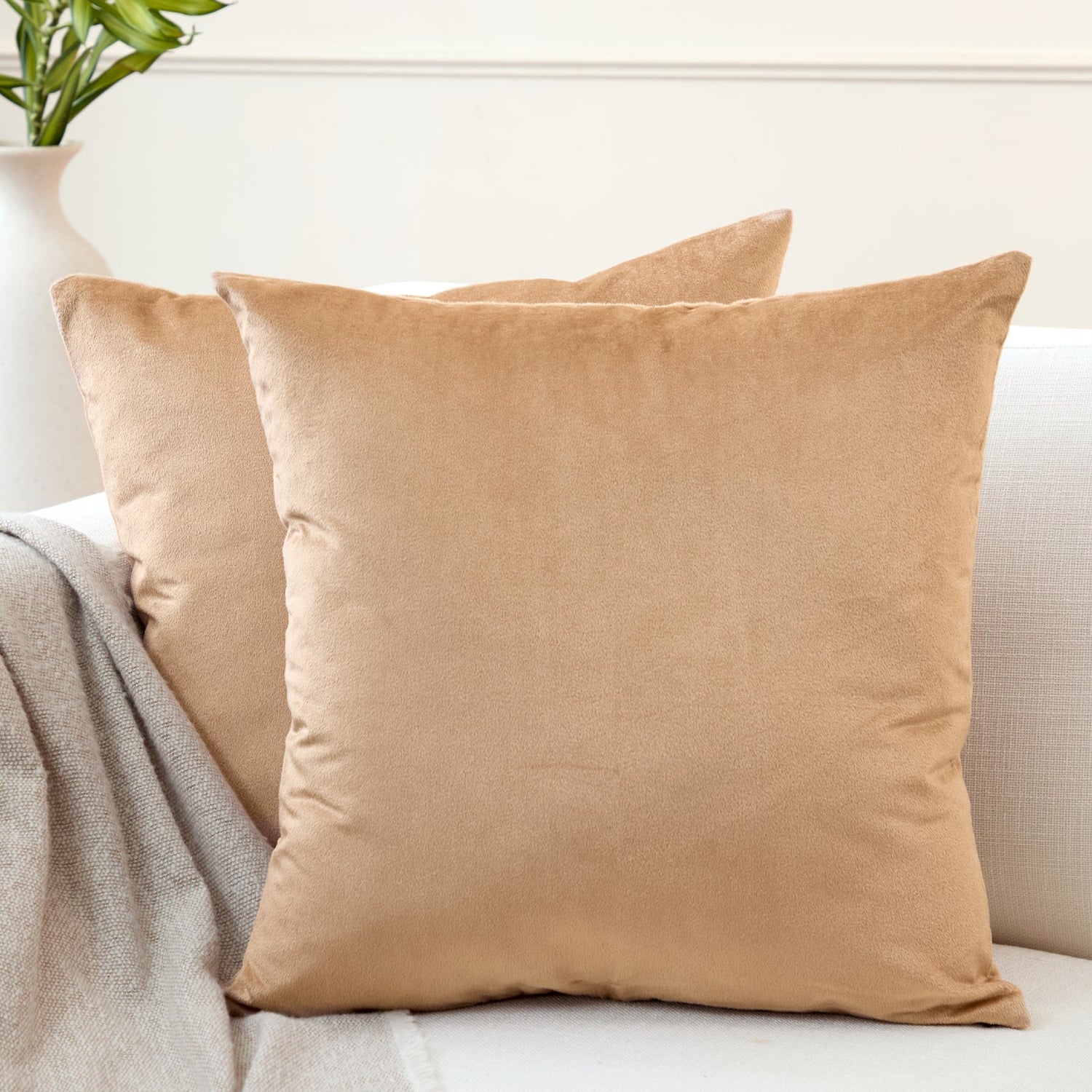
Nobody argues about whether velvet looks good. Pick one up in a shop, run a hand across the pile, watch the colour shift from deep to bright as the light moves, and the appeal settles the question on the spot. The harder question, the one worth actually thinking about before you spend, is a different one: will you still be glad you bought it in six months, in your room, with your household walking past it every day?
The honest answer is not a flat yes. Velvet is worth it for a shaded bedroom accent, a formal living room, or a festive refresh you put out for a season and pack away. It is a harder sell for a sunny, high-traffic sofa that a couple of kids and a dog treat as home base. The fabric has not changed between those two rooms. Your tolerance for its one demanding habit has.
The one thing that decides everything
Velvet is a single fabric with a single dominant trait, and almost every reason to love it or regret it traces back to that trait. It has a dense, upright pile, thousands of tiny fibre tufts standing on end, and that pile is what catches light, holds warmth against you, and grabs anything that drifts onto it. Sheen, depth of colour, that faint warmth when you lean back: all of it is the pile doing its job. Dust settling into the nap, a cat's fur clinging where it would slide off cotton, a warm patch on a June afternoon: also the pile, doing the same job you can't switch off.
So the buying decision is not really about velvet versus cotton in the abstract. It is about whether your room lets that pile be an asset or turns it into a chore.
What velvet cushion covers actually give you

The upside is real and hard to fake with anything cheaper. Velvet reads as expensive because the pile bends light in two directions at once, so a single cushion looks like several tones of the same colour depending on where you sit. Jewel tones especially, deep green, wine, mustard gold, gain a richness that flat cotton weave never manages. It adds visual weight to a room, which is why a pair of velvet covers can make a plain sofa look considered rather than sparse.
There is a tactile pull too. The pile has a slight give and warmth that people instinctively reach for, which is genuinely nice on a winter evening or in an air-conditioned bedroom where a cool room and a warm cushion balance out. If the look you are after is layered and a little luxurious, a couple of well-placed velvet covers tend to do more for a room than the same money spread across four plain ones. A saturated shade like the velvet green cover above is the sort of piece that anchors a whole seating arrangement.
None of that is in dispute. It is only half the picture.
The downsides, sized to an Indian home
Much of the velvet advice you will find online is written with cooler, drier, carpeted homes in mind. A few of the trade-offs land differently here, and they are worth knowing before you commit.
Heat is the big one. The pile traps a thin layer of warm air against your skin, which is the whole point in December and a real drawback in a non-air-conditioned living room from April to June. In a room that runs warm for a good part of the year, a velvet cushion you actually lean against can feel stuffy in a way a cotton one never does. This cuts by room: velvet suits an AC bedroom or a winter-heavy North Indian home far better than a non-AC hall in a coastal city.
Then there is the daily tax of dust and pet hair. The same nap that holds colour holds fine dust and fur, and in a dusty city or a home with a shedding pet you will see it collect faster than on a smooth weave. It is manageable once you know the trick. A rubber glove dragged across the surface in one direction, always following the lie of the pile, rolls the hair into a line you can lift off in seconds; a lint roller or the upholstery brush on a vacuum does the same. Fold it into whenever you dust the room and it stays invisible. Skip it for a fortnight in a pet home and velvet punishes you more visibly than cotton would.
Damp is a monsoon caveat rather than a deal-breaker. Velvet's pile holds moisture and dries slowly, so a cover that gets a damp-cloth clean during a humid stretch can stay clammy longer than you expect. It is fine if you let it dry flat with air moving over it, and a problem only if you rush it back onto the cushion damp. This matters more in June to September and more in a sealed, humid room than a ventilated one.
Fade, finally, is a placement decision. Saturated dyes take the brunt of harsh, direct sun, and India's is harsh. A deep velvet on a west-facing sofa that catches hours of afternoon light will lose depth faster than the same cover on a shaded chair. It is not a reason to avoid velvet, it is a reason to keep the darkest pieces out of the direct beam and let a sheer curtain take the edge off.
One more thing worth knowing: not all velvet behaves the same. Cotton velvet, polyester velvet and crushed velvet differ in how much they shed, pill and crush, so treat "velvet is durable" as conditional on the specific fabric and on decent care, never a blanket promise. Check the individual product page for what you are actually buying. If you are having covers stitched instead, our guide to velvet fabric by the metre explains the difference between the embossed and plain velvets sold by the metre.
Worth it if, skip it if
Set the pros and cons against your own room and the answer usually resolves itself.
Velvet is worth it if the cushions live somewhere shaded or air-conditioned, if the room is more formal or decorative than rough-and-tumble, if nobody in the house sheds heavily onto the sofa, or if you want a seasonal, festive layer rather than an everyday workhorse. In those rooms the pile is pure upside and the maintenance is a two-minute habit.
Lean away from velvet, or keep it to accent pieces only, if the cushions sit in direct afternoon sun, if a non-AC room runs hot for months, if a dog or cat treats the sofa as a bed, or if small children mean daily spills and you want covers you can throw in the machine without a second thought. None of these make velvet impossible, they just move it from the everyday cushions to the one you keep on the chair nobody wrestles on.
A worked example: a sunny TV room that the kids use as a trampoline is the wrong home for a full set of velvet. Base the everyday cushions there on something washable and forgiving from the cushion cover range, and keep a single velvet cover for the reading chair in the shaded corner. Same room, right fabric in each spot.
The everyday-and-festive strategy

There is a framing that resolves most of the tension. Velvet does not have to be a full-time commitment. It works beautifully as a seasonal layer you swap in for winter and the festive stretch around Diwali, over a hard-wearing everyday base you keep year round.
The base does the daily work: a washable, warm-weather-friendly fabric like the cotton canvas cushion covers, for instance the charcoal grey cotton canvas cover with its concealed zip, handles the heat, the kids and the machine wash without complaint. Then a couple of velvet covers, a gold velvet pair or a deep green, come out when the evenings cool and the house is dressed for guests. You get the plush festive look for the months it makes sense, and you are not fighting velvet's warmth and upkeep in May. Bought this way, the "worth it" maths shifts firmly in velvet's favour, because a seasonal accent you love for a third of the year is an easy yes in a way that a compromised everyday sofa never is.
If you like textured luxury but suspect velvet's demands are not for you, chenille covers give a softer, more muted plushness with a shorter pile that does not play with light the way velvet does, a reasonable middle path.
Caring for velvet, briefly
The dry-clean-only reputation is outdated for a lot of the cushion velvet sold today. Many covers can be home-washed with a light touch if the care label allows it: turn the cover inside out with the zip closed, use a mesh bag, run a cold gentle cycle with mild detergent, and keep the spin low. The machine is not the enemy; a hard spin and hot drying are what flatten the pile. Because getting this slightly wrong is the main way people end up disappointed with velvet, it is worth doing properly. The full method, including how to revive a crushed patch, is in the companion guide on washing velvet cushion covers without flattening the pile.
Frequently asked questions
Are velvet cushion covers worth the money?
For the right spot, yes. A pair of velvet covers tends to do more for a room than the same spend on plain cushions, and washed gently and kept out of harsh sun, velvet holds its look reasonably well, though how well depends on the fibre. The value case weakens on a hot, sunny, high-traffic sofa, where a washable fabric earns its keep better. Buying velvet as a seasonal accent rather than an everyday set is usually the strongest-value way in.
Is velvet good for cushion covers in summer?
In an air-conditioned room, it is fine year round. In a room that runs hot without AC, velvet's pile traps warmth and can feel stuffy against the skin through the Indian summer, so many people move velvet to the bedroom or a shaded chair for those months and bring it back when the weather cools.
Do velvet cushion covers attract dust and pet hair?
Yes, more than smooth cotton, because the pile catches and holds fine particles. It comes off easily though: drag a rubber glove or a lint roller across the surface in the direction of the pile and the hair lifts away in a line. A quick pass whenever you dust the room keeps it looking clean.
Do velvet cushion covers fade in sunlight?
Deeply dyed velvet can lose some depth in strong, direct sun over time, as most saturated fabrics do. Keep darker jewel-tone covers off a sofa that catches hours of direct afternoon light, or soften the light with a sheer curtain, and fading stops being a concern.


Leave a comment
This site is protected by hCaptcha and the hCaptcha Privacy Policy and Terms of Service apply.