

You hang a new pair of cotton curtains and they pool nicely on the floor, exactly the look you wanted. One warm wash later, after the monsoon left them smelling of damp, they come back sitting an inch above the floor, hovering like they are slightly embarrassed. Nothing is wrong with the curtains. They just did what cotton does.
Cotton shrinks, yes, and mostly it happens the first time the piece meets water and heat. The surprise is rarely the fact of it. It is the amount, and where the amount lands: a bedsheet losing a few centimetres barely registers, but the same loss decides whether a curtain still reaches the floor, whether a tablecloth still covers the table, or whether a cushion cover still fits over its insert. Most guidance treats shrinkage as a laundry problem for sheets. For a home full of cotton curtains, covers and table linen, it is really a fit problem, and fit is what this piece is about.
Why does cotton shrink in the first place?
To make cotton thread, the fibres are combed straight and the yarn is pulled tight and held under tension as it is spun and woven. The finished fabric is, in a sense, a fabric stretched into shape and frozen there. Then water gets in. The fibres absorb it, swell, and the yarn relaxes out of its stretched arrangement, drawing the weave closer together and the whole piece smaller. Heat speeds the swelling and relaxing along, which is why hot water and a hot dryer are the usual culprits. Agitation, the mechanical push and pull of a wash, works the relaxed yarns tighter still.
The useful consequence of this is that the biggest move happens once. A piece that has never been washed is carrying the most built-in tension, so its first proper wash releases the most. This is called relaxation shrinkage, and it is why a new cotton item can look noticeably smaller after wash one and then change very little with each careful wash after that. There is a slow trickle of further shrinkage over a textile's life, but the cliff is at the start.
So you cannot stop cotton shrinking, only manage it. What you control is heat, agitation and water, and once you have those in hand the rest is sensible handling.
Does cotton shrink every time, or just the first wash?
Mostly the first wash, and mostly all at once. If a cotton piece is going to lose 4 percent, the great bulk of that shows up early rather than creeping in a little each month. After that first big relaxation it settles, and normal careful washing keeps it roughly where it is. This helps, because the risk sits in one event you can prepare for rather than a slow decline you can never get ahead of.
How much is "a bit"? Cotton textiles commonly shrink somewhere in the region of 3 to 5 percent, and a piece that has never been treated to hold its size can go higher, with 10 percent sometimes cited as an upper end. Treat those as a rough, widely repeated range rather than a precise promise. The real number depends on the yarn, the weave, the mill's finish, and how you wash it. A loose, light cotton tends to move more than a dense, tightly woven one, though a good mill finish can override that.
How much cotton shrinks, and what it actually breaks
Three to five percent sounds trivial until you measure it against something fixed, like a floor or the edge of a table.
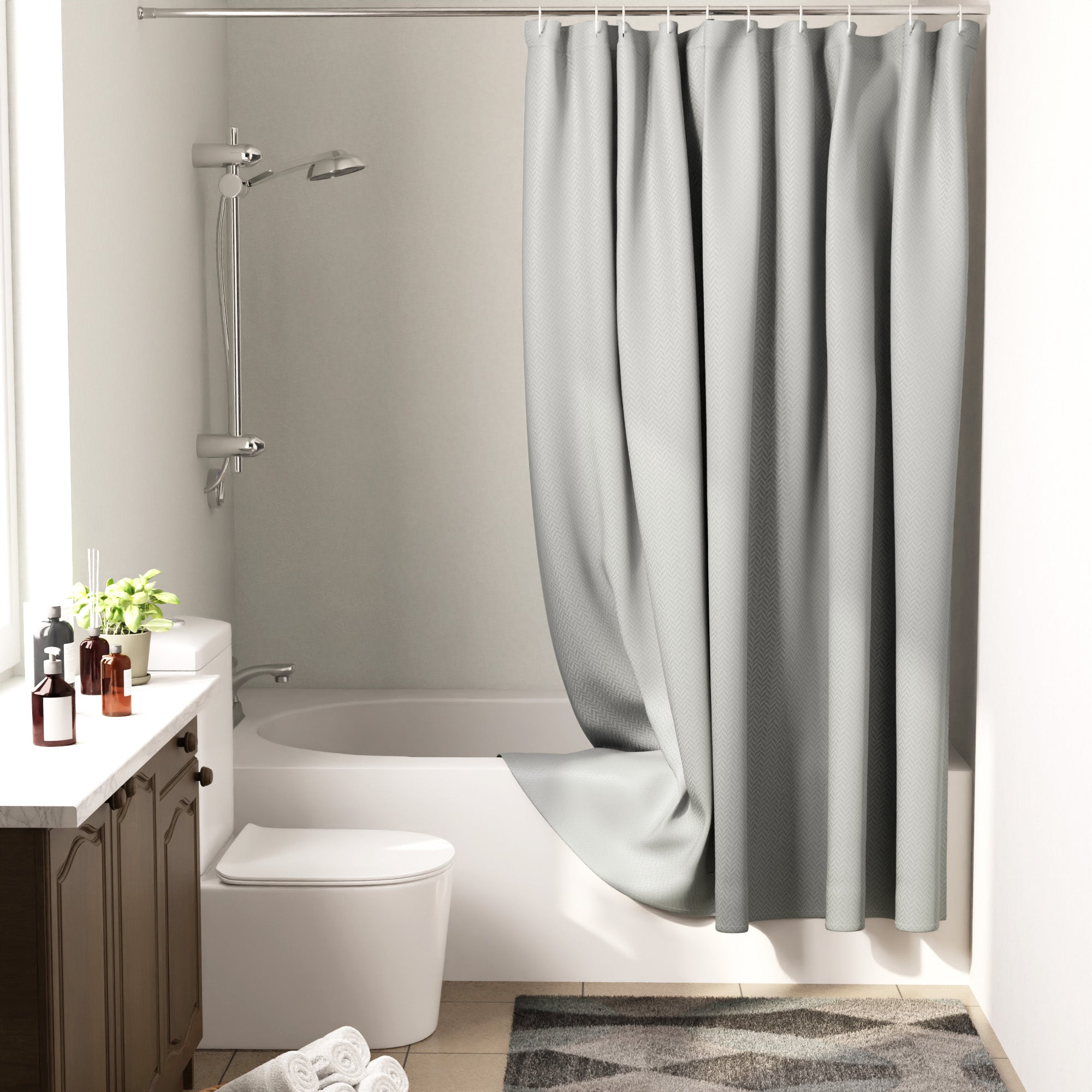
Take a standard 7 ft cotton door curtain, about 213 cm of drop. Lose 4 to 5 percent and you lose roughly 8 to 11 cm, close to a hand's width, lifted straight off the floor where everyone can see it.
The same maths plays out differently across a catalogue of cotton home textiles, because each category fails in its own way.
| Product | Typical size | Roughly 4% shrink | What actually goes wrong |
|---|---|---|---|
| Door curtain | 7 ft drop (213 cm) | about 8–9 cm shorter | hem lifts off the floor, the pooled look is gone |
| Cushion cover | 16 in (40 cm) | about 1.5 cm smaller each way | the cover fights the insert, corners look under-filled |
| Tablecloth | 60 in (152 cm) wide | about 6 cm less each way | less overhang, edges of the table start to show |
| Table runner | 72 in (183 cm) long | about 7 cm shorter | the drop at each end shrinks or disappears |
| Bathmat | 50 x 80 cm | about 2–3 cm each way | a smaller footprint underfoot, usually cosmetic |
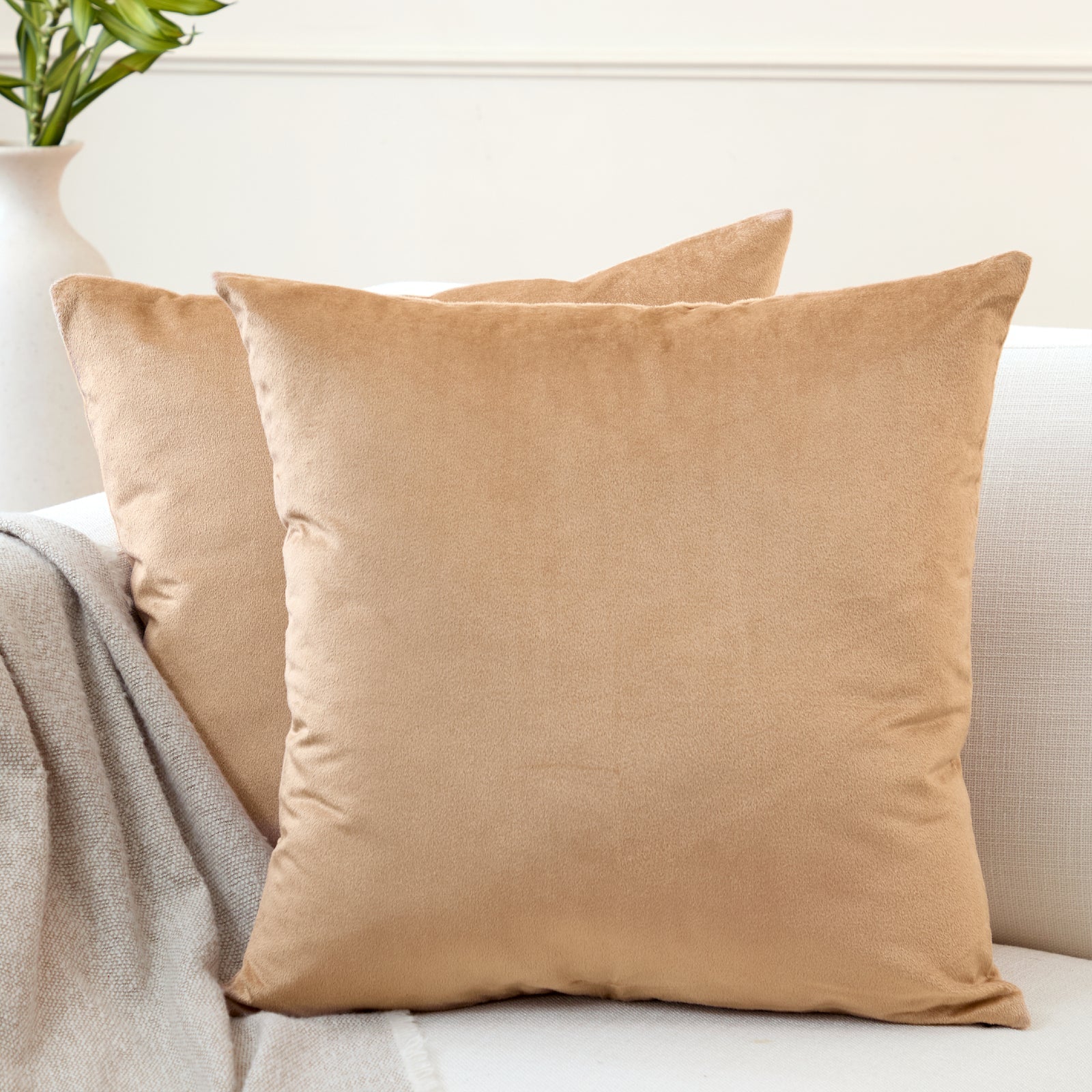
For a bathmat, shrinkage is nearly a non-issue. For anything measured against a fixed object, a floor, a table, a cushion insert, the same percentage turns into a visible failure. Cushion covers are the sneakiest of the lot, because covers are usually cut a touch smaller than their insert on purpose so the cushion looks plump. Shrink the cover on top of that and a 40 cm cover meant for a 40 cm pad becomes a genuine struggle to close.
How to tell if a cotton product is pre-shrunk before you buy
Some cotton is treated at the mill to do most of its shrinking before it ever reaches you. The common industrial process is called sanforising, and fabric that has been through it is often labelled pre-shrunk or pre-washed. A pre-shrunk piece has already released most of its tension, so it holds its stated size far better through your first wash. This is a real distinction, not marketing gloss. It is a fabric treatment used by mills across the industry, never any kind of Encasa certification.
The catch when shopping online in India is that care-label disclosure on cotton home textiles is patchy, so you often cannot tell. A few things help. Look for the words pre-shrunk, pre-washed or sanforised in the product description or on the care label. Failing that, weight and weave are decent proxies: a heavier, tightly woven cotton tends to move less than a loose, airy one, which is one of the practical reasons fabric weight measured in GSM is worth checking. And learning to read the care-label symbols tells you the maximum safe wash temperature, which is the single biggest lever you have over how much a piece shrinks. If a listing says nothing at all, assume it will shrink and plan for it when you choose a size.
How to wash cotton without shrinking it, the Indian way
Most shrinkage advice online quietly assumes a front-load machine and a tumble dryer, which describes very few Indian homes. The reality here is a mix of top-load semi-automatic machines, top-load fully-automatics, front-loaders, and a great deal of hand and bucket washing, and each treats cotton differently.
On a top-load semi-automatic, the twin-tub kind you fill by hand, the water going in is whatever you pour, so keep it cold to lukewarm and never add hot water from a geyser. The wash tub agitates hard, so give cotton the shortest wash that gets it clean and skip the spin-dryer's longest setting.
A top-load fully-automatic decides its own water level and often draws from a single cold inlet, which is kind to cotton, but the central agitator can be rough. Use the gentle or delicate cycle for anything you want to keep to size, and cut the spin speed.
A front-loader is generally the gentlest on cotton, tumbling rather than agitating, and its temperature control is the thing to respect. Pick a cold or 30 degree wash and ignore the 60 degree cottons setting, which is exactly the heat you are trying to avoid.
Then there is the bucket, which most laundry advice ignores entirely. In a lot of Indian homes, cushion covers, runners and curtains are hand-washed in a bucket, so the water temperature and how you wring them out matter more than any dryer setting ever could. Hand-washing in hot water is likely a bigger real cause of shrunk cotton here than heat drying, simply because dryers are rare and buckets filled from the geyser are not. The fix is easy: use cold or lukewarm water, and when you are done, press and squeeze the water out rather than wringing and twisting, which distorts and tightens the weave. This matters most for cushion covers, whose shape you are trying to protect. Wash cotton canvas covers like the charcoal grey canvas cover inside out in cool water with a mild detergent, so they still slip over the insert afterwards.

Whichever of the four you use, the levers are the same: cool water, gentle handling, short cycles. Heat and rough agitation are the two dials that push a piece toward the higher end of its shrinkage range instead of the lower.
Drying without undoing your good work
You can wash cotton perfectly and then shrink it on the line, because drying is where heat does its damage in an Indian home. Line-drying in shade is the safe default. Hard afternoon sun fades colour and dries fabric bone-hard and hot, a rougher time than a gentle dry in the breeze. Hang curtains and tablecloths by their full width rather than folded over a thin line, so their own weight keeps them stretched to shape as they dry.
For table linen that has to lie flat and keep its length, like a beige striped cotton runner, drying flat or over a wide rail beats bunching it on a line. During the monsoon, when nothing dries and everything smells of it, the temptation is a hot machine dry. Resist it: a slow dry in moving air is kinder to the size than a fast, hot one.

Bathmats are the forgiving exception. A little shrinkage in a cotton bathmat changes nothing about how it works underfoot, so dry them faster and worry less, giving them enough airflow to stop them staying damp. That matters more for smell and mildew than for size.
Does ironing fix a shrunk cotton item?
Not really, though a lot of advice implies otherwise. Ironing a slightly damp cotton piece and pulling as you press will stretch it out a little and make it look longer or wider for a while. That is the fibres being physically tugged, not the shrinkage being reversed. The relaxation that happened in the wash is a change in the yarn's arrangement, and pressing does not undo it. The stretch relaxes back the next time the piece is washed. So iron for the crease and finish, but do not count on it to bring a short curtain back to the floor for good.
Can you actually unshrink cotton?
You will find a popular trick everywhere: soak the shrunk item in lukewarm water with a little hair conditioner or baby shampoo, then gently stretch it back while damp. Be honest with yourself about what it can do. On wool and some blends, where the fibres genuinely relax with the conditioner, it can recover a bit of size. On 100 percent cotton the results are unreliable at best, because you are fighting that same set-in relaxation, and the piece tends to drift back once it dries and is washed again. It is worth a try on something you have nothing to lose on, but not a plan to lean on when you are buying.
All of which points back to the practical defence. Because you cannot reliably reverse shrinkage, the sensible move is to buy for it. When a cotton piece has to meet a fixed measurement, a curtain that must touch the floor, a tablecloth that must overhang, size up rather than exactly. Choosing a 7 ft cotton curtain like the cream sheer pair for a drop that is genuinely closer to 6 ft 8 gives the fabric its 3 to 5 percent to give, and it still lands where you want it after the first wash. Plan for the shrink and it stops being a problem.
FAQ
Does cotton shrink every time you wash it?
The large majority happens in the first proper wash, when the fabric releases the tension built into it at the mill. After that it settles, and careful cool washing keeps it roughly stable. You may see a small amount of further shrinkage over years of use, but nothing like that first drop.
Does higher GSM cotton shrink less?
As a rule of thumb, yes. A heavier, more tightly woven cotton has less slack to release than a light, loose one, so it tends to hold its size and shape better through washing. Weave tightness matters as much as raw weight, but the two often go together.
Is hot water or the dryer the bigger risk if I do not own a dryer?
Hot water, easily. In a home without a tumble dryer, the main heat a cotton textile ever meets is hot wash or rinse water, often a bucket filled from the geyser. Switching that to cold or lukewarm removes the single biggest shrink driver most Indian households have.
Does dry-cleaning prevent shrinkage?
Largely, because dry-cleaning uses solvents rather than water, and it is water swelling the fibres that triggers relaxation shrinkage. It is overkill for everyday cotton and adds cost, but for a special piece you want to keep exactly to size, it sidesteps the water that sets the shrinking off.

Leave a comment
This site is protected by hCaptcha and the hCaptcha Privacy Policy and Terms of Service apply.