
Most people pick a replacement ironing board cover by the print, notice it a fortnight later only because the iron keeps snagging, and never work out why. The pattern on top is the one thing that has no effect on how the cover performs. What decides whether ironing is quick or a slow fight is the layer you can't see and the way the cover is made, and that in turn depends on something nobody at the shop asks you: what kind of iron you use, and how often.
This guide assumes you already know your size fits. If you haven't measured your board yet, start with our ironing board cover size guide first, because a beautifully specced cover that gaps at the nose is still a bad cover. What follows is the decision after fit: what the cover should be made of, and why.
The short version
A good ironing board cover does three jobs, and you weigh them differently depending on how you iron. The surface fabric controls how the iron glides and how much grip you get. The padding underneath controls how evenly heat and pressure reach the garment, and how long the cover survives daily use. Heat reflection, the marketing headline on silver covers, is real but modest, and it helps a dry iron more than a steam-heavy one. If you iron a few shirts a week with a steam iron, a plain cotton cover on a firm felt pad will serve you better than a slippery metallic one. If you run a dry iron through a large weekly pile, the reflective surface earns its place.
Match the cover to how you iron, not to a spec sheet
Every buying guide online lists the same features in the same order and leaves you to guess which matter for you. They matter differently depending on one thing the guides skip: your iron. A dry iron puts all its work into heat and pressure, so anything that returns heat to the underside of the fabric genuinely speeds it up, and there is no steam trying to make the surface slippery. A steam iron floods the fabric with moisture, and here grip matters as much as speed. You want the garment to stay put while you push steam through it, and a very slick reflective surface can let lightweight fabrics slide around under the plate.
A lot of homes here fall in the middle, with a combo iron used dry for a quick touch-up and with steam for the creased cotton pile on a Sunday. That mixed use is exactly why a cotton-faced cover over a heat-returning pad is the safe default: it grips when you need it and still moves heat efficiently, without committing you to the trade-offs at either extreme.
Cotton or metallic: grip and precision versus speed
Cotton is the traditional surface and still the sensible default for most homes. It grips lightly, so shirts and saree pleats stay where you set them, and it takes steam without any drama. Its weaknesses are honest ones: it scorches if you park a hot plate on it, and in a humid climate it holds damp. A cotton cover put away still warm and moist after a steam session is the classic way to grow a musty smell.
Metallic or silicone-coated covers, the silver ones, put a reflective, slick face on top. That surface bounces heat back up towards the garment and slides freely, which suits fast dry ironing of a big pile. The trade-off is grip. Lightweight synthetics and thin cottons can shift on a very slick surface, and some people find steam beads and runs on a silicone face rather than passing through. A metallic cover isn't a mistake, but for the mixed steam-and-dry ironing most homes actually do, it optimises for a speed problem you probably don't have while giving up the grip you'll miss on pleats and collars.

Encasa's covers sit firmly on the cotton side of this split. If you steam-iron a mix of cotton shirts and saree pleats and want them to stay put, the Big Leaves Blue cover is the kind of thing you want: 100% printed cotton laminated to a soft fibre pad, with a drawstring and lock to cinch it tight so the grippy surface doesn't wander. Its listing states a scorch-resistant finish rated to tolerate ironing heat up to 220°C, which you should read as this particular product's own stated spec rather than an industry benchmark, since no home ironing cover is a certified heat shield. If you'd rather line up several prints and pad thicknesses before deciding, the ironing board cover collection has the full set in one place.
Padding: settle the foam-versus-felt question by frequency
This is the spec that decides how the cover feels for years, and it is the one the internet contradicts itself on. Some guides list foam as a normal padding option; others tell you to avoid foam outright because it loses its shape and can deform under heat. Both are half right. Foam and felt aren't better or worse in the abstract; the thing that separates them is how often you iron.
Foam cushions beautifully when new. It is soft, springy and cheap. Under sustained high heat and frequent pressing, though, it compresses and can glaze, developing a hard shiny patch along the path your iron travels most. If you iron once a week, foam may outlast your interest in the cover. If you iron every day or two, as many households here do, it flattens where you use it and the surface goes uneven. Felt and cotton batting behave the opposite way: firmer and less plush on day one, but they hold their loft far longer under a daily cadence, which is why the covers built for heavy use tend to use a fibre or felt pad rather than plain foam.

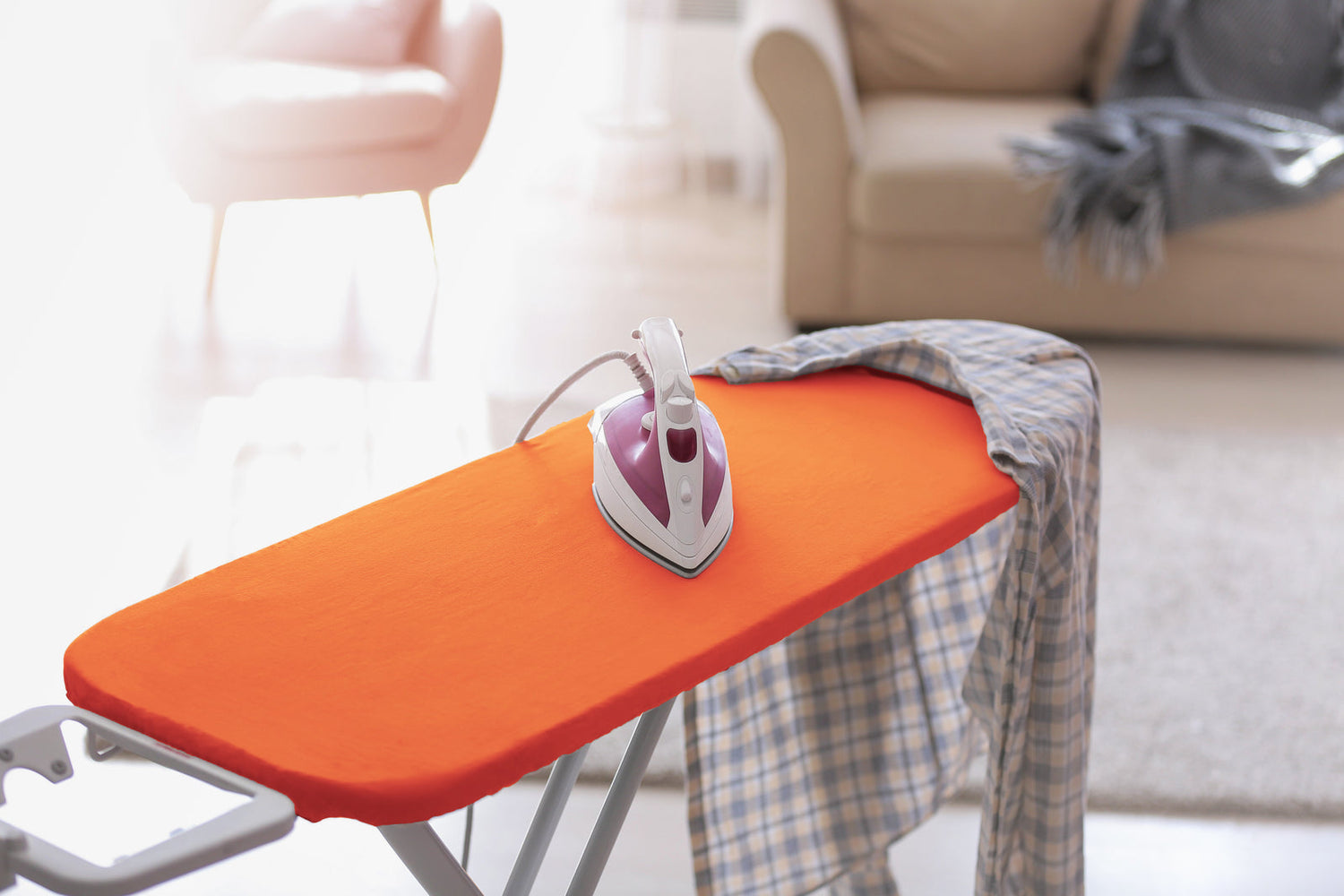
As a practical thickness, 4 to 6 mm of padding is the range worth aiming for, thick enough to stop the board's mesh grid printing through onto your clothes, thin enough that the surface stays firm rather than spongy. It is a rule of thumb from common buying advice, not a certified standard, so treat it as approximate. The Canvas Orange cover is a worked example of the frequent-ironer choice: a cotton face over roughly 4 mm of felt padding, fitted with elasticated edges, a nose pocket and a bungee cord, so it sits firm and stays put through a long session rather than going soft in the middle.
Is a heat-reflective cover actually worth it?
Heat reflection is real physics wrapped in oversold numbers, so separate the two. A pad that returns some heat towards the underside of the garment does let the iron work both faces at once, which can shave time off a big pile. What is not established is the size of the effect. You will see claims like a silver surface reflecting "up to 300% more heat", which trace back to a single product listing with no lab behind them, and figures like that should be read as advertising, not measurement.
The honest version is this: a reflective layer gives a modest speed gain, largest with a dry iron on a heavy load, smaller with a steam iron where the moisture is doing most of the work anyway. Note too that reflection is a property of the pad, not only of a shiny top surface. Several plain cotton covers, including Encasa's, use a fibre pad whose stated design returns some heat upward while letting steam pass through to vent, so you keep the grip of a cotton face and still get a share of the heat return. If you iron occasionally with steam, do not pay a premium chasing a reflection number. If you iron a large dry pile weekly, it is a reasonable thing to want.
Fit and hem: why nose shape decides the fastening
A stiffer or coated fabric holds taut differently from soft cotton, and this is where fit and material meet. On a rounded or Bathla-style pointed nose, a plain elasticated hem alone tends to gap, because the fabric can't pull evenly around the curve. A drawstring, or an elastic hem paired with a tightening strap, cinches the nose properly and keeps the surface drum-tight. The size guide covers nose shapes in detail; the takeaway for material choice is that the firmer the fabric, the more you want a fastening you can actively tighten rather than one that just stretches over and hopes. A cover that fits loosely wrinkles under the iron and undoes everything the padding was meant to do.
When to replace it: watch the cover, not the calendar
Most sources give you a number, three to five years, or point at a warranty. A year figure is a weak guide because it ignores how hard the cover has worked. Replace on the symptom instead. The clear signals are the board's mesh grid starting to print faint lines onto pressed clothes, a shiny glazed patch worn along the iron's usual path, an elastic hem gone slack so the cover shifts, or any brown scorch spotting on the surface. In a humid month, a new musty smell or fresh dark spotting is usually mildew from putting the cover away damp, not a stain you can wash out; dry it fully and if the smell stays, replace it. Any one of these means the cover has stopped doing its job, whether that took eight months or four years.
Buy by use case
For everyday home ironing, the weekly shirt pile, school uniforms, the odd saree, a cotton cover on a 4 to 6 mm felt or fibre pad with a drawstring or strap fastening is the safe pick. The Cotton Twill Triangles cover is a straightforward example, a twill-weave cotton face on a 5 mm fibre pad, sized to three standard boards with an elastic cord and clip.
If you don't have a full-size board, or iron on a table or bed, a padded ironing mat does the same job of cushioning and heat protection without the frame. The luxury anti-slip ironing mats fold away and include a non-slip base and a silicone rest for the hot iron, which suits small flats and travel.
The replacement symptoms above arrive far sooner when a board is worked all day. A guesthouse, boutique, tailor or press service can glaze a pad and slacken a hem in months, not years, so the frequency logic that pushes a home towards felt pushes a commercial setup towards buying covers by the dozen, often in non-standard sizes to fit heavier boards. Our bulk ironing board covers and mats page is set up for that kind of volume and custom sizing.
Frequently asked questions
What is the best material for an ironing board cover?
For most homes, a 100% cotton surface over a firm felt or fibre pad. Cotton grips lightly so garments stay put, takes steam without beading, and glides well once padded. Metallic or silicone covers reflect more heat and slide faster, which suits heavy dry ironing but offers less grip for steam work.
How thick should ironing board cover padding be?
Aim for roughly 4 to 6 mm. That is enough to stop the board's mesh grid pressing through onto clothes, while keeping the surface firm rather than spongy. Thinner than about 4 mm and you feel the metal; much thicker and precision suffers. Treat it as a practical range, not a fixed standard.
Is foam or felt padding better?
It depends on how often you iron. Foam is soft and cheap but compresses and can glaze under frequent high heat. Felt and cotton batting feel firmer at first but hold their shape far longer under daily use. Iron weekly and foam is fine; iron every day or two and choose felt or fibre.
Can you use a steam iron on a silver, heat-reflective cover?
Yes, though results vary. Some reflective and silicone surfaces let steam bead and run rather than pass through, and lightweight fabrics can slide on the slick face. If you steam often, a breathable cotton cover over a pad that vents steam downward tends to behave more predictably.

Leave a comment
This site is protected by hCaptcha and the hCaptcha Privacy Policy and Terms of Service apply.