
Blot the spill, rinse it from the back with cold water, rub in liquid detergent and wash. If a brown mark stays, soak it and wash again before it goes near a dryer or an iron. Two things change this method: milk, which Indian tea usually has, and the care label.
Two habits make these stains harder: reaching for hot water because hot feels cleaner, and reaching for the bar of soap next to the bucket. The reason is in the cup.
Why a tea or coffee stain behaves the way it does
Tea and coffee contain tannins. These are brown plant compounds from the same family once used to turn animal hide into leather, and they cling to cotton. Milk is a different kind of stain altogether, because it contains protein.
Iowa State University Extension's AnswerLine service sorts stains into groups, and it puts coffee and tea in its tannin group and milk in its protein group. The two groups get opposite treatment. A fresh tannin stain can be washed with detergent in hot water, if the fabric can take it. A protein stain needs cold water first, and the service says never to start with hot. Heat cooks the protein onto the threads, much as boiled milk forms a skin in the pan.
This is why stain guides seem to argue. One says soak in warm water, another says cold, and a university page says a hot wash. Many are thinking of plain black tea, where a cold rinse and a hot wash are simply different steps. With milky tea the order starts to matter.
The same service warns against the dryer while any stain is still showing, and another university guide gives the same warning about the iron, because heat sets stains.
AnswerLine also says natural soap, meaning bar soap, soap flakes or a detergent containing soap, makes tannin stains harder to remove. Many homes keep a washing bar near the bucket, and rubbing it on a fresh mark feels right. Read the pack. If it calls itself soap, or the pack does not say, use liquid detergent or dishwashing liquid instead.
How to remove tea stains from clothes
These steps are for black tea on cotton or polyester clothes. Start as soon as you can.
- Blot with a clean, dry cloth. Press and lift, and do not rub, because rubbing spreads the mark and works it deeper.
- Hold the stain under a cold tap with the water running through from the back of the fabric. This pushes the liquid out the way it came in.
- Rub in a little liquid laundry detergent or dish soap with your fingertips and leave it for a couple of minutes.
- Wash in the hottest water the care label allows. Many top-load machines have no heater, so this may simply be your normal wash. Hot water can also shrink cotton, so go by the label and not by the stain.
- Take the piece out while it is damp and look at it in daylight, not under a tube light.
- If you see any brown, do not dry it. Use the soak from US university extension advice: half a teaspoon of dish soap and one tablespoon of white vinegar in just under a litre of warm water, for 15 minutes. Rinse, then wash again.
- Dry it only when the mark has gone.
Many homes dry clothes on a line, so the dryer warning becomes a habit: look at the stain before the piece goes up, because a dried stain is harder to shift.
On silk and wool, follow the label and keep enzyme products away, because both fibres are protein and enzymes digest protein. If the piece matters to you, take it to a dry cleaner.
Do coffee stains come out the same way?
Yes. Black coffee is in the same tannin group as black tea, so the steps above apply. Filter coffee and many cafe coffees have milk in them, so they belong in the next section.
How to remove chai and milky coffee from clothes
A cup of chai leaves two stains in one place. The milk protein needs cold water, and the tannin can take heat. Since heat harms one and cold harms neither, cold goes first.
Soak the stain in cold water and move it around with your hand. Then work in liquid detergent, which also helps with the fat in the milk. A detergent with enzymes on the pack is worth using here, because enzymes break down protein. Soak with it in cold water as its pack directs. Wash in warm water, not hot, and check it while damp.
A brown mark left at this stage is likely to be the tannin, so use the vinegar and dish soap soak, rinse and wash again. Sugar dissolves in water, so the cold soak takes care of most of it.
The guides we read give no chai method as such, so this order comes from putting their two rules together. It also covers the school shirt that comes home with a brown mark and no story, because AnswerLine's advice for an unknown stain is cold water first. If the spill came with ghee, butter or a fried snack, there is an oil stain on top, and that part needs dish soap worked in before the wash.
How do you remove old or dried tea stains?
Treat it as chai, whatever was in the cup, because you may not remember. Soak it for half an hour in cold water with detergent or an enzyme product, then follow the same warm wash and vinegar soak.
Harder rubbing only wears the surface of the cloth. Repeat the soak instead, and stop when a full round brings no visible change.
Some old marks stay. One university guide notes that an old tannin stain may need bleach to go completely, and bleach depends on the label.
What works, what does not and what is risky
| Fix | What the advice says | Where it fits |
|---|---|---|
| Liquid detergent or dish soap | University extension pages list liquid detergent as a pre-treatment, and dish soap for oil stains | Every fresh stain |
| Enzyme detergent soak | Breaks down protein | Chai and milky coffee; not silk or wool |
| Vinegar and dish soap soak | Given by a US university extension page, always as a mix | A brown mark after the first wash |
| Bar soap | Makes tannin stains harder to remove | Keep it away from these stains |
| Lemon juice | A laundry brand warns it can lighten colour | Common advice, not tested; skip it on anything coloured |
| Baking soda | Not in the university stain guides we read | Common advice, not tested; skip it |
| Boiling water poured through | Heat cooks milk, and it can scald you | Never on chai; not worth the risk on anything |
| Oxygen bleach | Only "if safe for fabric" | A last step, and only if the label allows it |
| Chlorine bleach | Only "if safe for fabric"; can damage some fibres and dyes | White cotton with a plain triangle on the label, and nothing else |
Our guide to fabric care label symbols shows what each version means, and a triangle with a cross through it means no bleach of any kind.
How do you remove a tea stain from a tablecloth or napkin?
Table linen goes wrong in a different way. The stain is often a ring from the bottom of a cup, and nobody notices it until morning. So treat most table stains as old ones and start from cold.
Take the cloth off the table first. Hold the ring under a cold tap from the back, work in liquid detergent, soak only that part in a bowl, then wash the whole cloth so you do not end up with one clean patch.
Napkins are easier because the stain sits in a small area and the whole thing fits in a bowl. Keep whites and deep colours in separate bowls, because a dyed napkin can release colour into the soak, and colour bleeding has its own test. A napkin that spent a day in the laundry basket counts as a dried stain, so do not drop it straight into a hot load.
A yellow mark on the same cloth is probably not tea. Haldi behaves more like a dye, and candle wax and diya oil have their own steps.
When the white cloth says do not bleach

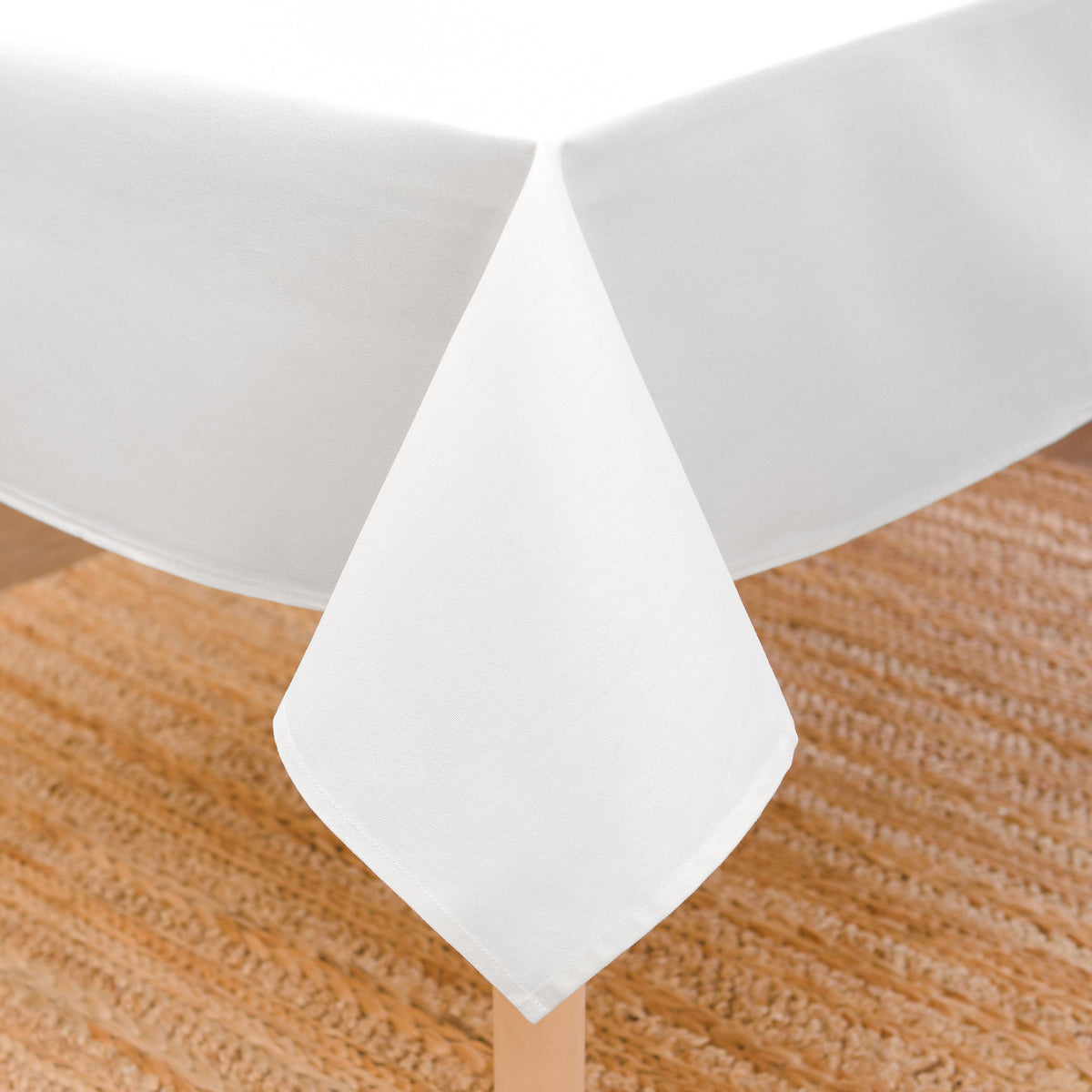
Most stain advice for whites ends with bleach, so a white tablecloth seems like the easy case. Check first. Our Cotton White Table Cloth shows a "Do Not Bleach" care icon in its gallery, the triangle with a cross, and that rules out chlorine and oxygen bleach alike.
So on this cloth the order stops short. Rinse cold from the back, soak in detergent or an enzyme product, use the vinegar and dish soap soak, and wash warm, not hot, as with any old stain. Repeat the soak while each round still makes a difference. If a faint ring survives all of that, it stays, because the next step would break the care instruction.
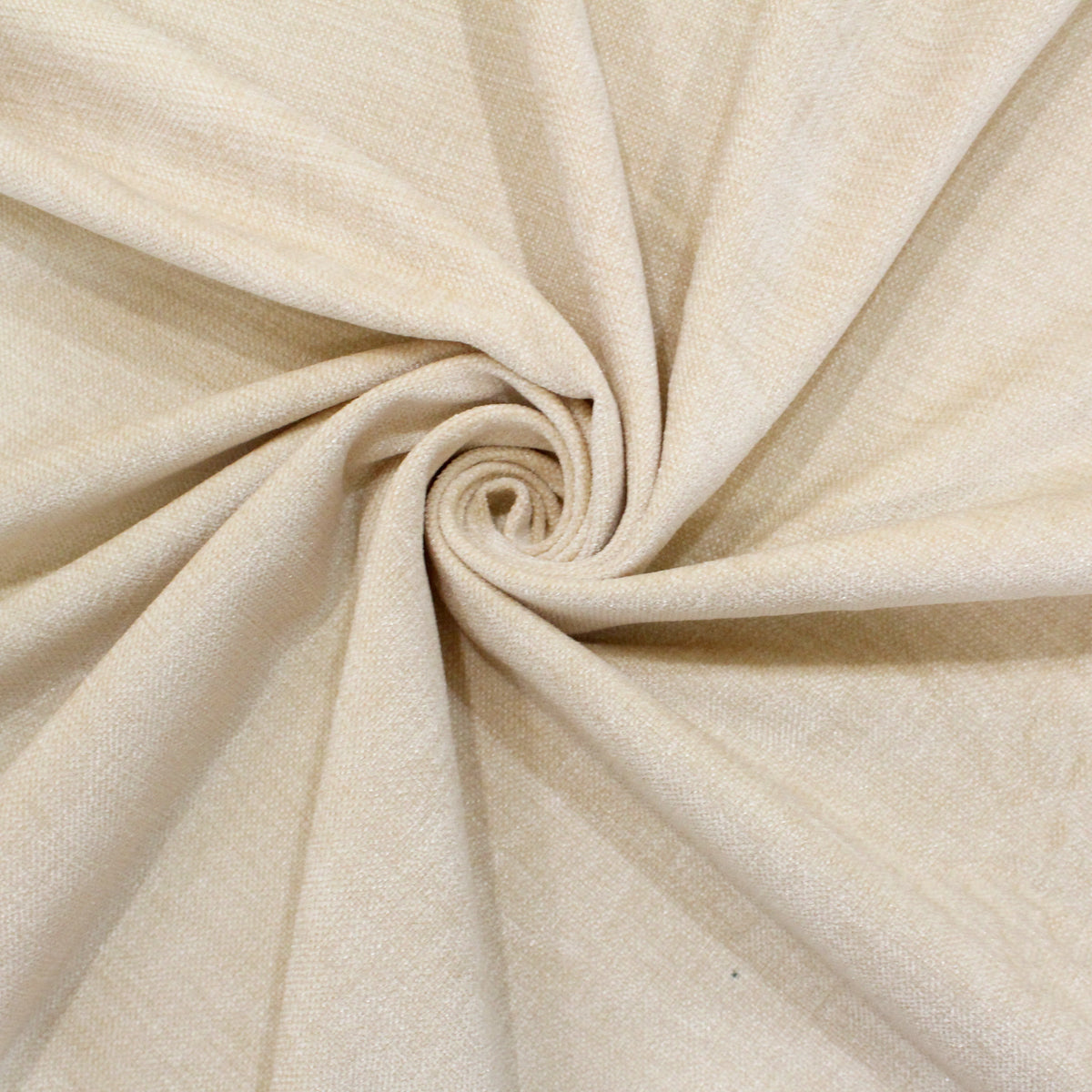
The cream Cotton Natural Table Napkins carry the same icon in their gallery. Our checks napkins show no bleach icon either way, and no icon does not mean bleach is safe. If your piece has a sewn label, read that, and if it has none, skip bleach.
What to buy so the next spill matters less
No cotton cloth is stain-proof, so choose for how little a leftover mark will show.

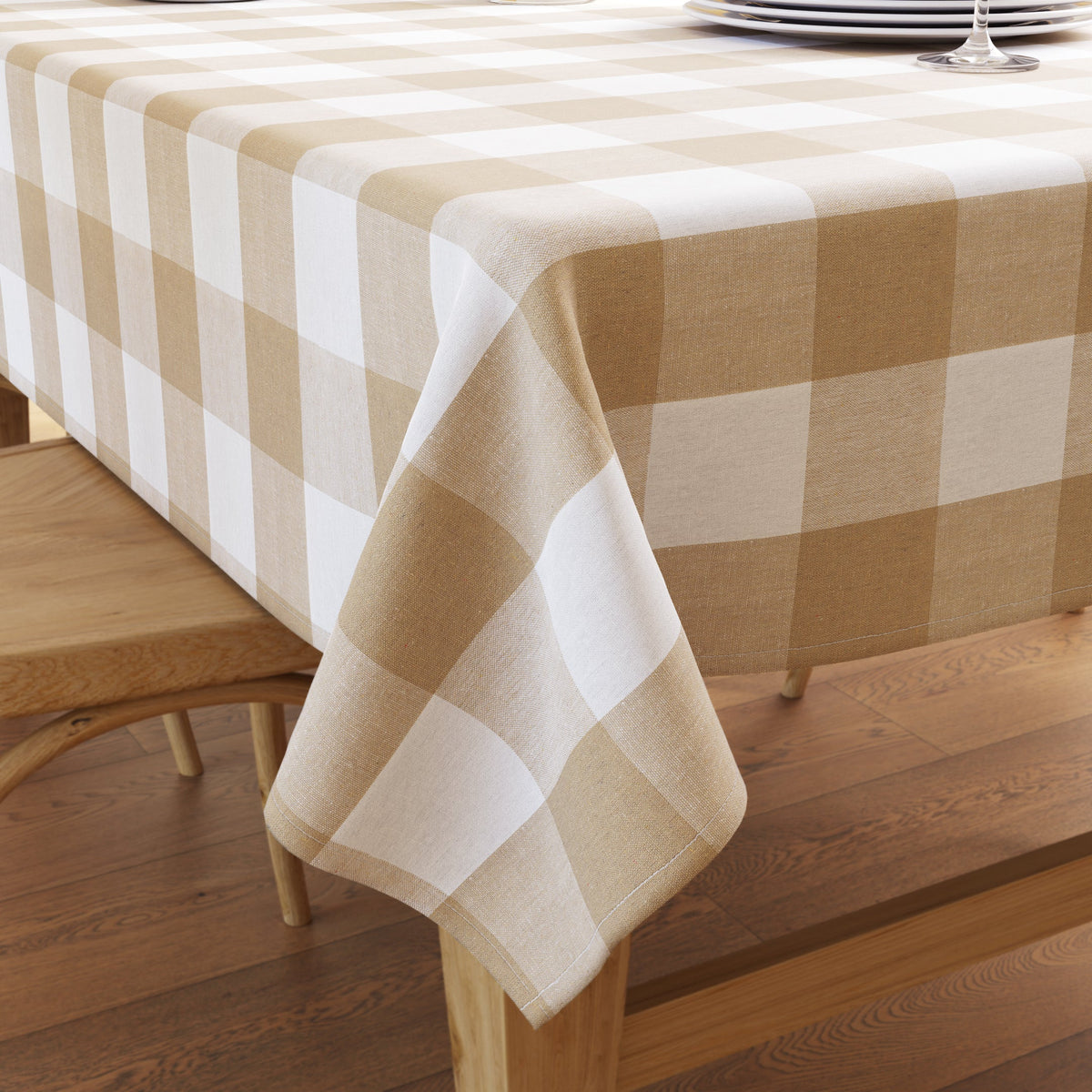
If a table takes the chai tray every evening, a plain pale cloth will show every ring. The tan and white Cotton Buffalo Beige Checks Table Cloth, sold in 72 x 56 and 91 x 56 inch cuts at ₹919 to ₹999, lets a faint brown shadow sit inside the pattern. If tan is wrong for your room, look for another mid-tone print in the table cloth collection, and avoid a pale solid.
Keep the cream or white cloth for days when you can treat a spill that same evening. For guests, napkins catch some drips that would otherwise reach the cloth, and they are far easier to soak. The matching Cotton Buffalo Beige Checks Table Napkins are about ₹760 for six at 43 x 43 cm. The darker solids in the table napkin collection hide more than cream, but a deep dye can run in a soak, and it is harder to see whether a stain has gone.
FAQ
Should you use hot or cold water on tea stains?
Cold is the safe start for any tea or coffee stain, particularly if you are not sure what was in the cup. Hot water is useful later, for black tea on fabric that can handle it.
Can you use bleach on tea stains?
Only if the care label allows it. A crossed triangle rules out every kind, including oxygen bleach. Coloured fabric and anything without a label are better left unbleached.
Why did the tablecloth stain come back after drying?
It most likely never left. A faint mark can be hard to see on wet cloth and shows up again as the fabric dries. Wet it again in cold water, repeat the soak and wash, and avoid ironing that patch until it is clear.

Leave a comment
This site is protected by hCaptcha and the hCaptcha Privacy Policy and Terms of Service apply.