
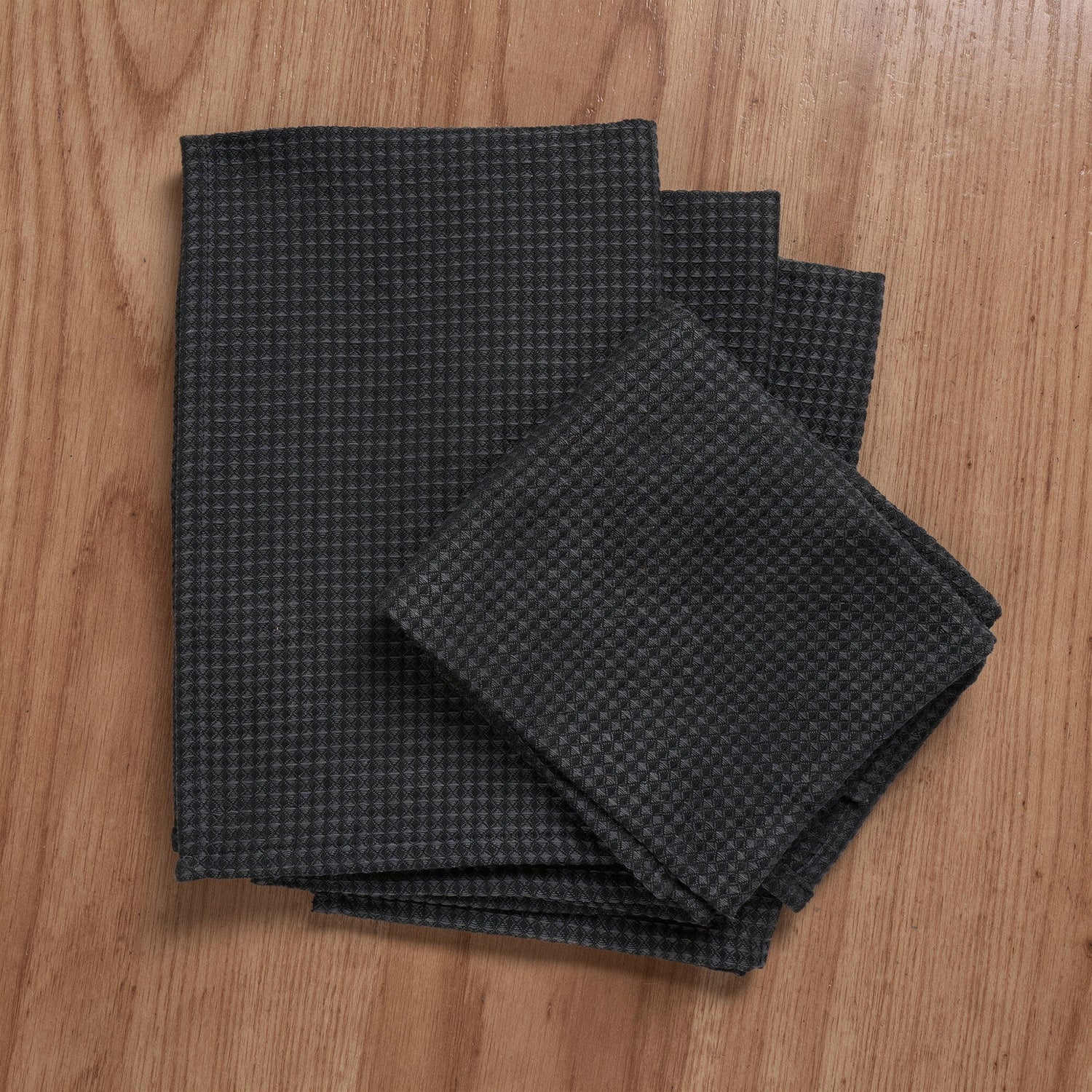
There is no single best kitchen towel, because a kitchen towel is not one type of cloth. Terry, waffle and flat weave are three different ways of weaving cotton, and the weave decides what the towel is good at. A towel that soaks up a spilled dal in one wipe is often a poor choice for polishing a glass, and the towel that leaves no lint on your glassware won't touch a wet counter without three passes.
The short version: terry (the loopy, towelling weave) holds the most water per wipe, waffle (the honeycomb-textured weave) holds a little less but dries faster between uses, and flat weave (a tight, plain weave with no pile) holds the least water but wipes and polishes without leaving fibres behind. Most kitchens work best with two of the three in rotation rather than one type doing every job.
What a weave actually does when it gets wet
Cotton itself absorbs water the same way regardless of how it's woven. It's a natural fibre with plenty of internal structure to soak liquid into. What changes between terry, waffle and flat weave is the surface: how much of that cotton is exposed, and how much air can reach it once it's wet.
Terry cloth is built from loops of yarn standing up off the base fabric, on one side or both. Loops multiply the surface area enormously compared to a flat piece of the same size, which is why terry holds so much water. The trade-off is that those same loops pack together tightly when wet, trapping moisture inside the pile and shielding it from air. A soaked terry towel looks dry-ish on the outside well before the base of the loops has let go of the water.
Waffle weave raises the fabric into a grid of small pockets instead of loose loops. Each pocket holds less water than a terry loop of the same size, but the raised structure keeps more of the wet fabric standing clear of itself, with air moving through the grid rather than trapped under a dense pile. That's the whole mechanism: less capacity, more airflow, so a waffle towel that's been used just as hard as a terry one is usually the drier of the two by the time you check on it again.
Flat weave is the plainest of the three, tightly interlaced yarns with no raised structure at all. There's simply less fabric depth for water to sit in, so it absorbs the least of the three and dries the fastest. What it's genuinely better at is friction without residue: a flat, tight weave doesn't shed the loose fibre ends that terry and waffle towels do, which is why it's the one that leaves glass and steel streak-free instead of fuzzy.
Which kitchen towel absorbs the most water?
Terry wins on raw capacity, by a clear margin, because of the loop-pile surface area described above. If the job is mopping a spill or drying a stack of just-washed pans, reach for terry first.
| Weave | Absorbs most | Dries fastest | Lint-free wipe | Best single use |
|---|---|---|---|---|
| Terry (loop pile) | Yes | No | No | Mopping spills, drying dishes |
| Waffle (honeycomb) | Middle | Yes | Middle | Everyday counter and hand wiping |
| Flat weave (plain) | Least | Yes | Yes | Polishing glass and steel |
Which kitchen towel dries the fastest between uses?
Waffle and flat weave both beat terry here, for the airflow reasons above, but they get there differently: flat weave dries fast mostly because it never held much water to begin with, while waffle dries fast despite holding a genuinely useful amount, which is why waffle is the better all-rounder for a towel that gets used all day and needs to be ready again an hour later.
This matters more than it sounds like it should. In a one-rod kitchen where the same towel mops the counter, dries a pan and wipes hands through the evening, a terry towel is still damp deep in the loops by the time everyone's gone to bed, exactly the conditions a damp cloth left bunched on a rail needs to start smelling by morning. A waffle weave kitchen towel run through the same rotation is noticeably closer to dry by then, because more of its wet surface has been sitting exposed to air rather than sealed under a pile.

Terry: the workhorse for spills and dishes
Terry is the towel most Indian kitchens already default to, and for the jobs it's built for that default is correct. It soaks up a spill in fewer wipes than the other two, it dries dishes without needing three towels in rotation, and it's forgiving of rough use: hot pan handles, wet hands, whatever the job demands. The Cotton Red Terry Kitchen Towel (Pack of 4) is a straightforward everyday set at 24x16 inches, priced for a rotation you don't have to baby. Its downside is the one described above: it stays damp longest, so it needs to actually get a turn drying out on a rail or a hook rather than living balled up under the sink, especially if it's doing double duty as a general cleaning cloth.
Waffle: the better choice if your towel never gets a proper rest
If your kitchen only has room for one rod and one towel is doing everything from breakfast to the last load of dishes, waffle is usually the more sensible pick over terry, not because it's more absorbent, it isn't, but because it's more likely to actually be dry the next time you reach for it. The Waffle Grey Black Kitchen Towel (Pack of 4) is a heavier 200+ GSM weave at 28x18 inches, built specifically for the "large, absorbent, but needs to dry between shifts" brief; the tighter weave also means less shrinkage over repeated washes than a looser terry.

Flat weave: the one that won't leave lint on your glass
Flat weave is the weakest of the three at soaking up an actual spill, so it should never be the only towel in a kitchen. What it earns its place with is friction without residue: no pile to shed, so it won't leave the fine fuzz that terry and even waffle can leave on a wet wine glass or a black granite counter. It's the smooth checked cloth kept separate from the "wet work" towels, reached for specifically once the glassware and countertops have already been wiped down. The Cotton Buffalo Blue Checks Kitchen Towel (Pack of 4) is woven from recycled cotton and carries an anti-odour finish, and at 70x45 cm it's oversized enough to double as a large drying cloth on the days a spill isn't the job.

How many kitchen towels do you actually need, and in which weaves
A workable everyday rotation is one heavier terry or waffle set for wet work and one lighter flat weave for glass and surfaces, with enough of each that one is always washed and dry while another is in use. If you'd rather not buy two separate packs to get there, the Cotton Beige Non Terry + Terry Kitchen Towel (Pack of 4) puts both weaves in one pack, some towels looped terry and some flat woven, which covers wet work and glass drying from a single purchase. The full Kitchen Towel collection covers all three weaves if you're building a rotation from scratch, and the Terry Kitchen Towel collection is worth a look on its own if wet-work drying is genuinely most of what your kitchen needs.
GSM (grams per square metre) is a useful shortcut once you're comparing towels within the same weave: a heavier terry towel of the same weave type holds more water than a lighter one, though it doesn't tell you anything across weaves; a light waffle towel can out-dry a heavy terry one despite weighing less. If you're picking between two towels by their GSM number, our GSM meaning guide explains what the number is actually measuring.
None of this replaces good habits either. A kitchen towel this guide would call the wrong weave for the job, but hung out flat after every use, will usually outlast the right weave left bunched up wet on a hook. Weave decides how fast a towel can dry; whether it's given the chance to is still down to where you hang it.
For anyone setting up the rest of the kitchen textile drawer at the same time, our guide to choosing a kitchen apron for Indian cooking covers the same absorbency-versus-drying trade-off for fabric that's on your body instead of on the counter. And if the window behind the counter needs dressing too, our kitchen curtains guide explains why the short 5 ft length and a fabric that takes frequent washing work best there.
Frequently asked questions
What is the best material for kitchen towels?
Cotton, in any of the three weaves above, is the standard choice because it absorbs well and tolerates hot washes. Within cotton, the "best" weave depends on the job: terry for spills and dishes, waffle for a towel that needs to dry fast between uses, flat weave for lint-free glass and steel.
How often should you replace kitchen towels?
There's no fixed interval. Replace a towel when it stops absorbing well, stays permanently musty-smelling after a wash, or the loops (on terry) or pockets (on waffle) have flattened out enough that it's essentially gone flat weave whether you meant it to or not. A rotation of at least three to four towels, so each gets a proper wash and full dry between uses, extends all of their working lives regardless of weave.
Can you machine wash and tumble dry waffle weave towels?
Yes, generally. A tight waffle weave like the one described above is designed for regular machine washing and holds its shape better across washes than a looser terry towel. Always follow the specific care label on the product, since finishes (like an anti-odour treatment) can carry their own washing recommendations.
What's the difference between a tea towel and a kitchen towel?
In practice the terms overlap in Indian households, but where a distinction is made, a tea towel usually refers to a thinner, often flat-weave or lightly textured cloth used for drying already-clean crockery and glassware, while "kitchen towel" is used more broadly for the thicker terry or waffle cloths doing spill and dish duty. The weave, not the name, is what actually tells you what a towel is good at.


Leave a comment
This site is protected by hCaptcha and the hCaptcha Privacy Policy and Terms of Service apply.