
One doormat, laid outside the main door, does very little for the state of your floors. It is the piece of cleaning equipment that gets bought once and then never thought about again, working alone against a job that takes two mats and a small routine. The sweeping every evening is the receipt.
Ask why Indian homes need mopping daily and the answer is not about housekeeping standards. On r/AskIndia, someone who had lived in several countries put it plainly: elsewhere you can skip a day, but here "there seems to be dust particles floating around that just settle on all your stuff". The top reply blamed constant construction and roads dug up and relaid. Some of that drifts in through windows. A good share walks in on the soles of shoes and chappals, over a mat meant to stop it.
An entrance needs two mats doing two jobs: a coarse one outside that scrapes grit and dried mud off the sole, and a finer, absorbent one inside for the dust and damp it missed. A single mat has to choose, and does neither properly. The rest comes down to cleaning them, because a saturated mat stops accepting anything at all.
1. One mat cannot scrape grit and dry feet at the same time

These are opposite pieces of engineering. Scraping wants a coarse, open surface with somewhere for debris to fall and air to dry it between uses. Absorbing wants the reverse, a dense pile that holds moisture and fine powder until you wash it. Ask one mat for both and it scrapes softly and absorbs slowly.
The question turns up in cleaning communities repeatedly. "Do you have multiple, like a bristly one outside and a finer/absorbent/other type inside?", asks one r/CleaningTips post. The answers converge on layering: "I can't imagine not having one inside AND outside", one commenter wrote. What the single mat misses does not stay at the door; it ends up on the first few metres of floor, then down the corridor.
| Where it sits | What it has to do | What suits it | What fails there |
|---|---|---|---|
| Outside the door | Knock grit and caked mud off the sole, take sun and rain, stay put underfoot | Coir, or polypropylene with deep grooves; rubber where rain reaches it | Anything soft, which soaks and turns sour |
| Inside the door | Catch what the outer mat missed, feel decent barefoot, wash often | Low-profile polypropylene, or absorbent microfibre | Coir, which sheds indoors and is rough on bare feet |
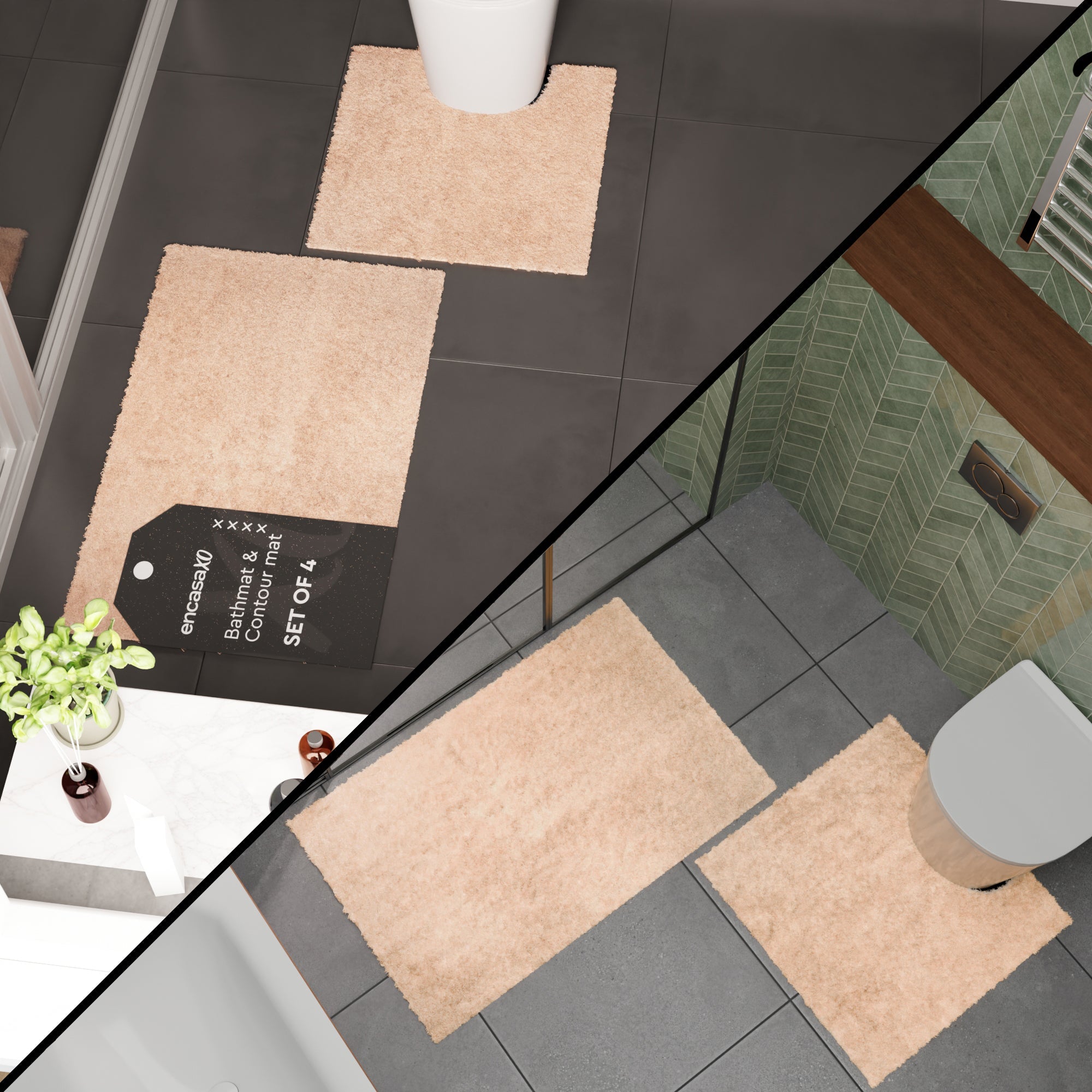
Door clearance decides the inside mat, since many Indian main doors swing inward with only a centimetre or two to spare. A low-profile polypropylene mat is cut for that gap, with grooves deep enough to hold sand and water behind a beveled rubber edge. Where there is more room and the household goes barefoot, an absorbent microfibre mat of the sort sold for bathrooms is the right texture indoors, and it machine-washes when it greys.
2. A mat that traps everything is no use if it will not give the dirt back
By the end of a dry season the mat outside has stopped catching anything. It is full to the fibre roots, and every step releases a little of last month's dust back onto the shoe about to walk in. The mat has quietly changed sides.
This is a common confession in cleaning threads. "This material traps everything. Vacuuming doesn't help", runs one. In a thread on cleaning a coir mat, a commenter admitted "it has never occurred to me to clean my coir mat", and others said the same before someone reported a vacuum "made a big difference". One person dug compacted gunk out of the grooves with a knife.
Whether a mat gives dirt back is structural, not a matter of quality. A deep coir bed holds fine grit among the fibres where suction struggles, which is exactly why it scrapes so well. Grooved synthetic mats keep coarse debris in the channels, and those empty when the mat is turned face down and beaten. So beat the outer mat weekly, and hose the grooved and rubber ones when they feel loaded rather than when they look dirty. Let it dry through before it goes back down, or in the monsoon it will smell within days.
3. Coir scrapes harder than the synthetics and sheds while it does it

Coconut coir is stiff and coarse, which is why it has been the default outdoor mat for a century. Little else takes dried mud off a sole as well, and it weathers without complaint. It also sheds, and anyone telling you otherwise is selling something.
Reddit is blunt about it. A BuyItForLife request asks for a mat that "doesn't disintegrate in a few months, during which I'll have to regularly broom the shredded pieces of it away", and elsewhere a poster says a relative avoids coir because it "starts flaking". Warehouse staff who unbox them by the pallet keep a running complaint thread: "They hurt my hands."
None of that makes coir wrong outdoors; it is coarse natural fibre behaving like coarse natural fibre. Construction decides how much and for how long: fibre density, and whether the edge is bound or left raw to fray. A dense mat with a finished edge sheds for a few weeks and then settles; a loose cheap one keeps going until there is not much mat left. Our own coir mats are built to keep that shedding low and the product pages say so, which is our claim about our construction rather than a promise that coir has stopped being coir.
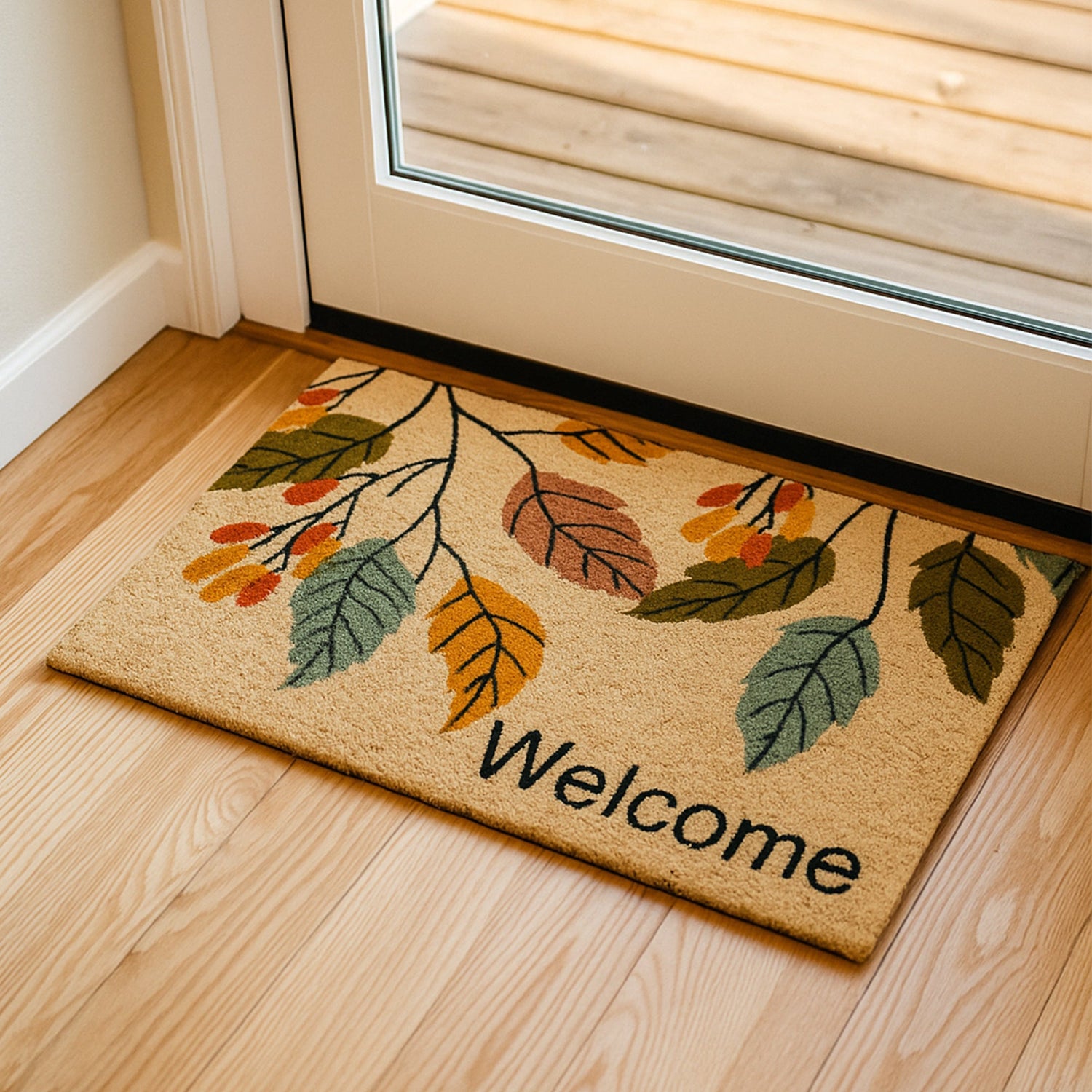
Coir belongs outside, under some cover, on a floor you can sweep. Plain colours like the brown coir mat hide the season better than pale naturals, and the hand-painted Welcome leaf design suits a porch where it will not bleach. Neither belongs inside the flat.
4. What ruins the floor is usually under the mat, not on it
Lift a mat that has held the same spot for a year and the interesting part is the underside. A cleaning thread says it in its title: "The backing from the doormat is sticking to my hardwood floor as I try to pull it up." Someone else asked, before buying, whether "rubber mats can stain laminate over the time".
The mechanism is degradation, not rubber as a category. Cheap or heavily filled compounds break down under heat and UV, the softening additives migrate out, and what is left is a tacky film that bonds to a finished floor. Trapped moisture does the rest, since a mat that never gets lifted holds a damp patch for months. Lift it when you sweep, never leave a soaked one on wood, and run a hand across the underside now and then: sticky rather than dry means it is on the way out.
Backing is not one thing either. Our coir mats use an anti-skid PVC backing and the rubber mat is a single piece made to take moisture without rotting, though sun and age tell on any of them eventually, ours included.
5. On wet tile, a doormat for the main door has to grip before it can clean

Polished tile and stone at an entrance look excellent and turn treacherous the moment rain reaches them. A homeowner on r/HomeImprovement described a tile-like entryway that "when it gets wet, it can be very slippery", with a door mat that helped without solving it. The worry is common enough that one buyer asked a mat's makers, before ordering, "do they slide around when you use them or do they stay in place?"
Anti-skid backing works by friction against the floor, and a film of water underneath is what takes that friction away. Weight helps and backing texture helps more. For an uncovered porch or a landing that catches blown rain, solid rubber is the honest answer: the black rubber oval has a textured back for grip on tile, marble and concrete, and takes standing water. Coir in that spot holds water and breaks down.
Doing this properly costs less than people assume. Polypropylene mats run about ₹439 to ₹659 by size, coir ₹549 to ₹789, and the rubber oval about ₹750, so two mats land near the price of one decorative one. Treat the outdoor one as a consumable, replaced every year or two, rather than a fixture.
Furnishing an entrance from scratch, work outward from the door swing: measure the clearance under the door, then pick the outside mat for your weather, rubber where the rain actually lands and coir where it does not, with grooved polypropylene covering everything in between. The inside one is a question about your feet rather than the weather. The full door mat range covers all three materials in 60 x 40 cm and 75 x 45 cm.
Frequently asked questions
How do you clean a doormat that has stopped taking dirt?
Turn it face down and beat it hard outdoors first, since most of the load sits deep in the pile. Grooved synthetic and rubber mats can then be hosed from the back and stood on edge to drain. Coir should not be soaked: brush it against the lay of the fibres, and vacuum it if your machine can cope. Our coir doormat guide takes that cleaning routine step by step, and covers where a coir mat can and cannot dry.
Which doormat material suits a wet, muddy entrance?
Rubber, if rain actually reaches the mat, because it absorbs nothing and will not rot. Polypropylene with deep grooves comes next, as the channels hold mud and rinse out. Coir is the weakest of the three for a soaked spot, and the best of them where it stays under cover.
Do doormats damage the floor underneath?
They can, and it is nearly always the backing rather than the mat face. Degraded rubber or foam leaves a sticky residue on wood and laminate, and any mat left damp on a sealed floor for weeks can mark it. Lifting it when you sweep prevents most of that.
Encasa XO is our own brand and the mats named above are ours.

Leave a comment
This site is protected by hCaptcha and the hCaptcha Privacy Policy and Terms of Service apply.