
Most Diwali decorating advice sends you straight to lights, diyas and rangoli. All lovely, all temporary, and none of it changes how the room itself feels once the lamps burn down. The thing that actually shifts a living room from everyday to festive is the soft layer sitting on top of it: the cushions on the sofa, the cloth on the table, the fall of the curtains. Change those and the room reads as dressed, even with the furniture exactly where it always was.
The fix is to leave the shell of the room alone and change only the soft layer, which is the cheapest part to swap and carries a large share of the festive feeling. Do it in order of impact for the effort: cushion covers first, the table next, curtains last. Buy to the sizes you already own so nothing arrives wrong, and put the festive set away carefully afterwards so the same pieces come back next year. Done this way it is a weekend job, not a project.
Why the textile layer is the highest-return Diwali home decor move
Think about what a room is made of, from the parts you cannot move to the parts you can. Walls and flooring are fixed. Sofa, bed and dining table are furniture you rarely shift. Then comes the layer that changes easily: covers, throws, runners, napkins, curtains. Much of a festive mood lives in that last, swappable layer, alongside the lamps and the rangoli, which is why it is worth your attention and your budget.
Repainting or buying new furniture for a festival is expensive and permanent, and you are stuck with a bold festive colour long after the season ends. New cushion covers and a fresh runner cost a fraction of that, take an afternoon, and come off again the moment you want the room back to normal. Rupee for rupee, little else changes a room as visibly for as little outlay. That is the case for treating textiles as the main event rather than an afterthought, and it holds every year: this is a system you repeat, not a look you buy once and discard.
The three-piece swap, in order
The mistake in every festive-decor list is that it hands you a pile of ideas with no sequence. If you are short on time or money, order matters more than anything. Work through the three pieces by how much they change the room against how much effort they ask.
Start with cushions. They are the fastest change in the house: unzip the everyday covers, slip on festive ones, and the sofa looks dressed in the time it takes to plump them. Covers store flat and cost little, so this is the leg to do even if you do nothing else. You rarely need to change all of them either, swapping the two or three most visible on a three-seater usually does the job while the plain ones behind stay put.
The table is the middle leg, and the one guests see from closest. A runner down the centre, cloth napkins at each place, and it is ready for the evening. It asks a little more than cushions because there are more pieces to lay and line up, though still an afternoon rather than a project. One honest caveat: if the table will be crowded with food and diyas all evening, a full runner and placemats can end up buried, and a single cloth or even a bare polished table sometimes looks better.
Curtains change a room the most, because they frame the whole wall and shift with the light, which is also why they come last: taking a pair down and rehanging fresh ones is a chore, and full-length festive curtains cost the most of the three. Reach for them if you have time and budget after the first two. And if your everyday curtains are already dark or heavy, you may be better off leaving them, since festive cushions and a dressed table against them often read better than a second bold fabric competing at the window.

Colour that works with the furniture you already have
The festive-colour advice online stops at naming shades. Gold, maroon, marigold, jewel tones, and then it leaves you to guess how any of them sit with your grey sofa and beige walls. The naming is the easy part. The useful part is a rule for pairing.
Here is one that keeps a room from clashing: hold the big fixed surfaces neutral and let the festive colour live only in the pieces you can swap. Your walls, sofa and flooring stay as they are, quiet and pale. The saturated festive shade, a deep maroon, an emerald, a warm gold, goes into the cushions, the runner and the curtains, which are small in area and easy to change back. Because the bold colour appears only in the swappable layer, it reads as a deliberate accent rather than a room that has gone loud, and it is gone the day you want it gone. This is styling judgement, not a law of colour, but it is a reliable starting point.
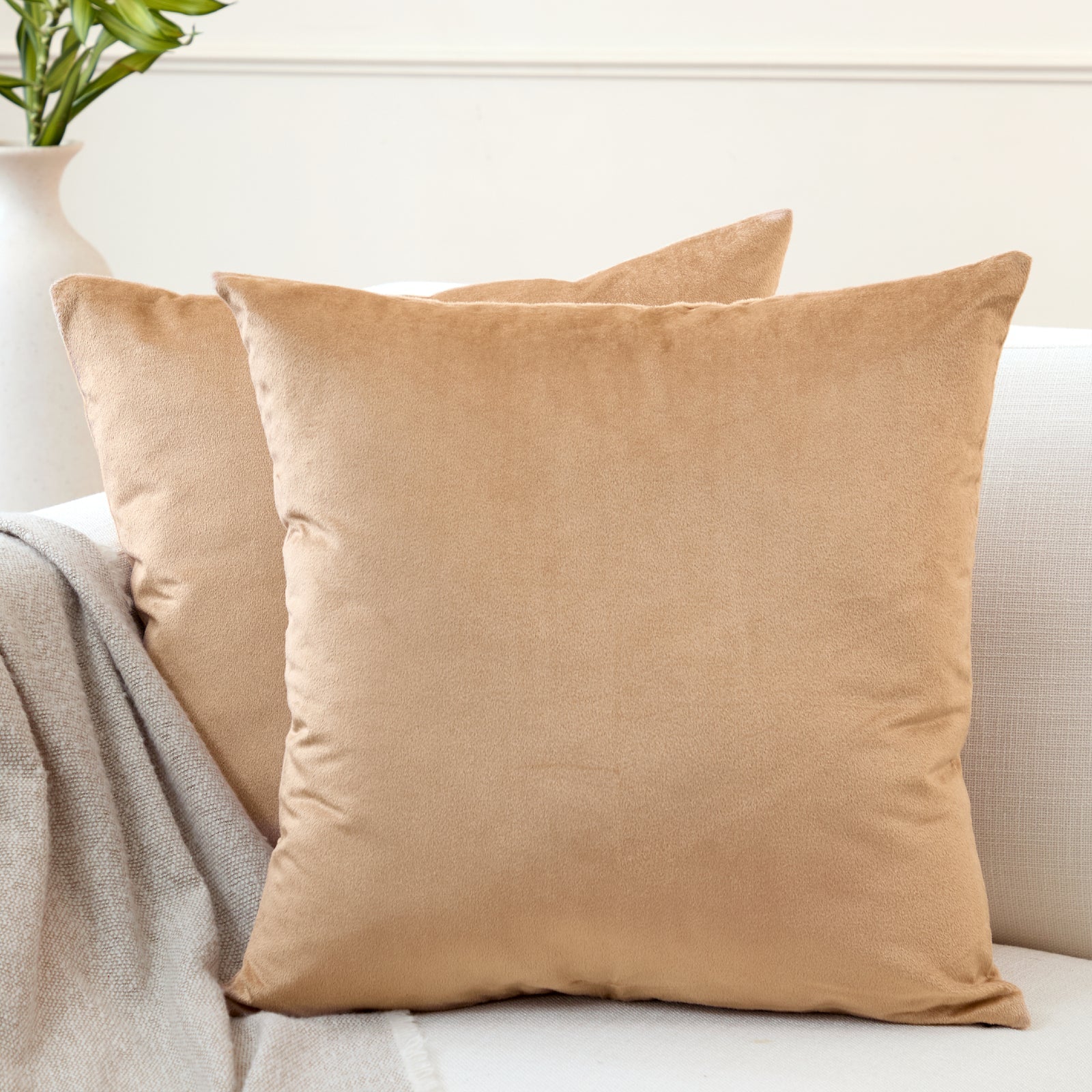
Two worked pairings to make it concrete. A charcoal or grey three-seater takes a gold cushion beautifully, with a maroon or deep-red runner on the table to answer it across the room. Beige or cream walls give you more licence: an emerald-green cushion with a mustard or marigold accent glows against them without fighting. Pick one festive colour as the lead and let a second play a supporting note, rather than scattering four bright shades and hoping. If you want the lead colour to carry real depth, a velvet green cushion cover or a velvet gold pair gives you the pile that makes jewel tones look expensive under warm light; the wider velvet cushion range runs to most of those deep festive shades.
Get the sizes right before you buy
The one practical step every festive guide skips is sizing, and it is where online buying goes wrong. A cushion cover a size off looks slack and sad however good the fabric; a runner cut wrong for the table looks mean or messy. Sort the numbers before you add anything to a basket.
For cushions, the common covers sold in India run 30x30, 40x40, 50x50 and 60x60 cm, which is 12, 16, 20 and 24 inches. The 40 cm (16 inch) is the usual sofa size in Indian retail and a safe default if you are unsure. Match the cover to the pad you already own rather than guessing, and once you know your size the cushion cover collection filters down to it. If you are mixing sizes on one sofa, our cushion cover size guide walks through how many of each to buy for a two or three-seater.
For the table, a runner should overhang each end of the table by a comfortable margin rather than stopping flush, and its length depends entirely on your table. The table runner size guide gives the lengths against common dining-table sizes so the runner sits right instead of looking stranded in the middle. Getting this one number correct is the difference between a table that looks set and one that looks half-done.
Curtains: full swap, or layer sheers over what you have
Curtains are the leg where you get to choose your effort. The full move is to take down your everyday pair and hang festive ones, in the standard 5 ft window, 7 ft door or 9 ft long-door lengths, which gives the biggest change but costs and takes the most. A rich festive curtain in gold or a deep tone, like this blackout gold pair, reframes the whole wall and doubles as light control for the evening.
The lighter move, if time or budget is short, is to leave your existing curtains up and layer a sheer over or beside them. A cotton sheer in a warm off-white softens the light and adds a festive fullness without a full replacement, and it lets the diyas and fairy lights glow through in the evening. If you are weighing which way to go, our guide on blackout versus sheer curtains covers what each fabric does to a room's light so you can layer with intent rather than by accident.

Setting the table for guests
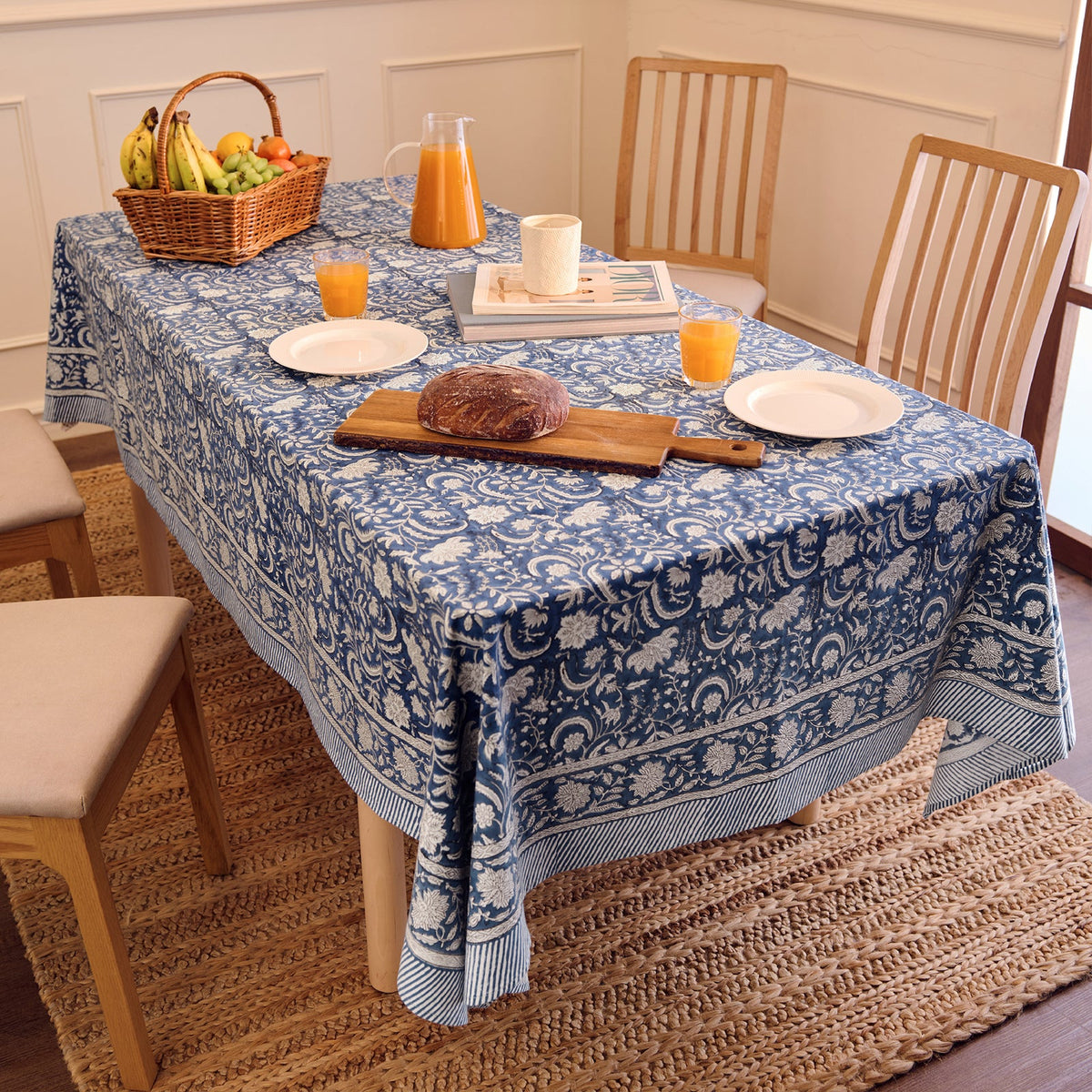
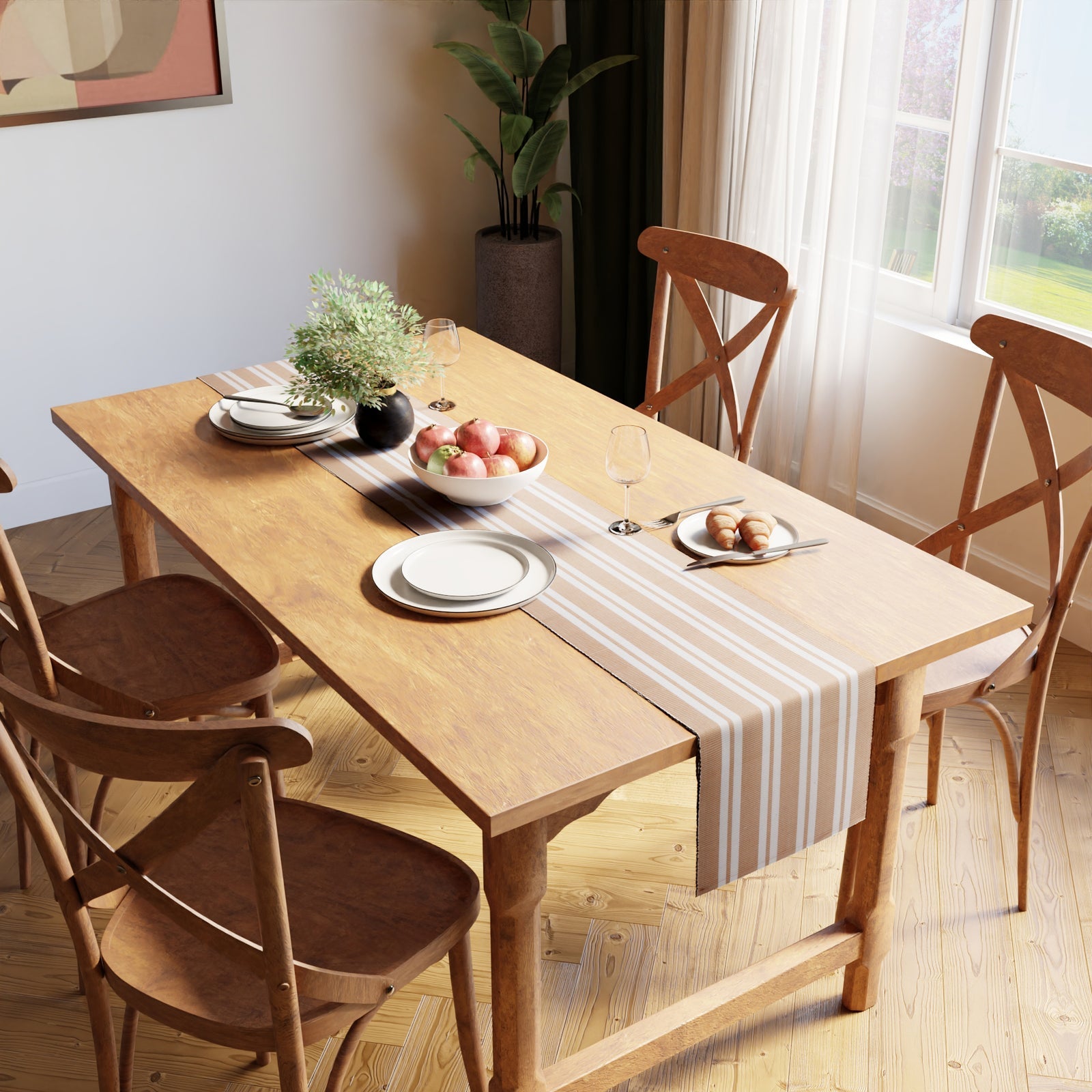
The dining table is worth a little more care because it is where the evening actually happens. Lay the runner down the centre first, then work outward: napkins at each place, a tablecloth underneath if you want the whole surface covered, and space kept clear for the food and lamps. A hand-block-printed cotton tablecloth under a plainer runner, or a striped cotton runner on a bare table, both read as festive without going fussy.
Cloth napkins do a lot of quiet work here, and folded well they lift the whole setting. A set of cotton table napkins in a colour that picks up the runner is enough, and a simple upright or pocket fold is plenty for a home table. If you want a few folds that hold through a real meal rather than collapsing when a plate lands, our napkin folding guide has the ones worth knowing.
After Diwali: storing the set so it comes back next year
Almost every festive guide stops at the party and skips this, which is a pity, because storage is what lets one good set come back year after year. Festive textiles are often richer and more delicate than everyday cotton, the velvet, embellished and darker-dyed pieces especially, so they need gentler handling if they are to look as good next time.
Wash or air the pieces before storing so no food or oil sits in the fibre for a year, and check the care label rather than assuming everything takes the same wash. Fold velvet and embellished covers loosely rather than cramming them, since hard creases and crushed pile are slow to recover, and keep zari or sequinned pieces away from damp, which is what tarnishes metallic thread. Store the folded set somewhere dry and out of direct light: sustained sun fades fabric, and it shows soonest on the saturated festive dyes. None of this is a certified standard, just sensible handling for fabrics that cost more than a plain cotton cover. Do it and most of next year's refresh is already sitting in your cupboard, bought once.
Frequently asked questions
What colours work best for Diwali cushions and curtains?
Warm and jewel tones carry the festival well: gold, maroon, deep red, emerald, mustard and marigold. Rather than chasing a single "right" colour, keep your walls and sofa neutral and let one of these lead in the swappable textiles, with a second as a supporting accent. That way the festive colour reads as intentional and comes off easily afterwards.
How can I decorate for Diwali on a budget without buying furniture?
Change only the soft layer. Fresh cushion covers, a table runner with napkins, and either new or layered curtains transform a room for a fraction of what paint or furniture costs, and they come off again after the season. Start with cushions, since they give the most change for the least money, and add the table and curtains if the budget stretches.
Do curtains need to match the cushion covers?
No, and matching them exactly usually looks flat. Aim for coordination instead: share one colour across the room, say a gold that appears in both a cushion and the curtains, while letting textures and secondary shades differ. A room where everything is the identical fabric and colour reads as a showroom, not a home.
How many cushion covers do I need for a three-seater sofa?
A common arrangement is five, three across the back and one on each side, though three or four also looks considered on a smaller sofa. Mixing two sizes, larger covers behind and smaller in front, adds depth. The cushion cover size guide covers the counts and size mixes for two and three-seaters.

Leave a comment
This site is protected by hCaptcha and the hCaptcha Privacy Policy and Terms of Service apply.