
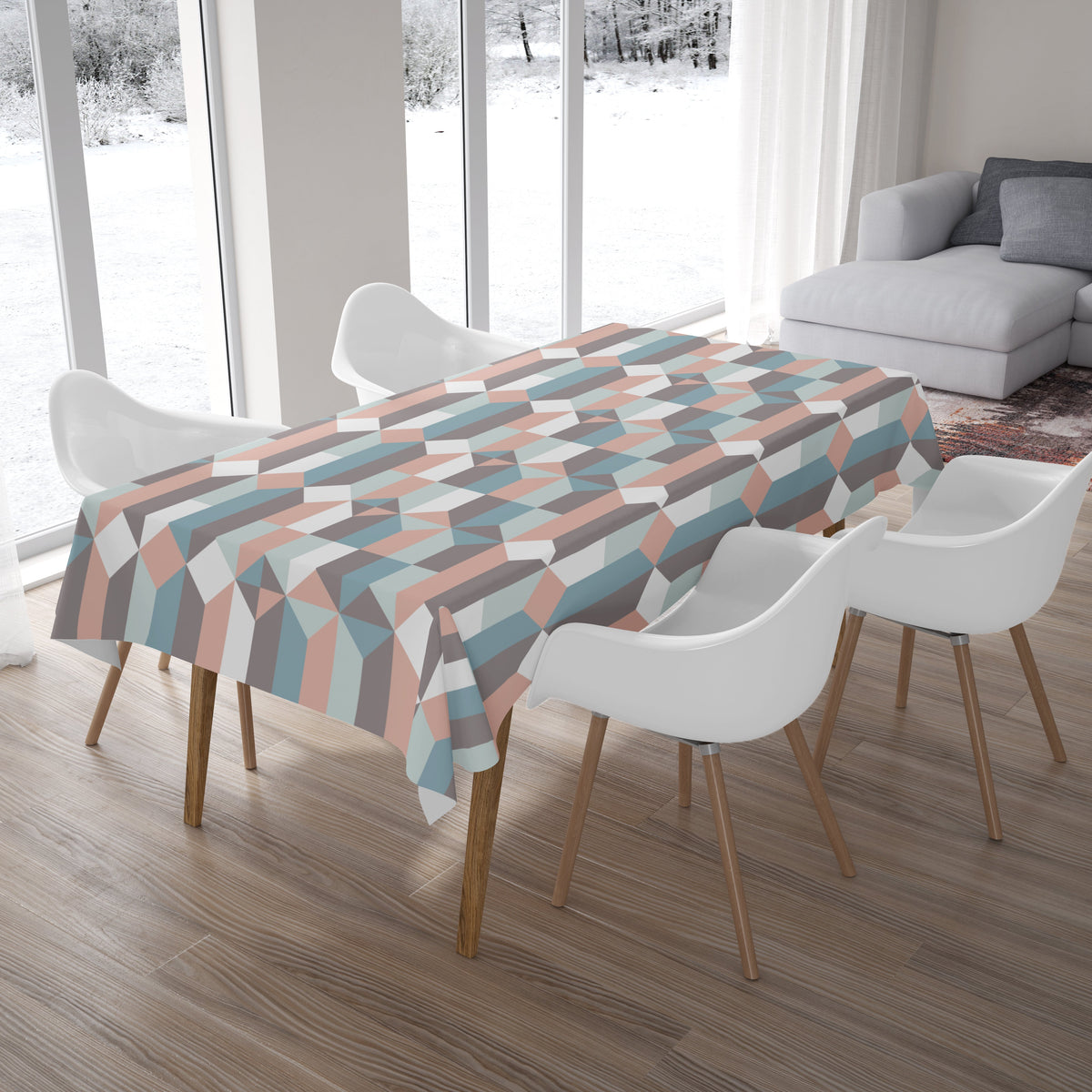
Two cotton tablecloths can be the same cotton at the same weight, and still behave differently on your table. One falls over the edge in soft folds. The other sits a little stiffer and squarer. The difference is not the cotton. It is the way the threads cross.
Twill fabric is cloth woven so that each thread passes over two or more threads before going under one, and every row starts one step to the side of the row before. That step is what draws the fine diagonal lines you can see on denim, chinos and drill. It also gives twill its useful habits: it drapes more softly than a plain weave, it is dense and hard-wearing, and its slanted texture tends to hide small marks.
How twill is woven
Every woven fabric has two sets of yarn. The warp runs along the length of the roll, held tight on the loom. The weft runs across, passing over and under the warp threads. The pattern of over and under is the weave, and three basic patterns cover most of what you will find in a home.
In a plain weave, the weft goes over one warp and under the next, every time. Each thread is locked in place at every crossing. In a twill, the weft goes over two or three warps and then under one, so the thread "floats" across a short stretch before it is tied down. Shift that float one thread across on each new row and the floats line up into a diagonal.
Twills are named by those counts. A 2/1 twill has each warp passing over two weft threads and under one. A 3/1 twill, the standard for denim, goes over three and under one, which is why jeans show such a strong slant. A 2/2 twill looks the same on both faces. Herringbone is a twill whose diagonal reverses direction every few threads, making the zigzag.
Twill is a weave, not a fibre. You can weave cotton, polyester, wool or a blend as a twill. Gabardine, drill, chino cloth and denim are all twills in different fibres and weights.
Why twill drapes and hides stains
Fewer crossings explain nearly everything. Because each yarn is tied down less often than in a plain weave, the threads can sit closer together and slide a little against each other. Closer threads make a denser, firmer cloth for its weight. Freedom to slide makes it bend more easily, so a twill falls into rounder folds where a plain weave of the same weight holds a stiffer edge.
The floats also give twill a smoother face with a slight sheen, since longer stretches of yarn catch the light. Mercerising, a treatment that swells cotton fibres so they take dye deeply and shine a little, adds to that. Put both together and you get the soft lustre people notice on a good cotton twill tablecloth.
Stains are a matter of what the eye can pick out. A flat, even plain weave in one colour shows every drop of oil as a clear outline. On a twill, the diagonal ribs break the surface into tiny ridges and shadows, so a small spot or a faint watermark has less of an edge to catch. Add a print and the effect is stronger. This is about how marks look, not whether they come out; turmeric on twill still needs washing quickly.
There are two downsides. Twill has a right side and a back, and the back often looks flatter and duller, so hems and seams should face down. And those floating threads can snag on a ring, a fork prong or a rough table edge more easily than a tightly locked plain weave.
Twill vs canvas vs plain weave
Canvas is not a separate weave so much as a heavy, tightly packed plain weave. Some canvas uses paired threads, called panama or basket weave, for a chunkier feel. Either way, it is built for firmness rather than drape.
| Plain weave | Canvas | Twill | |
|---|---|---|---|
| How threads cross | Over one, under one | Over one, under one, packed tightly; sometimes in pairs | Over two or more, under one, stepping sideways each row |
| Look | Flat, even, no direction | Firm, slightly coarse, matte or low sheen | Diagonal lines, smoother face, some sheen |
| Drape | Crisp | Stiff, holds its shape | Soft, falls in folds |
| Shows small marks | Clearly | Fairly clearly | Less, especially when printed |
| Sides | Same both sides | Same both sides | A face and a back |
| Common home uses | Bedsheets, voile, napkins | Cushion covers, structured curtains, bags | Tablecloths, aprons, upholstery, ironing board covers |
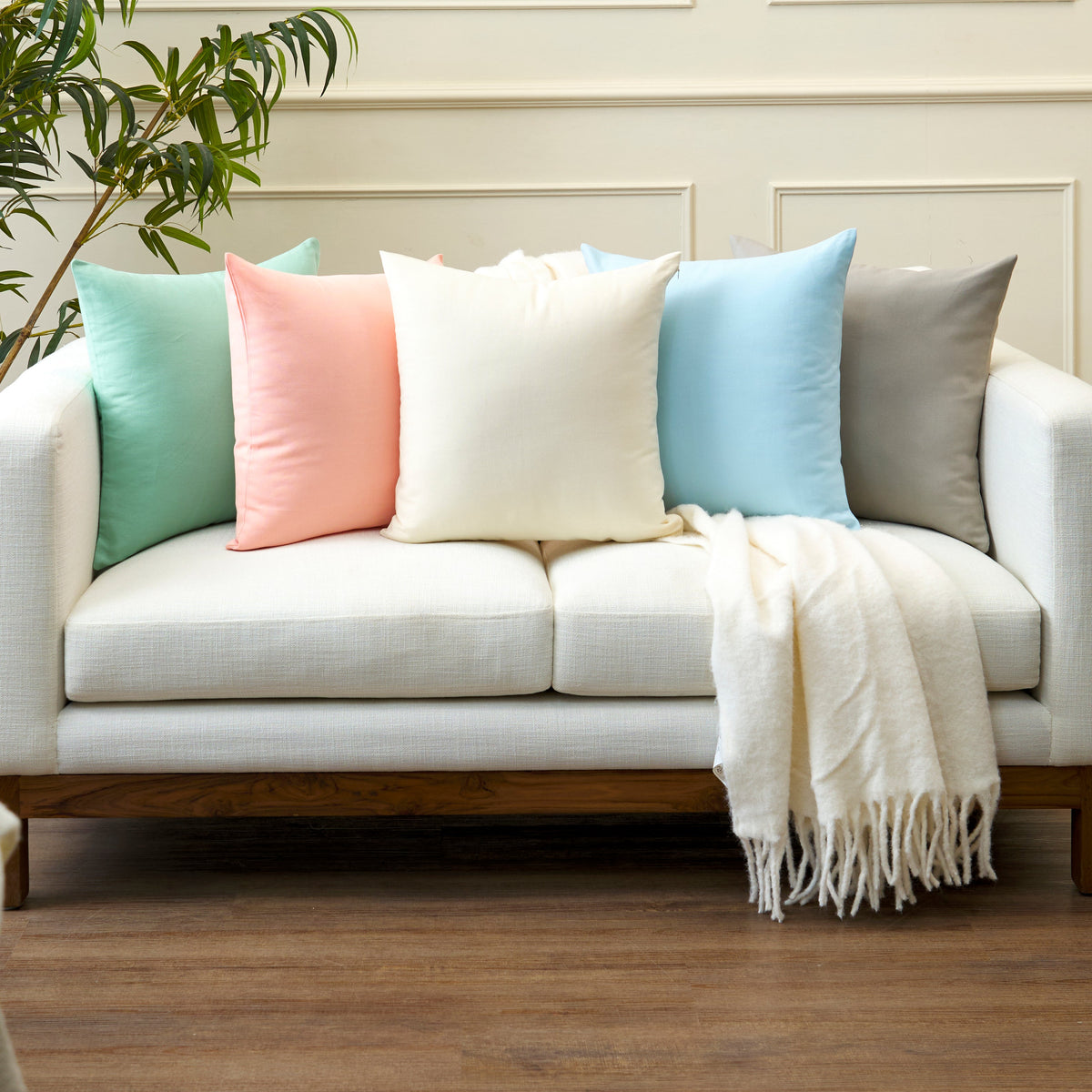
You can feel this in our own range. Our cotton canvas covers and curtains are stated at 180 GSM, and our printed cotton twill tablecloths are also described as 180 gsm mercerised cotton. Same fibre, same weight, same finish. Lay a canvas cushion cover next to one of those tablecloths and what you feel between them is the weave alone: the canvas firmer and drier to the hand, the twill smoother and quicker to fold.

Choosing a cotton twill tablecloth
A tablecloth is where twill earns its place. The drape matters because a cloth hangs over all four edges. The mark-hiding matters because dinner happens on it every day. And the density helps it survive being washed over and over.
Start with the shape and size of the table, then the fabric. Our printed twill cotton tablecloths come as a 72 x 56 inch rectangle, which their pages put at four to six seats, and a longer 91 x 56 inch cut for six to eight. Several designs also come as a 57 inch round, the size to look at for a small round table like the one in the photo. The terrazzo mint cloth shown above is one of these. Its busy speckled print suits a family table, because a print that already has dots and flecks hides the odd spill even better than the weave does on its own.
If you prefer something quieter, the multistripe cloth runs soft pink, yellow, sage and brown stripes in the same twill. Stripes look neat on a long rectangular table, as long as they run along the length so the eye follows the table rather than cutting across it.
On care, the pages for this line say the colours are fast to a cold machine wash and suggest washing dark colours separately. A few habits help twill in particular. Wash it right side in, so the face rubs less. Pull it straight by the corners while still damp, since some twills can pull slightly off square after washing, and a quick stretch puts the hem back level. Iron on the back if you want to keep the sheen on the front even.
When the table needs a bigger or rounder cloth
The printed twill line stops at 91 inches long and a 57 inch round. If you have a ten-seater, or a round table that needs more drop, look at the larger Jaipuri hand block-printed cottons instead. The Swiss block-print tablecloth comes up to 108 inches long and as a 60 inch round, with a pale base, a striped border and small floral motifs printed by hand. For the full spread of sizes across every fabric, the table cloth collection holds them all.

Not every twill tablecloth is cotton, either. Some polyester tablecloths are woven as twill too, such as our polyester chevron cloth, which its page describes as polyester twill. Polyester twill dries faster and resists creasing, but it feels slicker and does not soak up a spill the way cotton does. If you want to make your own cloth, cushions or an apron, cotton twill is also sold by the metre in a triangle print.
Questions people ask about twill
Is twill fabric cotton or polyester?
It can be either. Twill names the weave, not the fibre. Cotton twill is soft and absorbent; polyester twill is lighter, dries faster and creases less. The fabric line on the product label tells you which one you are buying.
How can I tell if a fabric is twill?
Look at the surface in good light. Twill shows fine parallel lines running at a slant across the cloth, and the back usually looks different from the front. A plain weave looks like a tiny even grid and is the same on both sides.
Is twill better than canvas for a tablecloth?
For most dining tables, yes. Twill drapes more softly over the edges and shows small marks less. Canvas is better for things that need to hold their shape, such as cushion covers or structured curtains.
Does cotton twill shrink?
Cotton can shrink a little in hot water or a hot dryer, whatever the weave. Wash cotton twill in cold water and dry it in the shade to keep it to size.

Leave a comment
This site is protected by hCaptcha and the hCaptcha Privacy Policy and Terms of Service apply.