
A bowl of dal tips over at dinner. On a cotton runner that is a soak, a scrub and a wash, and a faint yellow outline that may or may not come out. On a faux leather runner it is a wipe with a damp cloth before the rice gets cold. Now put a cushion in the same material on a sofa by a west-facing window, and leave it there through two Indian summers. That is this fabric in two scenes: wonderful against spills, much less forgiving of heat and sun.
PU leather fabric is a woven or knitted cloth with a thin layer of polyurethane (PU) plastic spread over one side, then pressed with a grain so it looks like hide. Its close cousin uses polyvinyl chloride (PVC) for the same layer. Neither one contains any leather. What you are buying is a plastic surface on a fabric back, and nearly everything good and bad about it follows from that.
What PU and PVC leather actually are
Turn any faux leather cushion cover inside out and you will see the two layers. The inside is soft, often a fuzzy black knit. The outside is the coating, embossed with a pebbled pattern to copy the pores of real hide. Older shops in India still call the PVC kind rexine, after a brand name that stuck.
The coating is the part you live with. It is why liquids sit on top instead of soaking in. It is also why the fabric does not breathe, why it gets warm under your skin, and why its failures are different from cotton's. Cotton wears thin, fades and frays. A coated fabric tends to hold its looks for a long time and then fail at the surface: it cracks where it is folded and flexed, or the top layer starts to flake away from the backing.
PU and PVC do this in different ways, which is the one place where the label matters.
| PU (polyurethane) coating | PVC (vinyl) coating | Real leather | |
|---|---|---|---|
| What it is | Plastic film on a fabric back | Plastic film on a fabric back, made flexible with softeners | Tanned animal hide |
| Feel | Softer, closer to hide | Firmer, more plastic to the touch | Varies; warms to the body |
| Spills | Wipe off | Wipe off | Water and oil can mark it |
| Typical way it ages | Surface can peel or flake, faster in damp heat | Can stiffen and crack as the softeners dry out, faster in sun | Scuffs, creases, dries without conditioning |
| Breathes | Very little | No | Somewhat |
Neither plastic is a bad choice. Both are easy-care surfaces that want keeping out of strong sun and away from direct heat.
Where faux leather beats cotton
Spills are the clear win. Tea, dal, oil, a child's mango, a dog's muddy paw: on a coated surface these stay on top long enough to wipe away. Cotton drinks them in, and turmeric in particular can stay as a stain.
Pets are the next one. Hair does not weave into a smooth coating the way it clings to a cotton or chenille cover, so a damp cloth or a dry palm clears it.
Then there is the "no washing" point, and it is a real saving for some homes. A cotton cushion cover needs to go through a machine, dry on a line, and maybe get ironed. A faux leather cover never leaves the cushion. If your covers mostly suffer from small, frequent spills rather than slow grime, that is a lot of laundry you skip.
Looks count for something too, though less than people think. A dark brown or black faux leather cushion sits well against a plain fabric sofa and gives it a firmer, more tailored edge than another soft cover would.
Where it loses: heat, sweat and sun
The same plastic layer that blocks a spill also blocks air. Sit with your bare arm against a faux leather cushion in a June afternoon without AC and you will feel it within minutes: warm, then slightly sticky. For a cushion you lean your back or head on every evening, that matters more than any spill does. In an air-conditioned room, or for cushions that are mostly decorative, it barely comes up.
Direct heat is the bigger risk. A plastic surface can soften, blister or take a permanent mark when something very hot sits on it. Faux leather runners are often sold as protection against heat marks, and for a warm serving dish that is fair. I would still keep a trivet under anything that comes straight off the flame, the pressure cooker or the kadhai, because a thin plastic film is not where you want to test the limit.
Sun works more slowly. Hours of direct light every day warm the surface and dry it out. On PVC that tends to show as stiffness and then cracking; on PU as a dull patch that can begin to flake. Neither shows up in the first month, which is why people blame the product a year later instead of the window.

Faux leather cushion covers: plain or stitched?
Once you have decided the sofa suits it, the choice narrows to colour, finish and size.
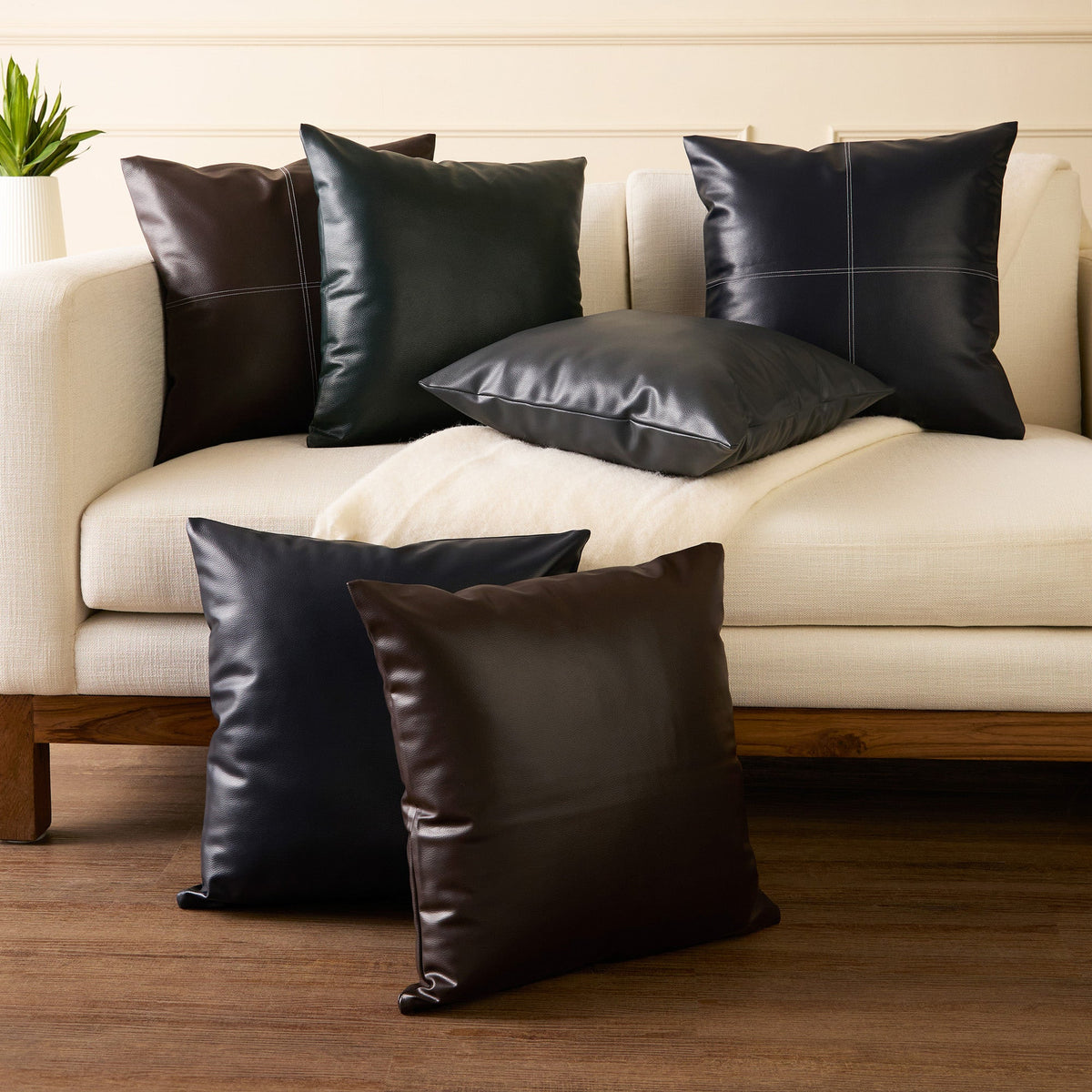
Plain covers are one smooth panel per side. They show the grain and sheen of the material, and they read clean and modern. Stitched covers have two lines of topstitching across the front, forming a cross that splits it into four squares. The stitching is decoration, but it does change the look a fair bit. A big plain shiny square can look a bit like a car seat on a casual sofa. The cross breaks up that expanse and makes the cushion look more like upholstery. The cream stitched faux leather cover above is a good example of how the stitch line softens a pale colour that might otherwise look flat.
Colour has a practical side here too. Cream shows every pen mark and denim rub, even if it wipes clean. Chocolate, dark brown and black forgive more. If children use the sofa as a slide, a darker plain cover like the chocolate faux leather pair is the low-worry pick, and its wipe-clean surface is exactly what that sofa needs.
Size works the same as any cushion cover. Ours come in 40, 45, 50 and 60 cm squares depending on the colour, with a concealed zip, covers only and no filler. Buy for the filler you already own, and use the full cushion cover range to mix a pair of faux leather with softer cotton or chenille covers on the same sofa. Mixing helps on a sofa where people really lie down: put the cotton where heads go and the faux leather at the ends.

Faux leather table runners on a dining table
A runner is the place where this material makes the most sense. It lies flat, so it is not folded and flexed the way a cushion is. Nobody leans on it with bare skin, so heat from bodies does not matter. And it sits exactly where serving bowls go down and drip.
Here is how it plays out on a typical six-seater with a wooden top that you would like to keep unmarked. Plates sit on bare wood or placemats. Down the middle, where the dal, sabzi and curd bowls land, you want something that takes drips without needing a wash after every meal. A cotton runner would be in the machine twice a week. A faux leather one gets wiped after dinner and stays put. The tan faux leather runner is 30 cm wide in four lengths, 91, 150, 183 and 240 cm, 0.7 mm thick, with a PVC surface and a tricot (knitted fabric) backing meant to stop it sliding. Its size chart pairs 150 cm with a four to six seater and 183 cm with six to eight. Add a trivet for the hot vessel and the table is covered for everyday use.
If you also want each place protected, faux leather placemats do the same wipe-clean job place by place. The table runner collection has cotton and velvet versions for festival tables, when looks matter more than speed of cleaning.
Buying PU leather fabric by the metre
For a sofa repair, a headboard, stool tops or your own cushion covers, the fabric is sold by the metre. The chocolate faux leather fabric is 137 cm wide and sold in one metre lengths at ₹798 a metre, with larger orders sent as one uncut piece where possible. Two things to plan for. Coated fabric cannot be eased or stretched the way a woven cloth can, so cut with a little to spare. And every needle hole stays visible if you unpick a seam, so pin inside the seam allowance and stitch it once.
The wider fabric collection has woven options if the piece will be sat on in the heat for hours, like a dining chair seat in a room without AC.
How to clean and care for faux leather
The routine is short, and the list of things to avoid matters more than the cleaning itself.
- Wipe spills soon with a soft cloth wrung out in plain water.
- For grease or a stubborn mark, use a few drops of mild dish soap in water, wipe, then wipe again with a clean damp cloth to remove the soap.
- Dry the surface with a soft towel. Do not leave it wet.
- Every few months, wipe the whole surface the same way to remove body oil and dust, which slowly harden the top layer.
What to avoid: alcohol, nail polish remover, bleach and strong cleaners, which can strip or dull the coating. No hot iron, ever. No hair dryer to dry it fast. Keep cushions out of a patch of direct afternoon sun, or swap them round so the same one does not take all of it. During the monsoon, make sure covers dry completely after a wipe; long-term damp warmth is when PU is most likely to start flaking.
Common questions
Is PU leather real leather?
No. PU leather is a fabric with a polyurethane plastic coating pressed to look like hide. It contains no animal skin. The word "leather" in the name only describes the look.
Which lasts longer, PU or PVC faux leather?
It depends more on where it lives than on the label. PVC is usually tougher against scuffs and water but can crack if it sits in sun and dries out. PU feels softer but can peel in long, damp heat. Kept out of direct sun and wiped regularly, both can last for years.
Can I use faux leather cushion covers in an Indian summer?
Yes, in an air-conditioned room or as decorative cushions. If you sit against them with bare skin in a hot, non-AC room, they will feel warm and sticky. In that case keep cotton covers on the cushions you lean on and use faux leather at the sofa ends.
Can a faux leather runner take a hot pressure cooker?
Put a trivet under it. The runner handles a warm serving dish, but a vessel straight off the gas can mark or soften a plastic surface.

Leave a comment
This site is protected by hCaptcha and the hCaptcha Privacy Policy and Terms of Service apply.