

Colour is already on the kurta, the cushion covers and the tablecloth. What do you do first?
Get the dry powder off before any water touches it. Then rinse cold from the back, work in detergent and wash, and keep the piece away from the dryer and the iron until the colour has gone. That order matters because Holi colour starts as a powder and turns into a dye stain once it gets wet.
Holi falls on 22 or 23 March in 2027, depending on your local calendar, with Holika Dahan the night before. If you are reading this ahead of the day, the section on preparing the house will save you some of the work. This guide covers cloth only.
What a Holi stain actually is
Dry colour sits on the cloth as loose powder. Water changes that. It dissolves the colour and carries it in between the threads, so a shirt that would have shaken nearly clean a minute ago now has a stain.
What goes in is close to what colours cloth in the first place. A paper in the Indian Journal of Clinical Biochemistry says most colouring agents used at Holi are synthetic dyes made for non-food goods such as textiles, paper and leather. That line is background, not a test result. Its samples were dry powders collected around Kolkata in 2020, and it does not list which dyes they were, so it cannot tell you what is in your packet.
Iowa State University Extension's AnswerLine service puts dye stains in a group of their own and says they can be difficult to remove. Its examples are things like mustard, felt pens and dye from other clothes in the wash, and Holi powder is not on the list. The steps below apply its general dye advice to Holi colour.
How to remove Holi colour from clothes
These steps are for anything you can wash at home. Try to do them the same day, because the service says fresh stains are much easier to remove than those over 24 hours old.
- Shake the piece outdoors while it is still dry. Fold the cloth inwards as you carry it, so the powder stays in the fold.
- Lift what is left with a soft dry brush, the sticky side of tape or a vacuum hose. The common advice is to avoid your palm and a wet cloth, because rubbing pushes powder into the weave.
- Hold it under a cold tap with the water running through from the back of the fabric. You rarely know which dye you have, and the service's rule for an unknown stain is cold water first.
- Work in detergent with your fingertips, then rinse thoroughly.
- Wash it as the care label says.
- Take it out while damp and look at it in daylight. If you can see any colour, do not dry or iron it. Go back to step 4, or use the soak in the next section.
The service warns against the dryer while a stain still shows, because the heat sets it. Treat the iron the same way. Many homes have no dryer, so in practice the habit is to look before the piece goes on the line.
The heap on the bathroom floor is a problem of its own. Wet pieces lying together can pass loose colour to each other, so rinse them one at a time, or at least keep the white ones apart. If a colour came mixed with oil, the oil needs dish soap first.
Should you use hot or cold water?
Cold first, and then only as much heat as the label allows. Some pages tell you to rinse in hot water. Start cold anyway: the dye is unknown, and cold is the safer choice for the stain and for the cloth's own colour.
Heat has a place later. The service ends its dye method with a wash as hot as the item will take, after the detergent and the soak. That suits white cotton with a label that allows it, though hot water can also shrink cotton. On coloured cloth, stay cold unless the label says otherwise, because hot water can also draw out a badly fixed dye.
How to remove colour stains from white and coloured clothes
White and coloured clothes part ways at the soak.
On white cotton, the service suggests soaking in a dilute all-fabric, colour-safe powder bleach after the detergent step. Follow the pack for the amount. If the mark stays and the care label allows it, its next suggestion for a white item is fresh bleach, meaning not an old bottle, used as that pack directs. For this step it says the stain should lift within 15 minutes, and that a longer time may weaken the fabric. So watch the clock, and stop at 15 minutes even if some colour remains.
Coloured clothes have a harder problem, because anything strong enough to remove the stain can also take the colour you want to keep. Keep chlorine bleach away from them. Test any stain remover or colour-safe bleach on a hidden seam first, as the service advises, and use it only if the seam looks the same afterwards. Otherwise, your tools are detergent and repeat washes.
Silk, wool and embroidered pieces should get the dry steps only. Take them to a dry cleaner and say the mark is a dye.
Stop when a full round of detergent and washing brings no visible change. Pink and magenta show most on white, simply because of the contrast, and a faint tint may stay. In our judgement, more scrubbing at that point mostly wears the cloth. Keep that shirt for next year's Holi.
Can you wash Holi colour out of cushion covers and table linen?
None of this section comes from Holi-specific tests. It is general dye-stain guidance applied to home linen, so treat it as a sensible order and not a promise.
| Piece | First move | Then | Where it stops |
|---|---|---|---|
| Cotton cushion cover | Take it off outdoors and shake it | Cold rinse from the back, detergent, wash alone | A tint that stays after a full round |
| Velvet cushion cover | Brush dry, along the pile | Follow the label, with no wringing | Rubbing can crush the pile |
| Cotton tablecloth or napkins | Lift by the corners and fold inwards | Treat the mark, then wash the whole piece | Whatever the label says about bleach |
| Fixed sofa fabric | Vacuum the dry powder | Test a cleaner on a hidden spot, then dab | A set-in mark needs a professional cleaner |
Cushion covers

You can treat a removable cover away from the sofa, which makes the job simpler. The white Cotton Canvas Cushion Cover is a fair example: it is cotton canvas, sold as a cover only, with a concealed zip. Its gallery says to close the zip before washing. The page shows no bleach icon either way, and no icon does not mean bleach is safe, so read any sewn label before you try it.
Look at the insert once the cover is off. Many inserts are not made to be washed, so if colour has come through, follow the insert's own label. For velvet, the velvet washing guide explains why the drying matters more than the wash.
Table linen

Say a white cloth takes a wet pink handprint at a Holi lunch. The usual last step for white cotton is bleach, so check that first. Our Cotton White Table Cloth shows a Do Not Bleach icon in its gallery and asks for cold water on its page, so for this cloth the method ends earlier. Brush off any dry powder, rinse the print cold from the back, work in detergent, then wash the whole cloth cold so you do not end up with one clean patch. Check it while damp, and repeat while each round still makes a difference. If a faint pink stays, it stays. A runner over that part of the table is a better answer than a stronger chemical.
A curtain with colour on the hem follows the same order once it is down, and washing one at home has its own guide.
Sofas and fixed upholstery
You cannot run water through a fixed sofa from the back, and that limits what you can do. Vacuum the dry colour first, using a brush attachment if you have one, and keep wet cloths away until the powder has gone. Test any upholstery cleaner on a hidden spot, then dab and blot without rubbing. A mark that has set is a job for a professional upholstery cleaner, and it may still not come out fully.
What does not help: lemon, vinegar, salt and sun
These turn up in a lot of Holi advice. None of the sources we read shows that any of them removes a dye stain.
Salt and vinegar are often said to fix colour. Our colour bleeding guide covers why they do not fix a cloth's own dye once it has left the dye house. That is a different problem from a Holi stain, but it removes the usual reason for reaching for them.
Lemon and vinegar are acids, and they can lighten or mark coloured cloth. If you still want to try one, keep it off silk and wool, test a hidden seam and treat it as optional, not as the plan.
You may have read that sunlight helps a haldi stain. That advice is about the pigment in turmeric, and we have no reason to carry it over to synthetic dyes. Long spells of direct sun can fade coloured cloth, as our canvas cushion cover page warns, so a tinted cover left out in it may end up with two problems.
How to prepare the house before Holi
On the morning of Holi, take white or pale covers off any sofa near the door, and take the good cloth off the table.
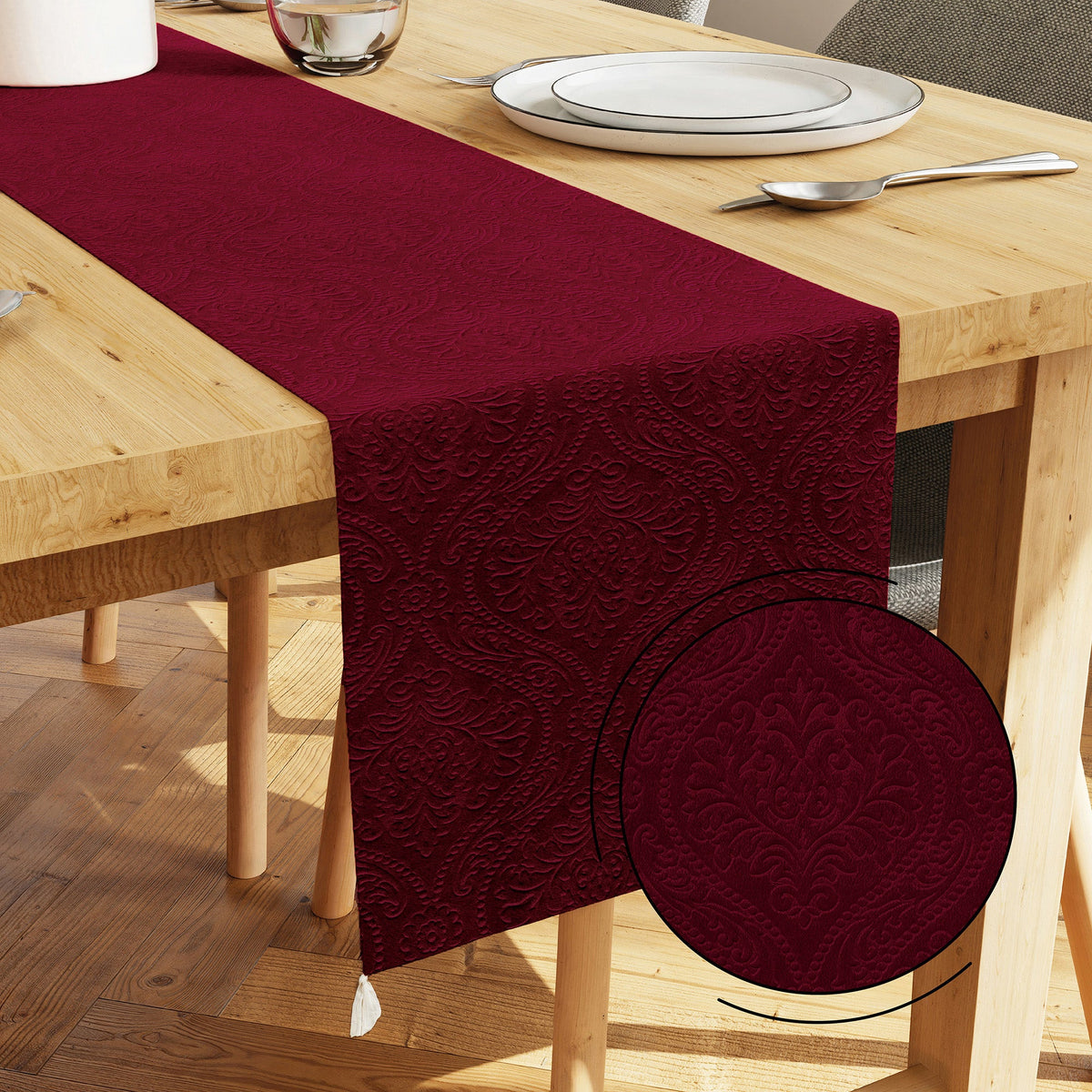
If you still want cushions out, a deeper pair from the cushion cover collection will hide a faint mark that white would show, although a deep colour also makes it harder to see whether the stain has gone. For a Holi lunch, choose a printed or deep-coloured cotton from the table cloth collection, and save the white one for later in the week. Neither is stain-proof. They only make a leftover mark less obvious.
Old clothes are still the best plan for the people. Choose pieces you will not mind seeing with a tint.
FAQ
Does Holi colour come out of white clothes?
It can, especially if you deal with it the same day and the label allows bleach. A strong pink can still leave a shadow, and that shadow may be permanent.
Can you remove Holi colour days later?
You can try, but expect less. Start with cold water and detergent, as you would on a fresh stain, and skip the iron.
Why does the colour look worse after a wash?
Wet cloth can hide pale marks, and they can show up again as the fabric dries. The wash can also move loose colour around if the powder was not fully lifted first. Wet the piece again in cold water and go back to the detergent step.
Should Holi clothes be washed separately?
Yes. Keep them away from your normal laundry, and wash white pieces apart from coloured ones, because loose dye can settle on whatever else is in the water.

Leave a comment
This site is protected by hCaptcha and the hCaptcha Privacy Policy and Terms of Service apply.