
Watch the cushions on a bed for one day. In the morning someone tidies the room and puts them back in their places. At night the same person lifts them all off, looks around for somewhere to put them, and settles for a chair or the floor. A sofa cushion can stay where it is for a week. A bed cushion is moved every day, and that decides most of what follows: how many to keep, how to stack them, and which cover is worth buying.
A bed cushion cover is a decorative cover for a square or rectangular cushion that sits on the bed during the day. It is not a pillowcase, and the cushion inside it is not meant for sleeping on. A common full look on a double bed is five cushions in three rows: two large at the back, two medium in front of them, one small at the centre. If you clear the bed every night, three is easier to live with.
For bed cushions, Encasa XO sells the covers only. We sell no inserts, no pillowcases, no shams and no bolsters, so anything on that list has to come from another shop.
Is a bed cushion cover the same as a pillow cover?
No, though the two names get mixed up all the time. In India, "pillow cover" usually means the case for the pillow you sleep on, commonly sold as 17x27 inches (about 43x69 cm), with some sellers listing 18x27 or 18x28. A decorative cover is a square, or a rectangle such as 30x50 cm. Order one when you wanted the other and it simply will not fit what you have at home.
Bed guides from the UK and US add more words. A sham is a decorative case for a sleeping pillow, usually with a border. An insert is the filled pad that goes inside a cover. A bolster is a long, round cushion. A headboard or back-rest cushion is a wide padded piece that stands against the head of the bed, and it is a different product from anything in this article. A listing called "bed cushion" could be any of these, so read what the pack holds before you pay.
How to arrange cushions on a bed
Build from the wall forward, with the largest cushions at the back and the smallest near the edge. Some guides describe the order the other way round, starting from the smallest, but the result on the bed is the same.
Sleeping pillows come first if you leave them out during the day. Stand them or stack them against the headboard, and lean the cushions on them. If you put the pillows away, the back row has to stand up alone, so it needs a firm insert. A bed with no headboard adds one more problem: the wall does the headboard's job, and cushions slip down any gap between the bed and the wall, so push the bed right back first. UK retailer Furn's guide uses this pillow base for every bed. It gives a double two large cushions and one small one, and a king two extra-large, two large and one statement cushion. Those are styling suggestions for British beds, a place to start and not a rule.
The five-cushion version is mirrored left to right, so it looks formal and finished. It gives you five things to move. One common choice is a second colour or texture for the middle pair, and the front cushion is the place to try something loud. The three-cushion version looks less staged, partly because the front rectangle sits a little to one side. If you sleep in the bed every night, you may not miss the other two.
Before you buy, do one sum. Two 60 cm cushions side by side take up 120 cm of width, and two 50 cm cushions take up 100 cm. Beds differ, so measure yours with a tape and check that the back row leaves some mattress showing on each side. If it does not, drop a size. Our cushion cover size guide covers the common sizes and how an insert should fit a cover.
How many cushions on a bed?
Retail guides count by bed size. It works better to count by how the bed is used, and the test is simple: keep no more than you can lift off in one trip, or two at the most. These are working numbers based on that test, not a measured standard.
| How the bed is used | Cushions | Why |
|---|---|---|
| Single bed, slept in every night | 1 or 2 | Little width, and often little floor space to put them at night |
| Double bed, slept in every night | 3 | One armful to clear, and still looks finished |
| Guest bed, or one that stays made most days | 5 | Moved rarely, so the extra work is rare too |
| Bed used as seating by day, against a wall | 3 or 4, all firm | People lean on them, so they have to hold a back up, not only look neat |
You see that last row in smaller homes, where the bed is also where guests sit. That bed is closer to a sofa, and a floppy back cushion annoys everyone by evening.
Then decide where the cushions go at night, before you buy them. A chair works if nobody needs the chair. A trunk or a basket works if it is big enough, and two 60 cm and two 50 cm cushions make a heap that many bedroom chairs will not hold. The floor is the easy answer and the worst one, because the cover picks up whatever is on the floor and goes back against your bed the next morning.
Which fabric suits a bed cushion cover?
A bed changes the job. Unless the bed doubles as seating, nobody sits on these cushions. They get leaned on, they touch hair and skin, and they are handled every day. In a home where people oil their hair, the back row collects it. So the real question for each cushion is whether anyone leans on it, and whether you are happy to wash it often.
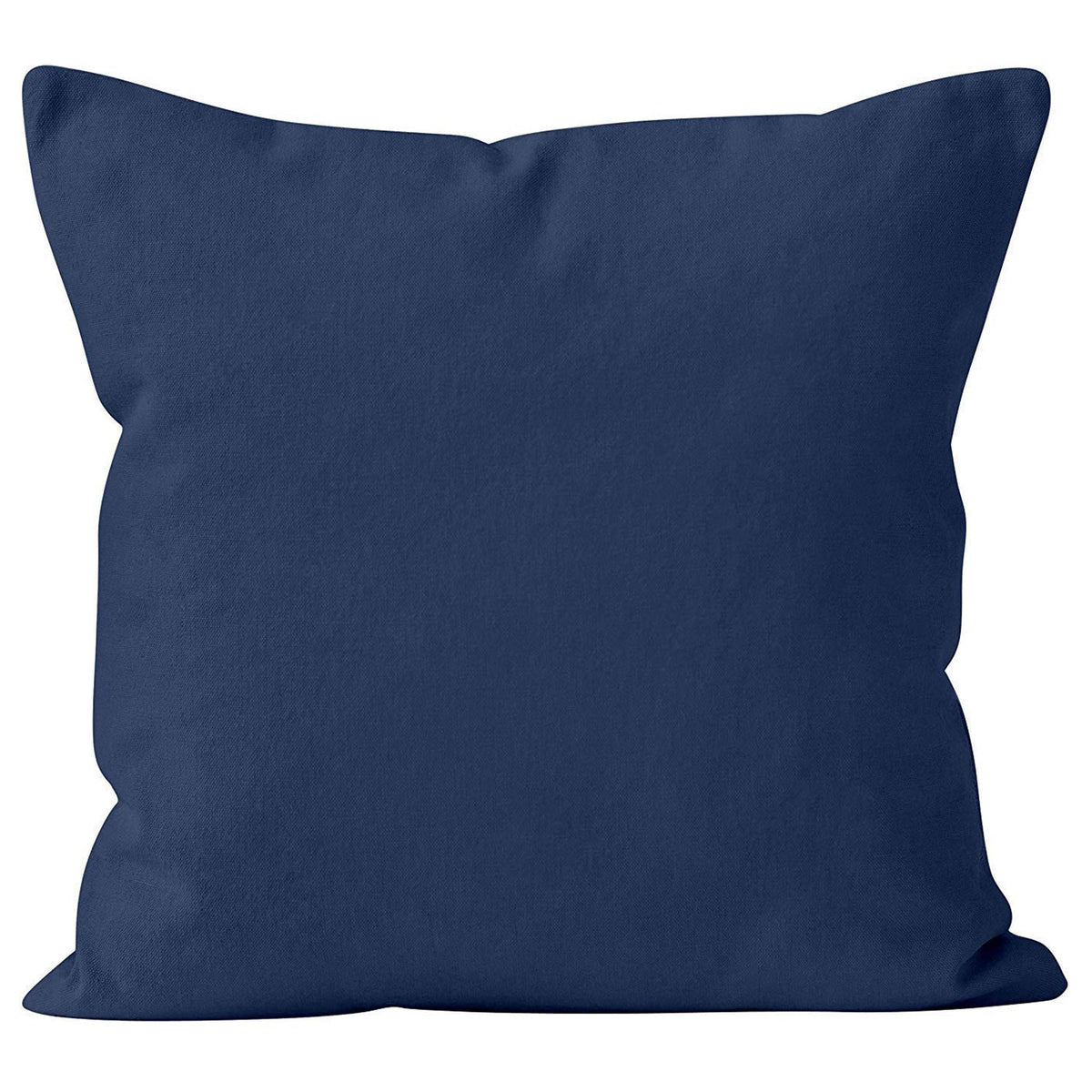
If someone leans on it, use cotton canvas. A flat weave has no pile to crush. Our white canvas cover has a hidden zip. It can crease after a wash, and white shows marks sooner than a darker colour, which is one reason to use it in the middle row, not the back.
If nobody leans on it, you can have pile. Velvet and chenille both tend to flatten under a resting back, so a back row in either fabric on a bed in daily use is likely to show where someone sat. The front rectangle is the safe spot for velvet, and the grey velvet cover is the one velvet in our range sold at 30x50 cm. For a square in another colour, on a bed that is mostly looked at, the velvet range has more to choose from.

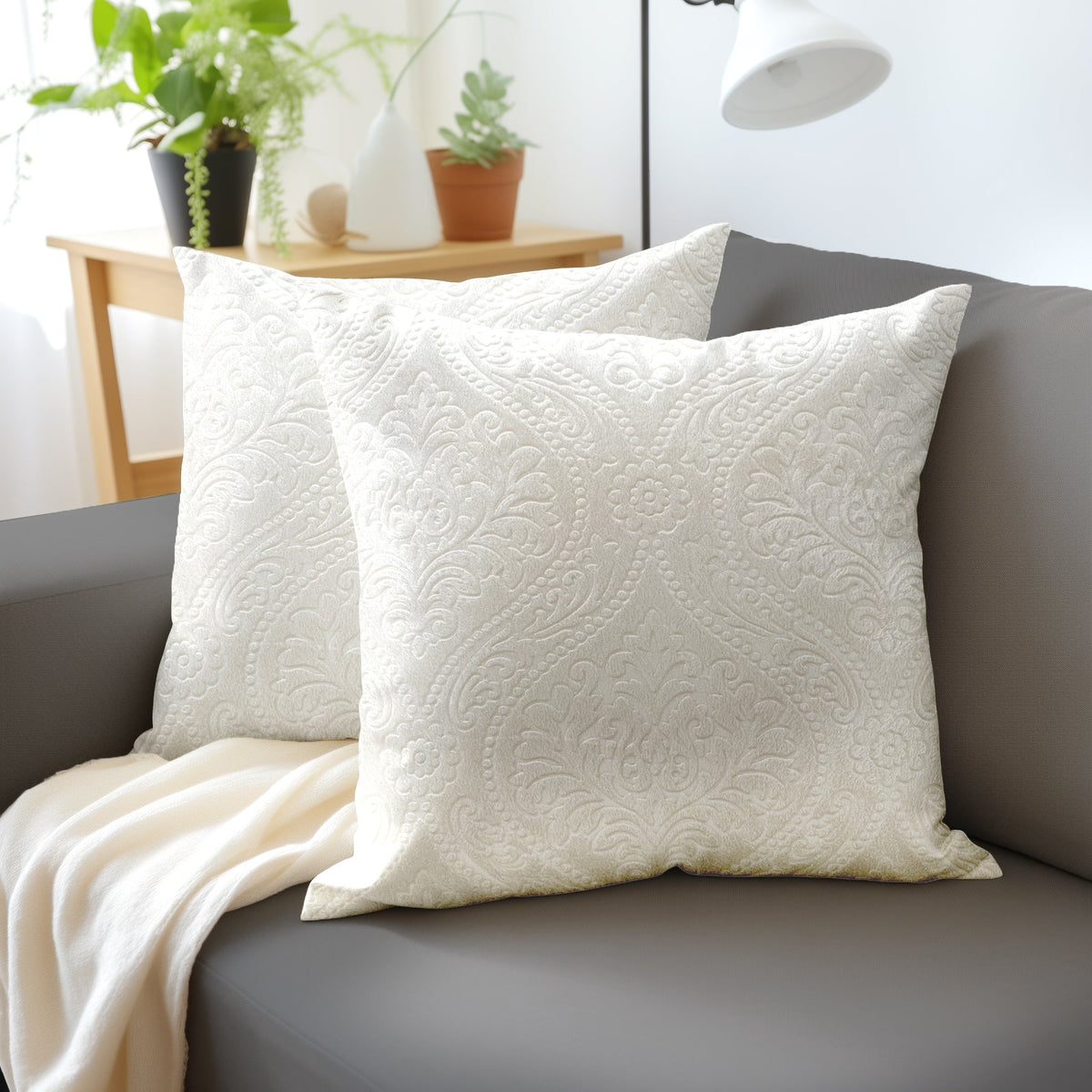
Our pictures of these covers show them on sofas. We have no picture of them on a bed.
Chenille is softer to the hand, which makes it a good guest-room fabric for cushions that mostly stay put. Our chenille natural cover reads cream to pale wheat depending on the light, and the chenille range carries 60x60 cm in other colours if you want the back row darker, though some colours are out of stock.

What each arrangement costs
Here are both arrangements at our listed prices on 30 October 2026, rounded to the nearest ₹10. Every price buys covers only, as the card on these listings says, so you also need one insert per cushion.

Say you have a guest room with pale bedding and want the five-cushion look. A pair of Scotch Blue canvas covers, which read as a deep navy, at 60x60 cm costs about ₹920 and gives the back row some weight against a light wall. A pair of white canvas covers at 50x50 cm costs about ₹690. A pair of grey velvet covers at 30x50 cm costs about ₹500. That comes to about ₹2,110 for six covers. You only need five on the bed, but the rectangle is sold as a pair, so one is left over. Keep it, because it lets you wash the front cover without leaving a gap.
For a bed you sleep in every night, take the three-cushion look. A pair of natural canvas covers at 60x60 cm costs about ₹920. It is a cream colour rather than a bright white, though a darker pair will hide hair oil better. Add the same grey velvet rectangle pair at about ₹500, and the total is about ₹1,420 for four covers, with three on the bed and one spare. On a guest bed, swap the back pair for chenille natural at 60x60 cm for about ₹1,000, and the total becomes about ₹1,500.
If a 60 cm back row leaves too much mattress showing on your bed, the canvas line goes up to 65 cm. If it fits but the colour is wrong, the wider cushion cover range sells 60 cm in several other fabrics.
Washing and the nightly reset
No fixed schedule suits every home. A cover that gets leaned on wants washing more often than one that only gets looked at, and an easy habit is to check the cushions when you change the sheets. On our canvas and chenille listings the care card says to close the zip before washing, to prevent damage. Velvet needs more care in the drying, and our velvet washing guide goes through it. During the monsoon, thick covers stay damp for longer, so wash on a dry day and make sure the cover is dry before the insert goes back in.
Daily handling also shows up a poor fit quickly. A cover that twists or slumps each time you put it back usually has an insert that does not fill it, and this guide to covers that slip and sag has the fixes.
Sheets rotate and cushions stay, so choose cushion colours that sit well with most of the sheets you own. Plain colours make that easier than prints. If you also want to match cushions to a sofa, our sofa mistakes list has that logic.
Frequently asked questions
What size cushion cover should I use on a bed?
No size is standard for beds. Some retailers publish tables that pair cushion sizes with bed sizes, but those tables reflect their own range. A 30x50 cm rectangle is a common choice for the front on any bed, and our size guide lists what the square sizes suit.
Do bed cushions go in front of or behind the sleeping pillows?
In front, if the pillows stay on the bed in the day. The pillows act as a firm base and the cushions hide them. If your pillows are worn or do not match, put them in a cupboard and let the back row of cushions take their place against the headboard.
What do you do with the cushions at night?
Give them one fixed place, off the floor. A corner of a chair, a trunk or a lidded basket all work. A fixed place is what makes a bed easy to reset in the morning, and if the room has no such place, keep fewer cushions.
Can I use sofa cushion covers on a bed?
Yes. We sell one range of decorative covers, not a separate one for beds. What changes is how often the cover is handled and washed, so a cover that was fine on a sofa may need more washing on a bed.

Leave a comment
This site is protected by hCaptcha and the hCaptcha Privacy Policy and Terms of Service apply.