
The wash gets the blame first. A cushion cover that looked smooth in the pack now has a rough patch on its front and small balls of fuzz at the corner where an arm rests. The last thing that happened to it was the washing machine, so the next load goes on gentle. The fuzz comes back anyway.
One sofa owner on Reddit had covers that started pilling within three weeks, and the comment does not mention a wash at all. The household got replacement covers and changed one other thing, a blanket: they got rid of their woven cotton ones and bought a quilt. That "seems to be preventing pilling", the owner wrote, and called it a theory.
Fabric pilling is what happens when loose fibres work out of a cloth, get rubbed into tiny balls and stay tied to the surface. Rubbing is the cause. A wash is one source of rubbing and daily use is another. Some of the fibres in a ball may have come from a throw or a pair of jeans.
Why does fabric pilling happen on clothes?
If you came here about a sweater or a T-shirt, the cause is the same. Knitted fabrics tend to pill more than woven ones because their yarns cross further apart, and short fibres pill more than long ones because they have more loose ends. Polyester and other synthetics are the stubborn case: the fibres are strong, so a ball tends to stay on instead of dropping off.
To slow it, turn clothes inside out, close their zips, keep them away from jeans and towels in the wash, and leave room in the drum. One r/laundry thread gives the same advice backwards: someone wanted to age a new blanket on purpose, and a reply with about 180 upvotes said to wash it with jeans, jackets and other heavy items, better still with exposed zips. Line drying, the norm in many Indian homes, helps but is no cure: an r/laundry commenter who only air dries still sees it on poor fabric. To take pills off, lay the garment flat and use a fabric shaver with light passes. An "anti-pilling" label tells you little unless it names a test and a grade, since textile labs rate pilling with set rub tests.
We do not sell clothes, so the rest of this page is about cushion covers. The rubbing is the same, but it lands on the same two spots every day, and you have more say over what does it.
What is actually inside the ball
On a cushion, a head or a back on the front panel and an arm on the corner keep the rubbing going.
The wash is partly to blame, but it does not explain a sofa. In an r/CleaningTips thread (20 upvotes, 10 comments), someone asked whether the pills on their sofa came from the sofa or their jeans. The top reply, with 37 upvotes, put it down to the friction of sitting and added: "You're not doing anything wrong."
"The cover must be cheap" is the next theory, and sometimes it is true. Short fibres or loose yarn do pill sooner, and a product photo will not tell you. But price is no protection either: one owner of a sofa costing about $7,000 described it as covered in a "fuzzy mess" three weeks after delivery.
"The sofa is shedding" can get it backwards. In the jeans thread, someone asked why the pills were dark on a lighter sofa. A reply with 16 upvotes said they likely came from dark clothing, and another described the same thing from a navy throw. So one ball can hold the cover's own fibres and lint from whatever rubs against it.
This week, a cover that looked new in the photo looks worn in the next one you take of that sofa. This month, the balls catch dust and turn grey, and the rough patch snags under a thumb. By next season the cover gets replaced, and if the new one is the same cloth in the same spot under the same throw, the fuzz returns.
Cloth that gives the rubbing less to work on

Look for a smooth, level face. A flat weave with no pile gives an elbow less to catch. A raised surface brings fibres to the top by design: chenille yarn is short tufts held between core yarns, and in some yarns those tufts can work loose.
The fibre name alone does not settle it. That Wikipedia entry lists cotton with wool and polyester among the fibres that tend to pill most, and the blanket blamed by the owner at the top of this page was cotton. So was the quilt that replaced it. That owner called the old throw "loose weave" and hoped the "tighter weave" of the quilt would help. How firmly the fibres are held is what they were pointing at.
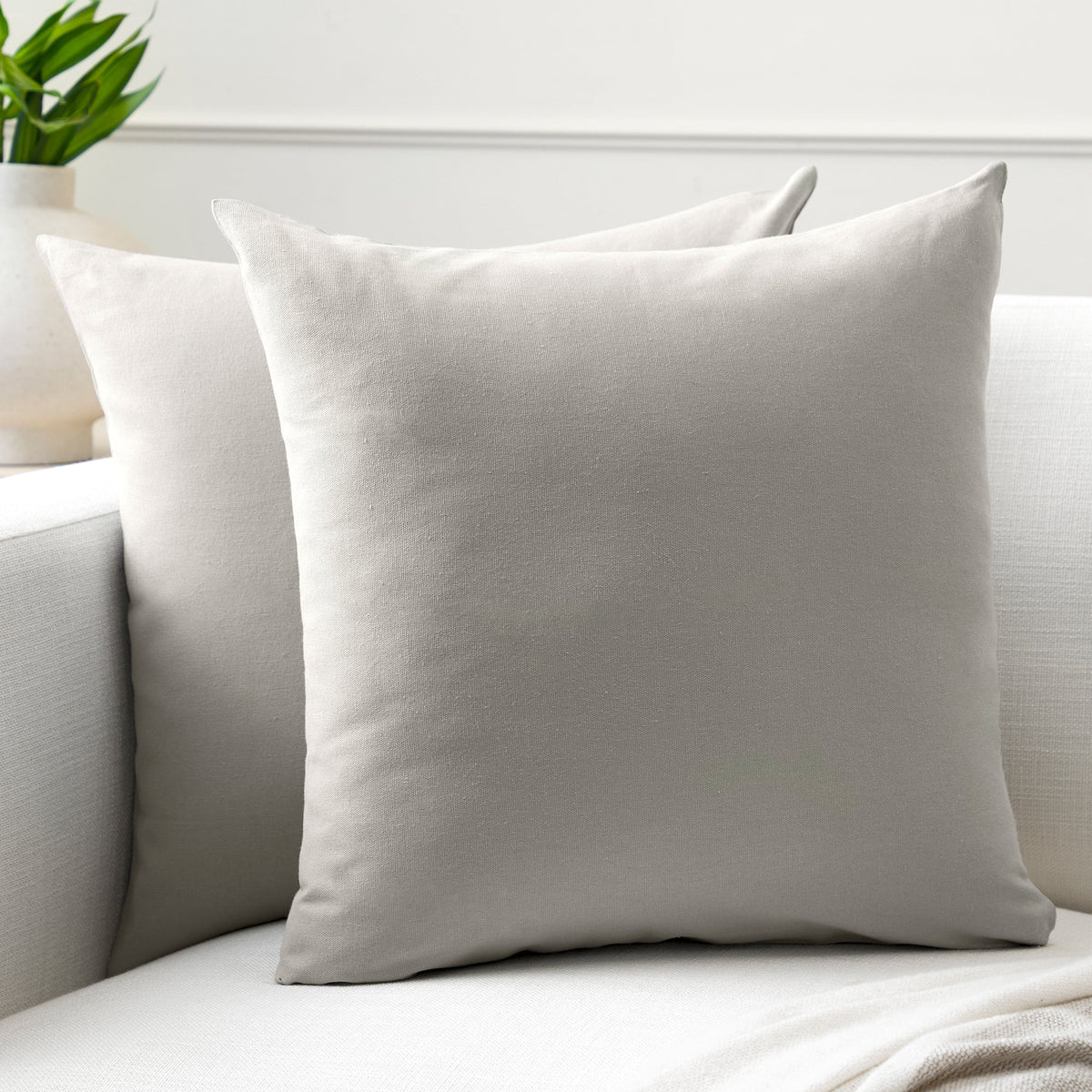
Our plain option is the cotton canvas cover in light grey. The page states a medium-weight cotton at 180 GSM with a canvas weave, so a back or an arm meets one flat level with no raised tufts. For a pattern, the navy ticking stripe is 100% cotton with the colour dyed in the yarn and no pile. Our product pages state no pilling test grade for these covers and give no fibre length, so this is a reading of how the cloth is built: fewer exposed fibres to catch, which lowers the risk without removing it.
The aim looks like this: the same cushion three months on, in the same corner, taking the same lean. A thumb slides across the front without catching, there is no grey ball on the pale ground, and there is little or nothing to shave. Whether you get there depends on the rubbing as well as the cloth.
What owners found when they looked at the throw
Changing the throw does nothing for a cover's own loose fibres, and one owner argued against the idea. Their pilling was on a footrest where no blanket went, so they blamed feet moving back and forth: "smoother textures will have less friction and thus less pilling."
The owner at the top of this page told the same story in a second thread: they "got rid of a cotton, loose weave throw blanket" for a quilt, and that seems to have stopped it. That reply and the footrest one have 2 upvotes each, and the blanket story comes from one household.
These two threads have 34 and 32 comments and concern one US maker's chenille sofa covers, so treat them as leads to test at home. Start with the ball and where it sits.
| What you see | Where it likely came from | What to do |
|---|---|---|
| Balls the colour of the cover, on the front panel and arm corner | The cover's own fibres, loosened by daily rubbing | Shave lightly once. If they return fast in the same spot, the cloth is the issue |
| Dark balls on a pale cover | Jeans or other dark clothes | Try the paper bag test below |
| Balls only where a throw lies | Lint from the throw, more likely if it is loose-weave | Take the throw away for a week, or swap it for something tighter |
| Fuzz all over after a wash, including the back panel | Rubbing in the machine: heavy items, open zips, a full drum | Wash covers zipped and inside out, apart from jeans and towels |
The test comes from a commenter in that r/CleaningTips thread (2 upvotes): sit on a paper bag, and if the pilling stops, the jeans were doing it. A clean old sheet over the seat for a week is our version of the idea on a sofa.
Which cover to get for a seat people lean on

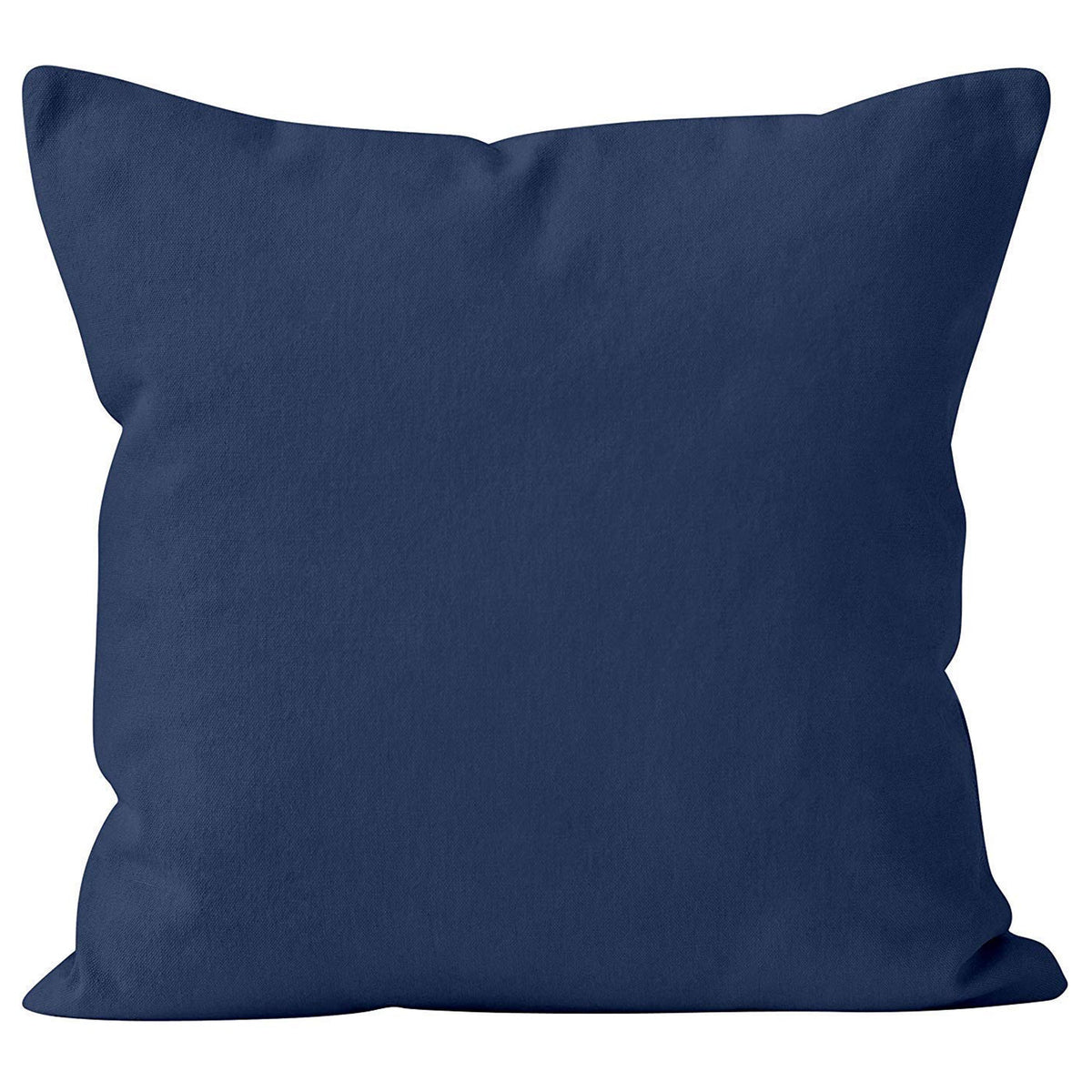
If the cover goes on a sofa end or a daily chair, get a flat-woven cotton one, because that is where the rubbing happens. In a pale room, the light grey canvas pair runs from about ₹500 at 40 cm to about ₹900 at 60 cm. A plain pale cover shows every dark ball, so in a house of dark jeans the easier choice is the navy ticking pair, at about ₹490 to ₹660 in 40, 45 or 50 cm.
Size is the mistake to avoid. These are covers only, so measure your insert, not the old cover. The cushion cover size guide covers the fit.
The bill for shaving the same patch
Go back to that bobbled front panel. The easy reply is a shaver, and a shaver leaves the rubbing where it was, so the balls come back. Each pass also takes a little cloth with it. An r/laundry commenter (19 upvotes) said shaving leads to thinning and earlier tearing, which is one person's view, and the $7,000 sofa owner worried about the same thing. On a pile, a blade has raised tufts to catch.
It also hides a clue. Shave a dark ball off a pale cover and the source is still in the jeans, so the next ball arrives dark too.
For a few pills on a flat cover, a light pass is still the right call, and the top reply in the jeans thread suggests just that. If the balls came from a throw, moving it costs nothing. If they are the cover's own and keep returning, a fresh pair in the same raised cloth, about ₹700 to ₹1,000 for one of our chenille pairs, buys a new surface and the same rubbing. A flat cotton pair at about ₹500 to ₹900 changes the surface.
Questions before you buy
Will a cotton cover just pill again?
It can. Cotton with short fibres does pill, and a flat weave only makes it less likely. Chenille is not doomed either: one Reddit commenter (4 upvotes) kept a chenille sofa for 17 years with no trouble, while others saw pills in weeks, so quality varies within one fabric name.
Can I just shave a pilled cushion cover?
Yes. Take the insert out, lay the cover flat and hold it smooth. Use a fabric shaver with light passes and no pressure, then lift the loose bits with a lint roller. A disposable razor can do it but cuts cloth more easily.
Will washing ruin new covers?
Not if you keep the rubbing down. The stripe and check pages say machine washable and advise washing dark colours separately, and the canvas page has a card asking you to zip the cover before washing. Inside out and away from jeans and towels is our own advice, not printed on the pages.
Is a pilled cover a defect I can return?
Pills on their own show that the cloth was rubbed, not whether it was faulty. Our refund policy says "you may return eligible items within 14 days of delivery for a refund or exchange", and that items "must be unused, in their original packaging, and in the same condition as when you received them". A cover that has pilled in use is no longer unused. The same policy does not charge return shipping on a defective item, so contact us if you believe a cover was faulty.
Start with the throw, then change the cover

Take the throw off the sofa for a week and watch the front of the most-used cushion. If the balls stop, you have saved yourself a purchase. If they keep coming in the cover's own colour, replace that one cover with a flat-woven cotton from the cushion cover range, or, on a chair that can carry a bold pattern, the buffalo red check pair at about ₹490 to ₹880 in 40, 50 or 60 cm. That gives the front panel a better chance of staying flat, with less work for the shaver.
Encasa XO is our own brand, and the covers named above are ours.


Leave a comment
This site is protected by hCaptcha and the hCaptcha Privacy Policy and Terms of Service apply.