
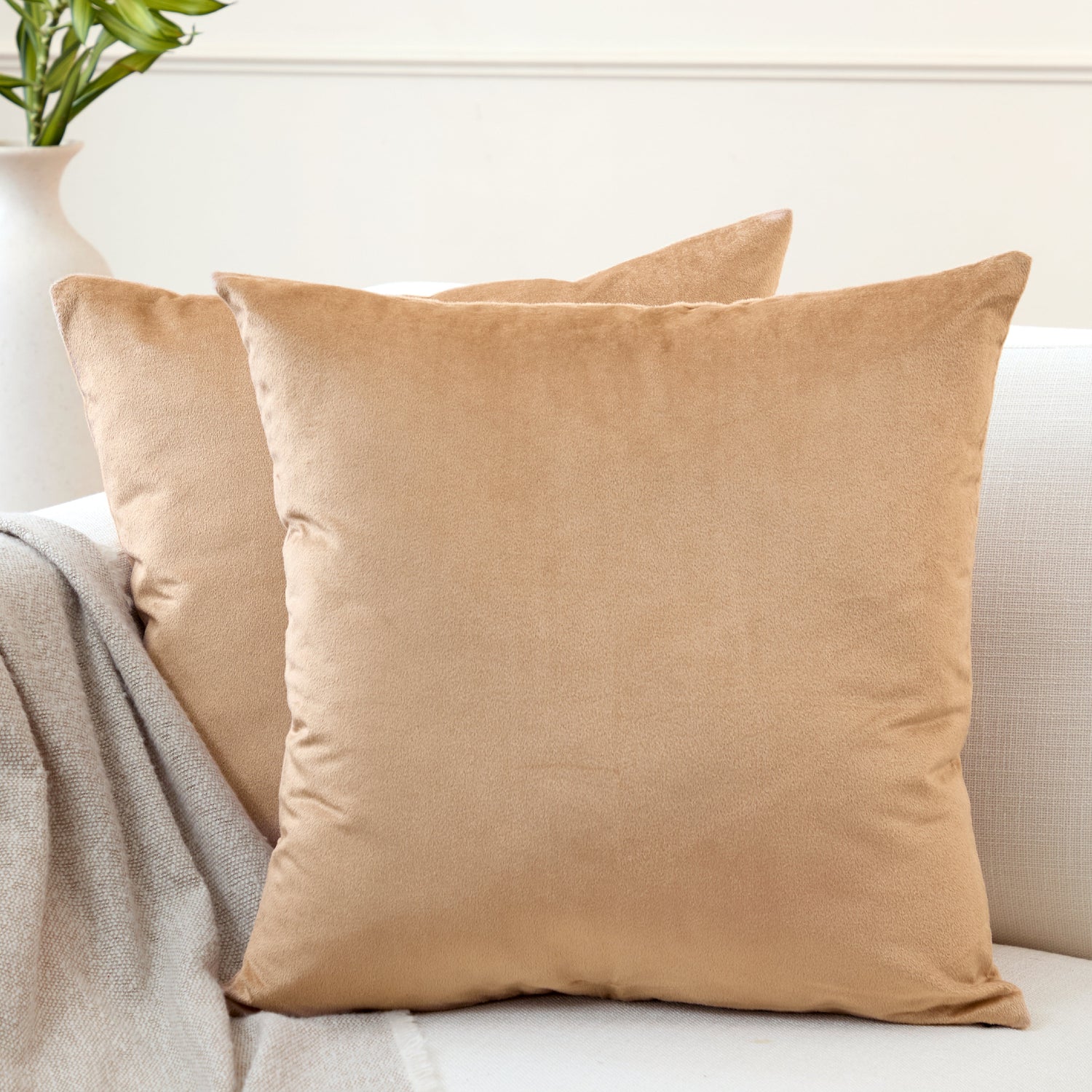
Sound sofas get sold off cheap all the time because the room around them stopped feeling right. The frame is fine, the foam has years left, and the replacement is much the same shape in a fabric that will look tired again on the same schedule. The covers were the part that had aged. They take the sun, the leaning, the food and the dog, while the frame underneath quietly does its job for a decade.
If nothing creaks, nothing sags, and everything you dislike about the sofa sits on its surface, what you have is a covers problem. New covers change colour, texture and how cared-for the seating reads from the doorway, which is most of what people mean when they say a sofa looks old. Here is how to tell the surface has aged and the sofa has not.
1. The frame is solid and only the fabric looks tired
Furniture and fabric age on completely different clocks. The things that genuinely finish a sofa, a cracked frame or a seat that sags towards the floor, announce themselves through your body rather than your eyes. Faded, bobbled, grubby cloth is what you notice from across the room, and it arrives years earlier, on a frame with plenty of life left in it.
Reddit threads where someone photographs their living room and asks whether they need new sofas or only better covers split along that same line. Some replies argue a cover swap will not rescue a look you have genuinely outgrown; the ones carrying more agreement tell the poster to change the covers and the colour first, and one commenter who had done exactly that on a structurally sound sofa called the result great. Covers change colour, texture and how clean a sofa reads; they do not change its shape or how it sits in the room.
The test is physical. Sit down hard in the middle, then along each end. If it holds, the sofa is not the thing that needs replacing.
2. One end of the sofa has faded lighter than the other
In one long Reddit thread about choosing between grey and blue cushions, half a dozen commenters raised sun fading unprompted, several talking themselves into the duller colour to dodge it, on the reasoning that a darker shade starts to go after a few years in a bright room. What they were circling is patchiness rather than fading. A set that has softened evenly looks lived in; one bleached arm, where the window falls on it, looks like nobody was paying attention.

Fade is also the only sign here that worsens while you think about it, which makes it an argument for placing deep colour rather than avoiding it. A pair of green velvet covers belongs on the shaded end or the armchair out of the sun's path, with something paler carrying the window seat. We say as much on our own cotton canvas listing, indoor use only and prolonged direct sunlight may cause fading. No cushion fabric is fade-proof.
| The spot | Cover that suits it | The catch |
|---|---|---|
| Seat in direct afternoon sun | Pale or mid-tone cotton canvas | Deep dyes show it first, so swap the cushions end to end every few months |
| Sofa the pets have claimed | A flat, tight weave in a mid-tone | Hair lifts off a flat weave far more easily than out of a pile |
| Where small children eat | Darker cotton canvas, or a print | On pale plain covers every mark is on display |
| Covers you will honestly wash often | Cotton canvas | Canvas colours are made for repeated washing; corduroy wants a hand wash or gentle cycle |
3. The covers have gone bobbly where people actually lean

Reddit threads about couch-cover fabric keep coming back to pilling, some of them describing covers that bobbled within weeks. What is interesting is that the posters do not write the fabric off. They rank one weave of it against another and buy again more carefully.
They are right to, because pilling is mechanical rather than mysterious. Short fibres work loose under friction, tangle into bobbles and stay attached, which is why a cover goes shabby in exactly the two places the sofa gets used: the back where shoulders rest and the corner where an arm goes. Shave them off and they return, because the friction has not gone anywhere, and a bobbled cover reads as cheap although nothing cheap happened.
Texture is still worth having. The rust orange chenille pair is made to resist pilling and wrinkling and not to bleed onto a light-coloured sofa, which is what lets a woven texture go on the seat that takes the leaning rather than on the decorative chair nobody touches.
4. Every mark shows, so the throw never comes off
Look at how the room is being managed rather than at the sofa itself. A throw that never gets folded away, guests quietly steered towards the armchair. Those are workarounds for covers that stopped looking clean, and they cost you the room.
The complaint underneath is nearly always pale fabric. One poster described beige cushions that had become a dirty mess where all the dirt spots show, and the replies were not about scrubbing harder but about buying differently next time, on the grounds that stains get lost in a pattern and a darker cover masks the dirt that arrives with children and pets.
Which makes it a purchasing decision rather than a cleaning one. The charcoal grey cotton canvas covers answer it directly: a mid-weight 180 GSM canvas in a colour that does not report every crumb, sold in seven sizes and thirty colours, so the darkest can take the high-traffic end and a paler shade the corner where nobody eats.
5. The sofa is furry by evening and you have stopped fighting it

Pet hair stains nothing and wears nothing out. It just makes a sofa look uncared for at the moment the doorbell goes, and it is back within a day of every clean. Owners hunting for couch covers on Reddit use hair magnet as a category of fabric. Their fixes are practical rather than magical: something hair sits on top of instead of burying itself in, a colour that is not the exact opposite of your animal's coat, and a spare set to rotate through the wash. One commenter's summary was that it is called FURniture for a reason.
The spare set is the part people skip, and it changes what you should be willing to spend, since the number that matters is the price of two. A brick corduroy pair fits the fixes above: a tight rib rather than a pile, in a mid tone that neither a black nor a golden coat disappears into, and sold as covers with the inserts left out, so the second set is cloth rather than more cushions to store.
6. You have quietly stopped taking the covers off to wash them
A wide zip opening sounds like nothing until you have fought a narrow one with a cushion half in and half out. That fight is why covers go unwashed. Reddit threads ask in earnest how to freshen cushions up without taking the covers off at all, and others ask what the trick is for getting them off in the first place. A cover that is a struggle to remove is a cover washed once a year, and a cover washed once a year looks like one. The rest of the reluctance is the wash itself, where a recurring thread is the cover that shrank in the machine and would not go back over its cushion.
Our velvet covers use a hidden zip with a wide opening, so stripping a cover or swapping an insert is a one-minute job, and the fabric is made not to bleed or shrink when washed with similar colours. Across the velvet range that detail decides whether covers stay clean for years, more than the pile everyone actually buys them for.
What new cushion covers for a sofa cost, against replacing it
A pack of two velvet covers sits roughly in the ₹450 to ₹800 range depending on size, chenille and corduroy packs run higher into the ₹900s, and plain cotton canvas covers start from around ₹300 in the small sizes. Restoring a whole three-seater is a few packs, against a sofa that costs a multiple of that plus a delivery day and the problem of the old one.
Start from whichever sign brought you here. If it is the fade, buy pale canvas for the window end and keep the deep velvet for the shaded one. If it is the marks, buy darker canvas in the sizes you already own, measuring an existing cushion first, because a 40x40 cm cover will not go over a 45x45 cm insert. The full cushion cover range is sorted by fabric, which is the decision left once you know which end of the sofa you are shopping for.
Frequently asked questions
How often do sofa cushion covers need replacing?
By condition rather than by calendar. The signals are pilling at the lean points, colour gone uneven rather than merely softer, and marks that survive a wash. A set on a sunny seat reaches all three well before an identical set in a shaded room.
Can new covers make an old sofa look new?
They change colour, texture and how clean the sofa reads, and that covers the bulk of what registers as old at a glance. What they cannot change is shape, height, or a collapsed seat: if the foam is flat or the frame moves when you sit, covers only give you a tidier version of the same tired sofa.
What size cushion covers fit a standard Indian sofa?
16x16 inches, which is 40x40 cm, is the standard sofa cushion size in India. Measure your existing insert corner to corner and buy the cover to match it exactly. The other sizes translate as 45x45 cm for 18x18 inches, 50x50 cm for 20x20 inches and 60x60 cm for 24x24 inches.
Encasa XO is our own brand, and the cushion covers named above are ours.



Leave a comment
This site is protected by hCaptcha and the hCaptcha Privacy Policy and Terms of Service apply.