
When people find white or grey spots on a kurta or the good tablecloth, they do the sensible thing. They wash it, dry it and fold it back onto the same shelf. A few weeks later the spots are back, sometimes on the clothes next to it as well.
The wash was not the mistake. Fungus on cloth needs damp air, still air and something to feed on, and a shut almirah in a humid month gives it all three. Washing takes the growth off the cloth, not off the shelf.
To remove fungus from clothes, brush the dry growth off outdoors, soak the piece in warm water with detergent for about an hour, wash it at the hottest temperature its care label allows, and dry it fully, in the sun if you can. Then find which of the six reasons below fits your cupboard, or the spots will come back.
1. The air inside a shut almirah stays damp long after the room feels dry
In Mumbai, Chennai, Kochi and many other coastal cities, the air holds a lot of water for months, not only in the monsoon. Inside a closed wooden or steel almirah, nothing moves that air, and the damp settles into the clothes.
There is a cheap test. People in r/Coconaad (a Kerala forum) and on home-improvement threads describe moisture-absorber bags and boxes that fill with water within a week or two. If a box fills that fast, it is a fair sign the cupboard is damp, whatever the room feels like. Open the almirah on dry days and let the air through; our guide to monsoon textile care covers the drying side.
2. Clothes went back in a little damp, or after one wear
A shirt that feels dry outside can still hold water in the seams, collar and hem. Fold it like that and you have packed damp cloth into a dark box.
Sweat does the same thing more slowly. The University of Kentucky's guide to mildew in clothing notes that even the moisture from sweat can be enough. Hang anything you have worn under the fan for a few hours, and fold it only when it is dry all the way through.
3. Food marks and grime are what the fungus eats, even on polyester
Mildew needs something to feed on. Cotton and other plant fibres can feed it on their own. Polyester and nylon resist it better, but the same Kentucky guide says dirt on the cloth can give mildew enough food to grow anyway.
That is why stored festive linen is so often where it shows up first. A tablecloth packed after Diwali with a faint ghee mark, or cushion covers with hand oil on the front, carry food with them. Wash everything before it goes away. Our guide to storing festive linen covers the packing itself.
4. It is packed tight, so no air moves between the clothes
Mildew can grow in dark places where the air barely moves, and the University of Florida's extension advice is simple: do not crowd the clothes. On a shelf packed so tight that you pull things out sideways, the middle of the pile stays damp for weeks.
Polythene bags make it worse over months, because they hold in whatever damp was in the cloth on the day you sealed them. Leave space on each shelf, hang what can be hung, and open the doors for an hour or two on a dry, sunny day.
5. The wall behind the almirah is damp
If the spots are worst on the side or back of the pile, look at the wall. An outer wall that takes the rain, a wall shared with a bathroom, or a slow leak from the flat above can keep the back of an almirah damp all season. Replies in r/mumbai threads on cupboard fungus tell people to check the walls and drawers for leaks before buying anything.
You cannot always fix the wall, especially in a rented flat. You can move the almirah a few centimetres out so air passes behind it, and keep the clothes you care about furthest from it. If the damp comes from a bathroom that never dries, start with our guide to a bathmat that always smells.
6. The almirah itself still has fungus on its shelves
This is why clean clothes go mouldy again. If spots grew on the clothes, they very likely grew on the shelves, the back panel and the corners too. One r/mumbai reply put it plainly: the spores on clothes come off "with a couple washes", but the ones in a wooden wardrobe are far harder to shift.
Before anything clean goes back, empty the almirah. Brush out any visible growth near an open window, wipe the shelves with a cloth wrung out in water and a little detergent, and leave the doors open until the wood is completely dry. Then put back only clothes that are clean and dry.
How to remove fungus from clothes, step by step
These steps follow detergent makers' guides and university extension advice. Check the care label first, and test anything stronger than detergent on a hidden corner.
- Take the piece outside while it is dry and brush the growth off with a soft brush, so the dust does not settle back in the room.
- Leave it in the sun and air for a few hours if you can.
- Soak it in warm water with your usual washing powder for about an hour. Ariel India's method puts a white towel on top to keep floating pieces under.
- Wash it at the hottest temperature the care label allows.
- Dry it fully, in the sun if the colour can take it. Sun helps with mildew but fades dark and bright colours, so turn coloured clothes inside out.
- Once dry, look at it and smell it. If spots or a musty smell remain, repeat once.
Bleach needs care. Chlorine bleach can help on plain white cotton, used only as its bottle directs, and never on silk, wool or spandex. On coloured clothes it strips colour, so use a non-chlorine (oxygen) bleach made for colours instead, as its pack directs. Never mix bleach with vinegar or any other cleaner.
The hottest temperature the label allows is often not very hot. Many coloured cotton home textiles say wash cold, and very hot water shrinks cotton (see our guide to cotton shrinkage). Then the brushing, the soak, a full day of drying and a second round do most of the work, though an old dark spot may not lift completely. For other marks on the same piece, our stain-by-stain chart gives the first move for each.
| What you see | What it usually means | What to do |
|---|---|---|
| White or grey powder that brushes off | New growth on the surface | Brush outdoors, soak, wash, dry in the sun |
| Grey, black or green dots that stay after a wash | Probably older growth that has stained the fibre | A second soak; oxygen bleach for colours, chlorine only on white cotton if the label allows |
| Spots along the fold lines | The fold held damp for weeks | Wash, dry fully, and store looser |
| Spots only on the side that faced the wall | A damp wall behind the almirah | Move the almirah out; clean and dry the shelves |
| A musty smell but no spots | Often a cloth or cupboard that stayed damp | Wash and dry fully; air the almirah before refilling it |
| The cloth is thin or tears at the spots | The fibre is weakened, by the fungus or by age | Stop treating it and replace it |
If anyone at home sneezes or coughs around the damp cupboard, ask a doctor about that. This guide is only about the cloth.
Stored tablecloths and cushion covers: what each one can take
Home linen gets packed away for longer than clothes, and the fabric decides how far you can push the method above.

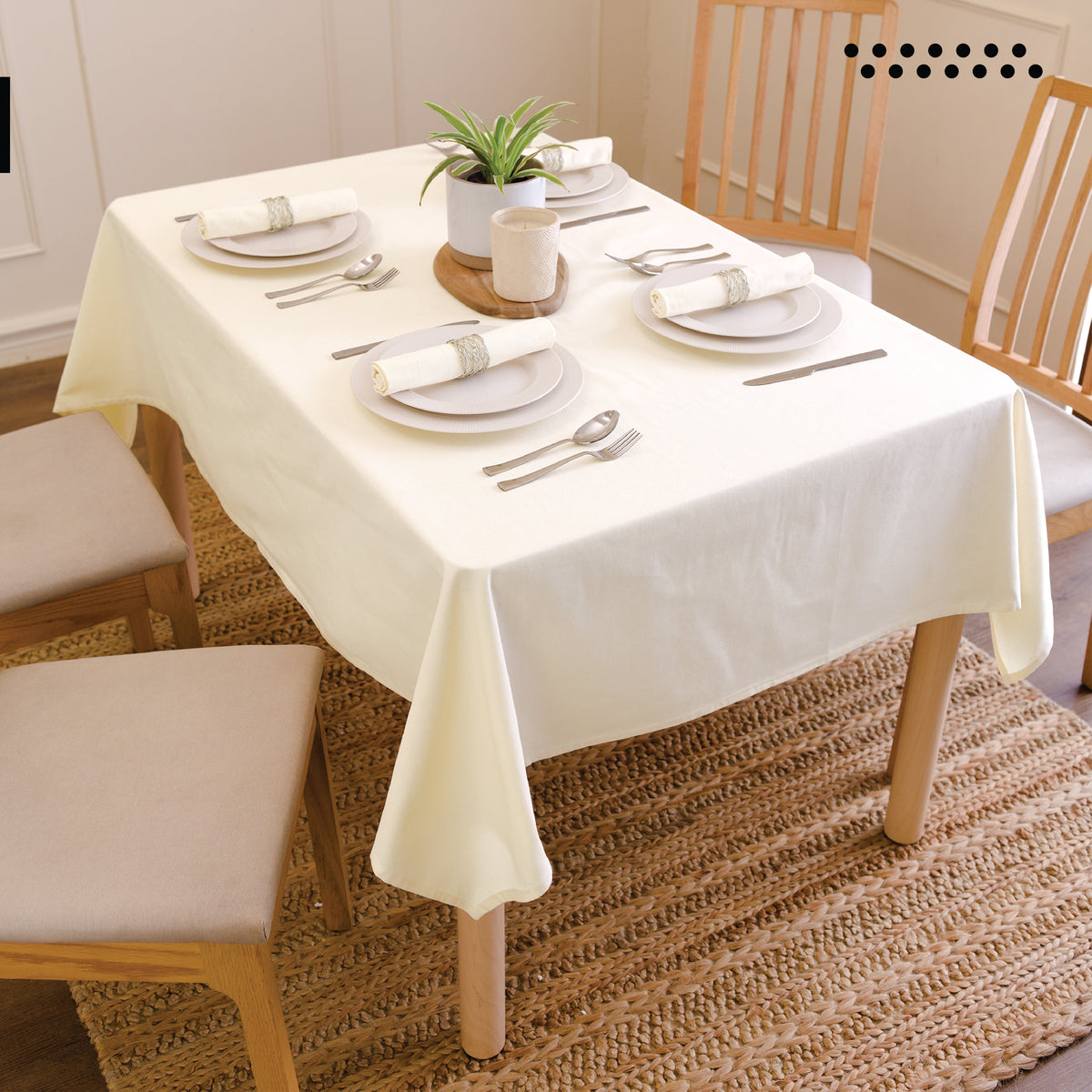
Take our cotton natural tablecloth. Its page says cold machine wash, and its care card shows Do Not Bleach. So it gets the brushing, the hour-long soak in cool water with detergent, a cold wash and a full day in the sun, and no bleach. The pale cream shows you plainly whether the spots have gone.
Cotton cushion covers are much the same. Take the inserts out first, because a damp insert inside a clean cover starts the whole thing again, and close the zip on a cover like our natural cotton canvas cover before it goes into the machine.
Our gold velvet covers are polyester, so the fibre resists mildew, but a cover packed with food or hand oil on it can still spot. Keep chlorine bleach off coloured velvet, follow our guide to washing velvet cushion covers, and dry the pile right through.
When a stored piece is not worth another round
Stop when two full rounds leave the dots unchanged, when the cloth tears under a gentle pull at the spots, or when a musty smell survives two washes and a day in the sun. The stain or the damage is then most likely in the fibre, and more bleach will only weaken the rest.

A spotted pair of cushion covers can cost less to replace than to keep treating. Our gold velvet covers, which look warm camel in the photos, cost about ₹460 to ₹810 a pair at today's prices, depending on size, and the velvet collection has other colours if you want a match for the rest of the sofa. A large festive tablecloth costs more, so give it the full second round before you look at the tablecloth collection. Whatever you buy, store it clean and dry in an almirah you have already cleaned, or it meets the same shelf.
Questions people ask about fungus on clothes
Does vinegar kill fungus on clothes?
Detergent makers disagree. Persil and Cleanipedia suggest a soak in diluted white vinegar, or a cup in the wash; Ariel India says to skip it and soak in detergent. If you try it, test a hidden part first, and never use it in the same wash as bleach.
Will fungus spread to the other clothes in the almirah?
The clothes next to a spotted piece sit in the same damp air, so they often grow spots too. That is why you brush outdoors and air the whole shelf, not just one shirt. Check every piece on that shelf in daylight before refolding it.
Is it the same thing as mildew?
Mildew is a kind of mould, and on cloth the two words are used loosely for the same spots. The fresh, powdery white or grey growth is what most people call mildew; darker dots that have stained the fibre are older growth. Both are treated the same way, but the dark ones may not fully go.
Encasa XO is our own brand, and the products named above are ours.


Leave a comment
This site is protected by hCaptcha and the hCaptcha Privacy Policy and Terms of Service apply.