
Is chenille actually a good fabric, or does it only look good in the photo? A photo can show you the softness of a grey cushion. It cannot show you what that surface looks like after a year of people leaning on it.
Chenille fabric is cloth woven from a fuzzy, tufted yarn, which gives it a soft, matte and slightly uneven surface. It suits cushions, table runners and chairs that get occasional use. It flattens where people sit, and a claw or a ring can pull a thread out of it, so it makes more sense on the cushion than on the seat under the cushion.
What is chenille fabric?

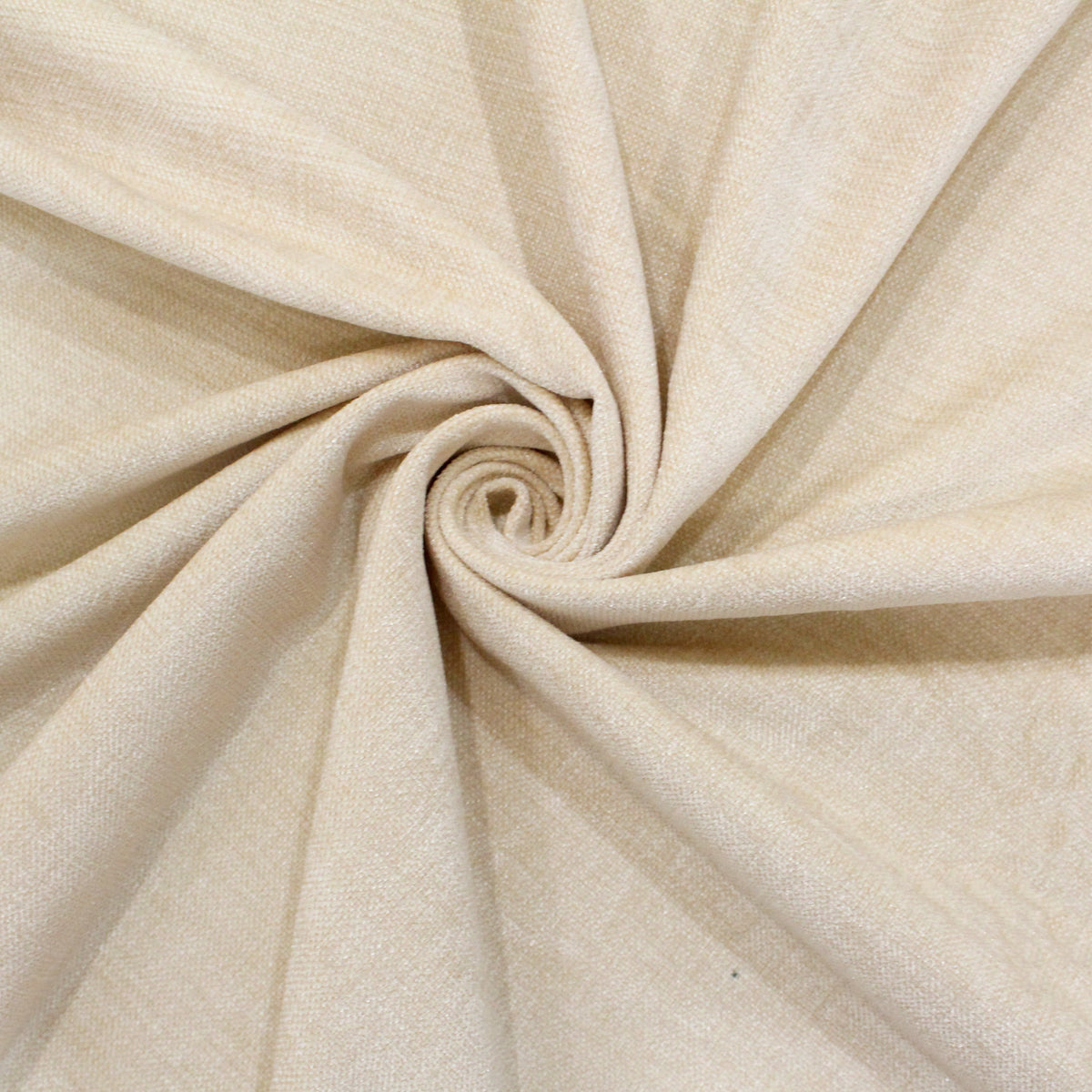
Chenille is the name of a yarn, not a fibre. As Wikipedia describes it, short lengths of yarn called the pile are placed between two core yarns and the whole thing is twisted, so the pile stands out at right angles to the core. The word is French for caterpillar, and the yarn does look like one, a thin fuzzy rope. Weave that rope into cloth and you get a surface like the one above, which comes from a grey chenille cushion cover.
Because the yarn is what makes it chenille, the fibre inside can change from one maker to the next, so read the label. If you can handle a piece, do two small checks. Stroke it one way, then the other, and watch the colour move a little, because the pile catches light differently from each direction. Then rub one corner hard with your thumb and see what comes away. The tufts in chenille yarn can work loose and leave bare cloth, and the same entry says makers tackled this with a low-melt nylon in the core and steam to set the pile. A listing rarely tells you how a yarn was made, so your thumb is the better test.
How does chenille wear?
Chenille is often sold as durable and, a few lines later, as something pets will snag. Both can be true, because they describe different kinds of damage.
The slow damage is flattening. Pile lies down under weight, so the spot where someone sits or rests a head every evening can go flat and take on a slight shine. A matte surface hides this better than a shiny one, but it does not stop it. Turning and plumping cushions spreads the wear around, and it is worth brushing a dull patch the other way before you decide anything is wrong with it, since pile pushed in a new direction can look like a different shade.
Snags are less forgiving. A cat's claw, a ring, a bag buckle or the zip on a pair of jeans can hook one yarn and pull a length of it out of the weave, and because the yarn is thick, the pulled bit shows. Try not to cut it. The usual sewing advice is to push it through to the back with a blunt needle. If a cat has already chosen a particular chair, this is the wrong cloth for that chair.
Sun is the vaguer worry. Fabric sellers warn that chenille colours fade in direct sunlight. Take that as a general caution about dyed cloth, not a fact about any one colour. A dark colour under a window with strong afternoon sun is the case to avoid, or at least to rotate.
Upholstery cloth is often graded by a rub count such as Martindale. No Encasa chenille page gives one, and the fabric pages state no GSM either, so nothing here can tell you how many years a piece will last.
Chenille vs velvet: which goes where?
Both feel soft and both have a pile, but they are built differently. Velvet is a way of weaving, with short fibres standing up from a backing. Chenille brings its pile in on the yarn. You can see the result from across a room: velvet has a sheen that turns one colour into two, and chenille stays quiet and matte. The chenille and the plain and embossed velvet compared below are all polyester, so the table compares like with like.
| Chenille | Velvet | |
|---|---|---|
| How it is made | a tufted yarn, woven into cloth | a weave, with short fibres standing up from a backing |
| Surface | matte and nubby | smooth, with a sheen |
| Where it marks | flattens and can shine where people sit, less obvious | flattens and shines where people sit, more obvious |
| Width by the metre | 137 cm | 150 cm embossed, 152 cm plain |
| One metre | ₹759 | ₹459 embossed, ₹499 plain |
| Longer cuts | none, raise the quantity | 2, 3 and 5 m on embossed |
| Ready pair of covers, 40 to 60 cm | ₹699 to ₹999 | ₹459 to ₹809 plain |
It is easy to assume velvet is the expensive one. Across this table it costs less at every step, by the metre and as a ready pair.
So the choice comes down to the seat. A chair you mostly use in the evening, under a lamp, is where velvet earns its sheen. A cushion that gets leaned on every day is easier to live with in chenille, because the marks are less obvious, though that is about looks and not a claim that it lasts longer. On a tight budget for a stitching project, velvet by the metre is both cheaper and wider.
Where chenille works at home

Cushions are its best use. They can be turned over, they can come off to be washed, and a textured cover stands out against a flat, tight sofa without needing a pattern. On a pale sofa, a dark pair like the maroon chenille covers gives the contrast by itself, at ₹699 for 40x40 cm up to ₹999 for 60x60 cm. Check the colour first, because stock is patchy: when this was checked in October 2026, a little over half the colours in the chenille cover range were available, with 40x40 cm the thinnest size. Size choices are in the cushion cover size guide.

A table runner is the second good home for it, since nobody sits on it. The maroon chenille runner comes in 91 to 240 cm lengths at ₹399 to ₹699. Not every colour sells every length, so match your table first with the runner size guide. Do not count on the cloth to shrug off a tea spill.
An occasional chair is a fair project too, and the fabric page names chair upholstery among its uses. A sofa is a harder call. The same page names sofa covers, but a full cover is a lot of cloth. The guide to buying fabric by the metre works an ordinary three-seater out at 12 metres at this width, which at ₹759 comes to ₹9,108 before the tailor, bought as twelve single metres. That is a lot to spend on a surface that flattens where people sit, and the same guide makes the case for corduroy on a sofa in daily use.
Chenille can also hang as a curtain, but with no stated weight you would be picking the rod blind.
How much chenille fabric do you need for cushion covers?

The chenille sold by the metre, like the grey chenille fabric above, shows a flatter, finer weave than the cover shown earlier, with its chunkier nubs. Both are sold as chenille, but do not expect a cover you stitch from the metre to match a ready cover in feel. The natural has the same flat look in cream.
This cloth is 137 cm wide and sells in whole metres at ₹759. You raise the quantity on the one option, and the page says the order is cut as one length, so two metres arrives as a single 200 cm piece. A cover needs a front and a back. Allow 1.5 cm of seam on every side and cut every square the same way up, so the pile runs one way on all of them.
At 40 cm, one metre gives three covers, which is ₹253 a cover against about ₹350 for a ready one. That saving of about ₹97 a cover comes before you pay for zips and stitching. At 45 cm the gap nearly closes, at about ₹380 a cover against about ₹400.
Above that the arithmetic turns. A metre has only 100 cm of length, so a 50 cm or 60 cm cover fits just one row of two squares, and a pair needs two metres. That is ₹1,518 against ₹899 for a ready 50 cm pair, or ₹999 for a ready 60 cm pair. You do get a third cover out of the two metres, which brings it to ₹506 a cover against about ₹450 and ₹500. The cloth has stopped saving you anything, and the tailor is still to pay.
So the metre earns its place when you want something the ready range does not offer. Teal, walnut brown and stone grey have no ready cover at all, for instance, while the teal chenille fabric, a soft sea green in its photos, was in stock at that October check. A little over half the chenille colours in the fabric range were available then, so pick the colour before you plan the cutting.
How do you wash chenille?
Some fabric guides say chenille is mostly dry-clean only. The label on your own piece is what counts. Encasa's own fabric, covers and runners are all listed for washing at home, and the fabric and cover pages say to keep dark colours apart or wash with similar colours. The covers add one useful instruction: close the zip before washing.
The rest is general practice and not from those pages. Use a gentle cycle, wash a new dark colour on its own the first time, and go easy on the spin. Dry it flat or over a rail in the shade, with a fan in the monsoon. If you are stitching from the metre, wash a small offcut first and measure it before you cut the rest. The velvet washing guide explains why spin and drying matter on any pile cloth.
Common questions
Is chenille good for a sofa?
For a sofa that is mostly looked at, or for a chair, it can work well. For the seat a family uses every evening, a fixed chenille cover is hard to wash and hard to replace. Chenille cushions on a sofa covered in something tougher give you the look with far less risk.
Does chenille shed or pill?
It can do either, depending on how the yarn was made and how hard it is used. Be careful with any listing that promises no pilling at all, and buy a small piece first if the job is a large one.
Is chenille warm to sit against?
A thick, soft pile often feels warmer than a thin flat cotton. That is pleasant in a north Indian winter and less so on a hot afternoon in a room with no air conditioning, where a cotton cover is the easier choice.

Leave a comment
This site is protected by hCaptcha and the hCaptcha Privacy Policy and Terms of Service apply.