
The casserole gets the blame. One cook on Reddit had tried two of them and neither kept chapatis hot for more than an hour, so they asked whether they had simply bought poor ones. The replies did not talk about brands. One said a casserole does not really keep rotis hot: it stops them going dry and hard by holding the moisture in, and that is all. Another said that, quite often, it makes them soggy.
Both replies are right. The box that keeps a roti from drying out is the same box that lets its steam turn back into water.
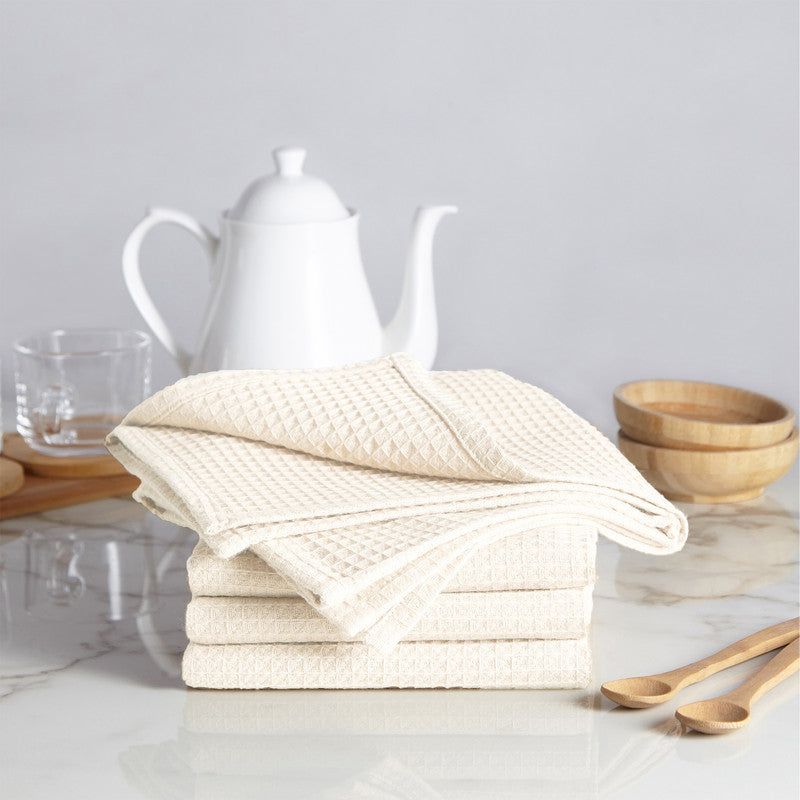
A roti cloth is a plain cotton cloth that sits between the rotis and the steel. It keeps the stack covered and warm, so the rotis stay soft, and it soaks up the steam that would otherwise run down the cold lid and wet the bottom roti. Many kitchens already own one: a large, clean cotton kitchen towel does the job.
Two failures from one box
A roti comes off the tawa full of steam. Put it straight into a closed steel casserole and that steam has nowhere to go. It reaches the lid and the walls, which are cooler than the roti, and turns back into water there. The drops run down and collect at the base, and the roti at the bottom sits in them. By lunch it is limp and sticks to the one above it.
Now take the opposite path. Leave the rotis on a plate, or open the lid to let the steam out, and they lose their warmth. A roti is a bread, and bread does not go hard only by drying. As it sits and cools, water moves out of the starch inside it and the starch sets into a firmer shape, which is the change known as staling. That is why a cold chapati in a sealed tiffin can still feel stiff. Warming it partly undoes the change, which is why a hard roti softens again on the tawa.
The dough still matters, and that part of the blame is fair. A stiff dough, a low flame or a roti left too long on the tawa will come out hard whatever you store it in. But a soft roti made well can still be ruined in the box, and that half of the problem is about where the water goes.
Today it is one soggy roti at the bottom of the tiffin, peeled off the steel and left on the side of the plate. By the end of the week it is the same roti at every lunch, and the top ones have gone stiff as well because the lid was left open to stop it. After a few months it is a second casserole, like the cook on Reddit bought, and it does the same thing, because the steel was never the cause.
What does a roti cloth actually do?

Cotton takes up water. Put a layer of it between the rotis and the steel, and the steam that would have become drops on the lid soaks into the cloth first. The cloth also wraps the stack, so the rotis keep their own warmth longer than they would in open air.
For cloths of a similar size and weight, the weave decides much of how much water the cloth holds before it is full. Our guide to terry, waffle and flat weave explains the difference: terry loops hold the most, waffle holds a good amount and dries faster, and a flat weave holds the least. For rotis, waffle sits in the right place. It takes up the steam from a batch, and it dries faster on a line before the next one. Terry holds more, but its loops can leave fine fuzz on whatever they touch, and that includes a roti.
The cloth we would point to is the off-white waffle kitchen towel. It is 100% cotton in a waffle weave, 70x45 cm, sold in a pack of four, and its page says it is low-linting, which is our claim about our own cloth. Off-white also matters more than it sounds: you can see when it needs a wash.
Picture lunch going right. You open the tiffin at one o'clock. The cloth is warm and a little damp to the touch. The roti at the bottom is soft, close to the one at the top. It folds round a piece of sabzi without a crack, and nothing is stuck to the steel.
What people found when they tried it
The cloth is not a new idea, and Reddit threads on keeping rotis soft keep coming back to it. In an r/IndianFood thread about rotis turning "dry and brittle" a few hours after cooking, the most-agreed reply, with 40 upvotes, was simply to stack them as they come off the flame and keep them covered with a dish towel.
Foil comes up as the other option, and one exchange puts the difference plainly. Someone suggested wrapping rotis in foil so they stay soft and "not sweaty". A reply with 4 upvotes, from someone who grew up in India, said a clean tea towel was what they used, and that foil may do the same job but the cloth "absorbs the 'sweat' better". Foil stops drying. It takes up no water at all.
Timing is the part people miss. In an r/IndianCooking thread from a reader whose morning chapatis turned hard by lunch, the top reply (9 upvotes) said to wrap them in a muslin cloth and put them in an insulated vessel. The answer under it, with 3 upvotes, added the condition that makes it work: put them in while they are still steaming from the tawa, because a cold chapati will stiffen however good the box is.
These are a handful of home cooks, not a test, but what they describe fits the steam and staling story above.
| What you find | What happened | What to change |
|---|---|---|
| Only the bottom roti is wet | Steam turned to water on the lid and ran down | Line the base with the cloth, not only the top |
| Every roti is damp and the cloth is soaked | Too many rotis for one thin cloth | Use a larger cloth, or two |
| Rotis stiff and cool at lunch | They went in after they had cooled | Put each one in as it leaves the tawa |
| Edges dry, centre soft | The stack was not fully wrapped | Fold the cloth right over the top |
| Rotis stuck together | Pressed together while wet from the drips | Line the base and do not press the stack down |
Which cloth to get, and how big
If you fill a casserole for a family meal or a morning tiffin run, get a large 70x45 cm cotton kitchen towel and keep it only for rotis. The size is the reason. Lay the stack at one end, bring the other end up and over, and tuck the spare under the casserole lid.
Here is the rule for size. To fold a cloth in half over a stack, the cloth has to be at least twice as long as one roti is wide, plus the height of the stack. Say your rotis are 18 cm across and the stack is 4 cm high: you need 40 cm.
Folding the four corners of a square in to the middle does not rescue a small one. The corners reach further than the sides, but for the same stack a square still needs sides of about 31 cm, so a 30 cm square falls just short. The quick test at home: lay the cloth flat, put the stack in the middle, and see whether the corners meet over the top.

That rules out the small square for a family stack. Our white waffle dish towels are 30x30 cm, and they suit a different job: one or two rotis rolled for a single tiffin, where the cloth wraps a roll, not a stack.
For a roti basket on the table, a dinner napkin is the neater choice. The natural cotton table napkins are 43x43 cm, plain cream with a hemstitched border, and the page gives them as 180 GSM cotton. That just covers a small stack in a basket. If you are not sure of your rotis' size, measure one before you buy. If it is wider than 20 cm, skip the napkin and go straight to the large towel.
The damp cloth that stays in the box
Go back to the casserole after lunch. The rotis are gone, and the cloth is still inside, damp, with the lid shut. That is where a good habit turns into a bad one.
A cloth that has taken up a batch of steam is full. Leave it in the closed box until dinner and it does not dry. It goes into the evening batch already wet, so it has nothing left to soak up, and the bottom roti is soggy again. Left like that for days, it starts to smell. A cloth that is always damp is the one thing a casserole can make worse.
So take the cloth out after each meal, open it out on a line or a rail, and give it a proper wash every day or two. This is a house habit, not a lab rule. Our kitchen cloth guide explains why the cloth for rotis should sit outside the cloths that wipe the slab and dry the plates. Keep two, so one can dry while the other works.
Questions before you buy
Is it normal for the roti cloth to come out wet?
Yes. A little damp means the cloth caught the steam that would have wet the rotis. If the rotis themselves are wet too, the cloth was too small or too thin for the batch.
Do I need to wash a roti cloth after every use?
It needs to dry fully after every use. Wash it every day or two, and straight away if anything has spilled on it. A cloth kept only for rotis stays cleaner than one that also wipes the slab.
Why not use foil instead?
Foil stops a roti drying out but holds none of its water, so the steam stays on the roti. It is also usually thrown away after one use. A cotton cloth does the same covering and takes up the water, and it goes in the wash.
My casserole is insulated. Does it still need a cloth?
An insulated casserole keeps rotis warm for longer, which helps them stay soft. It does not stop steam turning to water on the inside of the lid. The cloth handles that part, so the two work together.
Will the cloth leave fluff on the rotis?
A looped terry towel is the most likely to, because its loops shed short fibres. A waffle or plain cotton weave leaves less. Wash a new cloth once before it touches food, which also takes out any loose threads from the hem.
What each habit costs
Tally up the usual ways round the problem. Foil usually goes in the bin after one use. A plate on top keeps warmth in but drips onto the rotis the same way a lid does. The soggy bottom roti gets thrown away or reheated. A second casserole costs money and does the same thing as the first.
On the other side: a pack of four large cloths in the kitchen towel range costs about ₹500 at November 2026 prices, roughly ₹125 a cloth. Two of them cover the rotis in a house that cooks twice a day, with one drying while the other works. For a family casserole that means the off-white waffle four-pack, kept for rotis and nothing else, so the bottom roti at lunch comes out soft too.
Encasa XO is our own brand, and the cloths and napkins named above are ours.


Leave a comment
This site is protected by hCaptcha and the hCaptcha Privacy Policy and Terms of Service apply.