
A white shirt goes yellow under the arms, and the first thought is that it needs more bleach. Often the bleach is part of the problem. Ariel's Indian laundry pages warn that chlorine bleach "can cause yellowing itself" if it is overused, and a bleach maker, Clorox, says the same about too much bleach and about stretch fabric. So the yellow you are fighting may have been made, or made worse, by the bottle you are about to open again.
To remove yellow stains from white clothes, first look at where the yellow sits, because that tells you what caused it. Sweat and deodorant marks under the arms, and oil marks on collars, usually fade with a long soak in washing powder and a wash as hot as the care label allows. Yellowing that followed bleach, or a scorch from the iron, often stays.
Why do white clothes turn yellow?
Sweat is not yellow. Ariel's guide to sweat stains says sweat is clear and rarely marks cloth on its own. The yellow under the arms comes when sweat meets deodorant, and the mark builds up wash after wash if the residue is never fully lifted out.
Collars and cuffs pick up something else. They rub against skin all day and collect body oil. GE Appliances, in its washer support notes, lists "incomplete removal of body oil due to constant use of insufficient detergent" as a main cause of yellowed clothes. Each wash leaves a little oil behind, and over weeks it darkens.
A kurta that went into the almirah white and came out yellow usually had something left in it. Clorox describes storage yellowing as "the slow reaction of oxygen in the air with residual stains left behind on clothing", marks too faint to notice when the clothes were put away. A faint spill you never saw, or oil the last wash missed, turns yellow in the dark over months.
The iron can do it too. An iron that is too hot for the cloth burns the fibre, and a light burn shows as yellow or pale brown. Nothing was added to the cloth. The fibre itself has changed, which is why scorch is the hardest yellow to undo.
The last cause is the wash itself. Clorox's page on why bleach turns white clothes yellow says "even a small amount of spandex blended with another fiber can yellow when washed with bleach", and that using too much bleach, or pouring it straight from the bottle, can also cause yellowing. GE adds that chlorine bleach can yellow garments with resin finishes, which is how many wrinkle-free office shirts are made. Iron in the water is another quiet cause: GE says iron or manganese "may cause overall yellowing or spots", which matters in homes on borewell or tanker water.
Where is the yellow? Match the mark to the fix
Look at the garment in daylight, on a flat surface, before you treat anything.
| Where the yellow is | Most likely cause | First move | Will it come out? |
|---|---|---|---|
| Under the arms | Sweat with deodorant, built up over many washes | Long soak in washing powder, then a hot wash within the label | Often fades well, sometimes after a few rounds |
| Collar, cuffs, neckline | Body oil the wash did not fully remove | Liquid detergent worked into the band, then a hot wash within the label | Usually, if you keep at it |
| Fold lines or patches after storage | Old, unseen marks that yellowed with time | Soak and wash as for oil; oxygen bleach if the label allows it | Often, though very old marks can stay |
| A patch in the shape of the iron | Scorch, burnt fibre | See the iron-marks guide | Light scorch may; dark scorch will not |
| The whole garment, after bleaching | Chlorine bleach on spandex or a resin finish, or too much bleach | Stop bleaching | Often permanent |
| Every white in the load, yellow-orange | Iron in the water | Check the water, not the shirt | Not until the water is fixed |
How to remove yellow stains from white clothes, step by step
This routine is for the first three rows: sweat, collars and stored clothes. It follows Ariel's method for sweat marks, with the care label setting the limits. Our guide to fabric care label symbols explains the wash tub and the bleach triangle.
- Read the label first. Note the highest wash temperature, and whether the triangle is crossed out. A crossed triangle means no bleach of any kind.
- Mix washing powder into lukewarm water until it has dissolved. Ariel suggests about half a scoop of its powder.
- Soak the garment for about an hour. If it floats, push it under with a clean white cloth on top.
- For collars and cuffs, work a little liquid detergent into the band with your fingers before the soak. Do not scrub with a hard brush, because a worn collar shows more than a yellow one.
- Wring it gently and wash it with your other whites, at the highest temperature the label allows.
- Check it while it is still damp, in daylight. If the yellow is still there, soak and wash again before it goes near the iron.
Dry whites in the sun if you can. Ariel says the sun's rays help whiten clothes, and a line on the balcony gives you that for free. It works on a clean white. Our stain-removal guide explains why any heat, including the iron, should wait until a stain has gone.
If two or three rounds bring no change and the label allows bleach, the next step is an oxygen bleach powder, not chlorine. Clorox's own guide to yellow storage stains suggests a long soak in its oxygen powder, up to eight hours for whites, before a normal wash. Follow the pack, keep to the label's temperature, and test a hidden seam first. Never mix bleach with vinegar, lemon, ammonia or any other cleaner.
When the bleach is the cause
If a shirt went yellow after a bleach wash, more bleach is the wrong move. Clorox says yellowing "is unfortunately permanent if it was caused by misuse". Another round only weakens the cloth.
Check the label for elastane or spandex, which shows up in stretch shirts, leggings and some school uniforms, and for "wrinkle-free" or "easy-care". Keep chlorine away from both from now on. If you do use bleach on plain cotton, measure it and never pour it straight onto the cloth.
Many Indian homes use liquid blue, or neel, in the last rinse. It does not remove yellow. Blue and yellow cancel each other out to the eye, so a trace of blue makes a yellowed white look whiter. The blue rinses out over time, and the yellow is still underneath. It is a cover-up for a slightly dull white, not a fix for a stain.
If every white in the bucket comes out with the same yellow-orange tint, look at your water. GE's advice for iron in the water is to avoid chlorine bleach and to deal with the supply, such as a filter, or running the hot tap for a few minutes to clear rusty water from the pipes. Single rust spots, and scorch from the iron, each have their own method in our iron-marks guide.
How to stop white clothes going yellow
Let deodorant dry before you dress. Wash white shirts soon after wearing, because a shirt that sits damp in the basket for a week gives sweat and oil time to settle. Use the full dose of detergent for the load, since GE puts too little detergent, used again and again, first on its list of causes. Rinse well.
Wash everything before it goes into storage, even if it looks clean, and store it fully dry. The guide to storing festive linen after Diwali goes through the wrapping and the checks through the year, and the same advice works for a wedding outfit or a white kurta.
White napkins yellow for the same reasons
A white napkin wipes oily fingers and lips at every meal, much as a collar collects oil from the neck. The good set is also the one that sits folded for months between occasions. So the routine above applies to table linen as well, and it is worth deciding on that routine before you buy white.

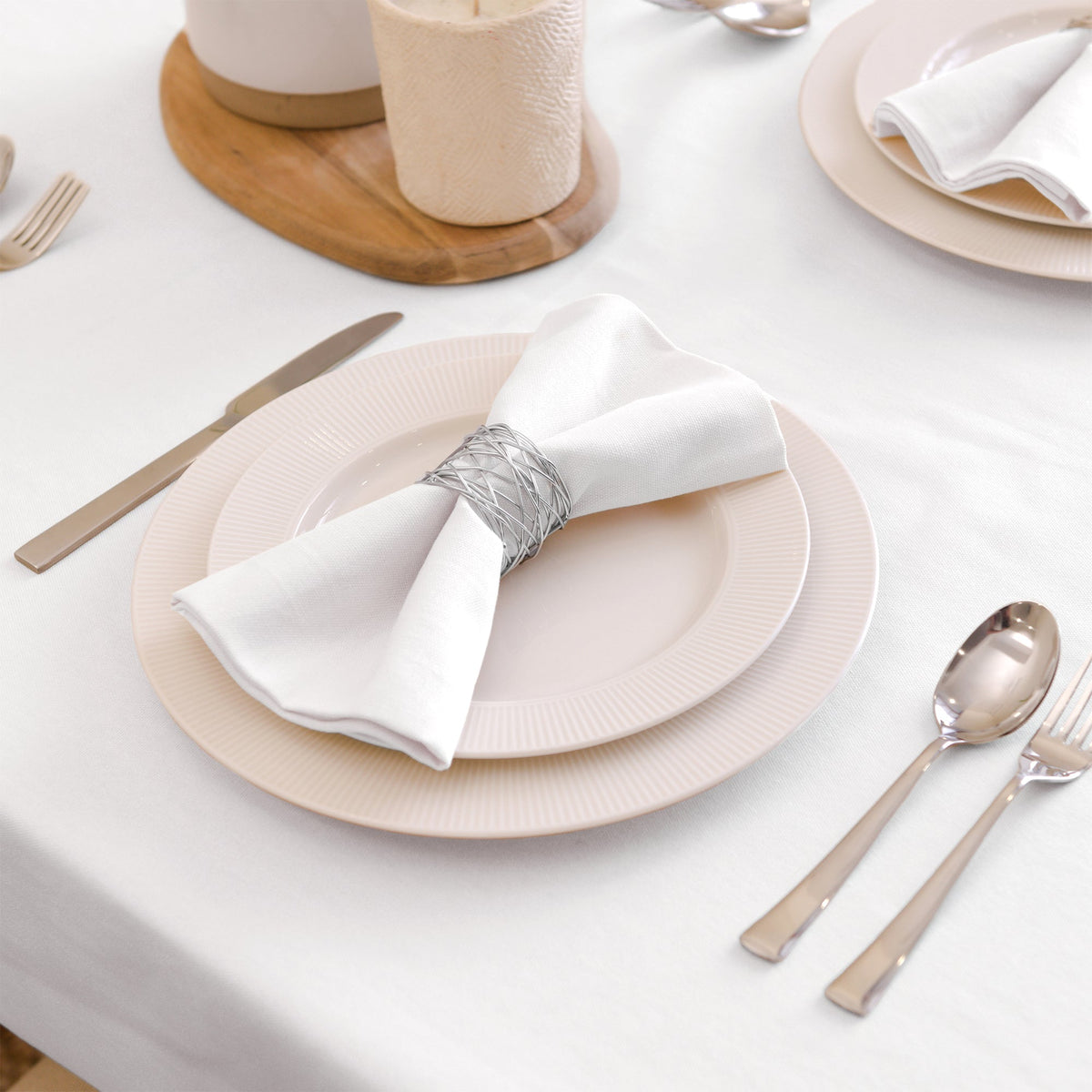
Start with the care icons. Our plain Cotton White Table Napkins are 43x43 cm cotton, and their gallery shows a Do Not Bleach icon. That takes the oxygen-bleach step off the table, so for these napkins the detergent soak, a wash within the label and a dry in the sun are what you have. They hold their white best when oily ones are soaked soon after the meal, not left in the basket for the weekend wash. The Damask Table Napkins in white, in the photo above, have a slight sheen, and their gallery shows no bleach icon either way. Go by the label that arrives with them, and if there is none, leave bleach out.

If nobody in your house will soak napkins after dinner, choose a warmer shade instead. On a cream napkin, a faint yellow shadow after a wash sits close to the colour of the cloth, so it is harder to see. Cotton Natural Table Napkins read as cream in their photos, and the table napkin collection has the same plain cotton in many darker colours if even cream is too pale for a daily table. Our white table cloth guide makes the longer case for off-white.
A festive tablecloth raises the same question. A plain white cloth used twice a year spends most of its life folded, which is when yellow creeps in. If it will not be washed straight after the event, a printed cloth from the table cloth collection hides a slow change that plain white shows.
Questions people ask about yellow stains
Do baking soda, vinegar or lemon remove yellow stains?
They are the most common home recipes, but the amounts change from page to page and none comes with a fabric maker's test behind it. Ariel's own answer on vinegar is that a detergent soak works better. If you try lemon, keep it to white cotton, test a hidden spot, and never use it in the same bucket as bleach.
Does drying in the sun whiten clothes or set the stain?
Both, depending on when. Sun on a clean white shirt helps it look whiter. Some stain guides warn against drying a marked shirt in strong sun, for the same reason the iron waits: heat can make a mark harder to shift. Check the shirt while it is damp, and only hang it in full sun once the mark has gone.
Why does my white school uniform go yellow so fast?
It gets worn in heat, washed often, and pressed hot most mornings, so sweat, oil and the iron all work on it at once. Check the label for elastane before using any bleach, wash it the day it is worn, and let the iron wait until the collar and underarms are clean.
When should I stop trying?
After two full rounds of soaking and washing, if the yellow looks just the same, or sooner if the cloth starts to feel thin or rough. Past that point you are wearing out the shirt, not the stain.


Leave a comment
This site is protected by hCaptcha and the hCaptcha Privacy Policy and Terms of Service apply.