
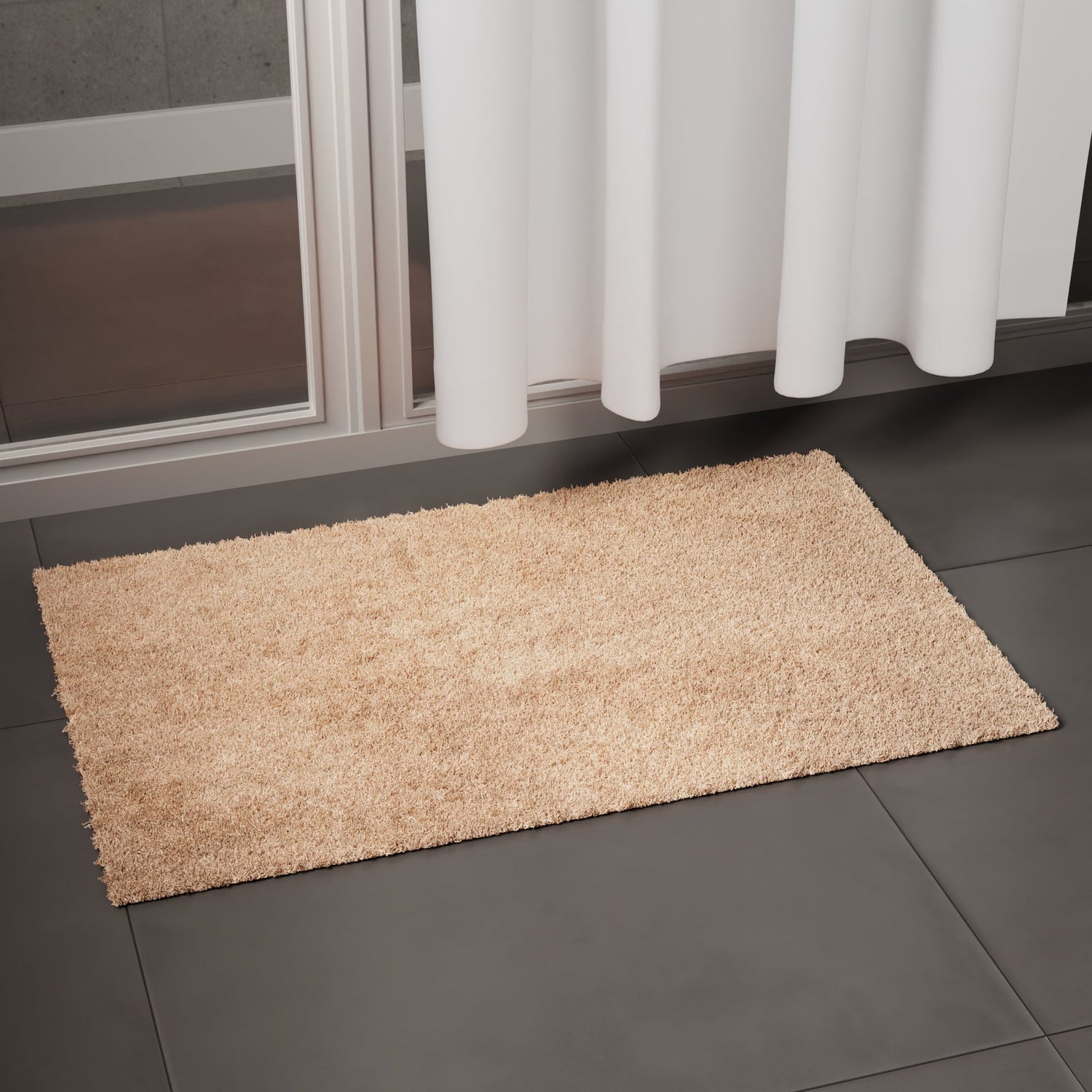
Picture the second person into the bathroom on a monsoon morning. The mat under their feet is already damp from the first shower, the window is fogged, and nothing in the room is really drying. That single moment, a mat that has not recovered between uses, is what actually separates a good bathmat from a bad one in an Indian home. Not how plush it felt in the shop.
Cotton and microfibre are the two mats you will choose between, and they solve that moment in opposite ways. Cotton soaks up a lot and takes its time drying. Microfibre grabs water fast off your feet and gives it back fast to the air. Which one is right depends almost entirely on how humid and how shared your bathroom is, so that is where we will end up. First, what each one is actually doing under your feet.
Absorbency and dry time are a trade-off, not a ranking
It is tempting to ask which mat is more absorbent, as if that settled it. It does not, because absorbency and dry time pull against each other. A mat that holds a great deal of water is, by definition, a mat that has a great deal of water to get rid of before it is dry again. That is cotton. A mat that holds less but releases it quickly is dry and ready sooner. That is microfibre.
Cotton, especially a looped or tufted cotton, has long fibres that pull water deep into the pile and hold it. It feels absorbent because it is, and one person stepping out onto a thick cotton mat gets a lovely dry landing. The catch is the second and third user, and the hours afterward, because all that held water only leaves as fast as a humid room will let it.
Microfibre is built from very fine synthetic strands with a huge amount of surface area, so it lifts water off wet feet quickly and spreads it thin across the mat, where it evaporates sooner than it would from deep cotton loops. It does not hold as much in total. In a bathroom with a window or an exhaust fan, a thin microfibre mat usually feels dry and ready again well before a thick cotton one; in a closed, wet bathroom, even a quick-dry mat can stay damp, just less so than cotton.
Feel, upkeep and how long each lasts
Underfoot, cotton wins on comfort. It feels soft and cool, it comes in weaves from flat to plushly tufted, and it does not carry the faintly synthetic feel some people notice with microfibre. It also washes without fuss, machine cold, and takes a hot Indian line-dry well, so a well-made cotton mat, washed and dried properly, tends to last a long time.
Microfibre feels different, denser and quicker rather than plush, and it asks for a little care in the wash. Keep it on a cold or warm cycle and skip the fabric softener, which clogs the fine fibres and kills the very quick-dry property you bought it for. Tumble on low or line dry and it bounces back. Treated right it lasts well; treated like a bath towel with softener every wash, it goes flat and slow.
Dry time also drives hygiene. A mat that dries quickly between uses gives the smell and mildew of a warm, closed bathroom less time to take hold, though how often you wash it and whether the room airs out matter just as much. One caveat cuts across the whole cotton-versus-microfibre question: a rubber or foam backing, common on both, traps moisture underneath against the floor whatever the top fibre is. So a thin unbacked cotton mat in an airy bathroom can stay fresher than a thick backed microfibre one in a sealed room. The fibre is only half the story; the backing and the airflow are the other half.

Cotton vs microfibre bathmat at a glance
| Cotton | Microfibre | |
|---|---|---|
| Absorbency | High, holds a lot | Moderate, grabs fast |
| Dry time | Slow, especially in humidity | Fast |
| Feel | Soft, natural, cool | Dense, quick, slightly synthetic |
| Smell and mildew risk | Higher if it stays damp | Lower, dries before it sours |
| Wash | Easy, machine, hot line-dry fine | Machine, no softener, low heat |
| Lasts | Years with normal care | Well, if softener is avoided |
| Best for | Dry, private, well-ventilated bathrooms | Humid, shared, small bathrooms |
So which should you buy?
In a bathroom that is small, shared and damp for a good part of the year, which describes a lot of Indian homes, dry time matters more than plushness, and that points to microfibre or a thin quick-dry mat. If two or three people use the bathroom in a morning, or if the monsoon keeps the room damp for weeks, you want the mat that is ready for the next person, not the one that felt most luxurious for the first. The microfibre bathmat range, like the grey microfibre mat, is built for exactly this, and a low-pile polyester quick-dry mat does a similar job with a printed finish.
Cotton is the better buy when your bathroom is private, dry and well ventilated, or when comfort simply matters more to you than turnaround, say a master bathroom used by one or two people with a window that actually airs it out. There a soft cotton bathmat gives a plush, natural landing and holds up well over time. Plenty of homes settle it by using both: cotton in the private bathroom, microfibre in the shared one. Whichever way you lean, the full bathmat collection has the sizes to match your fixtures.
Frequently asked questions
Is cotton or microfibre better for a bathmat?
Microfibre is usually better for humid, shared bathrooms because it dries fast between uses and resists smell. Cotton is better for private, well-ventilated bathrooms where comfort matters more than quick turnaround. The right pick depends on how humid and how shared your bathroom is.
Which dries faster, a cotton or microfibre bathmat?
Microfibre dries faster. Its fine fibres spread water thin across the surface where it evaporates quickly, while cotton holds water deep in its pile and stays damp longer, especially in monsoon humidity.
Do microfibre bathmats smell?
They tend to smell less than cotton because they dry quickly and give mildew less time to grow, but no mat is immune. When a microfibre mat does start to smell, it is usually because fabric softener has clogged the fibres and slowed drying, or a rubber backing is trapping damp underneath, so wash it without softener, lift it to air after use, and dry it fully.
How do I wash a microfibre bathmat?
Machine wash cold or warm without fabric softener, since softener coats the fine fibres and destroys the quick-dry property. Tumble dry on low or line dry. Avoid high heat, which can damage the synthetic pile over time.

Leave a comment
This site is protected by hCaptcha and the hCaptcha Privacy Policy and Terms of Service apply.