
"Will it come out?" That is the question, asked over a school shirt with a streak of blue poster colour, a kurta that brushed a freshly painted grill, or a dupatta that caught a drop of yellow while the diyas were being painted.
It depends on two things: what the paint is thinned with, and whether it is still wet. Paint thinned with water, such as poster colour, acrylic and most wall emulsions, usually comes out with water and detergent if you get to it before it dries. Paint thinned with a solvent, such as enamel on grills and doors, needs the solvent named on its tin. Once paint has dried, poster colour may still wash out, but acrylic, emulsion and enamel often leave at least a faint mark.
What is the paint thinned with?
Look at the tin or the bottle before you look at the stain. What the maker tells you to thin the paint with, or to wash the brush in, is what dissolves it. Water-based paints thin with water. Solvent-based paints, such as enamel, thin with mineral turpentine oil, which hardware shops often call tarpin oil. The University of Georgia Extension's page on paint stains uses the same rule for cloth: treat an oil-based stain with the solvent the paint recommends as its thinner.
The tin tells you what will move the paint. It does not tell you what your shirt can take. That part comes from the care label and a test on a hidden seam, and a thinner that shifts enamel can still lift dye or weaken some fibres.
The second half of the answer is time. While water-based paint is wet, water can still carry it out of the weave. Once it dries, it sets into a film on the fibres. Acrylic contains plastic, which is why a dried acrylic mark is so much harder to shift than a wet one.
The paint you are likely to meet at home
| Paint | Where you meet it | Thinned with | Wet | Dried |
|---|---|---|---|---|
| Poster colour | School art, charts, children's painting | Water | Rinse and wash | Often still washes out |
| Acrylic | Diya and pot painting, craft, fabric painting | Water | Rinse, dish soap, wash | Hard; a little rubbing alcohol may fade it |
| Emulsion | Walls, the pre-Diwali repaint | Water | Water and detergent | Long detergent soak; may leave a shadow |
| Enamel and oil paint | Grills, gates, doors, wood | Mineral turpentine oil or the thinner on the tin | That thinner, then detergent | Often permanent on cloth |
Fabric paint and some craft acrylics are made to stay on cloth. Treat them as acrylic, and work fast.
How to remove paint from clothes while it is still wet
Poster colour, acrylic and emulsion
- Lift off what sits on top. Use a blunt knife or the edge of a spoon for a blob, and a cotton bud for a drip. Press, do not rub, or you spread it.
- Turn the cloth over and run water through the back of the stain, so the paint is pushed out the way it came in.
- Work in a little liquid detergent, or a drop of dish soap on acrylic, which is what Crayola suggests for its own acrylic paint.
- Rinse, look, and repeat until no more colour comes out.
- Wash as normal, then check the spot while the cloth is still wet.
Poster paints are mostly water-based, so this often works even on a mark that has had time to dry a little. For wall emulsion, Asian Paints says it "can usually be scrubbed off with water and detergent". Note the word usually.
Enamel and oil paint
This is the one where you need the tin. Use the thinner it names, which in India is often mineral turpentine oil. If the tin has gone, the University of Georgia page falls back on mineral spirits, which is the same family of product. Work outside or beside an open window, wear gloves, and keep it well away from the gas stove. Read the thinner bottle's own warnings and follow them, because they differ by brand.
Test it first on a hidden seam. Then lay the cloth stain-side down on a folded old towel, dab the back with a rag wet with thinner, and move to a clean part of the rag as it picks up colour. While the spot is still wet with thinner, work liquid detergent into it, rinse, and wash the piece on its own.
When you cannot deal with it now
If the splash happens halfway through a job, keep it wet. The University of Georgia page suggests wrapping the stained part in plastic so it cannot dry. A polythene bag tied round the sleeve buys you time until the brushes are washed.
How do you get dried acrylic paint out of clothes?
With patience, and with lower hopes. Crayola's own fabric tip covers fresh acrylic and gives no method for a dried mark. Persil gives one: scrape off the raised paint gently, then dab the stain with an alcohol-based cleaner such as rubbing alcohol or nail varnish remover on a clean cloth to break up the dried surface, then follow the wet steps above. You may need several rounds, and on cotton a faint shadow often stays.
Test the alcohol or remover inside a hem first, and keep both away from the gas stove, because both catch fire easily. Acetone in particular damages acetate and some synthetics, and our ink stain guide has a short table of which fibres to keep alcohol and acetone away from.
Dried emulsion gets a slower treatment. Asian Paints' answer for one of its wall emulsions on cloth is to soak the piece overnight in ordinary detergent before working the paint loose. Skip the wire brush in that answer, which is meant for tougher surfaces than a shirt. A soft old toothbrush is enough.
Dried enamel is the hardest of the four. Asian Paints describes enamel as "solvent based, and permanent". Thinner may soften a small, thin spot. A thick dried drip on a cotton kurta usually decides that the kurta is now for painting days, so ask a dry cleaner before you give up on anything you love.
Hot water, the iron and the washing line
Heat gets confused advice. A warm wash is not the problem: Crayola's own tip for acrylic on fabric is a machine wash in the hottest water the garment allows. Your care label still sets the limit.
The warnings are about drying. The same tip says to air dry, and Nerolac's guide says to keep high heat away until the stain has gone. In many Indian homes that heat is the iron, not a dryer. Look at the spot in daylight while the cloth is still damp, and do not iron it until the mark has gone.
Wash a paint-marked piece on its own the first time, so any paint that rinses loose stays away from the rest of the load.
What we would not use
Kerosene and petrol come up often as home fixes. None of the paint makers' pages we read suggests either on cloth, and Asian Paints does not even recommend kerosene for thinning paint. Both are a fire risk indoors, and both can leave a smell and an oily mark of their own.
Turpentine on acrylic is the other common mistake. Two of the guides we read put acrylic with oil paint and reach for thinner. But acrylic is water-based, and its maker starts with water and dish soap. There is no reason to bring thinner and its fumes into the house for it.
And never mix cleaning products to make them stronger. One product at a time, rinsed out before the next.
For anything marked dry clean only, or silk, wool or acetate, go straight to the dry cleaner, and tell them what paint it was.
Before the painters come
A full repaint, often done before Diwali, puts paint on cloth that could have been put away. Take the covers off the cushions and fold them into a cupboard, and take the curtains down for the week. Throw an old sheet over the sofa.
For a craft table, a grey polyester table cloth (₹499 to ₹759 by size) has a water-repellent finish according to its page, so a wet splash of poster colour has a better chance of being wiped up before it soaks in. That does not make it paint-proof. Wipe while the paint is wet, and expect dried acrylic to stay.

If you are choosing from the water-repellent table cloth range, read each page first. Not every listing in it states the finish in its own description, so buy one that does.
An apron for the person holding the brush

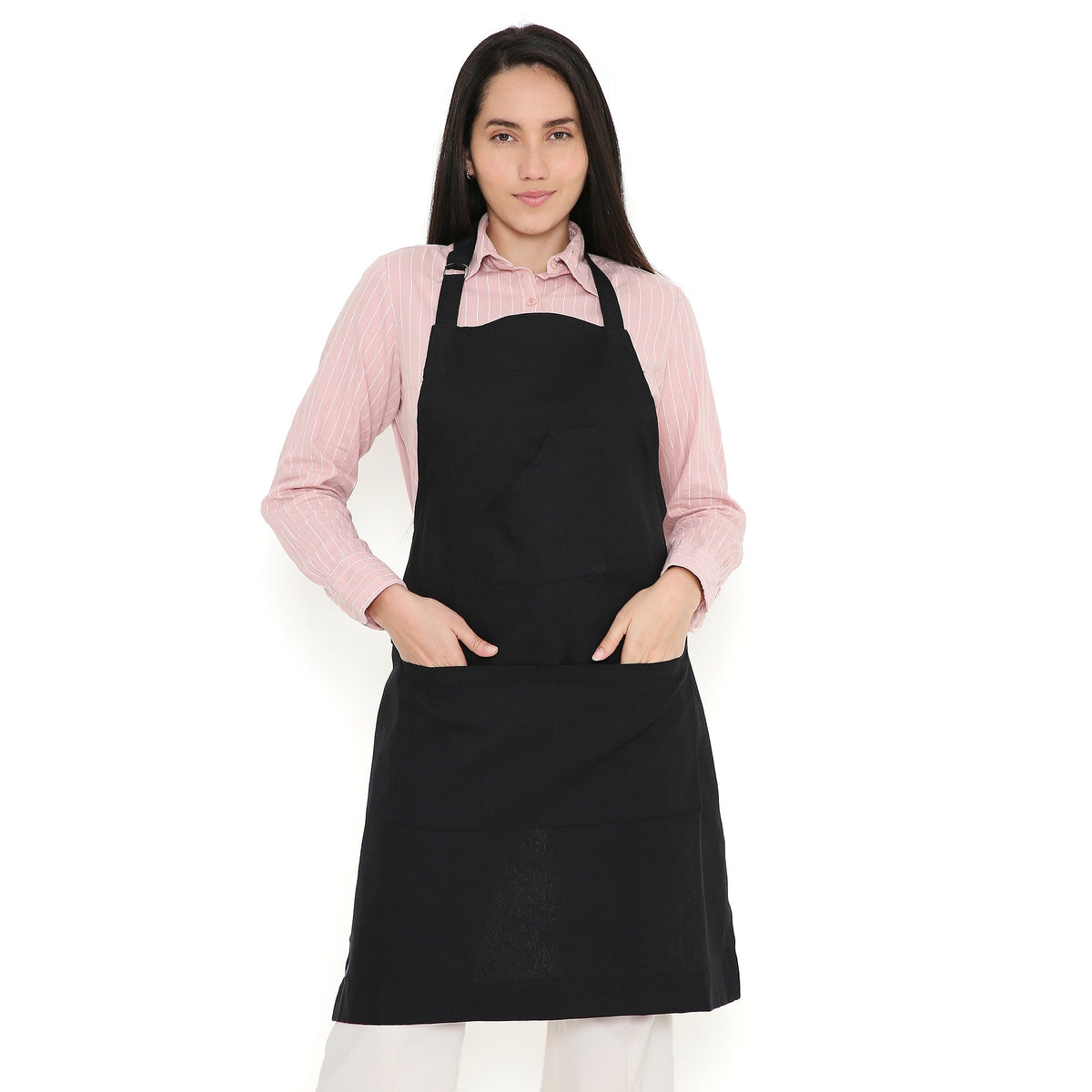
For the adult doing the wall touch-ups or the diya painting, an apron saves the clothes underneath, and its colour decides how it looks after a month of use. A pale apron shows every old mark. A black one or a busy check hides them. The plain black cotton apron (₹449, 68x85 cm) lists painting among its uses, and its care card says machine washable and do not bleach, so bleach is not an option for paint marks on it. If white emulsion is the job, a black apron will show it; the buffalo black checks apron (₹459) is a large black, grey and white check, so a pale speck and a dark one both have somewhere to hide. Rinse the apron the same day, while any paint on it is still wet enough to move.
Children are harder. Every apron in our apron range is cut in one adult size, so on a young child it is likely to hang past the knee. Before buying for an older child, measure from the shoulder to where the hem should land and compare it with the apron size chart. For small children, an old shirt worn back to front with the sleeves rolled up still does the job. Washable school paints help too: Crayola says its washable paints wash out of most launderable clothing, while its acrylic is meant to be permanent.
Questions people ask about paint stains
Does vinegar remove paint from clothes?
Sources are split. Nerolac lists vinegar and water as an extra try for water-based paint, with no amounts, and Ariel India warns that vinegar can damage fibres. We would try detergent and time first.
Will a dry cleaner be able to get paint out?
Sometimes. They have solvents and equipment you should not use at home. Their job is easier on a mark that has not been rubbed, ironed or tried with several products, so go early, and tell them the type of paint and what you have already used.
What if I do not know what the paint was?
Start with the gentle end. Touch a cotton bud dipped in cold water and a little detergent to the edge of the mark. If colour comes off on the bud, carry on with water. If nothing moves, it is either dry or solvent-based, and a dry cleaner is a safer next step than guessing at thinners.
What if colour comes off during the patch test?
If the test spot loses the shirt's own dye rather than paint, stop. That fabric will not take the treatment, so the stain is a job for a dry cleaner.


Leave a comment
This site is protected by hCaptcha and the hCaptcha Privacy Policy and Terms of Service apply.