
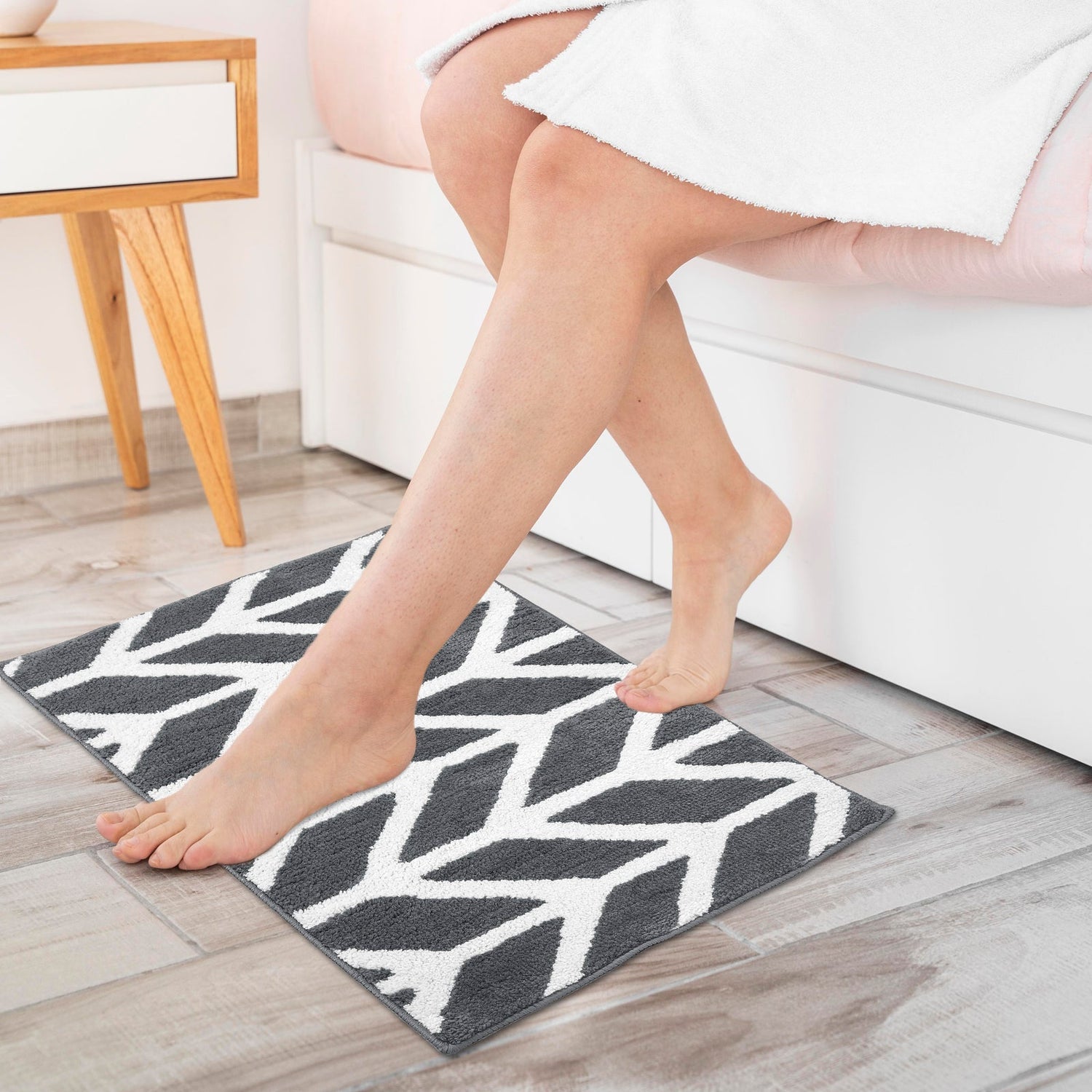
Which spec should decide your next bathmat: how plush it feels when you press it in the shop, or how fast it dries once it is home? In a typical Indian bathroom, small, humid, and shared by a family who bathe within an hour of each other, the answer is dry time, and it is not close. A mat that feels wonderful underfoot but stays damp until evening becomes a strip of cold, smelly cloth that the second and third person step onto. The plushness you paid for works against you.
So the deciding question for an Indian bathroom is not how thick or soft a mat is. It is how quickly it releases the water it just soaked up, so it is dry and pleasant again by the time the next person needs it. That shift in priority, from thickness to dry time, changes which mats are worth buying.
Why dry time matters more than thickness here
A bathmat has one job at the moment of use: pull water off your feet fast. Almost anything with a bit of pile does that well enough. The harder job, the one that separates a good bathmat from a daily annoyance, is what happens in the four hours after. A mat that holds a lot of water deep in a thick pile has nowhere to release it in a humid, poorly ventilated bathroom, so it sits damp. Damp is what breeds smell, mildew and that grey, slimy feel.
Two things drive how fast a mat dries. The fibre, because fine synthetic fibres like microfibre and polyester wick water to the surface and let it evaporate, while thick cotton pile holds it in the core. And the thickness, because a thin mat has less water to lose and more surface area relative to its bulk. Put those together and the ranking below falls out, without needing a stopwatch.
The three materials, and who each suits
Microfibre is the quick-dry specialist. The fibres are extremely fine, so they grab water fast and then give it up fast, and the mats are usually thin and light, which means they dry between family members rather than between days. They are also machine-washable and cheap enough to own two and rotate. The trade-off is that they feel less luxurious than deep cotton, and a very cheap one can shed or go flat over time. For a busy shared bathroom, that trade is worth making. The microfibre bathmat range is built around exactly this quick-dry priority, and a plain grey microfibre mat is the easy default.

Cotton is the comfort choice, and it splits in two. Thin, flat-woven cotton dries reasonably fast and feels natural underfoot, a good middle ground. Deep, tufted cotton pile is the one that feels best in the shop and the worst in a humid bathroom, because all that lovely thickness is water storage. Cotton suits a well-ventilated bathroom, a guest bathroom that sees light use, or a household that can hang the mat to dry after the morning rush. If you want cotton, the Cotton Beige mat sold in a pack of four lets you swap a fresh, dry one in while the used one dries, which is how you make cotton work in a busy home.

Polyester and other synthetics sit near microfibre for speed. A flat, quick-dry polyester mat with a printed face and a grippy backing dries fast and wipes clean, which suits a children's bathroom or a rented flat where you want something hardy and cheap to replace.
Quick comparison
| Feel underfoot | Dries | Best for | |
|---|---|---|---|
| Microfibre | Soft, light | Fastest | Shared, humid, high-traffic bathrooms |
| Flat-weave cotton | Natural, medium | Medium | Ventilated bathrooms, moderate use |
| Deep-pile cotton | Plush, thick | Slowest | Guest or low-use bathrooms, airy rooms |
| Polyester | Firm, practical | Fast | Kids, rentals, wipe-clean needs |
What else to check before you buy
Dry time is the headline, but three things decide whether a quick-dry mat actually stays pleasant. The backing matters: an anti-slip rubber or TPR backing keeps the mat still on a wet tile floor, though note that a solid rubber backing can trap moisture underneath, so lift and air the mat now and then. Size matters less than you think, because a smaller mat dries faster and a family rarely needs a large one at the shower door. And owning two is the quiet trick behind every dry bathroom: one down, one drying, swapped daily, so no single mat is ever asked to stay wet all day. You can compare weights and weaves across the full bathmat collection to find the pair that fits your floor.
Whatever you choose, the routine matters as much as the material. Hang the mat over the bucket, rail or door after the last person bathes rather than leaving it flat on the floor, and it will dry hours faster and never develop that damp smell. A thin quick-dry mat plus that one habit beats an expensive plush mat left flat every time.
Frequently asked questions
Which bathmat material dries the fastest?
Microfibre, followed closely by thin polyester. Both use fine synthetic fibres that wick water to the surface and are usually made thin, so there is less water to release and more surface for it to evaporate from. Deep-pile cotton dries slowest because thick pile holds water in its core.
Are microfibre bathmats better than cotton for Indian bathrooms?
For a humid, shared bathroom, usually yes, because drying fast between users is what keeps a mat fresh and stops smell. Cotton is more comfortable and more natural underfoot, and it works well in a ventilated or low-use bathroom or when you can hang it to dry after the morning rush.
How do I stop my bathmat smelling?
Smell comes from a mat staying damp, so shorten the time it stays wet. Choose a quick-dry material, hang it up to dry after use instead of leaving it flat, wash it regularly, and keep a second mat to rotate so neither one is ever damp all day.

Leave a comment
This site is protected by hCaptcha and the hCaptcha Privacy Policy and Terms of Service apply.