
"Is polyester cheap?" is usually the question behind this search, asked by someone holding two curtain listings at similar prices and feeling vaguely guilty about the synthetic one. The guilt is misplaced. Polyester and cotton are not a good fibre and a bad fibre. They are two fibres that behave in opposite ways around water, and almost every difference you will notice at home comes from that.
So here is the short version. For curtains, especially ones that face the sun or need to darken a room, polyester usually wins. For table linen that will meet dal, chai and wet hands, cotton usually wins. For cushion covers it depends on the room, and that is where most people get it wrong in one direction or the other.
The one difference that explains the rest
Cotton is a plant fibre and it loves water. It soaks it up, swells, and lets it go again as it dries. Polyester is a plastic fibre and it mostly ignores water. It takes in very little, so a spill sits on top or runs off.
Most of the practical differences follow from that.
Because cotton absorbs, it feels cool and breathable against skin, it mops up a spill instead of spreading it, and it lets washing water get right into the fibre, so food stains tend to come out. The same thirst is why it shrinks. Water relaxes the yarns that were pulled tight during weaving, and the piece draws in, mostly on its first wash. Our guide on whether cotton shrinks goes into how much and how to prevent it.
Because polyester barely absorbs, it hardly shrinks, dries fast, and creases less. But the same property cuts the other way. Water-based spills bead up and roll, which is great on a tablecloth's surface and annoying on a napkin you want to wipe your hands on. And oily marks are a known weak spot: polyester has an affinity for oil, so a ghee or pickle-oil stain can grip the fibre and hang on through a normal wash.
Sun is the other half of the story. Cotton dyes tend to fade faster in strong direct light, and the fibre itself weakens with long sun exposure. Polyester generally holds colour better on a sunny window. Even our own cotton canvas cushion covers carry a plain warning on the product page that long exposure to direct sunlight may cause fading.
Polyester vs cotton at a glance
| Cotton | Polyester | |
|---|---|---|
| Shrinks in the wash | Yes, mostly the first wash | Very little |
| Fades in strong sun | Tends to fade sooner | Tends to hold colour better |
| Feel | Matte, cool, breathable | Smoother; can feel warm or slippery |
| Water spills | Absorbs them | Beads them on the surface |
| Oily stains | Usually wash out with warm water and detergent | Can cling; treat quickly |
| Creasing | Creases; ironing helps | Creases less |
| Drying time | Slower, more so in monsoon | Faster |
| Best fit at home | Table linen, napkins, cushions you lean on | Sunny curtains, blackout, wipe-clean tablecloths |
The table is a summary, not a scorecard. Count the rows each fibre "wins" and you learn nothing, because a row that matters on a window does not matter on a dining table.
Curtains: why polyester usually wins here
A curtain hangs in the one spot in the house that gets the most sun, and it is a large, heavy thing to wash. Both facts push towards polyester.
Fading is the first reason. A west-facing window in an Indian summer is hard on any dye, and cotton tends to show it first, often as a lighter stripe along the folds that catch the light. The second reason is length. Curtains sell in 5 ft, 7 ft and 9 ft drops, and those lengths assume the fabric stays the length it was cut. A polyester curtain comes out of the wash the length it went in. A cotton one may come back a little short unless it was pre-shrunk or you wash it cool and line-dry it.
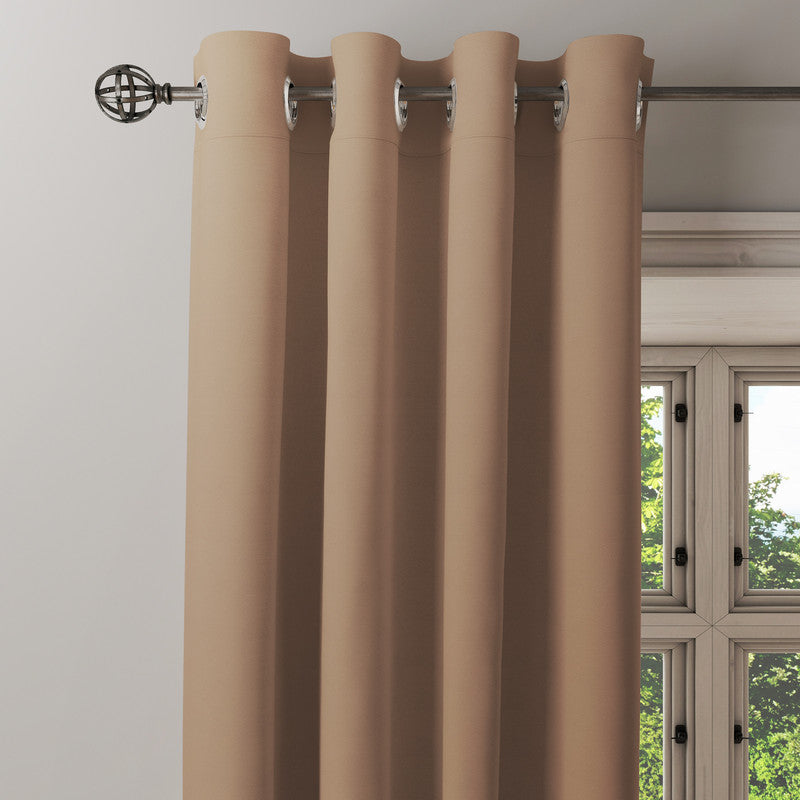
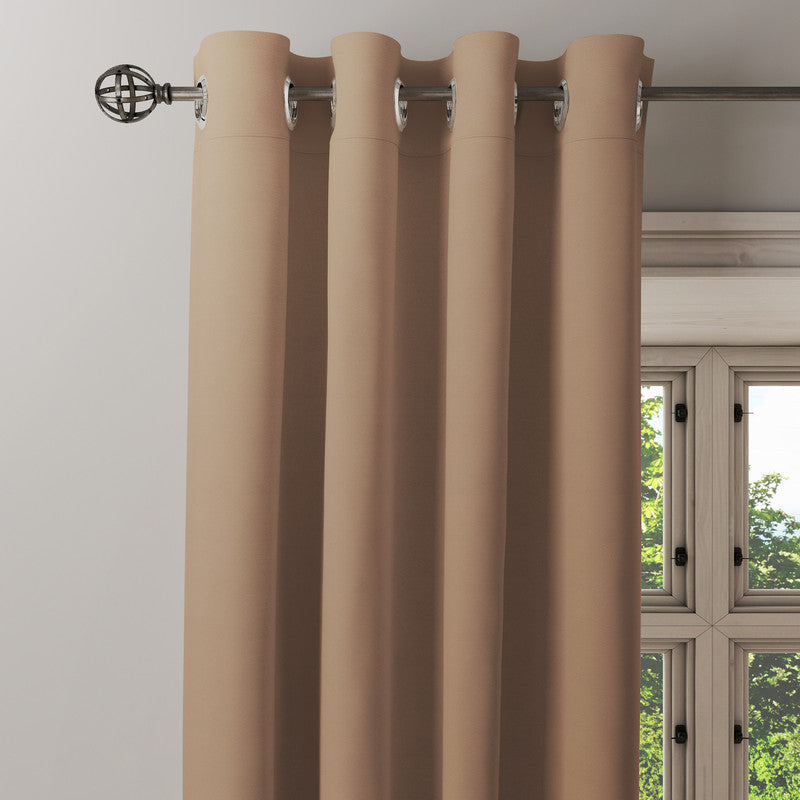
Blackout pushes things further. Room-darkening fabric relies on a dense, often multi-layer weave, and in practice that is nearly always a polyester construction. Our Blackout Polyester Twigs Beige Curtain is a typical example: 100% polyester triple-weave fabric, sold for cold washing and hung without ironing. For a bedroom where you want to sleep past 6 a.m. in May, that is the right material, and the cotton alternatives do not really compete.

Cotton curtains still have a place. In a shaded room, or on a window that gets only morning light, a cotton panama weave gives a softer, matte, more natural fall and filters light to a warm glow instead of blocking it. The Cotton Beige Curtain is that kind: 100% mercerised cotton, opaque enough that nobody can see in, but not a blackout. If you like that look, choose it for the north-facing living room, and keep polyester for the bedroom that bakes in afternoon sun. The full curtain collection has both kinds, so you can split by room rather than picking one fibre for the whole house.
Is cotton better than polyester for table linen?
Mostly, yes, with one useful exception.
Table linen is the place where cotton's thirst helps. A napkin's job is to absorb. A cotton napkin takes in a smear of sambar and lets go of it in the wash. A polyester one tends to push the moisture around your fingers, and if the smear was oily it may keep a faint ring after washing. The same goes for runners and placemats that sit under hot dishes and greasy serving spoons. Cotton also lies flatter and feels like cloth, not plastic, which matters at a table people sit at for an hour.
The usual worry about cotton tablecloths is shrinkage, and it is a fair one, because a tablecloth that loses a few centimetres stops hanging evenly at the edges. The fix is choosing a size with some overhang to spare and washing cool. Our Cotton Buffalo Red Checks Table Cloth is a yarn-dyed recycled cotton at 200 GSM, which the product page describes as mid-heavy, and its colours are rated fast to a warm machine wash.

Now the exception. If the table is a daily one in a house with small children, a coated polyester cloth can be the saner choice. The Polyester Apple Table Cloth has a water-repellent finish, so spilt juice can be wiped off instead of soaking in, and a non-slip backing. Keep it for the breakfast table, wipe it down rather than washing it after every meal, and act fast on oily spills, since polyester holds on to oil. For a festive dinner where the cloth is the point, cotton still looks and feels better. Between the two, the tablecloth collection lets you match the fibre to the meal.
Cushion covers: it depends on the sofa
Cushions are the genuinely mixed case, because a cushion lives in two worlds at once. It is touched constantly, which favours cotton, and it often sits in the sunniest spot in the room, against a window or on a sofa facing a balcony, which favours polyester.
Start with touch. If you lean your face or bare arms on the cushions, in a hot flat with the fan running, cotton canvas feels cooler and less clammy than most polyester. A cotton canvas cushion cover at 180 GSM is that kind of plain, matte, breathable cover. It washes well, and if it shrinks a touch on the first wash, a cover that hugs its insert a little more is not a disaster.

Then light and wear. A cushion that faces a sunny window all afternoon will tend to fade sooner in cotton. A sofa the kids jump on needs covers that take frequent washing without shrinking off the insert. In both cases a synthetic cover is the safer bet. Plush covers like the Velvet Gold Cushion Cover are also sold as not shrinking or bleeding, and the pile hides wear. But pile fabric of any kind can fade where sun hits it, so keep velvet on the chair that stays in shade.
A worked example makes it clearer. Picture a living room with a three-seater against the wall opposite a west-facing window, plus a reading chair in the shaded corner. The sofa cushions get two or three hours of direct afternoon sun and a lot of handling, so they should be the hard-wearing, low-shrink ones. The reading chair cushion sees no sun and is where you sit with bare arms in May, so that is where cotton earns its keep. Two cushions in the same room, two right answers. More on weighing these against each other is in our guide to the best fabric for cushion covers.
Care differences that matter in practice
Wash cotton cool if you want it to keep its size, and line-dry it in shade, both to limit shrinkage and to keep the colour from bleaching. In the monsoon, give it longer to dry, because damp cotton folded away too soon is how a cupboard starts to smell.
Polyester is easier to wash and quicker to dry, but it does not like heat. A hot iron can leave a shiny patch or melt the surface, so use a low setting or skip ironing; many polyester curtains are designed to hang out their creases. For an oily stain on polyester, work in a little dish soap before the wash rather than after. Once it has been through a hot dryer, the stain is much harder to shift.
Blends sit in between. A poly-cotton mix shrinks less than pure cotton and breathes better than pure polyester, at the cost of being a bit of both. Check the label rather than the feel, since a brushed polyester can pass for cotton in the hand.
FAQ
Does polyester shrink like cotton?
Barely. Polyester takes in very little water, so normal washing does not relax the yarns the way it does with cotton. Very hot water or a hot dryer can still distort it, so stick to cool or warm washes.
Which fabric lasts longer in sunlight, cotton or polyester?
Polyester usually keeps its colour and strength longer under direct sun. Cotton dyes tend to fade sooner, and long exposure weakens the fibre too. Lining a cotton curtain slows this down.
Is polyester bad for an Indian summer?
For things you touch with bare skin, like cushions you lean on, it can feel warmer than cotton. For things you do not touch, like curtains, the fibre's feel hardly matters, and its fade and shrink resistance are the bigger benefit.
Can I put cotton and polyester table linen in the same wash?
Yes, on a cool or warm cycle. Wash new dark cotton separately for the first few washes in case of dye run, and pre-treat oily marks on the polyester pieces before they go in.

Leave a comment
This site is protected by hCaptcha and the hCaptcha Privacy Policy and Terms of Service apply.