

You pull a velvet cover out of the machine, and the plush, light-catching face you paid for has gone patchy: flat in streaks, crushed at the corners, dull where it used to have depth. It looks ruined. Most of the time it is not, and understanding why tells you exactly how to wash the next one.
Velvet almost never fails in the wash itself. It fails in the wringing and the drying, where the wet pile gets crushed flat and then dries in that crushed position. Keep the pile from being squashed while it is wet and you keep the velvet. In practice that means cold water, a gentle cycle or hands, absolutely no wringing, drying flat rather than hung, and a soft brush over the nap while it is still damp to stand the pile back up.
Why velvet crushes, and where the damage really happens
Velvet is a pile fabric. The surface you stroke is thousands of short fibres standing upright, and the whole look of velvet, the sheen and the shift in colour as you move, comes from light bouncing off those upright fibres. Anything that bends them flat and holds them there dulls the fabric.
When velvet is dry, the pile is fairly resilient and springs back. When it is wet, those fibres go soft and take on whatever shape you press them into. So the moment of danger is not the soak. It is when you twist a soaking cover to wring the water out, or fold it over a tight line where its own weight presses the pile against itself. It dries with the fibres bent over, and that is the flat, streaky patch you see.
This is also why a fresh, slightly oversized insert matters as much as washing: velvet on a well-filled cushion stays taut and the pile stays open, while velvet on a saggy insert folds and self-crushes even between washes.
The method, step by step
Check the care label first, since some velvets are cotton-backed and some are polyester, and a few insist on dry cleaning only. If the label allows washing, this is the sequence that protects the pile.
- Turn the cover inside out and close the zip. This puts the pile against itself for protection and stops the zip snagging other fabric.
- Wash cold. Use cold water and a mild liquid detergent, never hot water, which relaxes the fibres and makes them far easier to crush. By hand, swirl gently for a minute or two; in a machine, use the gentle or delicate cycle inside a mesh laundry bag.
- Skip the spin, or keep it very low. The high-speed spin is where machine damage happens, because it presses the wet pile hard against the drum.
- Never wring. Do not twist the water out. Press the cover between your palms, or lay it on a dry towel, roll the towel up, and press to draw the water into the towel.
- Dry flat, turned right side out, on a fresh dry towel away from direct sun. Reshape it to its square while damp. Hanging a heavy wet velvet cover stretches it and lets the folds crush the pile.
- Brush the nap while damp. With a soft brush or even a clean, dry hand, sweep across the pile in one direction to stand the fibres back up. This single step restores the sheen, and it only works before the cover dries.

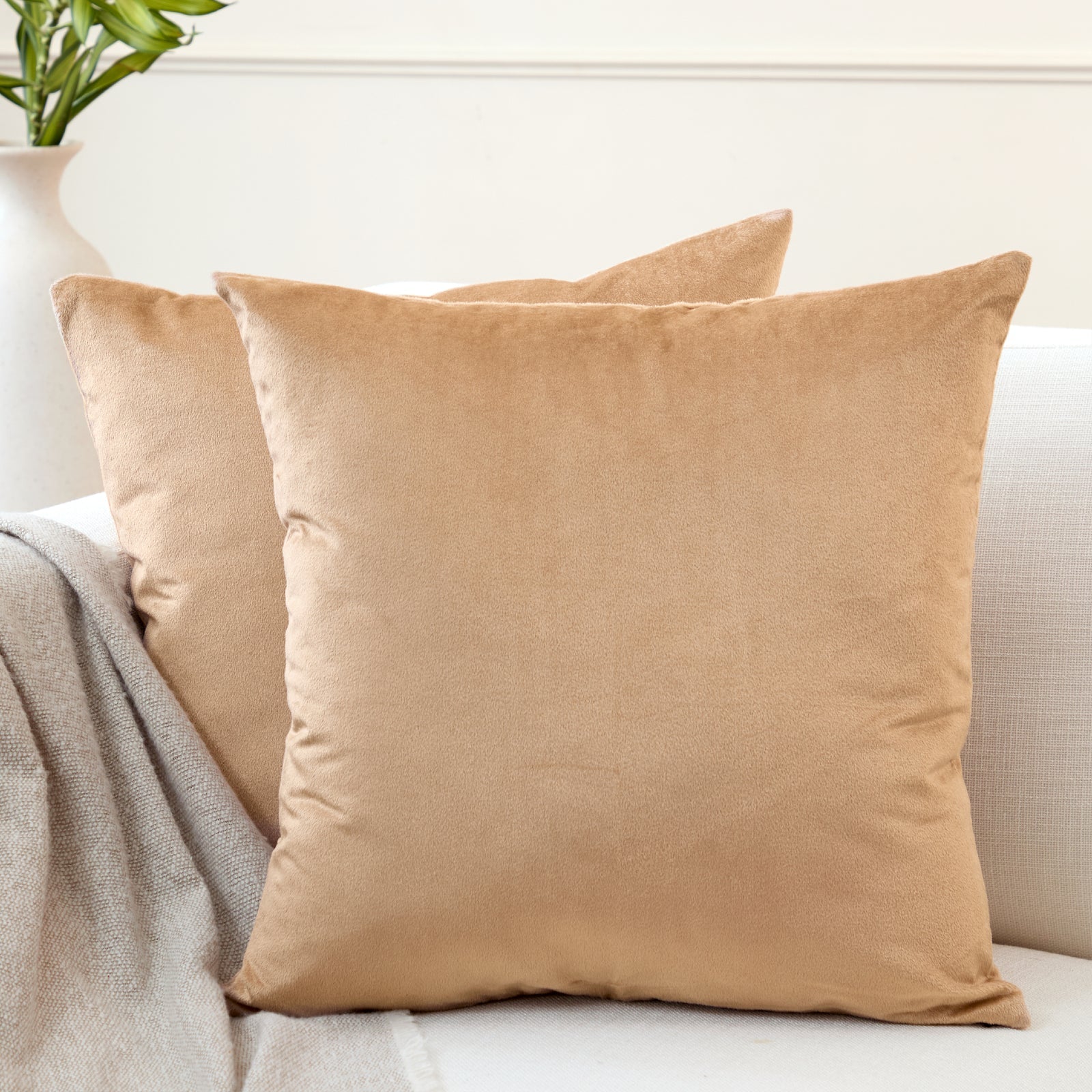
Almost all of Encasa XO's velvet cushion covers take gentle washing well when handled this way, whether that is the gold or the deeper green. The fabric is more forgiving than its reputation suggests, as long as the pile is never wrung or hung wet.
What crushes velvet, and what to do instead
| The habit that crushes it | Do this instead |
|---|---|
| Hot water | Cold water, mild liquid detergent |
| Full-speed machine spin | Gentle cycle, mesh bag, low or no spin |
| Twisting to wring out | Press flat between towels |
| Hanging heavy and wet on a line | Dry flat, reshaped, out of direct sun |
| Letting it dry untouched | Brush the pile in one direction while damp |
| Ironing the pile face | Steam lightly from the back only, if at all |
If a cover is only lightly soiled or has a single mark, you often do not need a full wash at all. Spot-clean the mark with a damp cloth and a drop of detergent, blot rather than rub, and brush the area dry. Fewer full washes means a longer life for the pile.
Keeping velvet looking new between washes

A soft brush every couple of weeks lifts dust out of the pile and keeps the sheen even, which matters more with velvet than with flat fabrics because dust settles into the nap and greys it. Rotate and plump the cushions so no one spot takes all the sitting. And keep bright velvet off a window that gets hard afternoon sun, because strong, direct light fades the colour over months regardless of how carefully you wash. If you are choosing where to place a new set, the calmer light of the wider cushion cover range in cotton or canvas is the better bet for a sun-blasted spot, and velvet for the shadier corners.
Frequently asked questions
Can you machine wash velvet cushion covers?
Usually yes, if the care label allows it. Turn the cover inside out with the zip closed, put it in a mesh bag, run a cold gentle cycle with mild detergent, and keep the spin low or off. The machine is fine; the high-speed spin and the drying are what damage the pile.
How do you fix flattened or crushed velvet?
Dampen the crushed area lightly with a spray of water or a little steam held away from the fabric, then brush the pile in one direction with a soft brush while it is damp. Standing the wet fibres back up is what lifts the flat patch. Do it before the fabric dries.
Should you iron velvet cushion covers?
Avoid ironing the pile face, since the flat plate crushes it. If a cover is badly creased, steam it gently from the back with the pile hanging free, then brush the front. Most velvet drops its creases just from being reshaped and dried flat.
Why did my velvet go patchy after washing?
Almost always because the wet pile was crushed and dried that way, usually from wringing or from hanging the cover heavy and wet. Re-dampen the patchy areas and brush the pile back up in one direction while damp, and the sheen generally returns.


Leave a comment
This site is protected by hCaptcha and the hCaptcha Privacy Policy and Terms of Service apply.