
A child gets a nosebleed on the way home, and a few red spots land on the collar of a white school shirt. That evening the shirt goes into the machine with the rest of the uniforms on the usual warm cycle. Next morning it dries on the balcony, and before school it gets a hot iron. Now the spots are brown, with a darker ring at the edge, and two more washes have not moved them.
Nothing in that routine was careless. Every step was simply warm, and warmth is what blood does not like. To remove blood stains from clothes, keep everything cold until the mark has gone: blot, rinse from the back under the cold tap, soak in cold water, then rub in detergent. Use an enzyme detergent if a mark is left, and check it while it is still damp. Only then wash, dry and iron as normal.
Why does cold water matter so much with blood?
Blood is a protein stain. Protein changes when it is heated: think of the clear part of an egg going white and solid in a hot pan. Once the proteins in blood are set like that inside the threads, water and detergent struggle to wash them back out.
The University of Georgia Extension puts it plainly in its guide to blood stains: "Stains set by heat will be difficult to remove." Its method starts with cold running water, then a soak in cool water for 30 minutes or longer, and only then a lukewarm soak with an enzyme product if a stain is still there. The enzyme step is the only point where it allows any warmth at all.
So the order matters more than the product. Even plain bar soap is a fair start, as long as the water is cold. On the stain-by-stain chart, blood sits with the other protein stains for the same reason.
How to get fresh blood out of clothes
Do this as soon as you can, while the blood is still wet and has not set.
- Blot the spot with a cloth or tissue. Do not rub, because rubbing spreads it wider and pushes it deeper.
- Turn the cloth inside out and hold the stain under the cold tap, so the water hits it from the back. That pushes the blood out the way it came in, instead of through the rest of the fabric.
- Rub a little bar soap or liquid detergent into the spot with your fingers, then rinse again in cold water.
- If a mark is left, soak the piece in a bucket of cold water for half an hour or more.
- Still there? Soak it again with a detergent that lists enzymes on the pack (sometimes written as protease). Follow the pack for the amount.
- Look at the spot in daylight before it goes anywhere near heat. If you cannot tell on damp cloth, let it air-dry in the shade and look again before you iron it.
Once the mark is gone, wash the piece as its label says. If it is silk or wool, skip the enzymes: both fibres are made of protein too, and an enzyme detergent can harm them. Dab those with cold water and take anything you care about to a dry cleaner.
Where the heat sneaks in
Many blood stains that will not come out met heat somewhere, and usually not on purpose.
The warm cycle on the machine is the usual one. Many product pages suggest warm water for stains, and for food, sweat and everyday dirt that is fine. For blood, warm water comes after the mark is gone, never before. The bucket topped up from the geyser does the same harm: a warm soak feels as if it ought to work harder, and with blood it works against you.
The iron is the one that finishes the job, because an ironed blood stain is among the hardest to shift. If a uniform is needed in the morning, send it with a faint mark rather than iron that mark in for good. A hot tumble dryer does the same, if you have one. Plain air-drying is not the problem; the trouble is a shirt that dries and then goes straight under the iron without anyone looking at the spot.
Dried blood and stains that have been washed already
Old blood darkens from red to a rusty brown as it dries. It can still come out, but it needs time rather than force.
Soak the piece in cold water first, for 30 minutes or longer, so the dried blood softens. Then rub detergent into the spot and soak again, this time with an enzyme detergent in water that is lukewarm at most, as the University of Georgia method allows. Repeat while the mark keeps fading. Scrubbing hard with a brush roughens the fibres and makes the patch look worse.
A stain that has already been through a warm wash, dried and ironed is a different story. Repeat long cold soaks with enzyme detergent and it may fade. Others fade to a faint shadow and then stop changing, and on those it is time to accept the shadow.
Some guides, the University of Georgia's among them, add a few drops of household ammonia for old stains. We leave it out, because ammonia must never be mixed with bleach, and the enzyme soak is the gentler thing to try first.
| What you are dealing with | First move | Water | What to expect |
|---|---|---|---|
| Fresh, still wet | Blot, then rinse from the back under the tap | Cold | Often comes out at this stage |
| Dried, never washed | Long soak, then rub in detergent | Cold, then lukewarm with enzyme detergent | Often fades; may need two soaks |
| Washed warm, dried or ironed | Repeat long soaks with enzyme detergent | Cold, then lukewarm with enzyme detergent | May fade to a faint shadow and stop |
| Silk or wool | Dab, no enzymes | Cold | Dry cleaner if the piece matters |
White cloth, bleach and hydrogen peroxide
Many stain guides reach for hydrogen peroxide or bleach as soon as the cloth is white. Peroxide does work on some blood stains. The University of Georgia method puts a few drops of 3% hydrogen peroxide on the stain for one to three minutes, as a last step after the soaks, then rinses and washes. It also says to test any cleaner on a hidden corner first.
What is easy to miss is that hydrogen peroxide is a bleach. It is a mild one, but your care label treats it the same way. Look at the triangle before you use it. A plain triangle allows bleach, two lines inside it mean oxygen bleach only, and a crossed-out triangle means no bleach of any kind. The guide to fabric care label symbols has the full set.

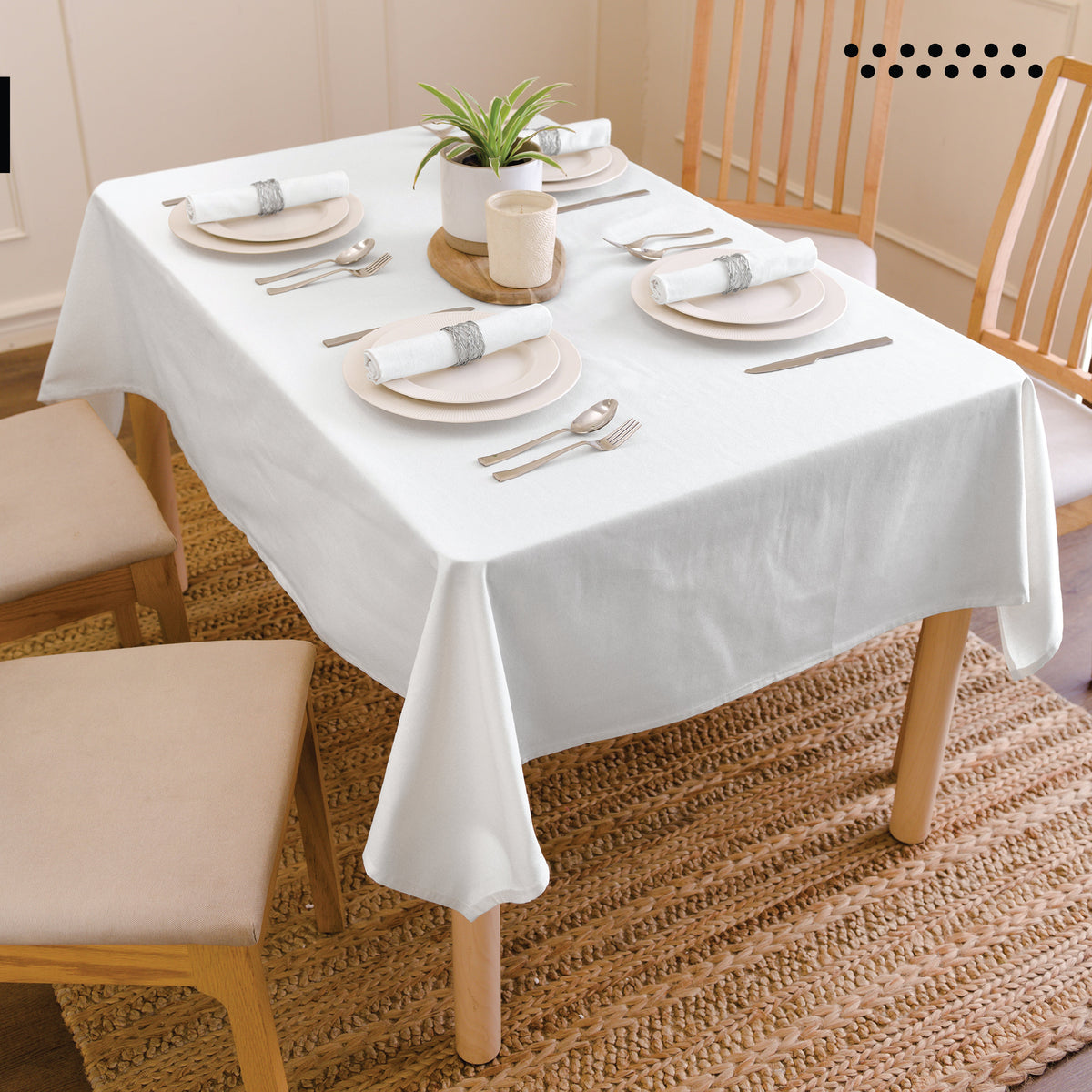
White does not mean bleach-safe. Take our own white cotton table napkins, six to a pack at 43 x 43 cm. The care graphic on their page shows the crossed-out triangle: do not bleach. So peroxide is off the table for them, however white they are. The same page suggests warm water for stain removal, which suits a dal spill and is the wrong first step for blood. If napkins at your table often end up pressed on a child's cut, that is a reason to keep the whites for guests and use a deep red or maroon set from the table napkin range for everyday meals, where a faint shadow is far harder to see.
On coloured cloth, leave peroxide alone unless the maker's label says bleach is allowed. Repeat the cold and enzyme soaks instead.
Uniforms, sheets and period stains
School uniforms pick up blood from scraped knees and nosebleeds, often on pale cloth that goes into a big warm wash with everything else. Take the stained piece out of that load, rinse and soak it cold on its own, and let it join the next wash once the mark is gone.
Period blood is the same kind of stain as any other blood, so the same cold-first order works on underwear, pyjamas and sheets. On a sheet, rinse the spot from the back so the water pushes the blood out rather than through. Soak just that part in a bowl of cold water if the whole sheet will not fit in a bucket, then use enzyme detergent and check before drying. Look at what is underneath too. If it went through to the mattress, dab that area with a cloth dipped in cold water and a little detergent, and do not soak it.
A cut while chopping, and the towel that gets grabbed
A knife slips while you are cutting onions, and the nearest kitchen towel goes round the finger. Once the finger is seen to, that towel usually lands in the laundry basket, where it sits damp for a day or two before the next wash.

Rinse it straight away instead. Hold it under the cold tap from the back until the water runs clear, then leave it in a bowl of cold water with a little detergent until wash day. Blood rinsed out in those first minutes has had no time to dry. The same towel left in the basket and then washed warm can keep a brown patch for good. Some towel pages, ours included, suggest washing at 40 degrees to remove stains. That is right for oil and food; for blood it comes after the cold rinse.
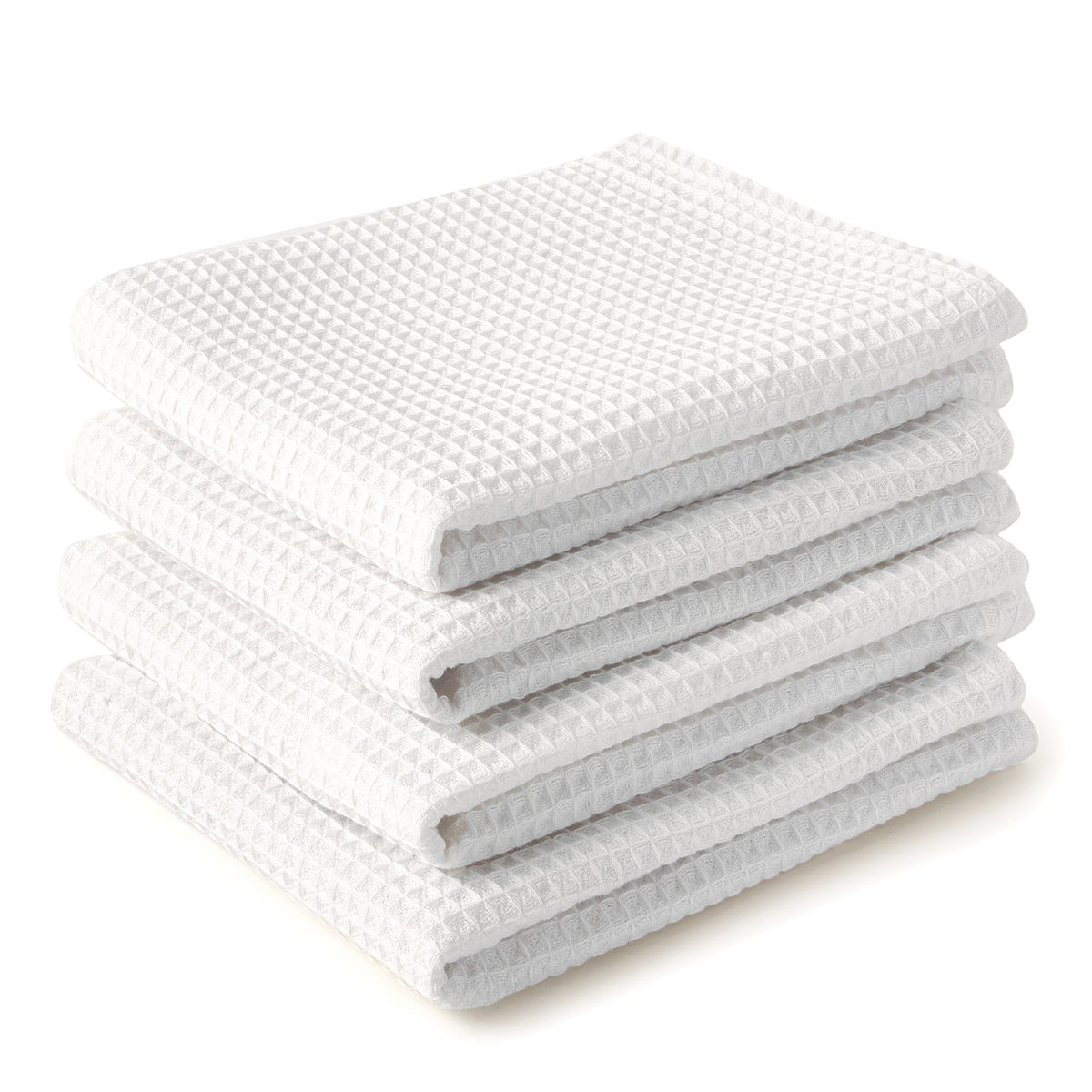
Colour decides how much a leftover mark matters. A towel like the white waffle kitchen towel shows every trace, so a cut that was not rinsed in time can leave a shadow you see on it for many washes.
Which towel to keep near the chopping board

If the towel hanging by the chopping board is the one that gets grabbed for cuts, make that one dark. The red waffle kitchen towel is the same 70 x 45 cm cloth as the white, with a hanging loop, and a faint brown shadow is much harder to see on deep red. It still needs the cold rinse, because the colour hides a mark and does not stop one. Wash a new red towel on its own for the first few washes, as you would anything deeply dyed (colour bleeding in the wash explains why). For the dish rack, where you want to see when a towel needs washing, pale ones from the kitchen towel range still make sense.
Questions people ask about blood stains
Does salt or baking soda remove blood?
Both are common home remedies for a fresh stain. Neither is part of the University of Georgia method, so treat them as worth a try at most. Cold water does the real work in both cases, and an enzyme detergent is the better next step.
Can I just put a bloodstained shirt in the washing machine?
Yes, if you rinse it cold first and run a cold cycle. The problem is not the machine, it is the warm setting many households use for every load. Check the spot before the shirt is dried or ironed, and run it again cold if any mark is left.
What about blood on a cushion cover or a sofa?
Take a removable cover off and treat it like clothing. For the cushion inside or the sofa itself, dab with a cloth dipped in cold water and a little detergent, then blot dry. Do not soak padding you cannot rinse out properly.


Leave a comment
This site is protected by hCaptcha and the hCaptcha Privacy Policy and Terms of Service apply.