
Most people meet a care label at the worst possible moment: a curtain that came out of the wash two sizes smaller, or a velvet cushion cover with a shiny scorch line the exact width of an iron. The strip of symbols was there all along, sewn into a seam, saying precisely what not to do. Nobody teaches you to read it, and home textiles rarely come with the plain-English version that clothes sometimes do.
One idea makes the rest fall into place: a care label is a set of ceilings, not instructions. The number in the wash tub is the hottest water the fabric will survive, not the temperature you have to use, and the dots on the iron are the most heat it can take, not a target. Every symbol either states a maximum, or, with a cross or bar through it, takes an option away. So you can always go gentler than the label says. You just can't safely go harsher.
Does India use the same care symbols as everywhere else?
Largely, yes. Textiles sold in India commonly follow the same pictogram system used across Europe and much of the world, managed internationally by GINETEX and published as ISO 3758. The Bureau of Indian Standards adopted it as IS 14452, whose foreword records that the Indian standard is "identical with" ISO 3758:2005 and was published "without deviations". So a wash tub, a triangle, an iron and a circle mean the same on a Jaipur-made tablecloth as on an Italian one.
Two gaps are worth knowing. Many home textiles carry no symbols at all, whether loose fabric bought by the metre, a tailor-made curtain, or older linen whose tag has washed away, a case with its own section below. And labels printed for the North American market write the same alphabet in a slightly different hand, covered further down. None of this depends on any brand's certification; the symbols are a shared vocabulary that labels draw from.
The five fabric care symbols, and the one rule that covers all of them
Nearly every care label is built from five base shapes, each governing one process. A quick way to read one is to scan in order: find any crossed-out symbols first, since those are the hard bans, then the wash temperature, then how it wants to be dried and pressed.
The wash tub always means laundering, and the triangle always means bleach, nothing else. The plain square is drying, with the marks inside it, a circle for a dryer drum or lines for a washing line, telling you the method. An iron means ironing, and a circle means professional cleaning, usually dry-cleaning. Everything else on a label is a modifier sitting on one of those five shapes.
The single most useful rule is the cross. A cross through any of these shapes forbids that process outright: a crossed tub means do not wash at home, a crossed iron means do not iron, and so on. A bar or two beneath a symbol is the gentler cousin, not a ban but a request to ease off, one bar for a gentle cycle, two for very gentle.
Washing: the number in the tub, and the dots you might see instead
On a label bought in India, the wash tub usually has a number printed inside it. That number is the maximum water temperature in Celsius: 30 for cool, 40 for warm, 60 for hot, and so on. A hand shape in the tub means hand wash only, in cool water no warmer than about 40 degrees. It is the ISO system, and refreshingly literal.
Confusion creeps in with an imported label, say a cushion cover ordered from a US seller. North American labels use the same tub but replace the number with dots, following the ASTM system: one dot is the coldest, and each extra dot steps the temperature up. If you own textiles from both worlds, this table is the whole translation.
| Wash temperature | India / ISO label shows | North American label shows |
|---|---|---|
| Cold to cool | 30 in the tub | 1 dot |
| Warm | 40 | 2 dots |
| Warm to hot | 50 | 3 dots |
| Hot | 60 | 4 dots |
| Very hot | 70 | 5 dots |
| Boil wash | 95 | 6 dots |
For most home textiles you will treat "30" and "one or two dots" the same way: a cool or lukewarm wash. A tub reading 40 does not mean you must use 40-degree water, and in a bucket, which is how many Indian households actually wash cushion covers and napkins, cool tap water sits comfortably under that ceiling, safer for colour and shape. Going gentle does cost something, though: a cool wash lifts grease and set-in stains less readily than a hot one, so for a greasy kitchen apron or a badly soiled mat, use the label's ceiling rather than sit well below it.
Drying: reading the square, and getting things dry through the monsoon
The square is drying, and the marks inside it matter more than they look. A circle inside means tumble-drying is allowed, one dot for low heat, two for normal; a crossed circle means no dryer, common on coatings, rubber backings and delicate weaves. A horizontal line means dry flat, for anything that would stretch on a line, like a knitted throw; a vertical line means line-dry; a diagonal line in the top corner means dry in shade.
For Indian homes the tumble-dry symbol is often academic, since most of us line-dry anyway; the signals that matter are "dry flat" and "dry in shade", the latter protecting deep or bright dyes from strong sun. In the monsoon, when nothing dries outdoors, treat a "do not tumble dry" item as a slow indoor job: hang it over a rod with airflow, and give heavy cotton a day or two rather than reaching for heat the label may forbid.
Ironing: the dots decide, and the fabric confirms
The iron symbol carries one to three dots, and this is one place where the label really is the authority. The dots set the heat ceiling.
Commonly cited working ranges sit within those dots: cotton and linen press well hot, roughly 180 to 200 degrees with steam and slightly damp fabric; silk prefers a cooler iron around 140 to 150 degrees, worked on the reverse with a pressing cloth; synthetics want the lowest setting, since real heat glazes or melts them and the shine never comes out. Treat those numbers as guidance and the dots as the instruction: if the label shows one dot, keep the iron cool whatever a fabric chart says. Most home textiles are cotton or a cotton-poly blend, so the two-to-three-dot range covers most napkins, tablecloths and cushion covers; anything with a sheen or raised pile needs more caution than its fibre suggests.
Bleaching and dry-cleaning: the triangle and the circle
The triangle is bleach, and for coloured home textiles the honest answer is usually to leave it alone. A plain triangle allows bleach; two diagonal lines mean oxygen or non-chlorine bleach only; a crossed triangle means none. On anything dyed or printed, chlorine bleach is a fast route to a pink patch, so the crossed triangle is the one you want to see.
The circle is professional care, nearly always dry-cleaning. For a home reader, what matters is whether it is crossed: a plain circle means dry-clean only, common on lined or coated curtains and your cue that this is no bucket-wash item, while a crossed circle means do not dry-clean. A plain circle beside a crossed tub says plainly that water is not this fabric's friend.
Reading the labels on your own home textiles
Home textiles hide traps garment guides never mention, because the constructions differ. On your own pieces, the symbol worth checking first is often not the wash tub, but whichever cross or bar the construction quietly forces.
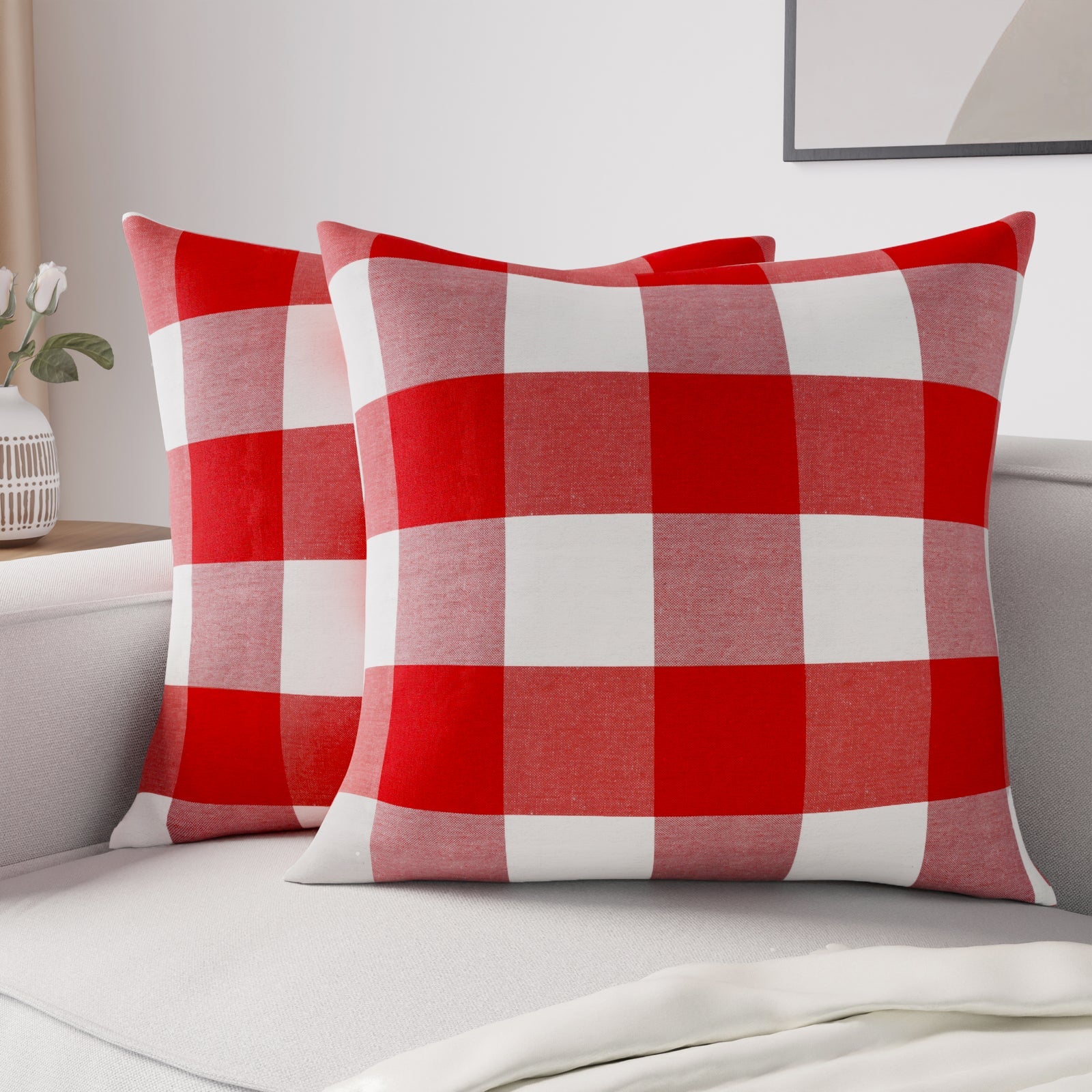
Cushion covers are usually the forgiving end of the room. Plain cotton and canvas covers take a cool machine or bucket wash and a warm iron without fuss. Pile is the part that punishes carelessness: press a velvet or chenille cover flat and the raised nap crushes into a shiny patch that never lifts, which is why those covers so often show a low-heat or crossed iron. With velvet cushion covers, steam them upright or, at most, work the reverse on the coolest setting, a caution worth extending to the shinier faces across the cushion covers range.

With curtains, reading the drying symbol first is what saves money. A plain cotton or cotton-canvas curtain washes and dries like a bedsheet. A blackout curtain is a different animal: the light-blocking is a coating on the back, and heat is its enemy. A hot tumble or a stretch in fierce sun cracks the film, it flakes, and the curtain stops blocking light long before the fabric wears out. That is why a blackout pair like the beige twigs carries a crossed tumble-dry and a low wash; line-dry it in shade and it keeps working. The wider curtains range spans wash-friendly cottons through to dry-clean-only lined styles, so here you genuinely cannot assume one pair's care applies to the next.
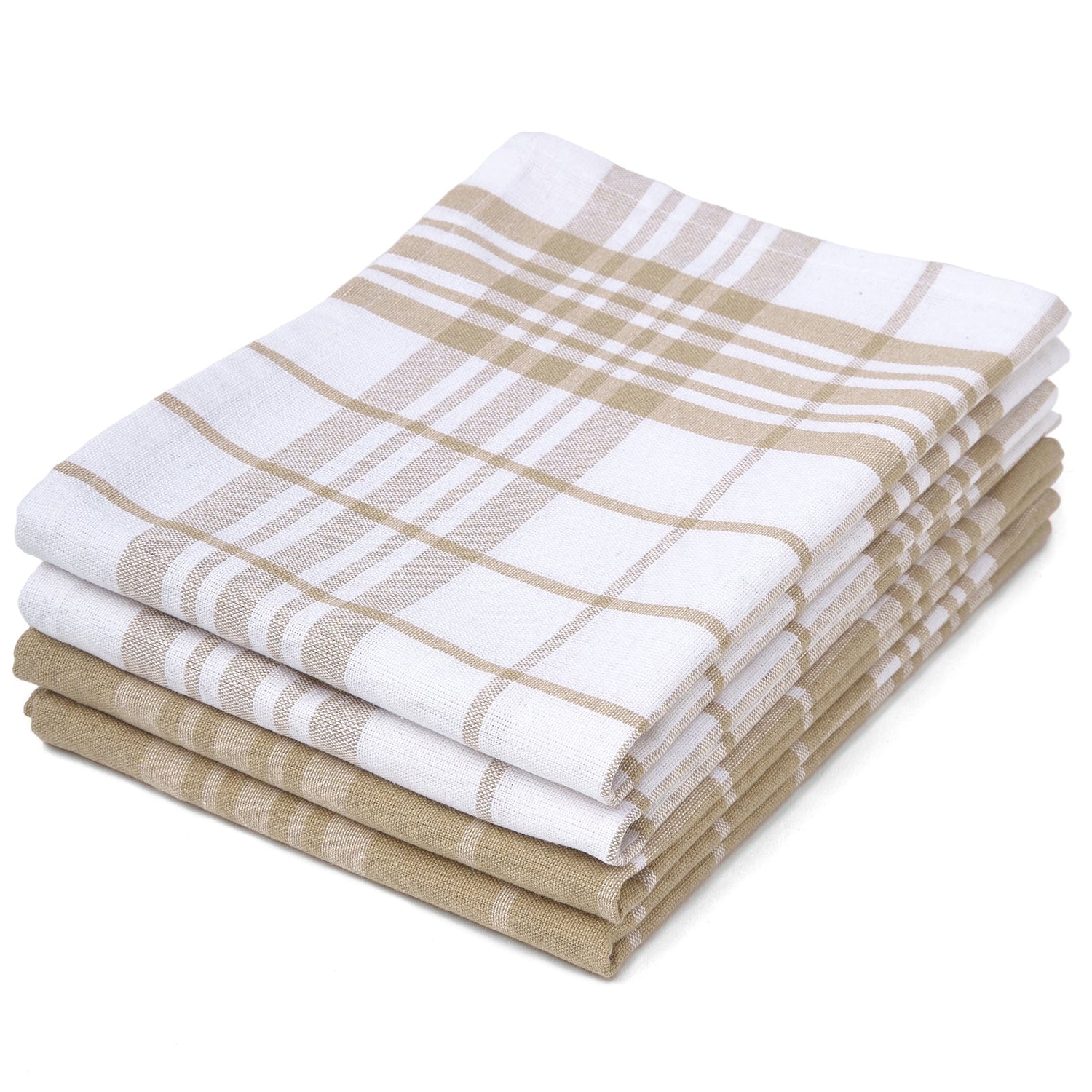
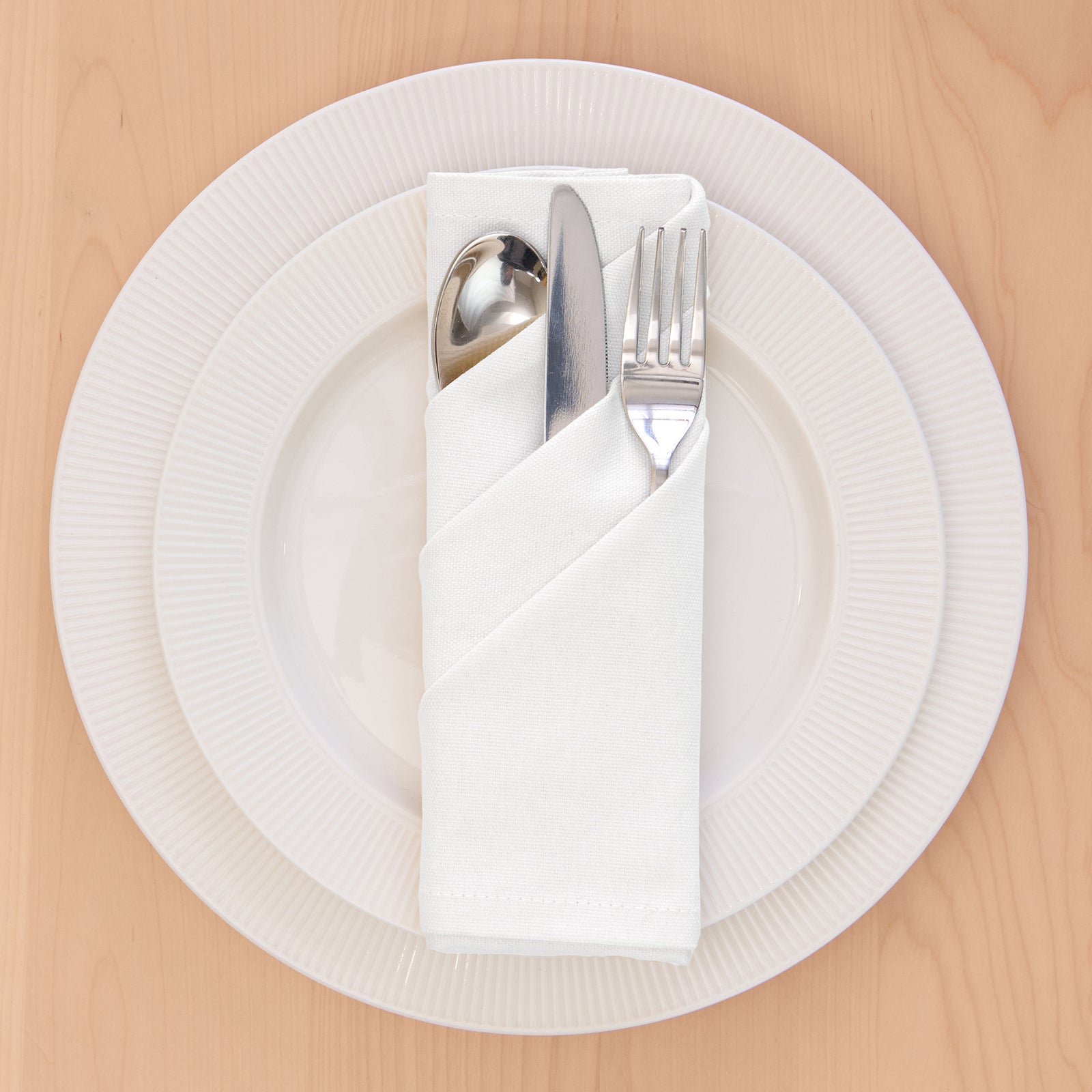
Table linen is where crossed and barred symbols cluster most thickly. The plain stuff is easy: a cotton tablecloth or a set of cotton napkins washes hot and irons at three dots, exactly what shifts turmeric and wine and presses a sharp crease. It is the decorative edge that asks for restraint. Hemstitching, drawn-thread work and embroidery tend to carry a hand-wash symbol, because a hot cycle frays the very detail you bought the piece for, so check each one rather than trust the whole napkin drawer to a single setting.

Bath textiles complicate every neat rule above, because the backing overrides the face. A bathmat can have a soft cotton or microfibre top and still show a crossed tumble-dry, thanks to the rubber or latex layer that stops it sliding. That layer cannot take dryer heat or strong sun; it perishes, cracks, and sheds grey crumbs into the next wash. So the fibre on top tells you almost nothing about drying: a microfibre bathmat or any backed mat from the bathmat range goes on the line, never in a dryer. Bath textiles also earn a hotter, more frequent wash for hygiene, one place the label's higher temperature is worth using rather than ducking under.
No label? A fallback by fabric and construction
Plenty of home textiles arrive with nothing to read: loose fabric bought by the metre, curtains run up by a tailor, a hand-block tablecloth from a fair, a years-old cushion cover whose tag washed away. The stock advice, "hand wash cold if in doubt", is safe but often needlessly timid. Better to judge by what the thing is made of and how it is built.
Weight and construction decide the fallback more than fibre name. A heavy cotton-canvas curtain or a sturdy cotton cushion cover is hard to damage: a cool wash and a hot iron are usually fine, and a hidden corner tells you fast whether the colour bleeds. A fine linen or hemstitched napkin, silk, or anything embroidered is the opposite: hand wash cool, no wringing, dry flat in shade, iron on the reverse at low to medium heat. Hand-block and natural-dye prints deserve that cautious route too, at least for the first wash, since the dyes can run before they settle. When you truly can't tell, the local dhobi or press-wala has handled far more unlabelled fabric than any of us, and a word about "delicate, low heat" is reasonable insurance.
Two India-specific realities sit under all of this. If your water is hard, as it is across much of the country, detergent works less well and leaves deposits, so a gentle wash at the label's ceiling, plus a thorough rinse, beats a hotter, harsher cycle. And in a bucket-wash household, "machine wash cold, delicate" just means cool water, a mild soak and a light hand rather than vigorous scrubbing.
Common questions
What does a crossed-out care symbol mean?
A cross through any symbol forbids that process completely: a crossed tub means do not wash at home, a crossed iron means do not iron, a crossed circle means do not dry-clean. It is the one rule that never varies, so scan for it first.
What is the difference between the dots and the numbers on a wash symbol?
They express the same thing, a maximum wash temperature, two ways. Labels for India and most of the world print the number in Celsius inside the tub, such as 30 or 40; North American labels use dots, one for the coldest wash rising to six for a boil wash. One or two dots roughly equals the 30 to 40 range.
How do I wash something with no care label?
Judge by construction. Sturdy cotton and canvas take a cool wash and a hot iron; test a hidden corner for colour bleed first. Fine linen, silk, embroidery and hand-block prints want a cool hand wash, no wringing, drying flat in shade and a low-to-medium iron on the reverse. When unsure, treat it as delicate: gentler care rarely harms a fabric, while a hot cycle can ruin it once.
Can I put a rubber-backed bathmat in a tumble dryer?
Almost never, and the label will usually show a crossed tumble-dry to say so. The heat perishes the rubber or latex backing, which then cracks and flakes off, even though the fabric top may be perfectly machine washable. Line-dry backed mats and keep them out of harsh direct sun for the same reason.

Leave a comment
This site is protected by hCaptcha and the hCaptcha Privacy Policy and Terms of Service apply.