
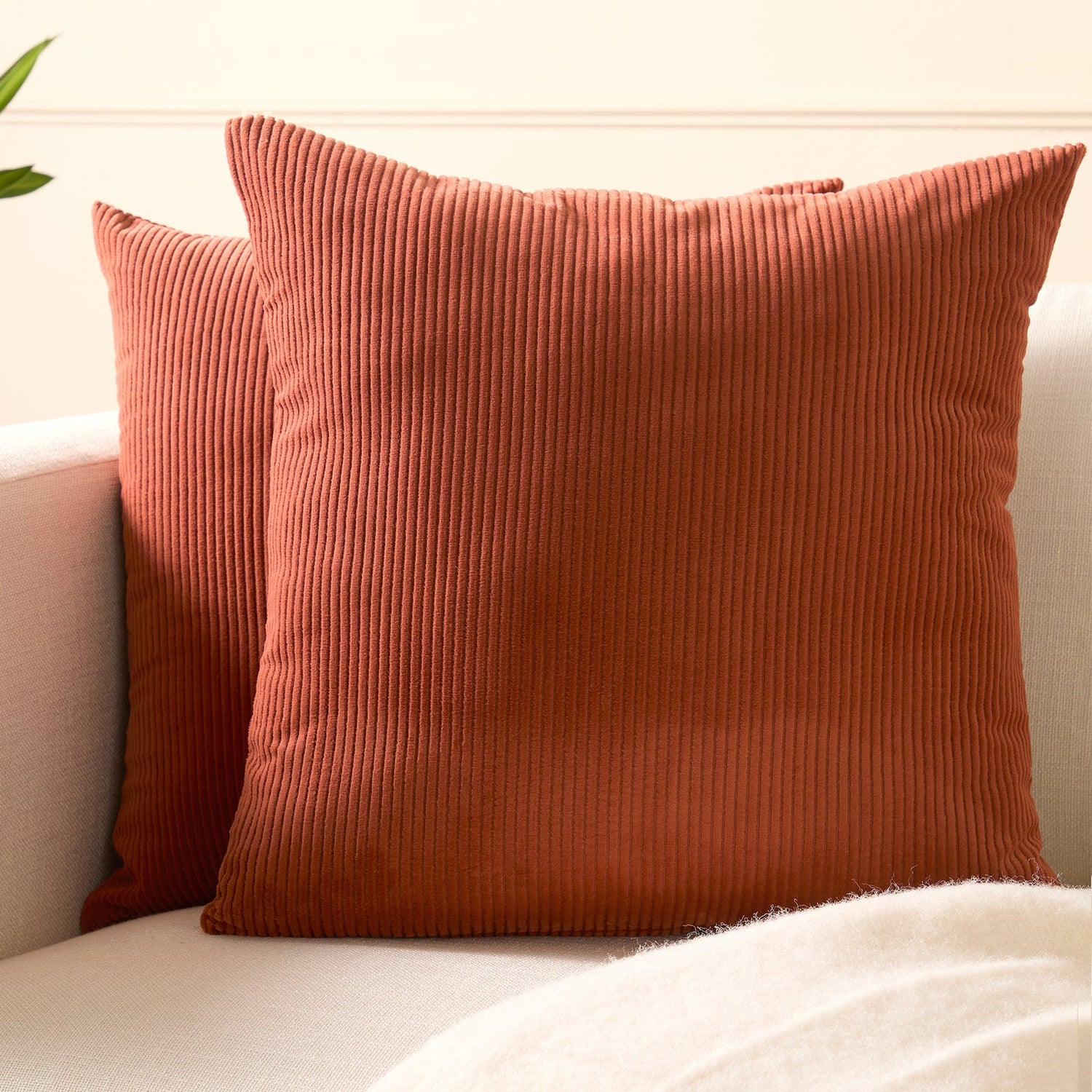
There is no best fabric for a cushion cover. There is only the best fabric for the room the cushion has to survive in. A velvet cover that looks magnificent in a shaded formal living room will fade and blotch on a sunny balcony, where a tougher fabric would have shrugged the light off. A printed polyester that survives a child's juice glass would look cheap on a wedding-gift sofa nobody sits on. The fabric that wins is the one matched to the stress the spot actually puts on it: sun, traffic, spills, and how often you are willing to wash the thing.
So instead of asking which fabric is nicest, this guide sorts the three you will actually choose between, cotton, velvet and polyester, by what they are good and bad at, and then hands you a way to match one to your own sofa. For the wider picture beyond cushions, the natural and synthetic fabrics used across home textiles covers how each fibre behaves.
Start with the room, not the fabric
Before the feel of the cloth, four questions about the spot decide most of it. How much direct sun does the seat get, because sun fades everything and some fabrics far faster than others. How much traffic, meaning children, pets, and people who flop rather than sit. How likely are spills, which is really a kitchen-adjacent-versus-formal-room question. And how often will you honestly take the cover off and wash it.
Answer those and the fabric almost picks itself. A bright, busy family room wants something washable and fade-resistant. A low-traffic formal room can afford something that looks richer and asks for more care. Hold that framing while we go through the three.
Cotton: the safe all-rounder
Cotton is the default for a reason. It breathes, so it never feels clammy in a Delhi summer the way a synthetic can. It takes print beautifully, which is why most of the patterned covers you like are cotton or a cotton blend. It washes easily and, crucially, it tells you the truth when it is dirty, so you actually clean it. The trade-offs are real but mild: pure cotton creases, it can shrink on a first hot wash if you are careless, and a thin cotton wears at the corners faster than a heavy weave.
Where cotton earns its keep is the everyday sofa that sees normal life. A cotton canvas cover in particular, a heavier plain weave, stands up to leaning, resting and the occasional wash-and-repeat far better than a light printed cotton, and it holds a crisp edge that suits modern rooms. If you would rather have covers stitched to match a sofa, our guide to buying fabric by the metre works out how many metres a three-seater needs from real cloth widths.

Velvet: looks, at the cost of care
Velvet is the fabric people fall for, and with reason. The pile catches light, so a filled velvet cushion looks rounder and richer than the same shape in flat cotton, and a couple of them can lift a plain sofa on their own. It also feels wonderful, which matters more than we admit for a thing you rest against.
The costs are equally honest. Velvet fades in direct sun, so keep it off the seat that gets the afternoon glare. The pile crushes where you lean, though a damp brush usually lifts it back. And it does not want a rough machine wash: a cold, gentle cycle and a flat dry, not a spin-and-wring, or the pile mats. If your room is low on direct sun and you are the sort of person who will treat a cover gently, velvet repays it. The velvet range, like these gold velvet covers, is where to spend on a formal or feature sofa rather than a family one.

Polyester: the workhorse for busy homes
Polyester, and polyester blends, get unfairly dismissed. For a home with children, pets and a lot of daily use, a printed polyester or poly-cotton cover is often the sensible choice. It resists fading better than cotton in strong light, it does not crease, it dries fast after a wash, and it costs less, so replacing a set after a few years does not sting. It is also the base for many machine-washable printed covers, which is exactly what a busy sofa needs.
What you give up is breathability and a certain depth of feel. A pure polyester can feel slightly slick against the skin and it is not as cool to sit against in peak summer. But for the second sofa, the kids' den, or any seat that takes a beating, that is a fair trade for a cover you can wash on Sunday and forget.
Cotton vs velvet vs polyester, side by side
| Cotton | Velvet | Polyester | |
|---|---|---|---|
| Feel | Breathable, matt, natural | Soft, plush, catches light | Smooth, can feel slick |
| Look | Casual to smart, great print | Rich, formal, adds depth | Bright print, flatter finish |
| Sun resistance | Moderate, fades over years | Poor, fades in direct sun | Good, fades least of the three |
| Wash | Easy, machine, may crease | Gentle cold only, flat dry | Easy, machine, dries fast |
| Durability | Good in heavy weaves | Delicate, pile crushes | Very good under hard use |
| Cost | Mid | Higher | Lower |
| Best for | Everyday family sofa | Formal, low-sun feature sofa | Kids, pets, high traffic |
Read the table by your own room rather than top to bottom. If your deciding factor is a sunny window, the sun row rules out velvet before feel even enters the discussion. If it is a house full of children, the durability and wash rows point at polyester or a heavy cotton, whatever the covers look like in the photo.
The one rule to match fabric to room
Pick the fabric by the harshest condition the seat faces, not the nicest thing you want. A sofa in strong afternoon sun should be polyester or a fade-tolerant cotton, full stop, however much you love velvet, because sun is the condition that will actually decide the outcome. A gentle, formal room with no direct light and light use can have the velvet you wanted all along. And a normal family sofa somewhere in between is what cotton was made for, which is why it stays the default.
A trick many people use: buy the room-appropriate fabric as the base set, in a plain colour, then add one or two accent covers purely for texture in the spot that stays out of the sun, whether that is a green velvet or a matt corduroy. You get the richer fabric where it is safe and the toughness of cotton or polyester where the work happens. So for a sunny TV room that the children treat as a trampoline, the base cushions from the main collection should be polyester or a heavy cotton, with a velvet or two kept back for the one shaded armchair nobody jumps on.
Frequently asked questions
What is the best fabric for cushion covers?
There is no single best fabric. Cotton suits everyday family sofas, velvet suits formal low-sun rooms where it will be treated gently, and polyester suits high-traffic homes with children or pets. Match the fabric to the sun, traffic and wash frequency the seat actually faces.
Do velvet cushion covers fade in the sun?
Yes, velvet fades faster than cotton or polyester in direct sunlight, and the pile can look patchy where the light hits hardest. Keep velvet off seats that get strong afternoon sun, or use it as an accent in a shaded part of the room.
Which cushion cover fabric is easiest to wash?
Polyester and heavy cotton are the easiest, since both take a normal machine wash and polyester dries fastest without creasing. Velvet is the fussiest, needing a cold gentle wash and a flat dry to protect the pile.
Is cotton or polyester better for cushion covers?
Cotton breathes and feels cooler, which suits Indian summers and everyday use. Polyester resists fading better, dries faster and costs less, which suits busy homes with children or pets. Choose cotton for comfort and print, polyester for hard wear and strong light.

Leave a comment
This site is protected by hCaptcha and the hCaptcha Privacy Policy and Terms of Service apply.