
It is the third week of July, the window has been shut against the rain for days, and the bathroom has stopped drying between uses. You step out onto a mat still damp from whoever went before you, onto tile holding a film of water that goes nowhere. By the weekend the room has a sour smell that no floor cleaner touches.
The easy conclusion is that the bathroom is at fault: no exhaust, and no cubicle to hold the water in one corner. But the smell is coming from the mat, and from the layer underneath it.
A bathmat smells because it never gets fully dry, and the part that stays wet longest is usually the rubberised backing rather than the fabric you can see. Washing strips the smell out for a day or two, then the same conditions rebuild it. What ends the cycle is a mat that dries in the room it lives in, hung after use so air reaches both faces.
1. The bathmat smell comes back within a day of washing it
Reddit threads on bathmat smell keep landing on the same account. The mat goes through the machine, sometimes four times with different detergents, comes out smelling of nothing at all, and is sour again a day after going back down. One poster on r/CleaningTips described the funk surviving four cycles and then travelling to the clothes washed after it.
The mat is not dirty the way a shirt is dirty. The smell is a by-product of bacteria and mould living in a pile that stays wet most of the day, so a wash removes the colony without touching the conditions that grew it.
The washing escalates from there, a spare goes into rotation, and eventually the floor is left bare. Those same threads converge on a fix that has nothing to do with detergent: dry the mat outdoors in full sun. The poster who could not shift the stink after four washes put it out for a day of sunshine and reported it gone.
2. Look under the mat, because the backing is where the water is trapped
Turn the mat over. If the underside is a continuous sheet of rubber or PVC bonded to the fabric, you have found the part that never dries.

Water works down through the pile and stops at that sheet. It cannot evaporate downwards through sealed rubber, and upwards only as fast as a soaked pile and a humid room allow, so the seam between the layers stays damp long after the surface feels dry underfoot. The most upvoted diagnostic comment in that r/CleaningTips thread says as much: rubber bonded to fabric traps moisture where bacteria and fungi grow, while a plain cotton mat dries out more easily.
That caveat outlives every material comparison, since a fast-drying face fibre bonded to a sealed backing is still a mat with a wet layer inside it. What it asks of you is hanging the mat after use, and preferring one light enough to sling over a rail with one hand. If the wet patch you are fighting is beside the kitchen sink or under the dressing table, the polyester Ludo mat is a 60 x 40 cm version of the same idea at about ₹300, sold for those spots rather than as a bathroom mat.
3. The mat never dries between the first shower and the second
Four people, one bathroom, mornings stacked between seven and nine. The mat gets perhaps forty minutes to itself before the next set of wet feet, and in July it does not use them well. Threads on quick-drying mats describe the cheap ones staying damp for hours and smelling like a swamp inside a week.
Absorbency is not the answer, because absorbency and dry time pull against each other. Microfibre is built from very fine strands with a large surface area, so it lifts water off feet and spreads it thin, where it evaporates sooner than water sitting deep in cotton loops. With an open window or a working exhaust, that decides whether the second person steps onto a damp mat or a dry one. In a sealed bathroom in the monsoon, even a quick-dry mat stays damp, just less so.

For a bathroom that turns over three or four times a morning, the microfibre grey bathmat at about ₹800 is the sensible default: 76 x 51 cm, a dense plush pile that absorbs strongly and stays dry for longer stretches, and an anti-slip backing applied as a hot-melt adhesive layer. If your bathroom has no window, buy a second from the microfibre range, because a mat you can swap out while the first dries beats any single mat.
4. One mat is being asked to cover the wrong patch of floor
The water on a bathroom floor is not spread evenly, and the patch that gets genuinely soaked is rarely where the single rectangle everyone buys ends up.
| Where it goes | What the mat is doing there | What suits it | Size |
|---|---|---|---|
| Just inside the door, on the dry side | Catching what your feet carry out | Cotton, deep pile, comfort counts most | 80 x 50 cm rectangle |
| Around the WC or basin pedestal | Sitting in constant splash, awkward shape | Cotton contour, washed most often | 45 x 45 cm U-shape |
| The wet area itself, where you bathe | Soaked daily, has to dry fastest | Microfibre | 76 x 51 cm |
| Kitchen sink, dressing table, balcony door | Short spells of water, moved and wiped | Polyester, cheap enough to swap | 60 x 40 cm |
The mat by the door is the one your feet meet, so it can be the plush cotton you enjoy standing on, while the one in the wet area should be chosen for dry time rather than feel. The contour piece goes grim first, since splash lands on it all day and it is the hardest shape to hang.
5. The mould creeps back at the edges however often you clean
Ask a parenting forum about bath mats and the replies read like a maintenance diary. One r/UKParenting thread has a poster on their third mat with the mould returning after every clean, while a commenter hangs theirs after every use, cleans it weekly, and says the mould still creeps back.
Mould rarely starts in the middle of the pile. It starts at the binding and the perimeter of the backing, where water collects and air does not reach, so scrubbing the face leaves all of it untouched. Two habits do more than any cleaning product: hang the mat over a rail or a bucket rim every single time so both faces are exposed, and skip fabric softener, which coats the fibres and works against the absorbency you paid for. If mould is back within weeks despite that, the mat has lost the argument and no routine will win it back.
6. A mat that slides on wet tile is a safety problem, not a nuisance
This is the failure that can hurt somebody. One poster called it wild how many bath mats have zero grip underneath, so that stepping out of the shower sends the whole thing skating across the floor like a slip and slide. Another, asking about anti-slip flooring, framed it around elderly parents who visit for a few days each year.
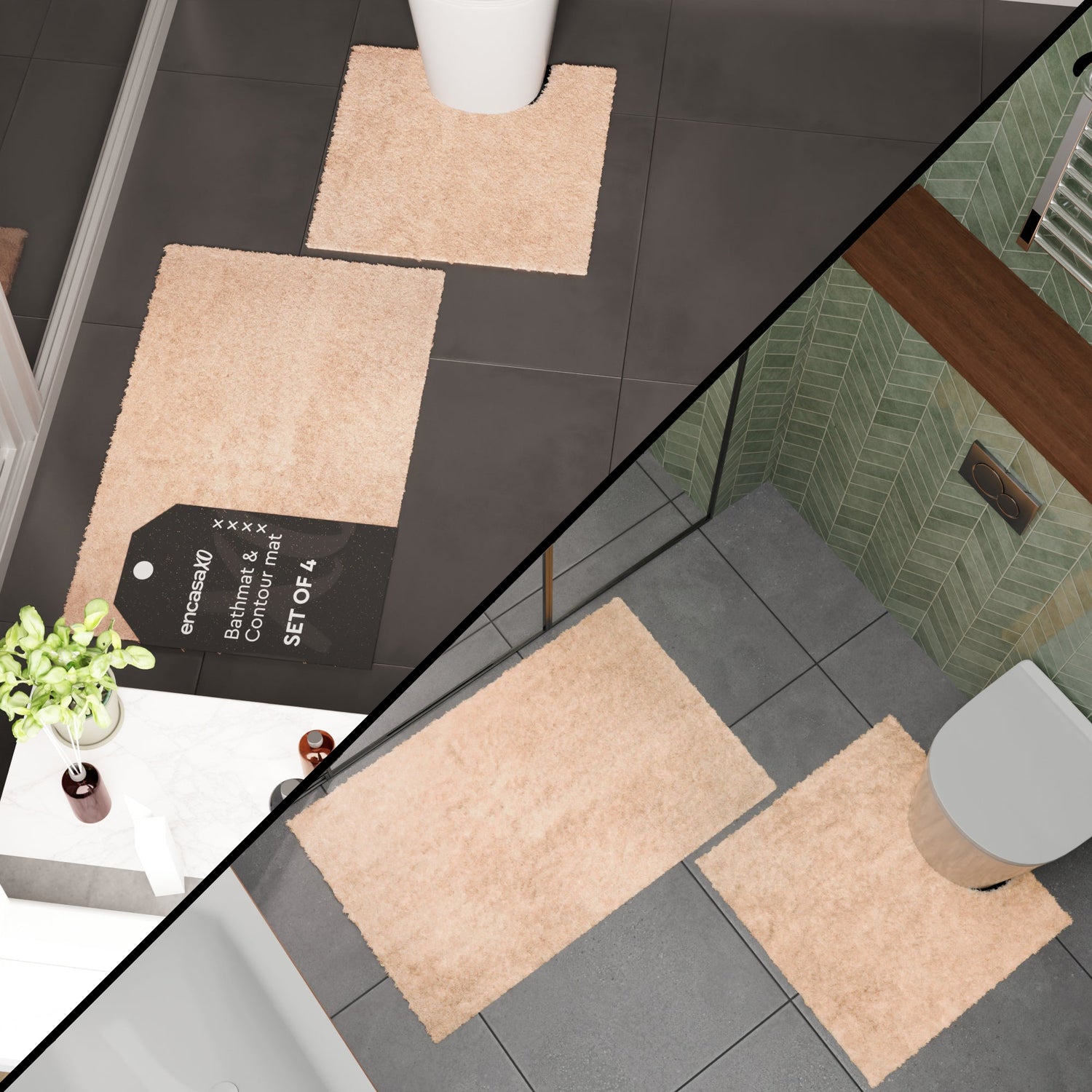
Grip is what backings are for, so the answer is to buy it and then hang the mat so the backing dries too. The cotton beige set of four pairs full-size rectangles with U-shaped contour mats and carries an anti-slip backing, so the mat by the door stays where you put it when a wet foot lands at an angle. The microfibre mat carries the same kind of backing, which is the part that matters most when children or elderly parents use the bathroom.
7. Replacing a mat twice a year costs more than buying the right one once

An r/bifl poster put it plainly: cloth mats in a constant state of dampness, replaced roughly every six months because of mildew, which they note is not a buy-it-for-life approach. That is not bad buying. It is buying the same mat again.
Buying once costs less than that habit does. Polyester runs about ₹300 for a single 60 x 40 cm mat and under ₹500 for a pack of two, microfibre sits around ₹800 for the 76 x 51 cm size, and cotton runs from just over ₹800 for a pack of two up to about ₹1,500 for a set of four. That set is worth dividing out: two rectangles plus two contour mats puts the cost per mat below the pack of two, and gives you the spare that makes hanging one to dry workable.
If the bathroom has a window that opens or an exhaust that gets used, the four-piece cotton set covers the doorway and the pedestal with spares to rotate. If it is sealed and shared, start with microfibre for the wet area and add cotton only where the floor stays dry. Either way, filter the bathmat range by material before colour, since material decides whether you buy this mat again in six months.
Frequently asked questions
What makes a bathmat smell even after it has been washed?
Bacteria and mould growing in a pile that stays damp between uses. A wash clears them for a few days, then a humid bathroom rebuilds the same conditions. Check the underside too, since a bonded rubber backing holds water long after the surface feels dry.
Is it better to hang a bathmat after every use or to wash it more often?
Hanging it, by a distance. Washing treats the symptom and adds wear, while hanging removes the standing moisture that caused the problem. Drape it over a rail so air reaches both faces.
Which bathmat is safest for elderly parents in a wet bathroom?
One with a proper anti-slip backing and a low profile, placed on the dry side of the doorway where the foot lands first. Thick, loose mats without grip are the ones that skate on wet tile.
Where should the mat go in a bathroom with no shower cubicle?
Two places, doing different jobs. A quick-drying mat where you bathe, and an absorbent mat on the dry side of the door. A single mat in the middle of the floor tends to stay wet and stop neither.
Encasa XO is our own brand, and the bathmats named above are ours.

Leave a comment
This site is protected by hCaptcha and the hCaptcha Privacy Policy and Terms of Service apply.