
The priest is already unpacking the kalash on the kitchen counter, half the moving boxes are still taped shut in the hallway, and somebody is asking where the doormat is, because nobody bought one. This is how a lot of griha pravesh mornings actually go. The puja itself takes an hour or two, but the flat has to look and work like a finished home for the rest of the day, with relatives arriving for lunch and staying on through the evening.
A new home doesn't need every textile in the house ready by the muhurat. It needs the ones the ritual and the first guests will actually touch: something at the threshold, curtains so the windows aren't bare glass, a table set for the meal that follows the puja, a kitchen that can produce that meal, and a bathroom guests won't hesitate to use. The spare room, the balcony, a second set of cushions, all of that can follow in the weeks after.
What griha pravesh home textiles actually need to be ready first
Ordinary home shopping spreads itself out. You buy curtains when the sun starts hitting the sofa at the wrong hour, a new bathmat when the old one finally gives up. Griha pravesh doesn't allow that; every room has to present itself on one fixed date, so the useful question isn't "what does this flat eventually need" but "what will a guest see, sit on, eat off or step onto in the first few hours."
That reframes the list. A doormat matters more on day one than a matching set of curtains in the guest bedroom, because every single person who enters, including the priest, crosses it first. A functioning kitchen towel matters more than a decorative table runner, because the customary first dish, often a simple kheer or payasam, has to get made and served before anyone notices whether the tablecloth matches the curtains. Work outward from what gets touched, not room by room off a generic moving-in list, and the order mostly sorts itself.
| Area | What happens there on the day | Buy before the date | Can wait a few weeks |
|---|---|---|---|
| Entry | Every guest and the priest cross it first | A doormat that can take mud and slush | A boot tray, a second seasonal mat |
| Living room | Guests sit here for most of the visit | Curtains up, enough cushions for the main seating | Throws, an extra accent cushion set |
| Dining | The post-puja meal is served here | A tablecloth or runner, napkins for the headcount | Placemats, a second linen colourway |
| Kitchen | The first dish is cooked and served from here | Kitchen towels, an apron for whoever is cooking | A full towel rotation, printed sets |
| Bathroom | Guests use it, often more than once | A bathmat, a shower curtain if the plumbing is new | A second mat for a spare bath |
The entrance: the first thing anyone steps over
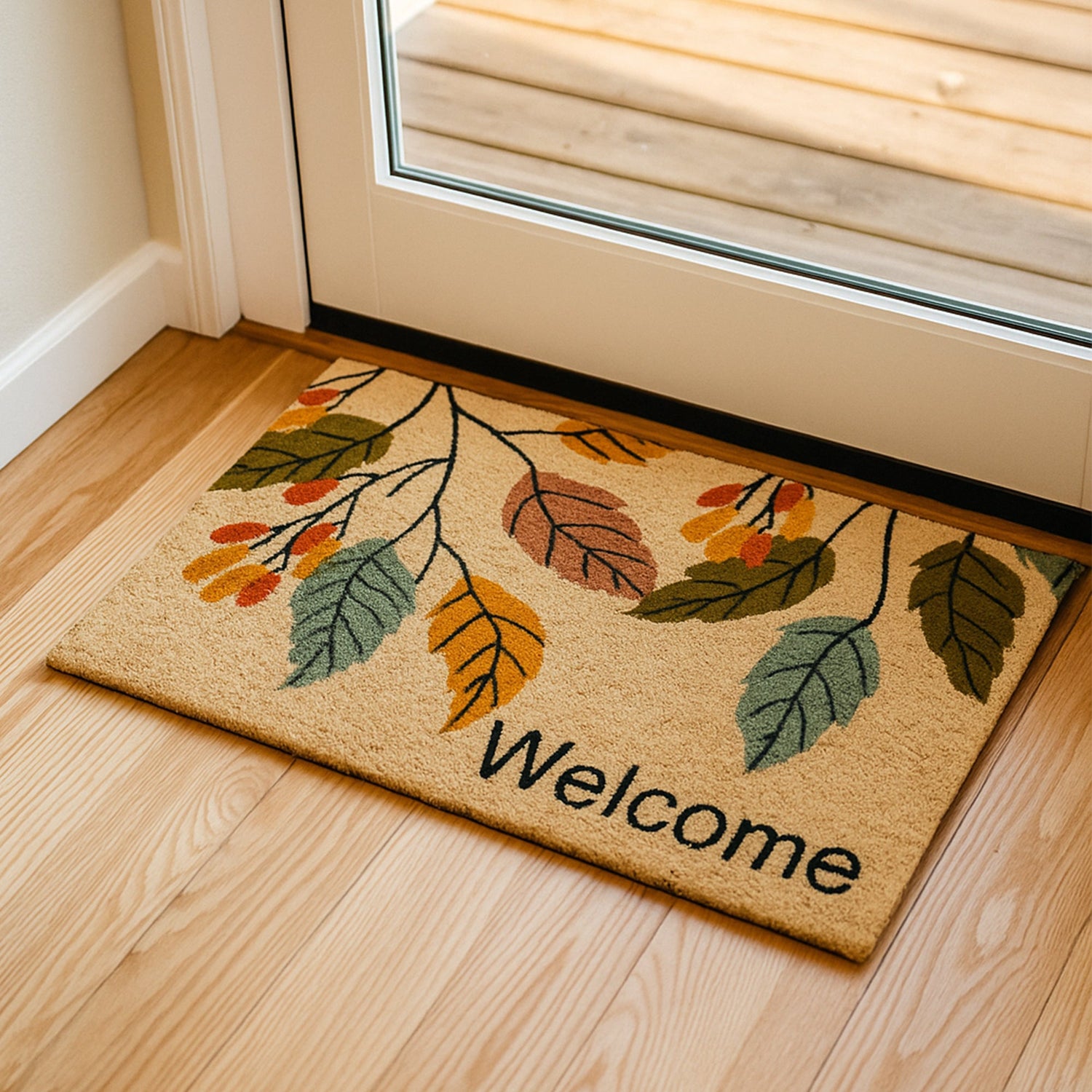
Skip the doormat and it shows within the hour. New flooring, especially, holds every footprint and every bit of dust that a dozen pairs of shoes carry in from the lift lobby or the building compound, and a griha pravesh guest list tends to run larger than an ordinary Sunday visit. A coir doormat is the honest default for this spot: it's rough enough to actually scrape grit off a shoe sole, rather than just moving it further into the flat, and it cleans up with a shake, a brush or a vacuum rather than a wash. If the building has a covered lobby and the mat only ever meets clean, dry feet, a softer cotton or printed mat will do the job with less fuss.

One thing worth deciding before the date rather than during it: whether shoes come off at the door at all. Many households doing a griha pravesh ask guests to remove footwear as a matter of course, in which case the mat's job shifts slightly, from scraping mud off soles to giving people somewhere dry and grippy to stand while they take shoes off. Either way, buy it early. It's the cheapest item on this whole list and the easiest one to forget until the morning it's needed.
The living room: curtains and cushions for a bare flat
A newly handed-over flat almost always has bare windows, and bare glass reads as unfinished in a way that an empty side table or a missing rug doesn't. Curtains are worth measuring for as soon as the keys arrive rather than the week of the puja, since a wrong drop is the one mistake in this whole list that can't be fixed by ironing or a quick wash. If you haven't measured a window before, the curtain size guide walks through rod height and drop so the 5, 7 or 9 ft standard lengths actually land right rather than puddling on the floor or stopping short. For a living room where guests will spend most of the day, a light-filtering curtain that softens the afternoon sun without going fully dark tends to suit the mood better than a bedroom-grade blackout; if a west-facing window is genuinely harsh, a blackout polyester pair is the sturdier answer.

Cushions do more work per rupee than almost anything else on this list, since a bare sofa is one of the fastest tells that a home is only just moved into. You don't need the full complement day one, just enough to dress the main seating: three or four covers on a three-seater reads as furnished, and the standard Indian sizes, 30x30 up to 60x60 cm, mean you can buy against the pads you already own rather than guessing. The cushion cover size guide has the counts for two and three-seaters if the sofa is new as well. A velvet cushion cover in a warm shade photographs well for the family album that every griha pravesh produces, though a plainer cotton canvas cover is the more sensible everyday choice if the sofa will see young children or a dog before the year is out.
Setting the table for the first meal
The meal after the puja is usually the part guests remember, more than the ceremony itself, so the table is worth more attention than a "nice to have" line at the bottom of a moving checklist. A tablecloth or a runner is the base decision: a full tablecloth covers a table that's still bare or slightly marked from the move, while a runner over an already-decent table top adds colour without hiding it entirely. Either way, buy to the table you have rather than a guess; the table runner size guide sets out lengths against common dining table sizes so it doesn't stop short or trail off the end.

Napkins matter more here than at an ordinary family dinner, since a house full of relatives and neighbours means more spills, more turmeric-yellow food, and more chance of a stain landing on clothes rather than the table. A set from the table napkin collection in a colour close to the runner is enough; buy to your expected headcount plus a handful spare rather than the exact guest count, because griha pravesh gatherings tend to grow by a few last-minute arrivals.
The kitchen: ready before the first meal is cooked
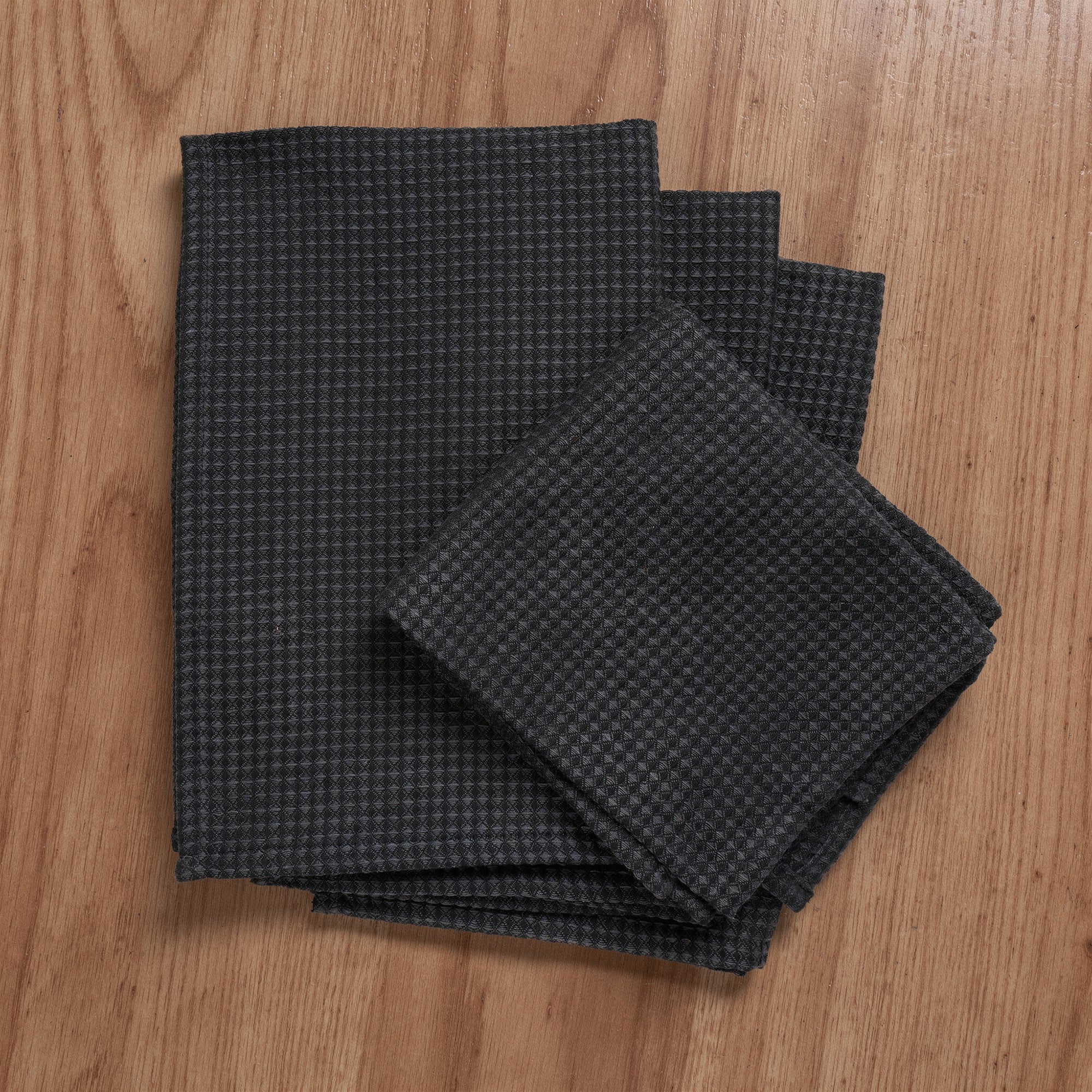
A kitchen can look finished and still not be ready to cook in, and griha pravesh is usually the first real test of a new one. Whoever ends up making the first dish will want a kitchen towel within reach before the stove is even lit, both for wiping hands and for handling a hot vessel straight off a new, possibly still-slippery hob. A pack from the terry kitchen towel range absorbs faster than the thin, printed towels sometimes bundled free with a moving-in kit, which matters when there's no time to hunt for a dry one mid-cook.

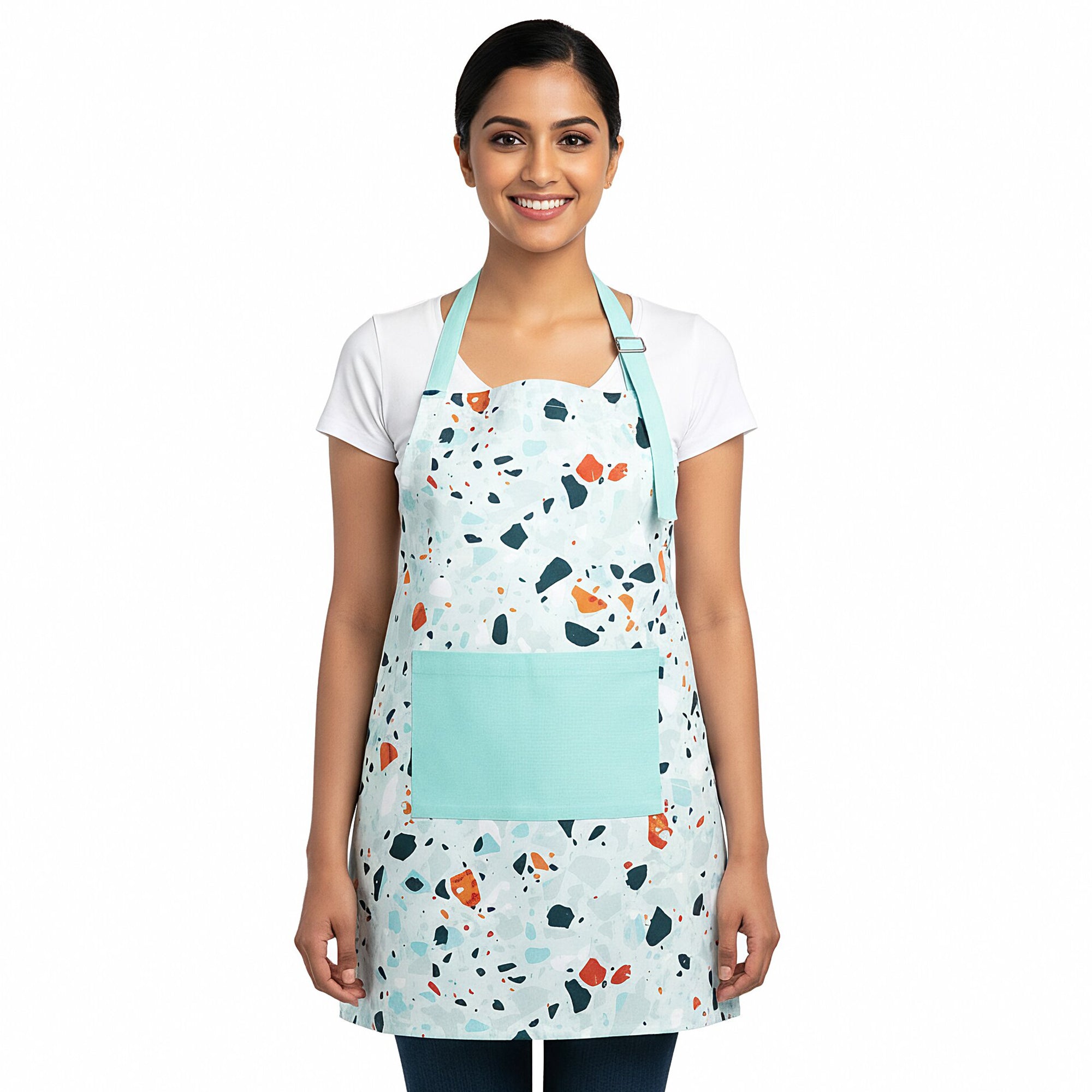
An apron is easy to leave off this list, since it feels like a personal item rather than a home one, but a splash of hot oil or turmeric on a new saree or kurta on the day itself is not a small thing. If more than one person is likely to be in and out of the kitchen, cooking or plating, keep a second apron on the counter rather than assuming one is enough. Beyond that first day, the kitchen fills itself in over the following weeks: more towels, potholders, the rest of the linen a working kitchen wants once it settles into daily use.
The bathroom guests will actually judge
Most housewarming checklists treat the bathroom as an afterthought, somewhere between the balcony and the store room, and that's a mistake, because it's one of the only rooms a guest uses alone, without the household around to make it feel finished. A wet floor with no bathmat is the kind of thing a visitor remembers longer than a bare curtain rail ever gets noticed. A cotton bathmat is the straightforward pick for a bathroom that dries out between uses; if the plumbing or the exhaust is new and you're not yet sure how well the room ventilates, a quick-dry microfibre mat from the bathmat collection is the safer bet until you've lived with it through a few showers.
If the bathroom is plumbed for a shower rather than a bucket and mug, check the curtain rod is actually up and fitted with a curtain before the date, not just installed and bare. A shower with no curtain sends water across the floor with every use, which on a griha pravesh day of back-to-back guests turns into a standing puddle rather than an occasional splash.
Frequently asked questions
How many cushion covers does a new living room need for griha pravesh?
Enough to dress the main seating rather than the whole house. Three or four covers on a three-seater sofa reads as furnished for the day; a full set across every chair and the guest bedroom can follow later. Match the cover size to the pads you already own, since the standard sizes run from 30x30 up to 60x60 cm.
What colour textiles are traditional for a griha pravesh?
There's no fixed rule, though warm and auspicious shades, reds, yellows, maroons and golds, show up often in griha pravesh decor because they echo the puja itself. Keeping the big pieces, walls and sofa, neutral and letting one warm shade lead in the cushions, table linen and doormat is an easy way to look coordinated without matching everything exactly.
Do curtains need to be up before the puja itself?
It helps but isn't a ritual requirement; it's a practical one. Bare windows make a flat look unfinished in photographs and to arriving guests, and hanging curtains is one of the few jobs on this list that can't be done in five minutes on the morning itself, so it's worth doing days ahead rather than leaving for the last stretch.
Can griha pravesh home textiles be bought on a tight budget?
Yes, and the entry, table and kitchen items on this list are the cheapest ones on it, a doormat, a set of napkins, a couple of kitchen towels. If the budget is tight, spend first on what guests actually touch, the entry and the table, and treat curtains and a full cushion set as the parts that can arrive over the following weeks once the immediate pressure of the date is gone.

Leave a comment
This site is protected by hCaptcha and the hCaptcha Privacy Policy and Terms of Service apply.