
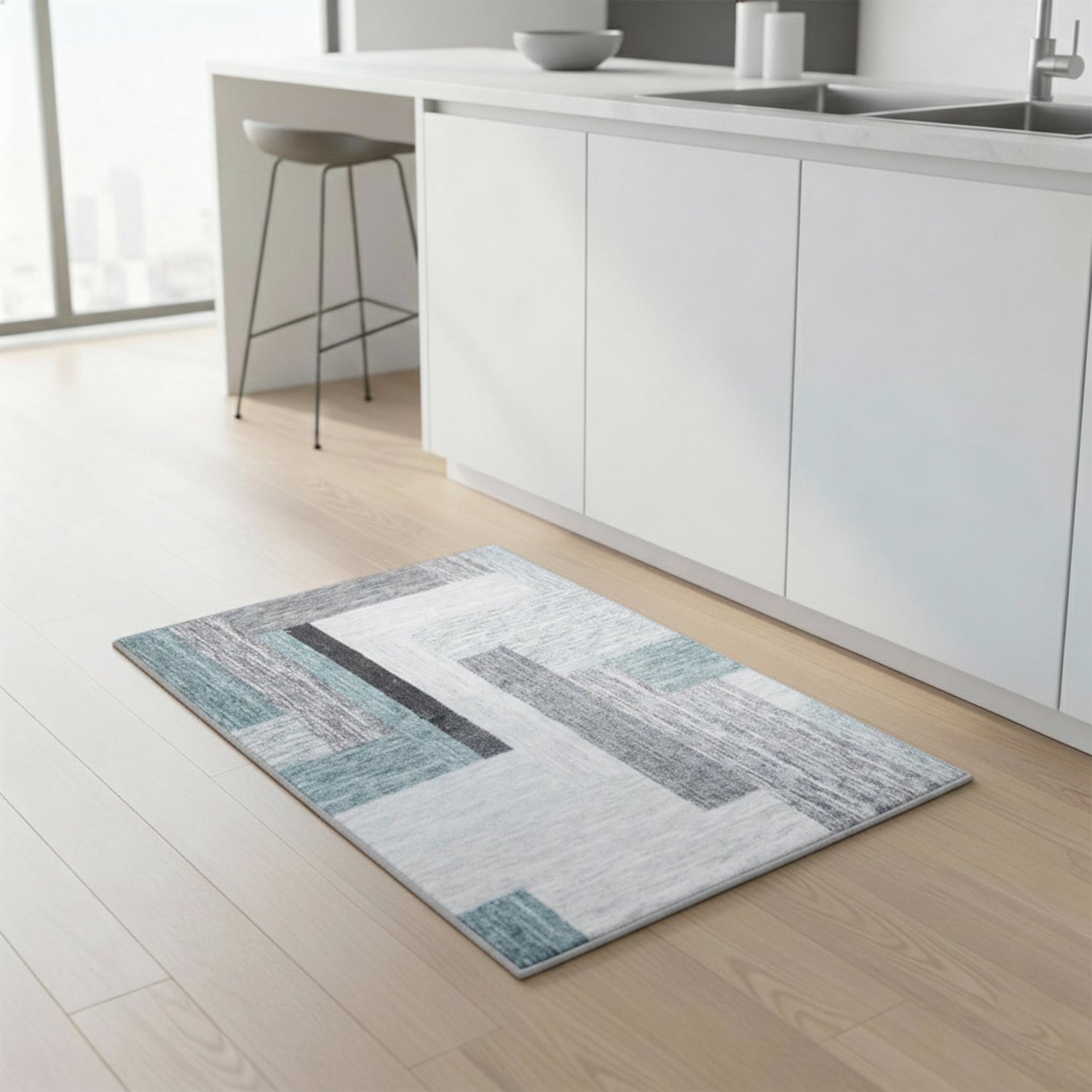
Type "bath mat sizes" into a search bar and the results split into two camps. US listings quote inches, 17x24, 21x34, sometimes "oversized" with no number at all. Indian ones quote centimetres, 60x40, 80x50, occasionally nothing beyond "large" or "premium". Neither tells you whether the mat will fit the strip of floor outside your shower, or swallow half the gap in front of your washbasin instead.
A bath mat's size only has to answer one question: how much floor does the wet-to-dry spot it's covering actually have? Indian bathrooms really only need two practical sizes. A compact mat, roughly 24x16in (60x40cm), for tight spots like doorways and basins. A fuller mat, roughly 30x20in (76 to 80 x 50 to 51cm), for the run outside a shower or tub. A third, smaller shaped piece, about 18x18in (45x45cm), wraps a toilet base and is a different product from either rectangle, not a smaller version of one.
How many bath mats does one bathroom actually need?
Not one per bathroom. One per wet-to-dry transition point. Every spot where feet go from wet tile or wet skin to a floor you want dry is its own decision, and a bathroom can have anywhere from one of those spots to three. Size settles how much floor a mat covers; whether it stays put on wet tile is a separate question, and what actually stops a mat sliding deals with that one.
A bathroom with a separate shower cubicle, a washbasin a few steps away, and a door out to the hallway has three transition points and, in most cases, wants three mats: one where you step out of the shower, one at the basin where splashes land, and one by the door so wet feet don't track water into the bedroom. A smaller bathroom where the shower drains straight onto open floor, with no cubicle or step to contain it, often collapses two of those points into one wide wet zone, and a single well-placed mat covers it.
The size chosen for each point follows from the same logic that decides whether you need it at all: how much floor that spot actually has, not how big the room is. A large bathroom with one wet zone can get by on one mat. A small bathroom with three separate points still needs three, just smaller ones.
What are the standard bath mat sizes, and where does each one belong?
Encasa's own bathmat range, across cotton, microfibre and polyester, sorts into almost exactly the two sizes above, with the U-shaped piece as a separate third product.
| Size (cm) | Size (in, rounded) | Fits | Encasa examples |
|---|---|---|---|
| 60 x 40 cm | ~24 x 16 in | Doorways, washbasin aprons, any gap under about 50cm | Polyester Bathmat 60x40 cm, ₹299 single / ₹499 for two |
| 76 to 80 x 50 to 51 cm | ~30 to 31 x 20 in | The run outside a shower cubicle or tub | Cotton Beige Bathmat, Pack of 4, ₹1,499; Microfibre Grey Bathmat, ₹799 |
| 45 x 45 cm, U-shaped | ~18 x 18 in | Wraps a toilet base, not a flat rectangle | Sold only inside shower curtain and bathmat combo sets, see the full bathmat range for current listings |
The 60x40cm size runs across cotton, polyester and microfibre alike. The 80x50cm size is mostly cotton, sold in packs of two or four. A few microfibre mats land at 76x51cm instead, close enough to 80x50cm that it solves the same spot, just in a fibre that releases water faster than cotton does; our cotton vs microfibre comparison covers that trade-off in full. If drying speed matters more to you than the exact centimetre count, the microfibre bathmats run both lengths in that faster-drying fibre.
The size decides the footprint; the fabric decides how the mat behaves once it's down. Both sizes come in cotton, so picking 60x40cm or 80x50cm doesn't lock you into a particular feel underfoot or a particular dry time. That split matters more in a shared bathroom used within an hour by more than one person, where a mat that stays damp becomes the second person's problem, than it does in a spot used once or twice a day. Size answers "does it fit". Fabric answers "how does it hold up between uses", and that's worth reading on its own before you lock in colours.
A worked example: fitting a mat to a narrow gap
Say the clear floor between your shower cubicle and the next fixture, a washbasin cabinet, measures about 70cm. An 80x50cm mat laid with its long edge across that gap would overhang by 10cm and curl up against the cabinet, which is exactly the kind of edge that catches a bare foot. The 60x40cm mat sits inside that 70cm run with room on both sides, tile showing at the edges rather than mat bunching against furniture. Where the gap runs longer, past about 80cm, the larger mat stops overhanging and starts doing its job properly, covering more of the walk than the smaller one would.
This is the actual decision, not "small bathroom, small mat". A generously sized bathroom can still have a tight 60cm gap between a shower and a low shelf, and a modestly sized one can have a clear metre of floor outside an open shower area. Measure the spot, not the room.
The same logic runs the other way at a doorway. Most Indian bathroom doors open onto a corridor or bedroom floor that can't get wet, and the clear width at that threshold is rarely more than 45 to 55cm once the door swing and any threshold strip are accounted for. That's squarely inside 60x40cm territory. An 80x50cm mat set at a doorway that narrow ends up half under the door sweep, catching on the door itself every time it opens, which is a smaller annoyance than an overhang by the basin but an annoyance all the same.
What about the U-shaped bath mat?
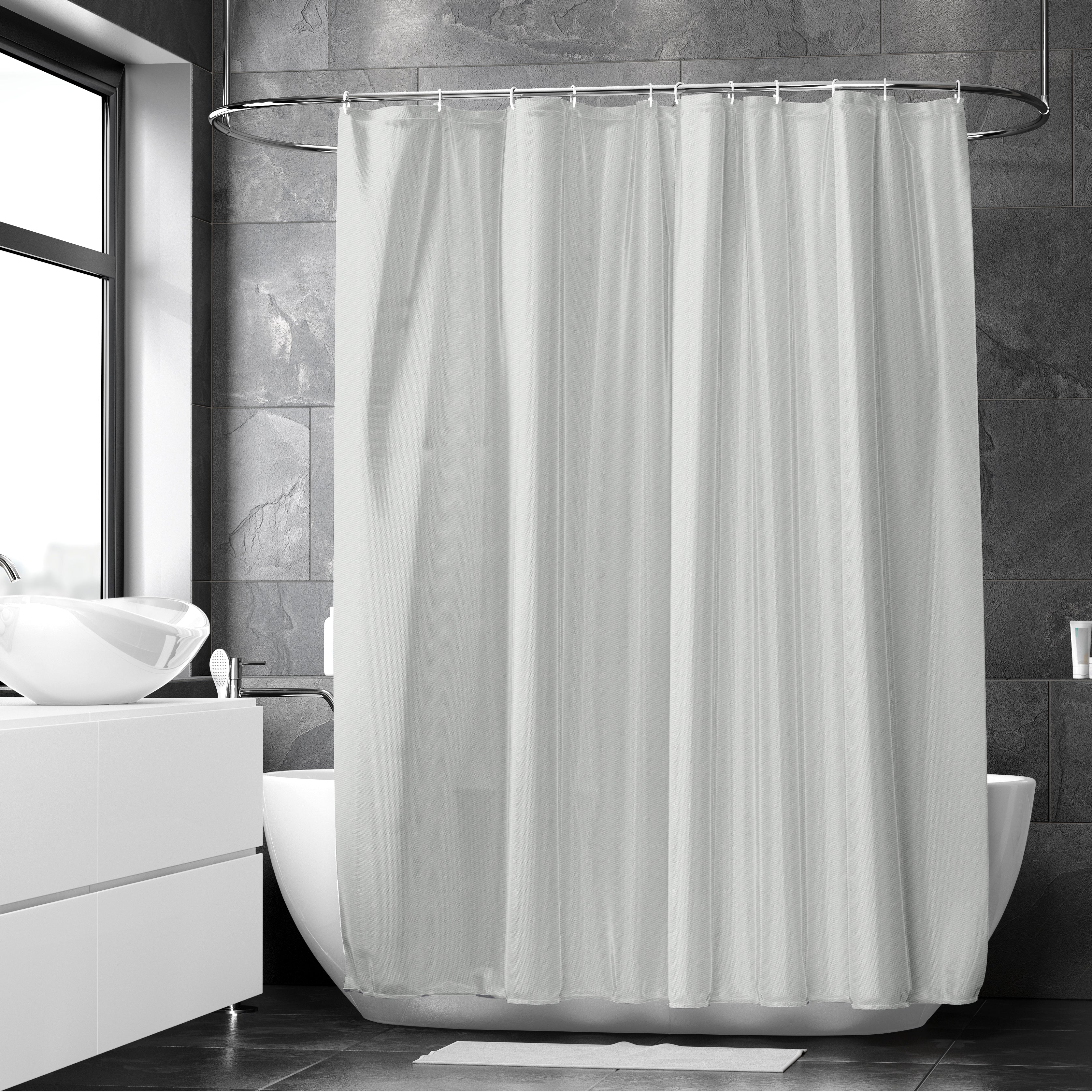
The 45x45cm U-shaped piece is not a smaller flat mat. It's cut with a curve to sit around the base of a toilet, closing the gap a rectangular mat leaves on either side. Encasa doesn't sell it as a standalone product; it comes bundled with a shower curtain in the combo sets, alongside a standard 80x50cm rectangular mat for the main wet area. If a wrap-around piece for the toilet base is specifically what you're after, that combo listing is the place to look, rather than the standalone bathmat pages, which carry rectangles only.
Frequently asked questions
What size bath mat should I buy for a small Indian bathroom?
Measure the actual clear floor at the spot you're covering, not the room. A washbasin apron or a doorway in a compact bathroom usually leaves a gap under 50cm, which a 60x40cm mat sits inside comfortably. The 80x50cm size is built for a longer run and will overhang a tighter gap like that.
How many bath mats does one bathroom need?
One per wet-to-dry transition point, not one per bathroom. A bathroom with a separate shower area, a washbasin, and a door typically wants two or three mats. A bathroom where the shower drains onto open floor with no cubicle may only need one, placed where feet actually land wet.
What is the U-shaped bath mat used for?
It wraps around the base of a toilet rather than lying flat like the rectangular mats do. Encasa sells it bundled into shower curtain and bathmat combo sets rather than as a standalone size, so a combo listing is where to find it, not the regular bathmat pages.
Why do some bath mat listings show sizes like 17x24 inches instead of centimetres?
That's a US sizing convention, roughly 43x61cm, built around bathroom layouts that tend to have longer, wider gaps between fixtures than a typical Indian flat does. Encasa's cm-based sizes, 60x40cm and 80x50cm, are sized for the shorter runs common here and cover the same practical range without needing a conversion.

Leave a comment
This site is protected by hCaptcha and the hCaptcha Privacy Policy and Terms of Service apply.